10 Most Hospitable Towns In South Carolina
On June 28, 1776, a colonial garrison under Colonel William Moultrie beat back a British naval squadron from a palmetto-log fort on Sullivan's Island. The island still marks the date every year as Carolina Day. That habit of remembering runs through small-town South Carolina. You see it in the Saturday farmers markets and the jazz lounges. You hear it at the parades that have run for more than a century. Hospitality here is less a slogan than a reflex, and the ten towns ahead all share it.
Hartsville

Hartsville does hospitality the way a good college town does, with the doors open and something always on. Anchored by Coker University and a working downtown in the Pee Dee region, it leans on spots like JazzyBlues 843 on West Carolina Avenue, which runs live jazz and blues nights, jazz karaoke, and weekend comedy for whoever wanders in. Its deepest roots are agricultural: Coker Farms, a National Historic Landmark, is where David R. Coker began breeding improved cotton, corn, and grain varieties for the South in 1902, and it still runs guided tours. Each December, the Heart of the Holidays festival fills downtown with an art-and-wine stroll and open houses at the shops.
York

York makes a strong first impression and then backs it up. The county seat runs one of the larger preserved historic districts in the Piedmont, more than 180 buildings on the National Register, the kind of intact Main Street where people still stop to talk. The welcome runs through the food and the land here: Bush-N-Vine Farm on Filbert Highway opens for U-pick strawberries each spring and peaches in summer, and Hoof and Barrel on West Liberty Street plates Southern cooking, hickory-smoked barbecue, and house-cut steaks. For room to roam, Kings Mountain State Park on the North Carolina line covers 6,883 acres of trails, two fishing lakes, and a living-history homestead farm.
Edisto Beach

Edisto Beach is hospitable by way of restraint. About 50 miles south of Charleston on Edisto Island, it stays deliberately low-rise, with no building over three stories and not one chain hotel, so what you get is the unhurried, neighborly version of the South Carolina coast. Edisto Beach State Park covers 1,255 acres of oceanfront and maritime forest with two campgrounds, cabin rentals, and an Environmental Learning Center that walks families through loggerhead turtles and the ACE Basin estuary. In summer, Movies in the Park brings residents and visitors out with lawn chairs for free screenings, and McConkey's Jungle Shack has served fried seafood and burgers to beach traffic since 2008.
Aiken

Aiken has been welcoming outsiders since the 1880s, when wealthy Northeastern families wintered here with their horses for polo, steeplechase, and fox hunting, and the town has stayed gracious about visitors ever since. That horse culture is still the through-line. The Aiken Thoroughbred Racing Hall of Fame and Museum, set in a stable in Hopelands Gardens, honors more than 40 Aiken-trained champions, and Aiken Equine Rescue keeps daily volunteer hours Monday through Saturday with no appointment needed, so anyone can pitch in. The Carriage House Inn, an 1872 home in the downtown historic district, runs as a small bed-and-breakfast. It is, plainly, a town built to host.
Newberry

Newberry holds just over 10,000 people but hosts like a much bigger place. The heart of it is the Newberry Opera House, an 1881 Romanesque Revival building restored in 1998 that books a year-round season of jazz, classical music, Broadway tributes, and touring acts, the rare small-town venue that pulls regional crowds in for the night. Around it, Wells Japanese Garden offers a quiet walk among ponds and bridges, Enoree River Vineyards pours weekend tastings on a covered porch over the working vines, and Figaro Market downtown turns out gelato and pastries. For a town this size, the welcome runs deep.
Beaufort

Beaufort carries some of the deepest European and African American roots on the Carolina coast. The Spanish named this stretch Santa Elena in the 1520s and built a settlement of that name on nearby Parris Island in 1566, and the modern town was chartered in 1711, the second-oldest in South Carolina. All that history sits inside an unusually walkable downtown National Historic Landmark District, one of the largest concentrations of intact antebellum architecture in the South. The hospitality shows up at Henry C. Chambers Waterfront Park, seven riverfront acres where the whole town turns out, and at Magnolia Cafe on Carteret Street, a longtime local favorite for breakfast and lunch. The Beaufort History Museum, set in the 1798 Arsenal, fills in the rest.
Georgetown

Georgetown sits where four rivers meet as the third-oldest city in South Carolina, incorporated in 1729 and once one of the busiest rice-exporting ports in the country. Today the welcome is on the water: the Harborwalk along the Sampit River strings together restaurants and shops, and every October the free Georgetown Wooden Boat Show draws builders and crowds for a weekend on the river. The Rice Museum, in the 1842 Old Market Building and Town Clock, tells the story of the Lowcountry rice economy, and the South Carolina Maritime Museum on Front Street keeps ship models and a working Fresnel lens pulled from the old North Island Lighthouse. It is a town that meets you right at the dock.
Laurens
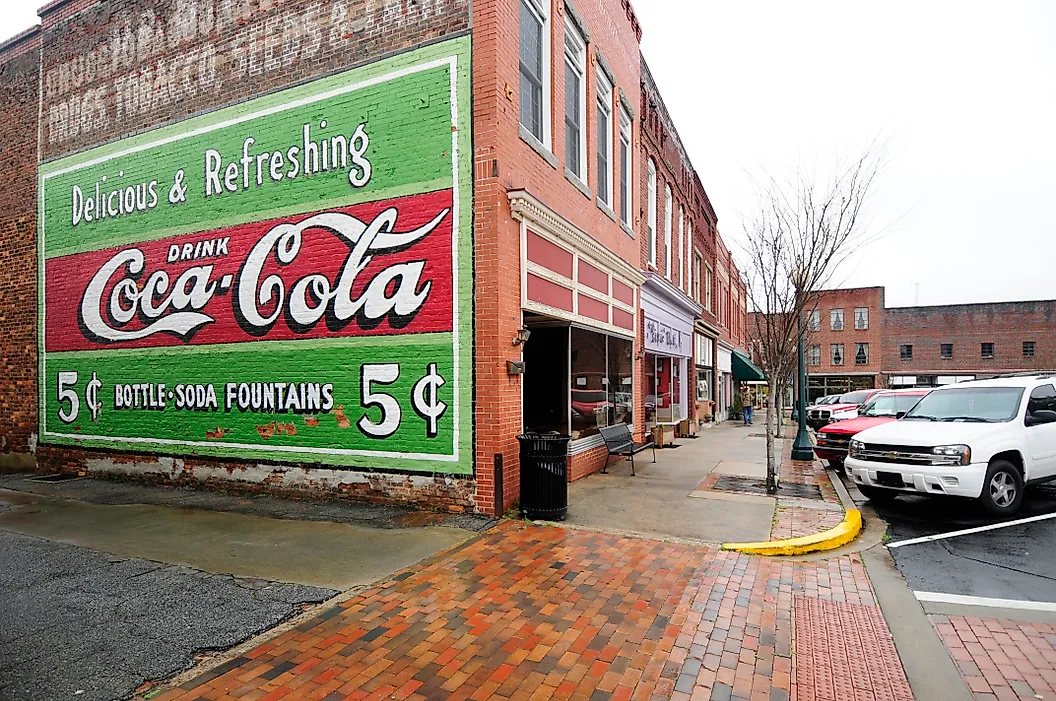
Laurens runs a tight downtown square around the 1838 Laurens County Courthouse, ringed by restored brick storefronts that now hold art co-ops and locally owned restaurants. The Artist's Co-op on East Public Square is a volunteer-run nonprofit selling local jewelry, pottery, and paintings, the kind of place where someone walks you through every piece. Tap and Table on West Main serves smash burgers and fried chicken out of a renovated historic building. The Laurens County Museum covers regional history, including the county's turbulent Reconstruction era. Just south of town, Verdin's Too runs an open-air plant nursery worth the stop.
Landrum

Landrum sits in the Blue Ridge foothills of the upstate, in horse-and-orchard country near the North Carolina line. The hospitality is small-scale and genuine: the Landrum Farmers Market on Trade Avenue runs Saturdays April through December with local growers and crafters, and the Hare and Hound Pub on East Rutherford Street has poured traditional pub fare since 1986. Just south of town, the Red Horse Inn is one of the most-booked small luxury inns in the upstate, with private cottages, a wine bar, and seasonal alpaca-and-wine visits on the grounds. Brookwood Park adds a short nature trail and a playground for the grandkids.
Sullivan's Island

Sullivan's Island guards the north side of Charleston Harbor as a residential beach town of fewer than 2,000 year-round residents, the kind of place that shows up for its own traditions. Every June 28, Carolina Day marks the 1776 Battle of Sullivan's Island, when Colonel William Moultrie's forces beat back a British Royal Navy squadron from a palmetto-log fort, the victory that put the palmetto on the state flag. Fort Moultrie, part of Fort Sumter and Fort Moultrie National Historical Park, preserves that ground and the coastal defenses that followed through World War II. The Sullivan's Island Lighthouse, also called Charleston Light, has marked the harbor since 1962 and was the last major lighthouse the federal government built. Sullivan's Fish Camp on Middle Street has served Lowcountry seafood since 1988.
What Makes These Ten So Welcoming
The common thread is that hospitality here is a habit, not a slogan. Hartsville, York, Aiken, and Newberry pour it through college towns, U-pick farms, horse country, and a small-town opera house. Beaufort, Georgetown, and Sullivan's Island anchor the Lowcountry coast, where the welcome happens on the waterfront and at festivals that go back generations. Laurens and Landrum hold down the upstate with town squares and Saturday markets where strangers actually get talked to. Edisto Beach makes its case by keeping things deliberately small. Visit any of them, and you tend to leave knowing someone's name.