10 Most Hospitable Towns In Georgia
In small-town Georgia, a good welcome usually shows up at the lunch counter, where the waitress calls everyone honey and refills your tea before you ask. The towns here keep that habit alive in their courthouse squares and rail depots and along their riverfronts. Each one has built its reputation on something it actually does well. One floats tubers down the Chattahoochee every summer. Another lets you walk into the gold mine that started a rush. The welcome lands because it comes attached to a real place.
Thomasville

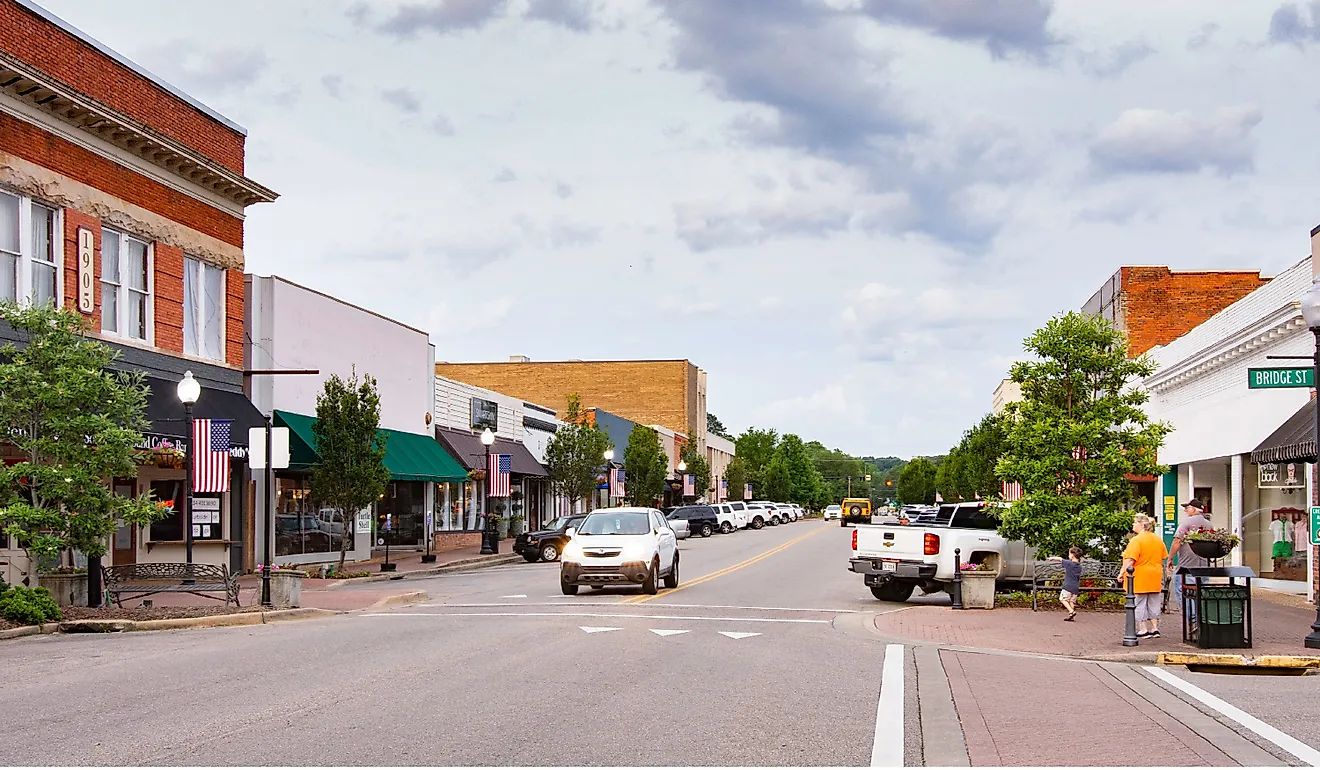
Broad Street in Thomasville still runs on brick-paved sidewalks under live oaks, and the storefronts hold independent shops and cafés rather than the empty windows that hollow out a lot of historic downtowns. People come downtown to do their actual errands, which keeps the district from feeling staged for visitors. That working pulse is the thing Thomasville does better than almost anywhere its size in southwest Georgia.
A few blocks away, the Big Oak earns its name. The southern live oak began as an acorn around 1685 and now spreads a limb span of more than 160 feet, and it has been a photo stop for generations of residents. Thomasville carries the official title of Georgia's Rose City, and the Thomasville Rose Garden backs it up with over 1,500 rose bushes that bloom from April through July, just ahead of the rose show the town has held since the 1920s. The Thomasville Center for the Arts fills out the calendar the rest of the year with exhibits and classes that give locals a regular reason to gather.
Blue Ridge

Blue Ridge sits in the North Georgia mountains, and its downtown does most of the work of making travelers stay an extra day. Main Street keeps locally owned shops and galleries in its historic buildings, with handmade pottery and paintings that come from artists working in the area.
The Blue Ridge Scenic Railway runs the show from its depot on Depot Street, just off Main. Excursion trains roll through the mountain valleys and trace the Toccoa River for a four-hour round trip to McCaysville on the Tennessee line. The town also gives anglers and paddlers an easy outing at Lake Blue Ridge, where the forested shoreline keeps the water clear well into summer. Hikers head for Long Creek Falls instead, a short walk off the Appalachian Trail that ends at a double-drop waterfall back in the woods.
Dahlonega

The 1828 gold rush that built Dahlonega is still the first thing the town tells you about itself, and the square wears that history without turning it into a museum piece. Tasting rooms, restaurants, and shops keep the streets busy around the old courthouse, which now holds the gold story rather than the county docket.
The Dahlonega Gold Museum State Historic Site occupies that 1836 courthouse and lays out how the rush reshaped North Georgia. A short drive away, the Consolidated Gold Mine takes visitors underground through tunnels that once ran one of the largest mining operations east of the Mississippi, with gem panning at the surface afterward. The mountains do the rest of the work here, with trailheads nearby reaching sections of the Appalachian Trail, and Wolf Mountain Vineyards pouring its own wines on a ridge above the foothills.
St. Marys

St. Marys runs on tidewater time, a coastal town on the St. Marys River where the Georgia shore meets the Florida line. The waterfront still carries the town's working maritime history, and its downtown keeps locally owned shops and restaurants in buildings that go back centuries. Most days the riverfront draws a steady mix of residents and visitors who come to watch the boats clear the channel.
St. Marys Waterfront Park, with its benches and walking paths along the river, is where most visits begin. From the same downtown dock, ferries run the seven miles out to Cumberland Island National Seashore, where wild horses graze the dunes and maritime forest backs the undeveloped beaches. Back on the mainland, the St. Marys Submarine Museum traces the town's long tie to the Navy's submarine fleet at nearby Kings Bay, and a self-guided History Walk lines a 600-foot trail with 24 interpretive panels covering everything from the Timucua to the shipbuilding boom.
Greensboro

Greensboro anchors Georgia's lake country, set among rolling farmland and the waters of Lake Oconee. The downtown has grown carefully enough that people still park, walk the city center, and stay a while among the local shops and restaurants.
Lake Oconee is the main outdoor draw, pulling boaters, anglers, and golfers out for long weekends by the water, with the well-known courses at Reynolds Lake Oconee a short drive from town. The history runs deeper than the lake-resort reputation suggests. The Old Gaol, built around 1807 from locally quarried granite, stands with two-foot-thick walls and a trap-door gallows as the oldest standing masonry jail in Georgia. The Greene County African American Museum adds another stop, preserving local stories that the lake-country image tends to skip over.
Perry

Perry calls itself the crossroads of Georgia for good reason, sitting near the geographic center of the state where the interstates meet. Its downtown keeps brick storefronts, local restaurants, and shaded sidewalks close enough together that one parking spot covers a whole afternoon on foot.
The Georgia National Fairgrounds and Agricenter is the engine of the town, hosting the Georgia National Fair each fall along with livestock shows, rodeos, and concerts through the year. That calendar says a lot about Perry, where farming and big community gatherings still set the pace. For a quieter stop, the Perry Area Historical Museum keeps photographs and artifacts tracing the city's growth, and Rozar Park offers walking trails and open space to stretch out between downtown and the fairgrounds.
Senoia

Senoia is a town where the main street does most of the talking. Historic storefronts, restaurants, and boutiques give downtown an easy energy, and the place still feels tied to the families who lived there long before the film crews showed up.
Those film crews are the reason a lot of people first hear about Senoia, since the town has served as a primary location for The Walking Dead, and guided tours walk fans through the filming sites and the production history. The town does not lean on that fame alone. Main Street holds its own with preserved architecture and gathering spots that work for anyone who has never seen an episode. Marimac Lakes Park gives a quieter break with walking paths and green space, and a steady run of festivals and outdoor events keeps residents and visitors sharing the same sidewalks year-round.
Helen

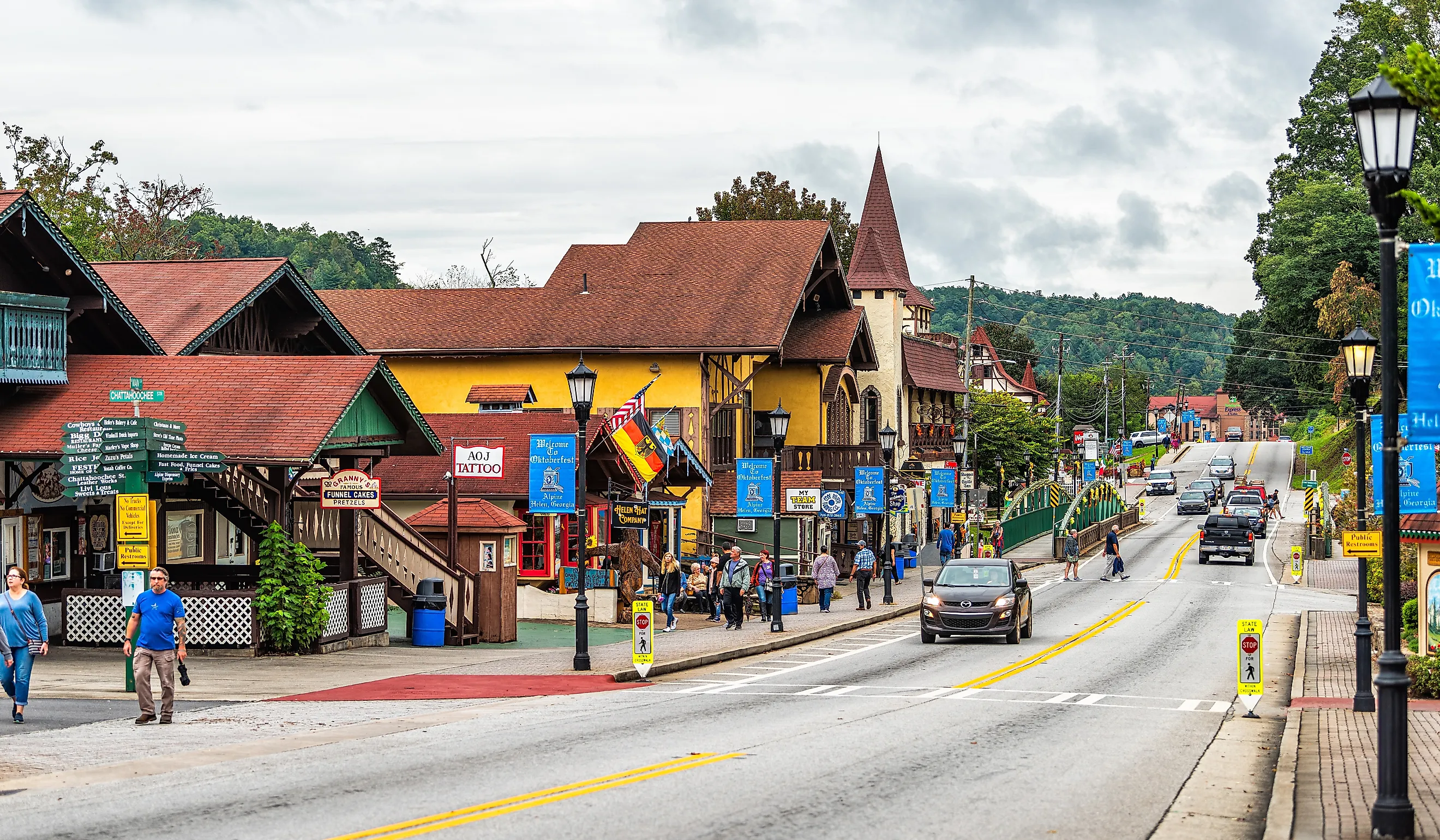
Helen rebuilt itself in 1969 as a Bavarian alpine village, a last-ditch idea from a dying lumber town that turned into one of Georgia's most recognizable destinations. Cobblestone-style walkways, painted gingerbread facades, and the Chattahoochee running right through the middle give it an atmosphere no other community in the state shares. Local businesses lean fully into the European theme, and the surrounding mountains hold up their end in every season.
The outdoors carries as much of Helen's appeal as the downtown does. Unicoi State Park keeps hiking trails and a lake busy through the year, and Anna Ruby Falls drops twin waterfalls through the forest a short drive north. In the warm months, tubing the Chattahoochee becomes the town's signature afternoon, with floaters drifting past riverside restaurants on the way through. The crowds peak twice a year, first for the long-running Oktoberfest, then for the Lighting of the Village that turns the town over to winter lights.
Eatonton

Eatonton built its identity on the writers who came from here. The Uncle Remus Museum keeps the legacy of Joel Chandler Harris, whose Br'er Rabbit tales drew on the folklore he heard on Putnam County plantations, and the Alice Walker Driving Tour marks the sites tied to the Pulitzer Prize-winning author of The Color Purple, who grew up just outside town. The Georgia Writers Museum rounds out the literary trail by honoring authors from across the state.
The outdoors pulls the other direction, toward Lake Oconee, where days go to boating, fishing, and time near the water. Back in town, the Old School History Museum and a historic walking tour open up Eatonton's past in more detail, and the calendar fills out with festivals and seasonal concerts that bring neighbors together through the year.
Cave Spring

Cave Spring takes its name from the limestone cave and freshwater spring at the center of this northwest Georgia town, a water source that has run for as long as anyone has lived here. The streets stay quiet, the historic buildings stay standing, and the community puts real effort into keeping both that way.
Most visits start at the cave in Rolater Park, where clear water flows out and feeds a swimming pool the town claims as one of the largest in Georgia. Cave Spring sits on the Trail of Tears, and the Vann Cherokee Cabin, a hand-hewn log cabin dated to around 1810, marks that history as a recognized site on the route. For time outdoors, the Cedar Creek campground gives paddlers a run down Big Cedar Creek and anglers a place to fish, with the town's antique shops waiting back on the square. Community traditions still carry weight here, and the Cave Spring Picklefest each fall is the one that fills the streets.
Where the Welcome Comes From
What ties these towns together is that the welcome is never the only thing on offer. Helen hands you a tube and the Chattahoochee. Dahlonega walks you into the mine that started a gold rush. St. Marys puts you on a ferry to wild horses. The friendliness reads as real because it sits on top of something a town actually does, and a place that knows what it is tends to be the easiest kind to visit.