Where People Are Moving To In Missouri In 2026
Missouri's growth is gathering at the edges rather than the center. The state passed 6.27 million residents in 2025, and most of that gain landed in a handful of fast-building places. People are following newer housing, shorter commutes, and jobs they can reach. Missouri keeps losing residents in St. Louis while the cities west of it keep adding them. The eight places below are where Missourians are moving right now.
Republic

Republic has turned into one of the fastest-growing mid-sized cities in the state, and the engine is Springfield. The city sits just southwest of the region's largest job center, which makes it an easy suburban landing spot with newer subdivisions, local schools, and a manageable commute. Its population reached about 22,404 in 2025, up from 18,620 in 2020, a 20.3% jump in five years. The city's own planning leans hard into that growth, with attention to transportation, new construction, and public services. U.S. 60, the school campuses, and fresh residential blocks all show the change on the ground. Republic keeps growing because Springfield-area demand keeps pushing outward.
Lake Saint Louis
Lake Saint Louis marks how much of Missouri's growth has shifted into western St. Charles County. The city climbed to 19,129 residents in 2025 from 16,723 in 2020, a 14.4% increase and one of the stronger rates among the state's mid-sized cities. Its appeal runs to lake-centered neighborhoods and a spot wedged between O'Fallon and Wentzville, with quick access to I-64 and I-70. The county added more than 21,000 residents between 2020 and 2025, and Lake Saint Louis caught a good share of that westward move. The draw is not only the water. It is being close to St. Louis-area jobs while sitting in the stretch of county that still has room to build.
Nixa
Nixa keeps filling in as the Springfield metro pushes south into Christian County. The city reached 26,597 residents in 2025, up from 23,252 in 2020, a 14.4% increase that puts it among the faster-growing places in southwest Missouri. Housing and schools do most of the work, helped by its proximity to Springfield and the appeal of newer homes in a smaller setting. Local planning points to more housing, economic development, and road capacity as the long-term needs. The growth shows up along U.S. 160, downtown, the school facilities, and subdivisions spreading along the city's edges. Nixa adds residents because it gives Springfield-area households more room without cutting them off from the metro economy.
Wentzville

Wentzville remains one of the main landing points for people moving deeper into St. Charles County. Jobs, roads, and housing all meet here, starting where I-70 and I-64 cross and the large employment base anchored by the General Motors assembly plant. The city grew to 49,495 residents in 2025 from 44,943 in 2020, a 10.1% gain that keeps it among the county's most visible growth centers. A $600 million state project to rebuild the I-70 stretch between Warrenton and Wentzville signals how much pressure is on the corridor. Downtown, Wentzville Parkway, the GM area, and new subdivisions all show growth arriving from several directions at once.
Lee's Summit

Lee's Summit carries the Kansas City side of the state's growth story. The city reached 107,514 residents in 2025, up from 101,127 in 2020, a 6.3% gain that is meaningful for a place already past six figures. It stretches across eastern Jackson County into Cass County, with I-470, U.S. 50, and a pair of state routes tying residents to metro jobs, shopping, and healthcare. The local economy gives it weight beyond a commuter address, across downtown, Summit Fair, and the Missouri Innovation Campus area. Lee's Summit grows because it works as a full suburban city rather than a bedroom edge of Kansas City.
O'Fallon

O'Fallon keeps adding residents even though its open-frontier growth days are behind it. The city rose from 91,388 residents in 2020 to 96,101 in 2025, a 5.2% increase that holds it near the top of Missouri's larger suburban stories. The mix now is mature but still expanding, with housing, jobs, retail, and highway access stacked along I-70 and I-64 in St. Charles County. It has been one of the St. Louis area's fastest-growing cities for decades, and the employer base has grown with it. The activity clusters around Highway K, the I-64 corridor, O'Day Park, and commercial areas serving both residents and commuters. O'Fallon stays on the list because it has become a main service hub for the western St. Louis suburbs.
Columbia

Columbia grows more steadily than the suburban sprinters, but it remains one of Missouri's most durable population centers. The city reached 130,900 residents in 2025, up from 126,048 in 2020, a 3.8% increase that keeps Boone County climbing while many rural counties shrink. Its base is the University of Missouri, paired with healthcare, research, insurance, and manufacturing. The growth is easy to spot around campus, downtown, the Discovery Parkway area, and the medical corridors tied to MU Health Care and Boone Health. Columbia adds people because its jobs and services reach well past the city limits while the edges still have room for new housing.
Kansas City

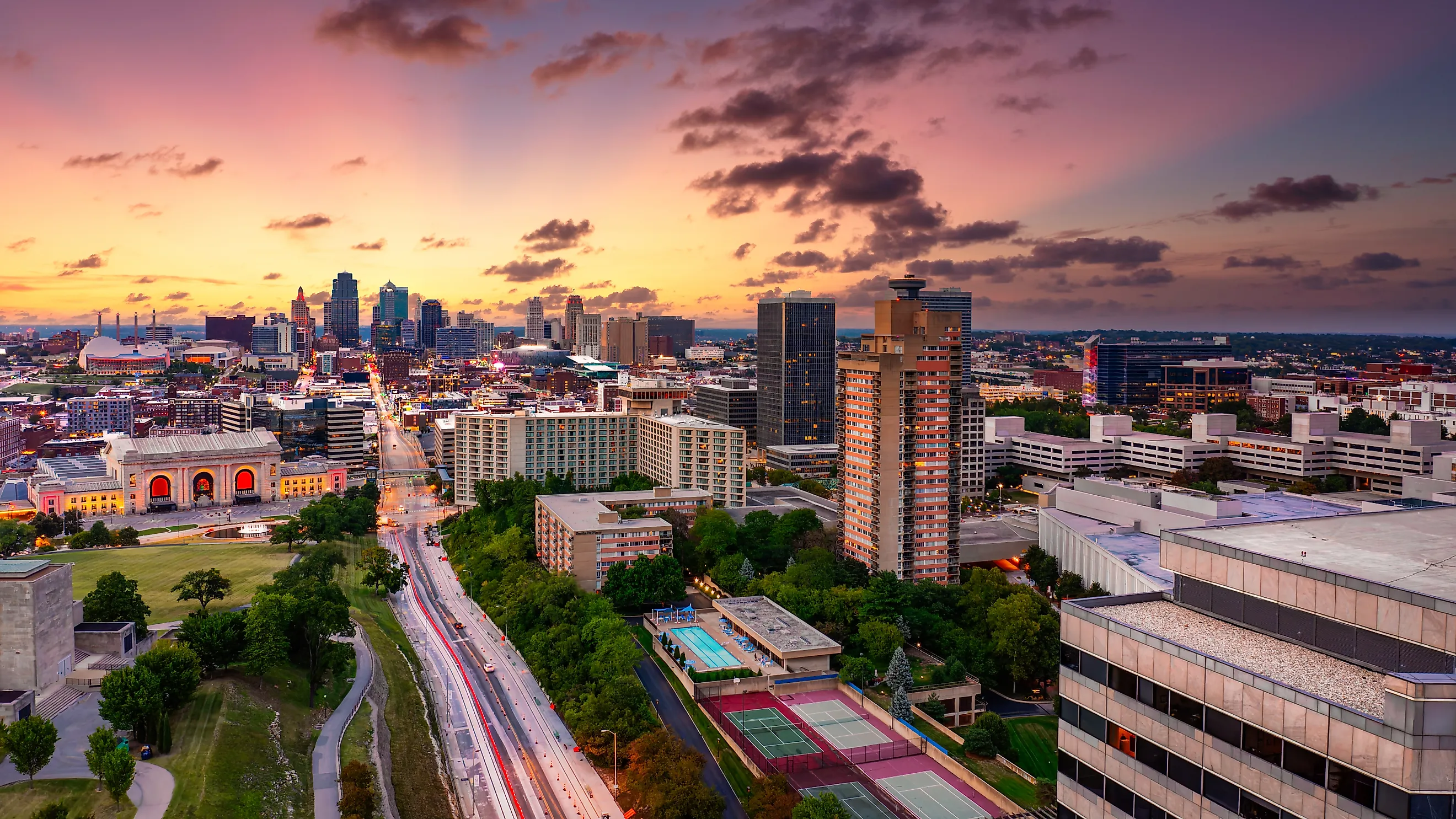
Kansas City added more residents by raw count than anywhere else in the state. The city grew to 521,220 residents in 2025 from 508,012 in 2020, a 2.6% rise that works out to more than 13,000 people. Its size gives it several growth engines at once, from downtown apartments to Northland subdivisions to airport-area development and logistics. The Northland matters most because it still has room for new housing that older neighborhoods lack, while downtown and the River Market keep pulling renters who want to live near work and transit. Kansas City grows because it offers several versions of city and suburban life inside one set of limits.
Where Missouri's Growth Is Heading
Missouri's growth is concentrating around a few regional engines instead of spreading evenly. St. Charles County keeps absorbing the westward move out of St. Louis, while the Kansas City metro, Columbia, and the Springfield suburbs gain through jobs, schools, and housing supply. The strain will show first in roads, school capacity, and the demand for local services in places like Republic, Nixa, Wentzville, Lake Saint Louis, and Lee's Summit. The next few years will favor the towns that can add homes near jobs without turning every commute into a bottleneck.