8 Wales Towns With Unforgettable Main Streets
Eight Welsh towns make their main streets the whole reason to visit. Wales packs castles, slate country and book shops into walkable centers you can cross in minutes. Portmeirion looks like a stray piece of the Italian Riviera dropped onto the Gwynedd coast. Conwy wraps its medieval streets inside town walls that still carry 21 towers. Blaenau Ffestiniog sits under grey slate tips that once roofed half the world. Here are eight towns in Wales where the main street is the main event.
Portmeirion

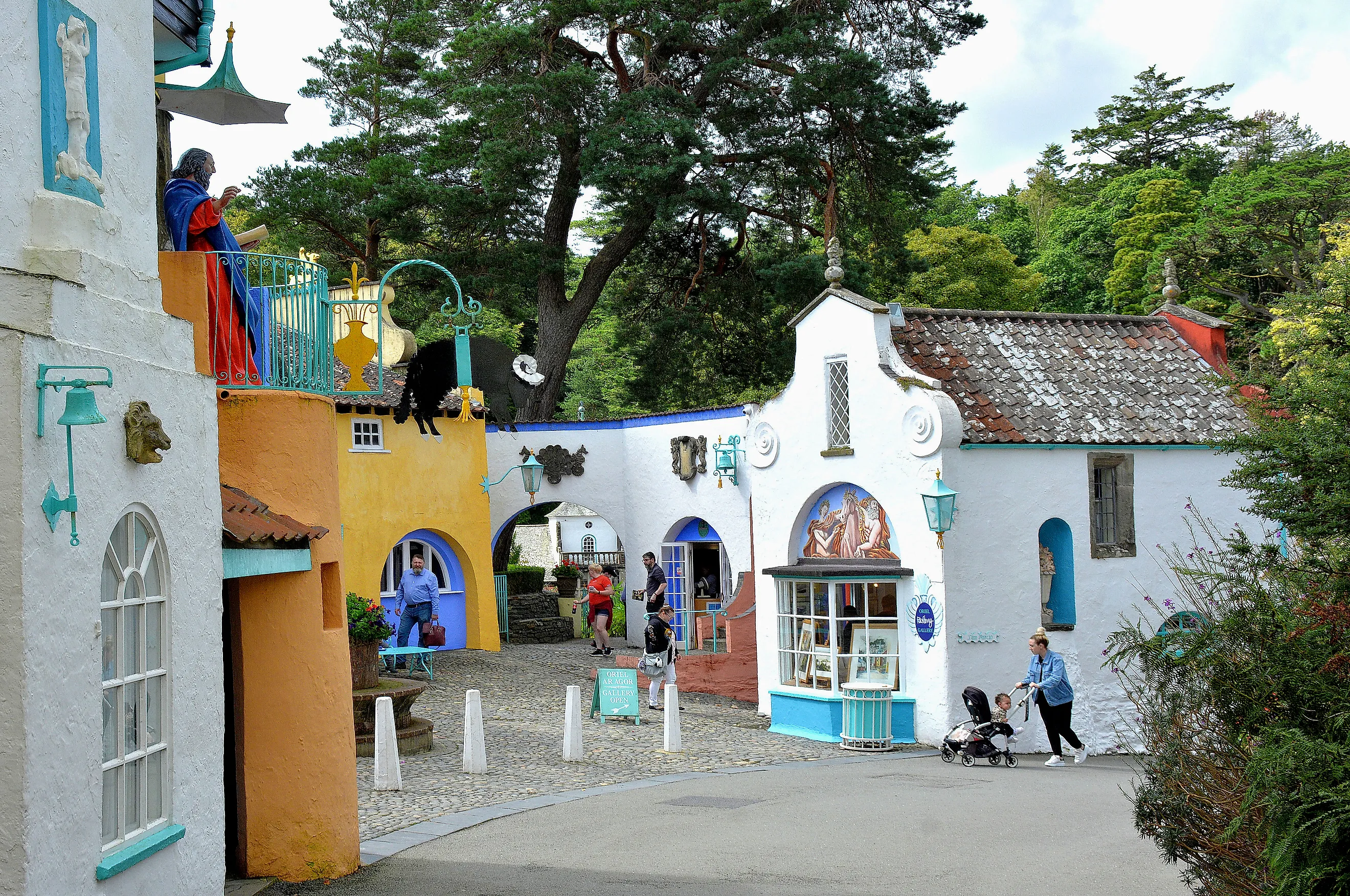
Located by the sea in North Wales, Portmeirion is a tourist village that looks like it got lost on the way to Italy. Clough Williams-Ellis developed it between 1925 and 1973, drawing on Mediterranean architecture, and the village is now popular enough that visitors pay an admission fee to enter. It is generally open seven days a week, with winter hours of 9:30 a.m. to 5:30 p.m. and main-season hours of 9:30 a.m. to 6:30 p.m. Visitors should check the official site for date-specific closures or changes.
Portmeirion's Central Piazza, effectively its main street, is a turret-lined space filled with cupolas, spires, and colorful buildings. Trees and shrubs frame the view, while a fountain sits at its center. Steps lead down toward the River Dwyryd and its estuary, where the outlook takes in blue-green hills and sandy beaches.
Blaenau Ffestiniog

This striking town sits high in the mountains, surrounded by craggy peaks and vast mounds of slate that give Blaenau Ffestiniog its otherworldly appearance. Church Street, the town's main street, features understated period houses set against a backdrop of rugged mountains and blue-tinged slate spoil heaps. The effect is bleak, cold, and yet mesmerizing.
Slate mining was a major industry in Wales during the 1800s, and at its peak Blaenau Ffestiniog was home to nearly 12,000 people, many of them native Welsh speakers. Welsh remains a common first language here today, with more than three-quarters of residents able to speak it. Visitors will still hear Welsh spoken in shops, cafes, and on the streets.
Llangollen

Llangollen is a small riverside town with a history dating back to the seventh century. Castle Street, the town's historic main street, is lined with period buildings near the River Dee and the Grade I-listed Llangollen Bridge, whose present structure probably dates from the 16th century. Further afield lie the ruins of the medieval Valle Crucis Abbey and the UNESCO-listed Pontcysyllte Aqueduct and Canal World Heritage Site. The rolling patchwork hills around the town complete the setting.
The town center is home to a variety of independently owned businesses, including Books Llangollen. Llangollen Country Market runs at the Memorial Hall on Market Street on the second and last Friday of the month between March and Christmas, offering crafts, baked goods, produce, and other local items. Nearby, the Llangollen Railway offers scenic train journeys through the surrounding Area of Outstanding Natural Beauty.
Conwy

Conwy, in North Wales, is a medieval town dominated by the 13th-century Castell Conwy, part of a UNESCO World Heritage Site. The castle has eight towers. Conwy's town walls have 21 towers and offer panoramic views over the town, the surrounding countryside, and the River Conwy. High Street has an old-fashioned atmosphere and sits within the town's three-quarter-mile circuit of walls, among the best-preserved medieval town walls in Europe. Visitors can walk along sections of the walls for wide views of the town and castle, with the mountains of Snowdonia forming a dramatic backdrop.
Plas Mawr, on the High Street, is one of the best-preserved Elizabethan houses in the United Kingdom. Here, visitors can explore the kitchen, bedrooms, and great hall while learning how people lived during the 16th century. Just a short stroll away is the Smallest House in Britain, on the route toward the riverfront.
Aberaeron

Located in Mid Wales, Aberaeron is a seaside market town with a pebbled beach and colorful houses that, according to local legend, sailors painted in different colors so they could recognize their homes when returning to shore. The town was carefully planned in the early 1800s around its harbor and main square, creating one of the most colorful streetscapes in Wales. Rows of houses painted in bright shades of purple, blue, red, green, and pink surround the waterfront and Alban Square, making the town instantly recognizable. Its distinctive appearance was once judged notable enough to feature on a set of postage stamps.
Monmouth

Near the border between England and Wales, Monmouth sits where the River Monnow meets the River Wye, which gives the town its name. The area holds evidence of prehistoric activity and Roman occupation, while Monmouth Castle dates to the 11th century.
At the heart of the town is Monnow Street, a roughly 500-yard main shopping street lined with high street stores, independent shops, cafes, and restaurants. The spire of St Mary's Priory Church towers above. Nearby, the Bee Shop, just off Agincourt Square, sells honey, beeswax candles, natural cosmetics, gifts, and other bee-related products. Colorful bunting decorates the street during the summer months.
At the end of Monnow Street stands Monnow Bridge, a three-arched stone crossing built in the 13th century. With its gate tower still standing on the bridge, it is the only remaining medieval fortified river bridge of its kind in Britain. Visitors can also take a tour of the bridge's gatehouse. Just off Monnow Street stand the ruins of Monmouth Castle, the birthplace of Henry V.
Ruthin

Located in the Vale of Clwyd, Ruthin is a medieval town with a history closely tied to Ruthin Castle, which was begun in 1277 and is now part of an upmarket hotel. At the heart of the town lies St. Peter's Square, a historic center perched on a hill alongside the castle. The square and its neighboring streets are lined with black-and-white timber-framed medieval buildings, and the surrounding patchwork of green hills provides a quaint backdrop.
St. Peter's Square is noted for its concentration of listed buildings, including the black-and-white timber Old Courthouse, begun in 1401, the Grade I-listed St Peter's Church, and the former Myddelton Arms, also known as Seven Eyes for its distinctive row of windows. Each year, the Ruthin Festival brings crowds to the square for the Top of the Town two-stage event, filling this historic heart of the town with music and celebration.
Hay-On-Wye

Hay-on-Wye sits near the Welsh-English border in Powys, Mid Wales. Despite its tiny size, it is known as the "World's First Book Town." It all started in the early 1960s, when book enthusiast Richard Booth opened the town's first bookshop and sparked a trend that transformed the community. Today, Hay-on-Wye is home to around 20 independent bookstores spread across Lion Street and Castle Street, which together form the heart of the town.
Notable shops include Murder & Mayhem, a store dedicated to crime and horror fiction, while the Honesty Bookshop consists of open-air bookshelves set against the backdrop of Hay Castle. Visitors simply pop money into the honesty box when taking a book. Every year, Hay-on-Wye also hosts the Hay Festival, where leading thinkers and writers gather to discuss literature, science, politics, and the arts.
Eight Towns, Eight Main Streets
What links these eight towns is how much they invest in a single street. Aberaeron paints its waterfront terraces in candy colors, Hay-on-Wye lines its lanes with bookshops, and Conwy hems its High Street inside medieval walls. Each main street carries the character of its town in concentrated form, which is why a slow walk down one tells you more than any landmark checklist. Pick the one whose story appeals most and start there.