10 Best Towns In Croatia For Retirees
Retiring to Croatia can look like sipping morning coffee in Samobor’s scenic central square, or checking out Špancirfest, a ten-day festival of parades, concerts, and acrobatics in Varaždin. This list highlights ten standout locations across the continental north, the Kvarner Gulf, and the Dalmatian coast. Although vast in offerings, what each town has in common is its livability, reasonable access to healthcare, and housing that holds its own against the national average. Whether you are a Croatian thinking about where to spend your next chapter, or a foreign expat who has decided this country deserves more than a summer visit, this list is a good place to start.
Varaždin, Central Croatia

Varaždin is arguably the country's most elegant town, which sits near the Slovenian border on the quiet banks of the Drava River. A little over an hour from Zagreb, Varaždin was the country’s former 18th-century capital, and its streets still echo that today with its Baroque architecture. It also features a walkable, well-preserved historic center. At its heart lies the Old Town fortress, which was built between the 14th and 19th centuries and is home to some of the Varaždin Town Museum’s exhibits, though further exhibits can be found at the Sermage, Hercer and Patačić palaces.
Varaždin prioritizes quality of life for its residents. In April 2026, the county became Croatia’s first member of the Global Network for Age-Friendly Cities and Communities, reflecting its commitment to accessibility and inclusivity. Moreover, Varaždin is home to the Varaždin General Hospital, one of the largest and most modern medical facilities in the country.
There is also no shortage of events here. In late August is Špancirfest, a ten-day festival of parades, concerts, and acrobatics. September brings the Trash Film Festival, a celebration of low-budget action and horror cinema, as well as the Baroque Music Evenings, where you can catch classical performances inside castles and candlelit chapels.
Here, housing is more affordable than the national average, which sits at approximately €366/sq ft for apartments and €304/sq ft for houses. Varaždin sits at a reasonable €298/sq ft for apartments and €137/sq ft for houses.
Samobor, Central Croatia

Samobor is located just 30 minutes west of the nation’s capital. This quaint inland town offers a cozy, scenic small-town feel while still benefiting from close access to Zagreb's urban amenities and large hospitals. Samobor also has buses that run directly to Črnomerec station or Zagreb’s main bus station, Autobusni kolodvor.
In the center of town is King Tomislav Square, a long open space lined with cafes and restaurants. It is a wonderful spot to enjoy a coffee and a piece of kremšnita, a nationally-loved, Samobor-born cream cake. From there, a relatively easy 30-minute walk leads to the Samobor Castle ruins, situated atop Tepec Hill and providing a sublime view over the town. Moving here also allows you to stretch your retirement savings. While you get the benefit of being in Zagreb’s backyard, houses in Samobor average about €147/sq ft.
Beyond the ruins are the Žumberak and Samobor Mountains, a 333 sq. km mountain system that connects the Alps to the karst caves and canyons of the Dinaric Range. Deemed a protected area in 1999, this park is the region’s most popular hiking destination, with many trails fairly easy and well-marked. The trails range from light riverside walks through the waterfall-lined Slapnica Valley to longer climbs up to Japetić peak, which is also a popular paragliding spot. Nine mountain huts are located across the park if you need a rest stop.
Rovinj, Istria

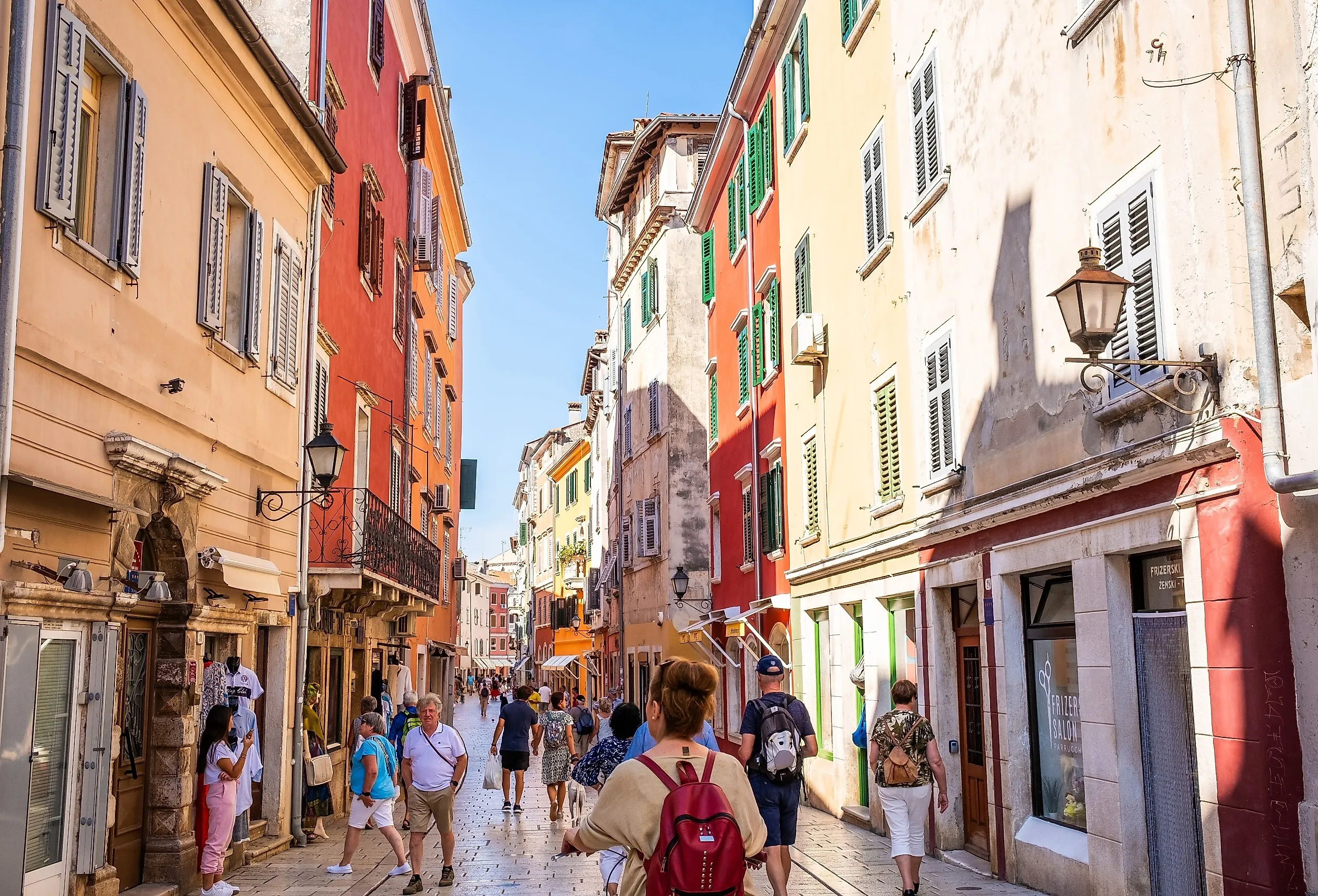
Sitting on the Adriatic coast, Rovinj looks like it was plucked straight out of Italy, with limestone streets polished smooth and a car-free Old Town that feels like a quieter version of Venice. Istria was under Venetian rule for over 500 years, and again during the interwar period. That influence is visible even today, with street signs written in both Croatian and Italian, and the Venetian-style bell tower of St. Euphemia Church rising above everything, climbable for the best view in town.
Old Town is a labyrinth of narrow, winding alleys and Gothic and Renaissance architecture with small Venetian details, such as the winged lion of St. Mark carved into doorways and stone arches. One of the most famous paths is Grisia Street, a cascading stone staircase lined with galleries and studios. It is also the site of an annual open-air art exhibition, held every August and drawing artists from all over.
About a 20-minute walk from Old Town along the harbour promenade is Punta Corrente Forest Park, a 128-acre seaside woodland, rich in botanical species, with flat walking and cycling paths that hug the shoreline.
Homes here cost more, averaging €389/sq ft. However, for many it is a justifiable premium given this town’s coastal beauty and its proximity to places like the Italian Dolomites, Slovenia's fairytale capital, Ljubljana, and the Austrian Alps, making it a great pick for retirees or expats looking to hop around.
Opatija, Kvarner Gulf

From Rovinj, we head east across the Istrian peninsula to Opatija. Known as the “Pearl of the Adriatic,” this grand spa town was declared a climatic health resort for aristocrats in the 1880s. Today, it remains a premier wellness destination, home to Thalassotherapia Opatija, a specialist rehabilitation hospital for heart, lung, and rheumatic conditions, as well as numerous facilities that use the region’s natural resources, such as saltwater and mud, in therapeutic treatments. One of the largest hospitals in Croatia, the Clinical Hospital Center Rijeka, is also just a 25-minute drive away.
Further enhancing the town's relaxing atmosphere, Opatija is filled with pastel-coloured Habsburg-era villas, manicured gardens and parks, and the Lungomare, a 7.4-mile promenade that snakes along the coastline, connecting Volosko and Lovran. One of the nation’s most celebrated parks, Angiolina Park showcases many different plants from around the world, including the town’s symbolic camellia. The park surrounds the 19th-century Villa Angiolina, now home to the Croatian Museum of Tourism. Further up from the sea, Margarita Park offers a quieter, oak-shaded escape.
Less than a 30-minute drive from town, Učka Nature Park is 62 square miles of mountain peaks and forests. At the top of the highest summit, Vojak, is a stone lookout tower, accessible via a hike or by car. Homes here sit at a similar price point to Rovinj, averaging around €388/sq ft, which really reflects its status as a prime Adriatic location.
Mali Lošinj, Kvarner Gulf (Lošinj Island)

South along the Istrian Peninsula, and a ferry to Cres, just across, lies Lošinj. The island’s main town, Mali Lošinj, sits on a deep, natural harbor with a broad promenade that curves around it and widens at the main square, where many concerts, markets, and festivals take place.
Known as the "Island of Vitality," wellness is central to life here. Aleppo pine forests cover over 70 percent of the island, creating exceptionally clean air. They also get more than 200 days of sunshine a year and have over 1,100 plant species, many with medicinal properties. The microclimate and sea aerosols have proven respiratory benefits, and several facilities offer therapeutic programs. The Aura Botanical Spa Garden has saltwater pools, saunas, treatment rooms, and quiet garden areas. The Garden of Fine Scents is a small botanical space with footpaths that wind around over 250 different therapeutic and aromatic plants.
There is also plenty to do beyond relaxing. Čikat Forest Park offers a variety of flat walking and cycling paths through dense woods. Above it sits Providenca, one of the island's best sunset viewpoints. If you have the grandkids visiting, you can stop at the Sea Turtle Protection Centre, which rehabilitates injured turtles, or head to Aquapark Čikat to enjoy its seawater pools and waterslides. Mali Lošinj remains incredibly affordable, given the island’s climate and scenery, with average housing costs around €253/sq ft.
Šibenik, Dalmatia

Situated south of Split, Šibenik, the oldest native Croatian city on the Adriatic, dates back to 1066 and predates the Roman and Venetian influences that define many towns along this coast.
One of the country’s most interesting buildings dominates this town’s skyline: the Cathedral of St. James. This UNESCO World Heritage site was built over more than 100 years using limestone from a nearby quarry and marble from the Island of Brač. No timber was used in the construction; instead, stone slabs were fitted into grooves to create the entire structure.
Another standout landmark is St. Michael’s Fortress, located on a steep hill above the town center. This massive stone structure served as a key lookout point for centuries. Completely revitalized in 2014, it is now an open-air stage, hosting summer concerts, local theater productions, and movie nights.
A more affordable coastal option, Šibenik has an average price point of around €323/sq ft for apartments and €304/sq ft for houses. The town also sits conveniently between Zadar and Split airports, about an hour each way, with bus connections from the main station to both.For a bit of peace and tranquillity right in the middle of town, Roberto de Visiani's Park, built in the late 1800s, is a great place to take a break, home to a variety of Mediterranean flora. The park is particularly enchanting during Advent when it is adorned in lights for the Šibenik Christmas Market.
Trogir, Dalmatia

Further down the coast is Trogir, a town packing thousands of years of history onto a tiny island squeezed between the mainland and Čiovo. Often called a "museum town", Trogir’s core is so remarkably preserved that the island was designated a UNESCO World Heritage site. Walking through its car-free, stone streets feels like stepping into another era.
The town's defining landmark is the Cathedral of St. Lawrence, a Romanesque-Gothic masterpiece built between the 13th and 17th centuries, celebrated for its portal by Master Radovan, an intricate stone doorway carved in 1240. On the western edge, Kamerlengo Castle is a 15th-century Venetian fortress with a stone courtyard repurposed into an open-air venue for theater, concerts, and festivals.
Trogir stands out for its practical logistics, too. It is less than 10 minutes from Split Airport and 30 minutes from KBC Split, the university hospital, and the Health Center of Trogir. Just west of Split is Marjan Forest Park with trails that pass a 16th-century cemetery, medieval churches, and cave dwellings once inhabited by Christian hermits, and if you are lucky, the park's resident donkeys. The highest point is Telegrin, a 178-metre peak reached by 314 stone steps, with views over Split, the Adriatic and the surrounding islands.
The average cost for a house is €445/sq ft, while apartments go for around €408/sq ft. This is relatively affordable given average costs in Split are €501/sq ft for a house and €568/sq ft for an apartment.
Makarska, Dalmatia

A little over an hour south of Split is Makarska. The Biokovo mountain range towers directly behind the town, shields the coast from harsh continental weather and gives Makarska noticeably warmer winters than the northern coast.
The town has more than three kilometers of beachfront, the main stretch being the two-km pebble Makarska Beach, with waters great for kayaking, paddleboarding, and jetskiing. A palm-lined promenade follows the coast, stretching from Ramova Beach to St. Peter's Forest Park, a quiet, pine-shaded nature reserve that feels worlds away from the busy beach strip.
Behind the beach, the old town clusters around Kacic Square, where St. Mark's baroque church watches over the daily morning market. A five-minute walk from the square is the historic Franciscan Monastery, which now houses a small museum, including a large, world-renowned collection of sea shells. Biokovo Nature Park begins directly behind the town. The most popular hike runs three hours from Makarska up to Vošac peak. Those who prefer not to hike can drive up to the Skywalk, a glass-floored platform that looks out over the Adriatic and the islands of Hvar, Brač, and Korčula, all served by regular boat connections from Makarska's harbor.
Come evening, retirees can visit the Makarska Observatory on Glavica Hill and participate in a guided stargazing session.
The town has its own community health center, and KBC Split is just over an hour away. Houses here average €319/sq ft and apartments €368, among the better values on this stretch of the Adriatic.
Korčula, Dalmatia (Korčula Island)

As the islands beckon once more, we head further south to Korčula. On the island’s eastern side is the car-free medieval Old Town, a fortified pocket of land surrounded by stone walls and towers. The streets are arranged in a unique herringbone pattern that allows summer breezes to circulate while shielding residents from harsh winter winds, keeping the center walkable all year.
In the middle of Old Town is the 15th-century St. Mark’s Cathedral, where climbing the 65 steps of its bell tower provides a fantastic view. Across the square is the Korčula Town Museum, housed in a 16th-century palace and providing a deeper look into local heritage.
The island is also known for its excellent, inexpensive wines, most notably Grk, a dry white wine grown in sandy soils. From Old Town, a short drive or a scenic bike ride brings you to the Lumbarda region, where you can enjoy tastings at Bire Winery, the area’s first organic winemaker, and Vitis Winery, which also produces liqueurs and olive oil.
For medical care, the Health Center of Korcula is on the edge of Old Town, providing comprehensive primary care. In 2024, Croatia’s first dedicated, civilian Helicopter Emergency Medical Service launched; operating 24/7 out of Split, it ensures islanders can bypass ferry schedules and reach advanced trauma care during major emergencies.
Finally, the housing market makes a very practical argument for settling here. Korčula is a more affordable entry point among the prominent Croatian islands, with houses averaging €413/sq ft.
Cavtat, Dalmatia

The final pick is at the southern end of the Dalmatian coast, 30 minutes from Dubrovnik. Cavtat began as the ancient Greek settlement of Epidaurus in the 6th century BC. When it was destroyed by invaders in the 7th century, refugees fled north and founded what became Dubrovnik. The site lay empty for centuries before being re-established in the Middle Ages.
Cavtat was rebuilt but remains small and unhurried, centered around the harbor. A lovely flat, paved promenade runs alongside the waterfront, looping around the Rat Peninsula, making it a great spot for regular morning walks. Directly across the harbor is the Sustjepan Peninsula, which has a rugged dirt trail around it. The walkway winds under dense pine trees with small side paths that lead down to smooth rock shelves and hidden coves, great for quiet swims in deep, clear water.
To see the town from above, follow the stone steps up from the harbor to the striking white Račić Mausoleum, which sits on a hilltop cemetery offering incredible views over the bay. Back down in the Old Town, the birthplace of painter Vlaho Bukovac is now a museum, showcasing his original works alongside rotating contemporary exhibitions.
Just 10 minutes from Dubrovnik Airport, with the borders of Bosnia and Montenegro both a short drive away, Cavtat serves as a great base for frequent travel. It also offers a distinct financial advantage over Dubrovnik. Homes in the greater Konavle region remain accessible, averaging around €348/sq ft.
Your Next Chapter Starts Here
Ten towns across four regions with housing prices that range from as low as €137/sq ft in Croatia's forgotten baroque capital, Varaždin, to €445 in the museum town of Trogir. The right answer depends on what retirement looks like to you. If your idea of retirement involves saltwater pools, pine-scented air, and regular spa appointments, Opatija and Mali Lošinj have been perfecting that lifestyle since the 19th century. If you want the rhythms of a small town with annual events you look forward to year after year, walking routes you could do in your sleep, a daily slice of kremšnita with your morning coffee, all without giving up close access to city-level healthcare, places like Samobor are hard to beat. If the coast is non-negotiable, the list offers several versions, from Rovinj's Venetian alleyways to Makarska's pebble beaches and mountain backdrop.