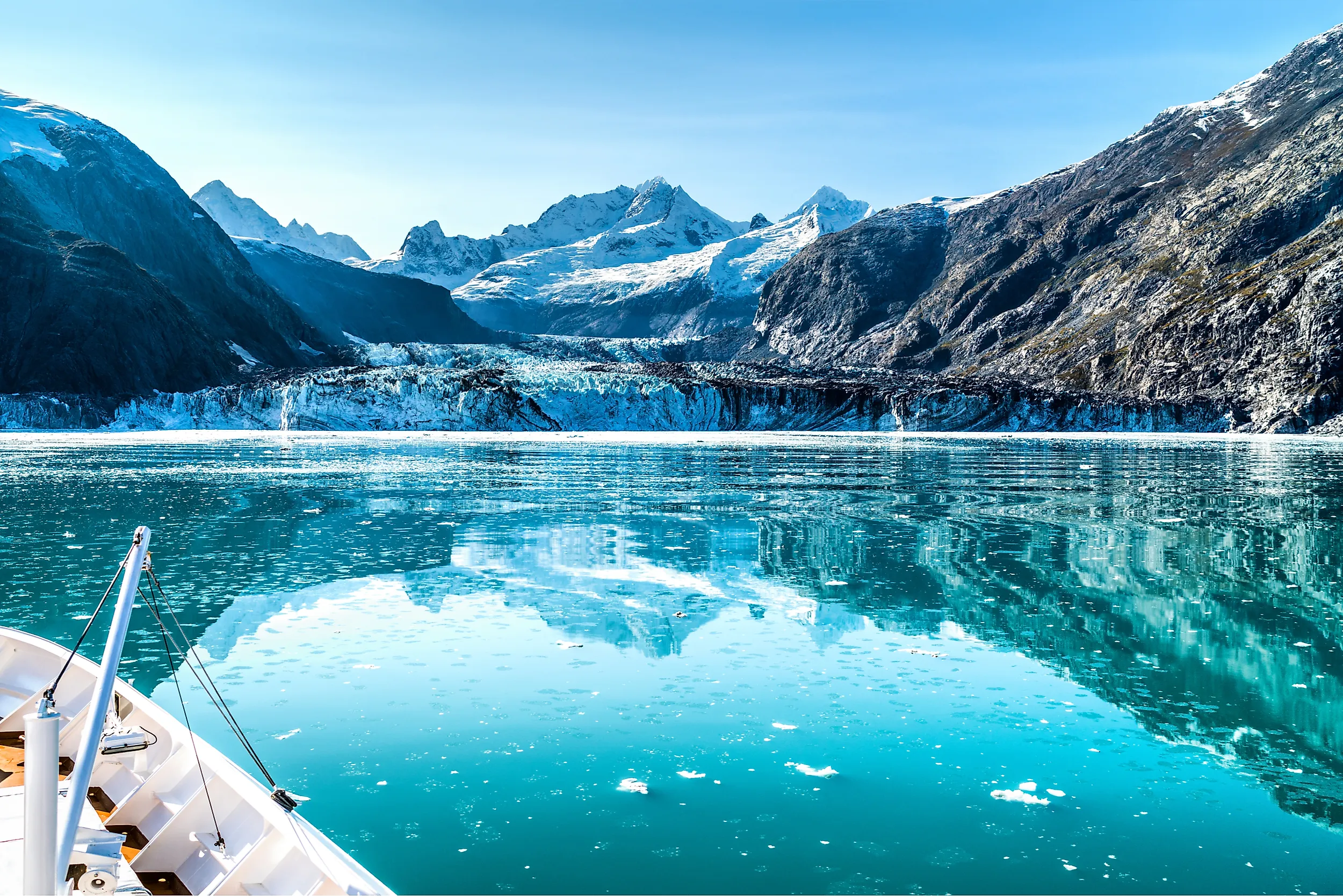
The National Park With The Most Glaciers
This looks like a softball question. The national park with the most glaciers is obviously the one called Glacier National Park, right? It says so on the sign. It is right there in the name. Case closed, everybody go home.
Except no. Not even close. The park named after glaciers is one of the worst places in the country to actually see a healthy one, and the true record holder is a place most Americans could not find on a map if you spotted them the first three letters. The real answer is a genuinely great piece of trivia, so let us walk through it, starting with the biggest fraud in the national park system.
First, Let's Deal With the Impostor

Montana's Glacier National Park has a naming problem that is getting more awkward every year. Around 1850, the park held roughly 150 glaciers. Today it has about 25 that are still large enough to count as active, and scientists expect even those to keep shrinking, with some estimates suggesting the park could lose its last functional glaciers within a couple of decades. So the park is essentially a beautiful mountain landscape wearing a name it can no longer back up, like a guy called "Tiny" who used to play offensive line and is now mostly retired. The scenery is spectacular. The glacier count is not.
If you drove to Glacier National Park specifically to see glaciers, you would be forgiven for feeling a little cheated. And you would be nowhere near the actual winner.
Wait, What Even Counts as a Glacier?
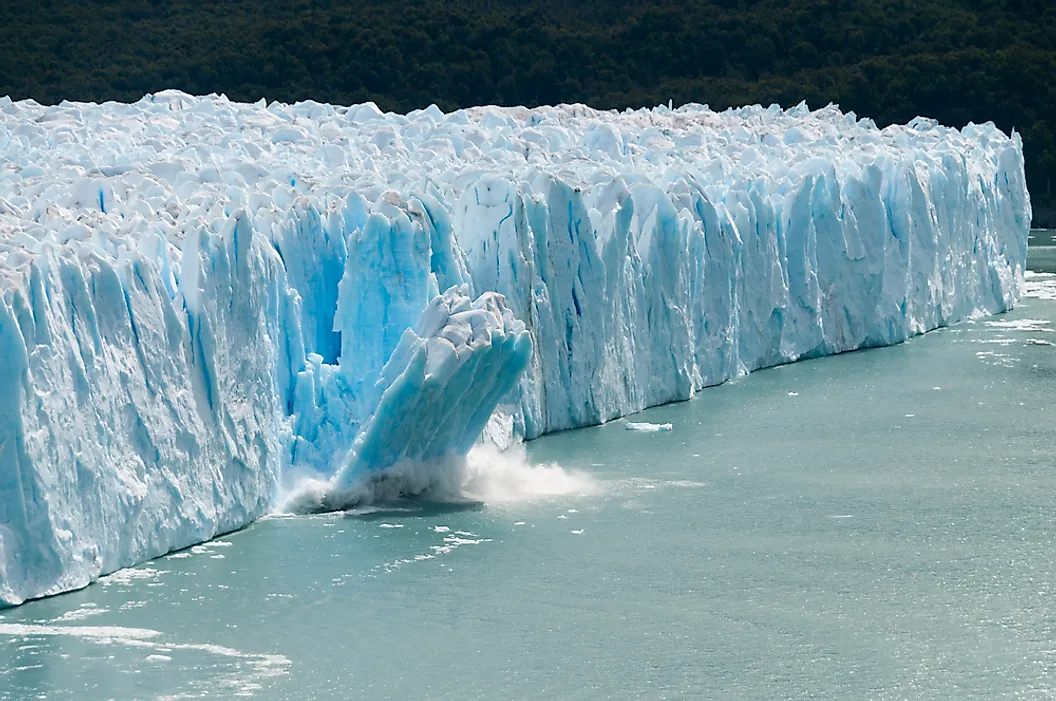
Before we crown anyone, we need a rule, because "glacier" is not just a fancy word for a big pile of snow. A glacier is a mass of ice thick and heavy enough to move under its own weight, slowly grinding downhill like extremely patient toothpaste. A patch of snow that sits there all summer and does not budge is just a snowfield, and it does not make the list. Most scientists use a rough size cutoff of about 25 acres, on the logic that below that, the ice usually is not heavy enough to flow.
This matters, because it is why glacier counts are always a little squishy. Some are named, most are not, and every survey draws the line in a slightly different spot. So when you see a park's glacier total, read it as "give or take a few dozen." With that settled, on to the contenders.
The Lower 48 Champion Is a Park You've Never Heard Of

Here is the first plot twist. If you stick to the Lower 48, the glacier crown does not go to Glacier, or Yellowstone, or any park you would name in a hurry. It goes to North Cascades National Park in Washington, which holds more than 300 glaciers. That is roughly a third of every glacier in the contiguous United States, all packed into one jagged, roadless tangle of mountains a couple of hours from Seattle.
And almost nobody goes. North Cascades is regularly one of the least-visited national parks in the Lower 48, pulling somewhere in the tens of thousands of visitors in a typical year, while parks a fraction as icy draw millions. It does not even charge an entrance fee. So the single most glaciated park in the contiguous country is also one of the emptiest, which feels like a scheduling error somewhere in the universe.
And It Turns the Water Electric Blue

All those glaciers do more than sit around looking cold. As the ice grinds against bedrock, it produces a fine powder called glacial flour, which washes downstream and hangs suspended in the water. When sunlight hits it, the flour scatters the light and turns lakes an almost cartoonish turquoise. The most famous example is Diablo Lake, whose color looks so artificial that first-time visitors routinely assume it has been photoshopped. It has not. That is just what happens when you let 300 glaciers slowly sand down a mountain range and pour the results into a reservoir. The effect peaks in mid to late summer, when the melt runs heaviest.
But the Actual Winner Lives in Alaska

Now for the real answer. If we count every national park in the country, North Cascades and its 300 glaciers get absolutely steamrolled by Alaska. The champion is Wrangell-St. Elias National Park and Preserve, which contains a jaw-dropping 3,121 glaciers at last official count. That is not a typo, and it is not close to a fair fight. Wrangell-St. Elias holds roughly 60 percent of all the glacier cover in the entire national park system, and about a third of the park itself is buried under ice.
Part of the reason is that the park is preposterously large. At 13.2 million acres it is bigger than Switzerland, bigger than each of the nine smallest US states, and roughly the size of six Yellowstones stacked on top of each other. Almost nobody visits, because getting in means either a bush plane or a long grind down a gravel road to the tiny outpost of McCarthy. It is the most glacier-rich park in America precisely because it is the kind of place humans have mostly agreed to leave alone.
Glaciers So Big They Have Their Own Zip Code

The scale inside Wrangell-St. Elias is hard to hold in your head. The park is topped by the Bagley Icefield, the largest non-polar icefield in North America, a slab of ice so vast that the glaciers pouring off it are just its runoff. Some of those glaciers, like the Root and the Kennicott, are stable and accessible enough that guides will strap crampons to your boots and let you go for a walk on them, which is about as close as most people get to hiking on another planet.

This is the part that separates a real glacier park from a pretender. In Glacier National Park you squint at distant ice through binoculars and feel wistful. In Wrangell-St. Elias you can stand on a glacier the size of a city and still only be looking at a small corner of the ice on offer.
Meet the Record-Breakers
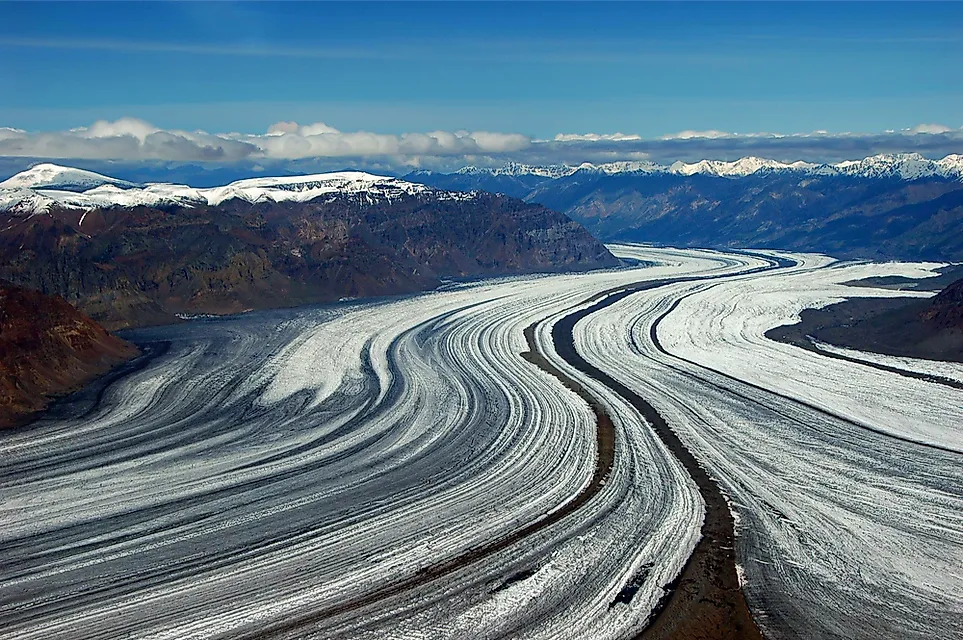
Wrangell-St. Elias does not just win on quantity. It is also home to some of the biggest individual glaciers on Earth, three of which rank among the ten largest anywhere outside the Greenland and Antarctic ice sheets. The Bering Glacier is the largest in North America. The Malaspina spills out of the mountains and spreads across the coastal plain into a single fan of ice larger than the state of Rhode Island. And the Hubbard Glacier is the longest tidewater glacier on the continent, dumping icebergs straight into the sea along a face miles wide.

Here is the kicker that drives climate scientists slightly up the wall: while glaciers almost everywhere are shrinking, the Hubbard has actually been advancing. Tidewater glaciers run on their own strange cycle of growth and retreat that does not track neatly with the climate, so this one has spent recent decades bucking the trend and getting bigger. It is the exception that proves how weird ice can be.
The Honorable Mentions

A few other parks deserve a nod before we hand out the trophy. Mount Rainier, also in Washington, is a single volcano wearing about two dozen major glaciers at once, making it one of the most heavily iced peaks in the Lower 48 all by itself. Up in Alaska, Glacier Bay, Kenai Fjords, and Denali all carry serious ice, and Gates of the Arctic has a sneaky 178 glaciers, though they are all small enough to fit the "technically counts" category. None of them come remotely close to touching Wrangell-St. Elias, but they are proof that the country still has a lot of ice, at least for now.
So, Who Actually Wins?
The honest answer depends on how you ask the question, which is exactly why it makes such good trivia. Counting every park in the country, Wrangell-St. Elias wins in a landslide with more than 3,000 glaciers, and it is not a debate. If you limit yourself to the Lower 48, the winner is quiet, empty, gorgeous North Cascades and its 300-plus. And the one park that actually has "glacier" in its name finishes so far down the list that it should probably think about a rebrand before the last of its namesakes melts away. The glaciers are shrinking almost everywhere, so the exact numbers will keep sliding for years to come. But if you want to stand somewhere and be truly outnumbered by ice, point yourself at Alaska. The name on the map may say otherwise, but the glaciers know where they live.