Where Young Families Are Putting Down Roots In Utah
You can usually tell where the young families are going before the census confirms it. A school district buys land. A grocery store opens next to three subdivisions that were dirt a year ago. The number of crossing guards goes up. Utah added about 44,000 residents between mid-2024 and mid-2025, and a handful of communities took the lion's share, most of them full of parents in their late twenties, thirties, and early forties. What ties these places together is timing. The classrooms, ballfields, and everyday errands are arriving at the same moment the moving trucks are, and that is exactly what makes them work for a family with young kids.
Saratoga Springs

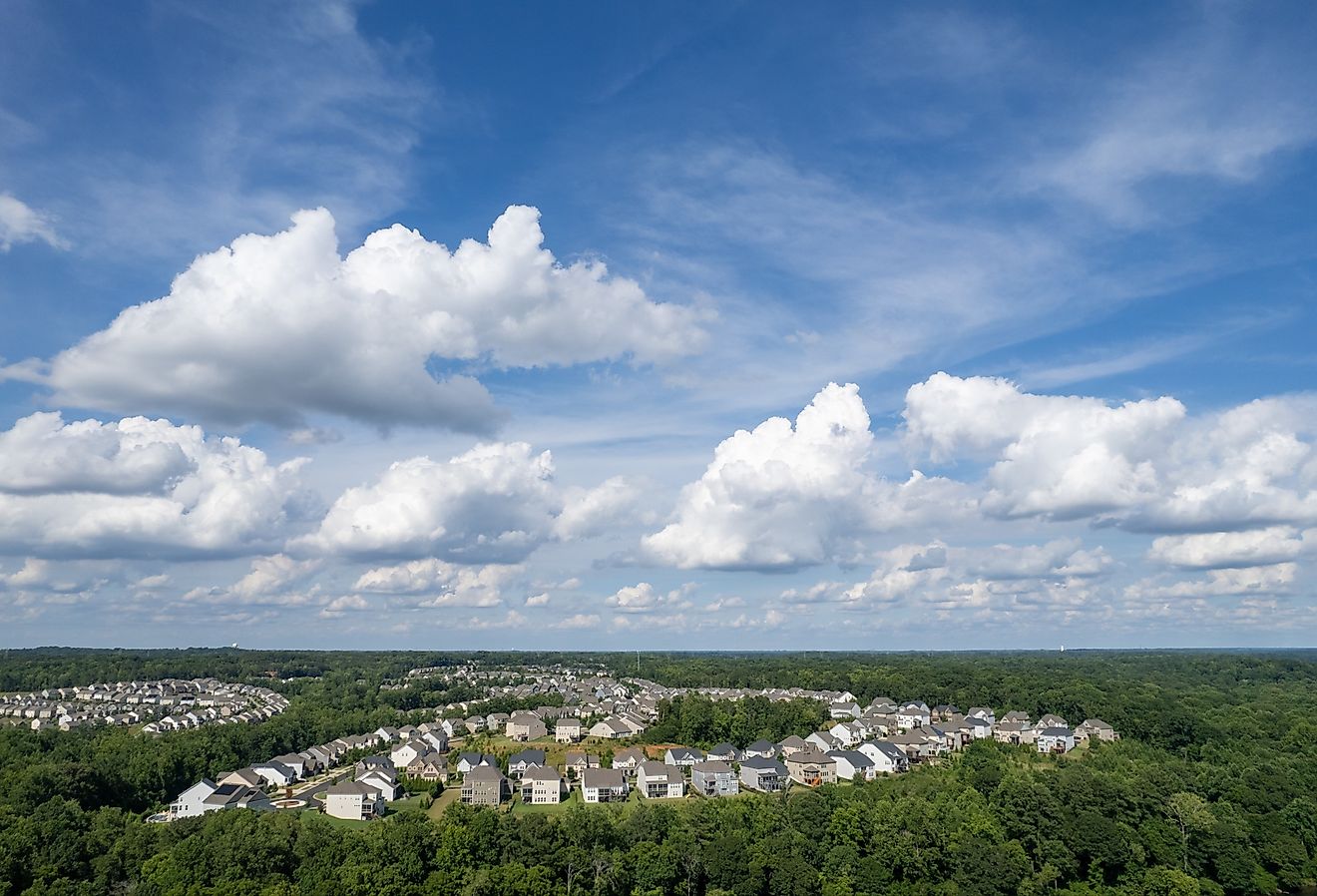
No city in Utah grew faster last year than Saratoga Springs. It added 4,682 residents between mid-2024 and mid-2025, an 8.4% jump that led the state in both raw numbers and rate, and pushed the population past 60,000. That is the kind of growth you can see from the road: new rooflines going up along Redwood Road, and neighborhoods like Beacon Pointe, Wildflower, and Meadows at North Lake filling in lot by lot.
The clearest sign of who is moving in is what the school district is building for them. In 2025, Alpine School District broke ground on a new high school near the Mountain View Corridor, set to open in 2028 and take pressure off the Westlake and Cedar Valley boundaries. Families here get Utah Lake at their doorstep, along with a growing web of trails and parks, but the reason people plant themselves in Saratoga Springs is simpler than scenery. They are betting the town will keep pace with their kids, and so far it has.
Eagle Mountain

Right next door, Eagle Mountain came in second in the state, adding 4,169 people for 6.8% growth and reaching about 65,000 residents. Together, the two neighbors now hold more than 125,000 people, most of them young and raising children, on land that was open range not long ago.
Eagle Mountain's growth comes with an unusual twist: the tech industry followed the families out here. Meta is in the middle of a two-million-square-foot data center expansion, and Google and QTS have both secured land nearby, drawn by the open space and Utah's data center incentives. Those campuses help pay for the roads and pipes a fast-growing city needs. On the family side, the schools are catching up in a big way. Starting in July 2027, Eagle Mountain and its neighbors will break off into the brand-new Lake Mountain School District, created after voters approved leaving Alpine, a direct response to parents who wanted local control over how fast classrooms get built. Day to day, the Town Center Marketplace, anchored by a Macey's grocery, keeps the errands close, so a family is not driving 20 minutes for milk.
Herriman

Herriman offers a preview of where a place like Saratoga Springs is headed. On the southwest edge of Salt Lake County, it has already made the leap from bedroom community to full-fledged family hub, climbing to roughly 63,000 residents from about 55,000 in 2020. The growth is not slowing so much as maturing.
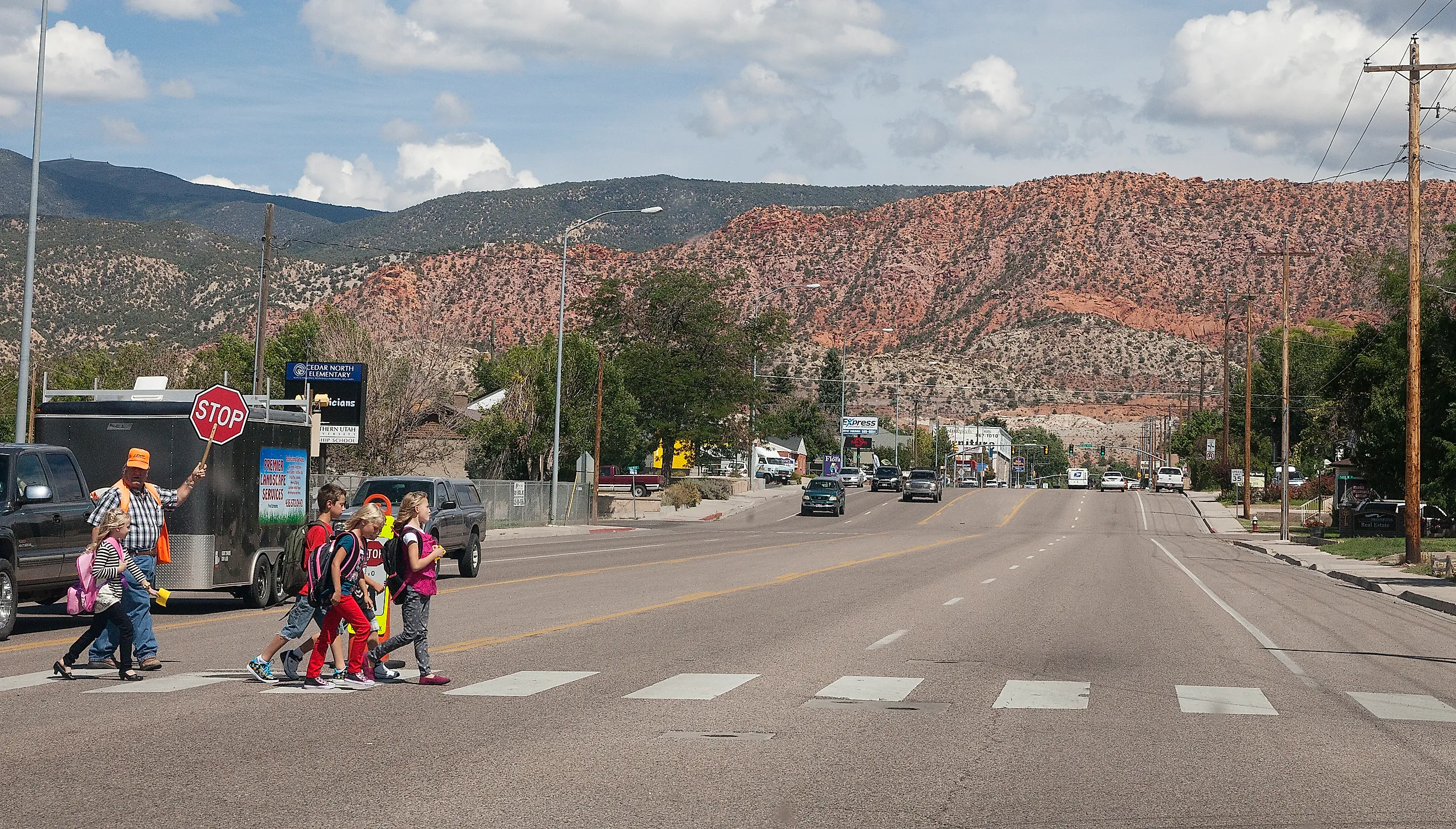
Here is the detail that says the most about daily life: the city went from 36 crossing guards in 2018 to 54 in 2025. That is nearly one new guard every year, each one standing at a corner where more kids now cross to school. Herriman runs 18 schools, eight of them opened in the past decade, and the housing is still climbing the southern hillside through developments like Rosecrest, Panorama, and South Hills. Traffic is the honest tradeoff, and locals will tell you so. What keeps families coming anyway is the everyday infrastructure of childhood already being in place: the schools, the parks, the youth leagues, the newer streets where kids ride bikes.
Spanish Fork

Spanish Fork wears its young-family character in its numbers. The median age sits around 28, and the city's own planners describe their core residents as young couples with children in starter homes, living the kind of schedule that revolves around school pickup and weekend games. This is a town built for exactly that life.
It added 1,777 residents last year, sixth in the state for raw growth, and no single thing explains why. It is the combination: a spot where Interstate 15 meets U.S. Highway 6, a steady stream of new home permits, and jobs at employers like Young Living, Mountain Country Foods, and Intermountain Healthcare. Canyon Creek has grown into one of Utah's busier retail corners, with a Costco, Lowe's, Walmart, and a Cinemark, which means a family can knock out the shopping and a movie night without leaving town. That convenience is quietly one of the biggest draws for parents whose free hours are already spoken for.
West Haven

Most of Utah's growth headlines come from Utah County, so West Haven is easy to overlook. It should not be. Out in western Weber County, where farmers have been selling parcels and open fields keep turning into cul-de-sacs, West Haven has been near the top of the state's percentage-growth list for years running, one of the fastest-growing larger cities in Utah.
The schools tell the story again. West Field High opened for the 2024-2025 year in nearby Taylor as Weber School District's newest, built to absorb a wave of kids from exactly this area. Within West Haven itself, families have two elementary schools, a junior high, a charter school, and a private option through eighth grade, with everyday shopping strung along 1900 West and Midland Drive. The appeal is a familiar northern-Utah trade: newer houses and newer classrooms out where the land is still affordable, with Ogden's larger job market a short drive away.
Tooele

Over the Oquirrh Mountains from Salt Lake City, Tooele draws the families who want more square footage and a smaller price tag without cutting the cord to the valley's jobs. The median age is under 30, more than 80% of homes are owner-occupied, and the population is now above 41,000. Those are the fingerprints of a working, kid-raising town.
The bigger story is spreading across Tooele Valley. In nearby Erda, a developer has started infrastructure on Echo, a master-planned community of 1,260 homes along State Route 36, with the first houses expected in 2026 and a mix of single-family homes and townhomes aimed squarely at first-time and move-up buyers. That road puts downtown Tooele and the Salt Lake Valley both within reach, and employers like US Magnesium, the Tooele School District, and Mountain West Medical Center give parents the option to work close to home instead of commuting every day. Room to grow, without giving up the paycheck, is the whole pitch.
Cedar City

Cedar City breaks the pattern in the best way: it hands young families a college town instead of a commuter suburb. Sitting at about 41,400 residents, the city projects it will reach roughly 47,000 within five years, and it says more than 17,500 homes are somewhere in its development pipeline. It is planning out loud for the families it expects.
The engine is Southern Utah University, with an enrollment that has reached an all-time high near 15,000, paired with Southwest Technical College turning out trained workers for in-demand trades. That combination does double duty for a family: it anchors local jobs and puts real education options within a few minutes' drive when the kids are older. Cedar City is also the place nearly everyone in Iron County comes to for shopping, healthcare, and work, so parents get the services of a regional hub with mountain trails and red-rock country close by, and none of the sprawl of Utah's big metros.
St. George

St. George has spent decades known as a retirement town, and that reputation is now half the picture. It added 3,303 residents last year, tying Salt Lake City for the third-largest gain in the state, and a growing share of those newcomers are young families chasing jobs in warehousing, transportation, tourism, and the local universities.
The proof is in the enrollment: Washington County School District counts more than 36,000 students, and its building list reads like a city bracing for more of them, with a new elementary in the Desert Canyons area, a rebuilt Snow Canyon Middle School, and another elementary on the way. Add Utah Tech University, a full slate of hospital services, and youth sports fields backed up against some of the best hiking in the Southwest, and you have a place that works for a thirty-something parent, not just a retiree. The honest caveats are real ones: home prices and long-term water supply both matter here, and families weigh them. Enough are deciding the tradeoff is worth it to keep the schools full.
Following the Crossing Guards
Put these eight places side by side and the same pattern shows up in each one. Saratoga Springs and Eagle Mountain are the leading edge, building high schools and school districts from scratch on former open range. Herriman shows what that looks like a decade later, once the ballfields and the traffic have both arrived. West Haven and Tooele carry the wave north and west, into the last affordable open land within reach of the Wasatch Front's jobs, and Cedar City and St. George prove southern Utah can pull the same young families with regional employers and university towns. The number worth watching is not the population estimate. It is the crossing guards, the groundbreakings, the grocery stores going in first. Where those show up, the families are already on their way.