The US Ports That Would Stop A State's Economy
Some US ports are not just busy, they are load-bearing. Shut one down and you would not get delays and grumbling, you would get an entire state's economy grinding to a halt. A few of these places are so central to how their state makes money, feeds itself, or ships its goods that losing the port would be a genuine crisis. Here are the American ports their states simply cannot function without.
Port of Valdez, Alaska

No single port defines a state's economy quite like Valdez does Alaska's. This ice-free harbor is the southern terminus of the Trans-Alaska Pipeline, the 800-mile artery that carries crude oil from the North Slope to the coast, where tankers load roughly 1.5 million barrels a day and haul it to market. That oil is the beating heart of Alaska's finances, funding up to 90 percent of the state's discretionary revenue in a typical year and helping pay for the famous checks Alaskans receive from the Permanent Fund. If Valdez ever went dark, the oil would have nowhere to go, and the money that runs the state would stop with it.
Honolulu Harbor, Hawaii

Being an island chain in the middle of the Pacific comes with an unforgiving catch: almost everything has to arrive by ship. Hawaii imports somewhere around 80 to 90 percent of what it consumes, from food to fuel to building materials, and the overwhelming majority of it flows through Honolulu Harbor, the state's primary commercial port. There is no highway or rail line to fall back on. Experts have long warned that if the harbor were knocked out for even a week or two, store shelves across the islands would empty and the state would face a genuine emergency. Few ports on Earth are a more total single point of failure.
Los Angeles and Long Beach, California

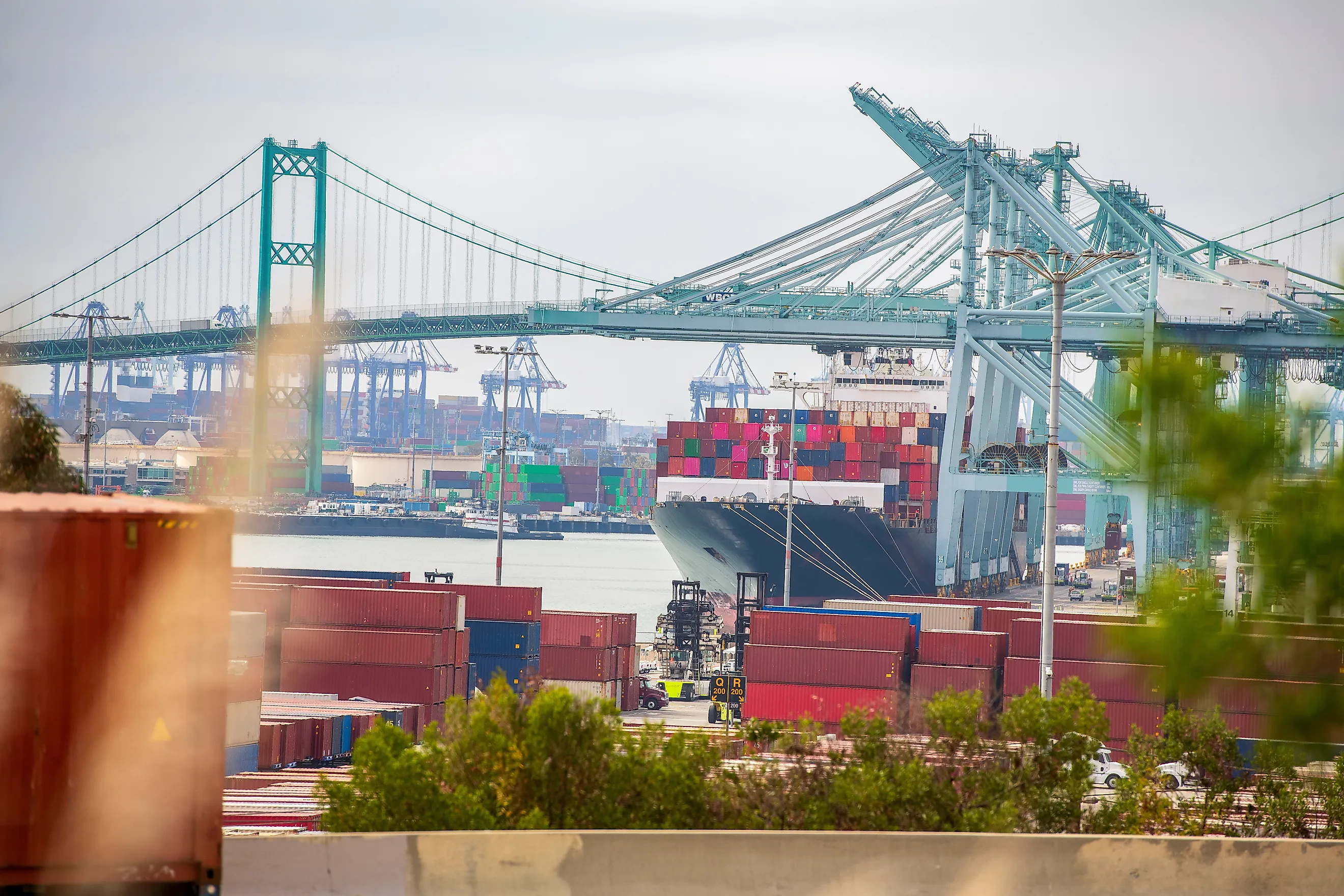
Side by side on San Pedro Bay, the Port of Los Angeles and the neighboring Port of Long Beach form the busiest container port complex in the Western Hemisphere. Together they move something like 40 percent of all the containerized goods imported into the entire United States. A shutdown here would obviously hammer California, but it would not stop at the state line. When these docks jammed up during the pandemic, ships stacked up for miles offshore and store shelves went bare from coast to coast. This is one port complex whose failure would freeze not just a state economy, but the nation's supply chain.
The Lower Mississippi Ports, Louisiana

Strung along the final stretch of the Mississippi River, the ports of South Louisiana, New Orleans, and Baton Rouge together make up the largest port complex in the country by tonnage. This is where the American heartland meets the sea. Roughly 60 percent of all US grain exports pass through these docks, along with staggering volumes of oil, chemicals, and coal. The system is the backbone of Louisiana's economy and a linchpin of the entire nation's agricultural trade. Shut it down and you would not only cripple a state, you would strand a huge share of the crops America sells to the world.
Port of Houston, Texas

The Port of Houston consistently ranks first in the nation for foreign waterborne tonnage, and the 50-mile Houston Ship Channel it sits on is lined with one of the greatest concentrations of oil refineries and petrochemical plants on the planet. Energy is Texas, and much of that energy moves through here. A prolonged closure would choke the flow of crude, refined fuels, and the chemical building blocks that feed factories nationwide, dealing a body blow to the Texas economy and rippling straight into gas prices and manufacturing far beyond the state.
Port of Savannah, Georgia

The Port of Savannah is home to Garden City Terminal, the single largest container terminal in North America, and it has become one of the fastest-growing ports in the country. It anchors an enormous logistics and warehousing industry across Georgia, supporting hundreds of thousands of jobs and serving as a primary gateway for imports flowing into the entire Southeast. For a state that has bet heavily on being a distribution hub, a crippled Savannah would send shockwaves through Georgia's economy and back up cargo across a large slice of the country.
Duluth-Superior, Minnesota

Far from any ocean, the twin port of Duluth-Superior is the largest and busiest port on the Great Lakes. Its lifeblood is iron ore, mined from Minnesota's Mesabi Range and shipped out by the millions of tons to feed American steelmaking, alongside big volumes of grain and coal. The port is the economic anchor of northern Minnesota and its Iron Range, a region built almost entirely around getting ore to the furnaces. If the freighters stopped calling at Duluth, it would gut the local economy and pinch the supply of raw material behind a chunk of the country's steel. Together, these ports are a reminder that a nation's economy floats, quite literally, on a handful of critical harbors.