6 Snake-Filled Waters In Virginia
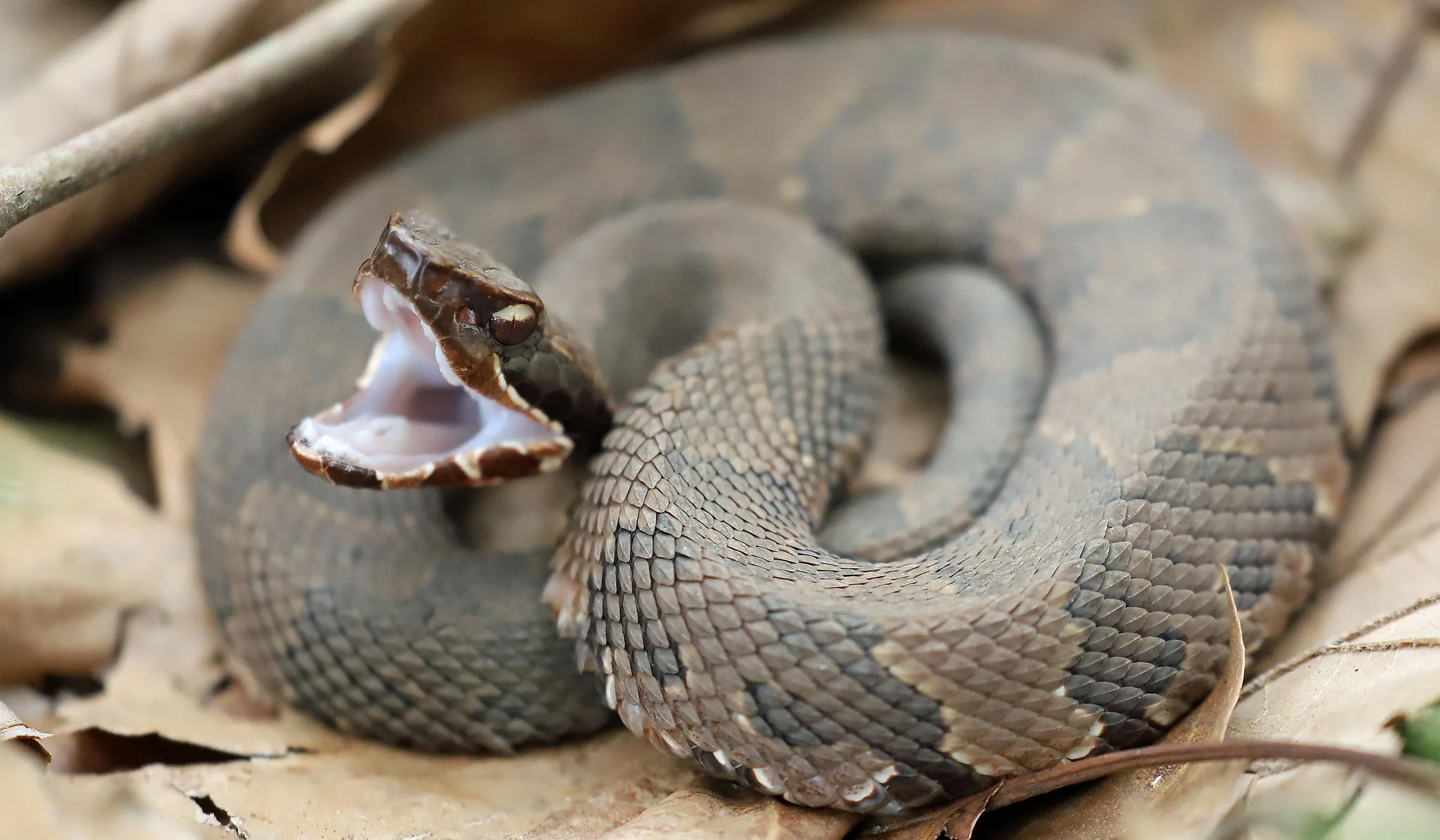
Virginia’s waterways host a surprising concentration of snakes, especially where slow currents, marsh grass, and shallow edges create abundant habitat for amphibians and fish. Visitors will find salt and fresh tidal marshes, a vast interior swamp, broad rivers, and popular reservoirs where water snakes and their venomous look-alikes live in numbers. Virginia’s coastal marshes, wooded shorelines, and drowned river valleys make ideal ambush and foraging sites for Nerodia water snakes, as well as occasional cottonmouths, hosting refuges and preserves where professionals monitor reptile populations. For travelers and naturalists, the state’s bodies of water listed below offer reliable opportunities to see snakes in their element.
James River

The James River winds across Virginia from the piedmont to the coastal plain, and its broad tidal sections and side marshes are hotspots for water snakes. Along quieter river bends, shoals, and oxbows, emergent grasses and sun-warmed rocks attract snakes that hunt small fish and amphibians along the current. Urban and suburban stretches of the river also reveal snakes on harbor edges and at small wetlands tucked between developments, because snakes adapt where suitable microhabitat exists.

There are reportedly frequent sightings of northern water snakes and related species along public trails and riverfront parks, and river-focused field guides emphasize the James River’s role as both a migration corridor and a long-term home for many semi-aquatic snakes. Anglers and kayakers who travel slowly through back channels are among those most likely to encounter groups of basking snakes in summer, while spring mating and late-summer juvenile dispersal increase daytime river sightings. Observers should be prepared to distinguish harmless water snakes from venomous look-alikes by head shape and behavior, and to give all snakes space.
Great Dismal Swamp and Lake Drummond

The Great Dismal Swamp and its central lake, Lake Drummond, form one of the most snake-rich wetland complexes in Virginia. The swamp combines cypress ponds, extensive ditches, and woody hummocks that create a mosaic of sunlit basking spots and shaded hunting lanes. Because water snakes feed heavily on fish, amphibians, and crayfish, the year-round standing water and dense marginal vegetation sustain high snake densities, especially of northern water snakes and red-bellied water snakes. The swamp region includes nonvenomous watersnakes, rat snakes, and occasional venomous species in low numbers.

Historically, the swamp has attracted humans for logging, travel, and settlement, and those activities have shaped access patterns that influence where people and snakes encounter one another. Visitors are encouraged to keep a respectful distance and to follow refuge rules to protect the fragile habitat while observing wildlife.
Chesapeake Bay marshes and tributaries

The shallow bays, tidal creeks, and brackish marshes of the Chesapeake Bay watershed provide ideal habitat for Nerodia water snakes and a suite of coastal reptile species. Marsh edges and submerged vegetation hold forage fish and frog populations that sustain dense concentrations of northern water snakes, while the low, muddy banks and flooded tree roots give snakes both hunting cover and daytime sunning opportunities. Estuarine tributaries from the Eastern Shore across to the tidal reaches of mainland rivers support frequent water-snake observations at the waterline and on emergent logs.

Wildlife educators and regional field guides note that northern water snakes are among the most commonly observed reptile species in many bay tributaries, and they are often mistaken for venomous species by casual observers because of their stout build and dark patterning. The Chesapeake Bay region’s mix of fresh and brackish water, combined with abundant shoreline habitat, keeps snake populations robust through spring, summer, and early fall, when reptile activity peaks.
Back Bay National Wildlife Refuge and coastal lagoons

Along Virginia’s southern Atlantic shoreline, Back Bay National Wildlife Refuge and the neighboring coastal lagoons maintain high snake visibility because of extensive marshland and shallow pond edges. Locals name cottonmouths among the venomous species present, along with brown and northern water snakes and ribbon snakes that inhabit marsh channels and brackish ponds.

The refuge’s 75 percent marsh cover concentrates both prey and predators, so visitors who walk boardwalks, ride the auto tour, or paddle quiet creeks have a reasonable chance to see snakes when the weather is warm. Managers emphasize safe distance and non-interference, and refuge photo releases frequently show snakes as part of the marsh community. Because the coastline’s tidal regime changes where snakes can hide and hunt, low tides and warm, sunny days are the most reliable windows for observation.
Smith Mountain Lake

Large inland reservoirs such as Smith Mountain Lake support a wide mix of snake species along their long shorelines, and recreational use of the lake increases human observations. The lake’s drowned river valley edges, woody drop-offs, and shallow coves provide prime feeding and basking habitat for water snakes, rat snakes, and other semi-aquatic reptiles. Natural-history roundups and wildlife sites list Smith Mountain Lake among Virginia lakes with notable snake diversity, and local reports document both non-venomous watersnakes and occasional sightings of copperheads or cottonmouths in surrounding woodland and wetland pockets.

Boat traffic, docks, and shoreline cottages are the primary places for people, so snake encounters tend to cluster where people and habitat overlap. Anglers and shoreline visitors should scan logs and lily pads before wading, and homeowners along the shorelines can reduce unwanted close encounters by managing brush piles and wood stacks where snakes shelter. Local conservation messaging stresses coexistence and safe distance as the best ways to enjoy lake wildlife.
Northwest River Natural Area Preserve

Beyond the larger lakes and bays, protected preserves such as the Northwest River Natural Area Preserve and smaller ecological preserves sustain dense, often unseen populations of snakes. Those preserves combine freshwater marshes, forested swales, and isolated ponds that function as refuges for ribbon snakes, water snakes, and occasional pit vipers, where human access is limited. Because public access is restricted at some preserves, snake communities there remain especially robust, and researchers conducting surveys find a greater abundance of species than in more disturbed landscapes. Those who may seek reliable sightings, guided or permitted access through preserves, yield both better observation opportunities and lower impact on fragile habitat.
Virginia’s snake-rich waters are rewarding destinations for wildlife enthusiasts and photographers who plan ahead and respect natural behavior. Wear sturdy footwear near shorelines, keep dogs leashed, avoid reaching into vegetation or under rocks, and learn a few identification cues so that nonvenomous water snakes are not needlessly persecuted. Many refuges and preserves offer interpretive programs, and museum guides provide reliable identification resources for visitors. With a careful approach, it is possible to enjoy the state’s waterways and to witness snakes as active members of coastal and inland ecosystems.