6 Most Snake-Filled Bodies Of Water In Minnesota
Minnesota's glacial lakes and river channels create a rich network of habitat for water-loving snake species. Across the state, slowly moving rivers, shallow natural lakes, and forested floodplains provide the conditions snakes need to hunt in or near water. Semi-aquatic species depend on specific features of the waterways and shoreline, such as deep rock fissures and burrows, gradual shallow drop-offs, and dense shoreline vegetation to forage, regulate their body temperature, and survive the harsh winter. Six Minnesota waterways are especially well suited as snake habitat.
Lake Pepin

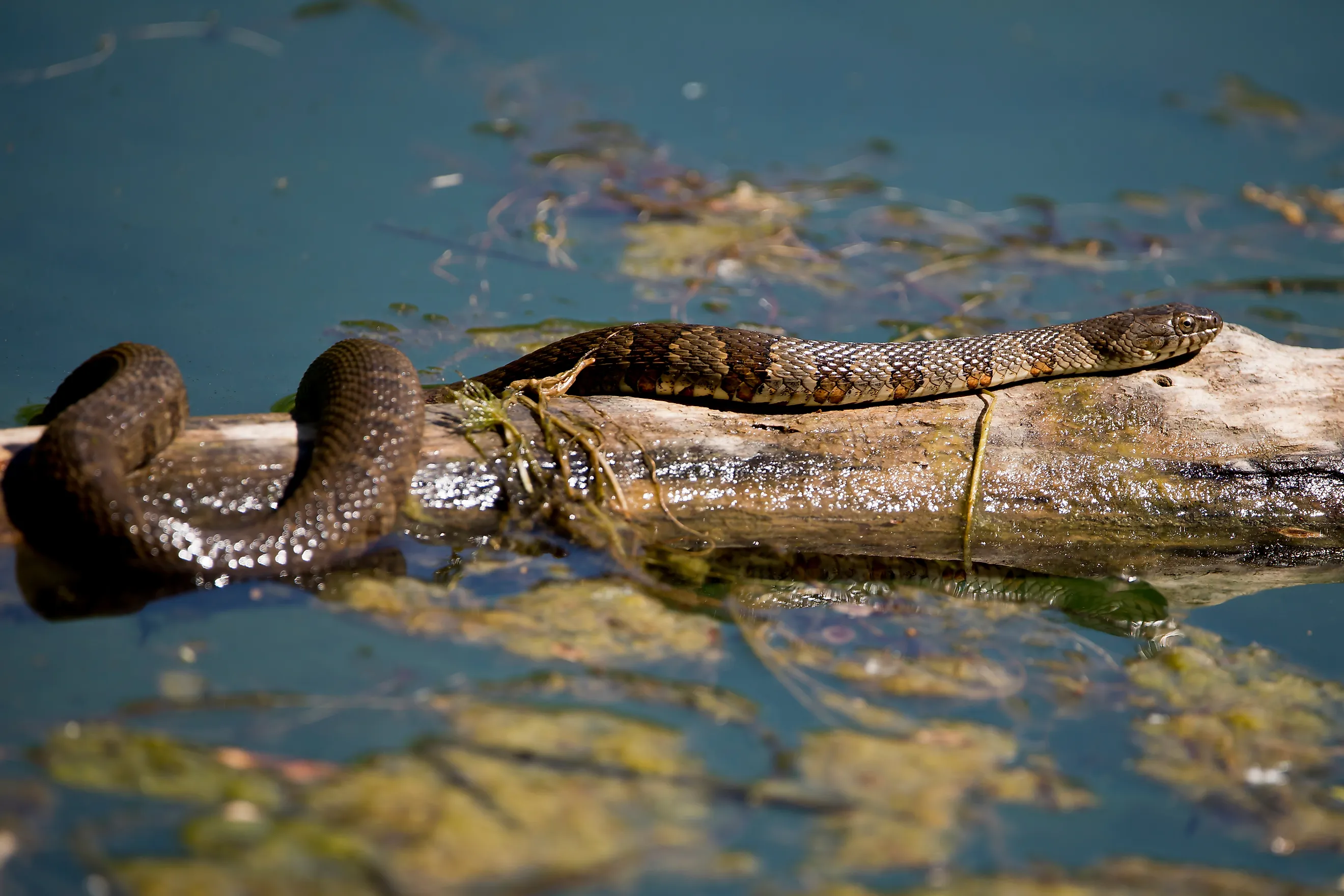
An abundance of prey and dense shoreline vegetation draw diverse populations of water-loving snakes to Lake Pepin. The 21-mile (33.8 kilometer) body of water is a natural widening of the Mississippi River created when sediment from Wisconsin's Chippewa River partially dammed the current and spread it across the ancient valley floor. The water now supports 85 documented fish species, an ideal habitat for snakes that hunt in water. Northern water snakes (Nerodia sipedon) are heavy-bodied hunters that move through the shallows of Lake Pepin using quick, lateral undulations. They rely on their speed, rather than ambushing, to close in on small fish and frogs.
The bluff-lined Mississippi corridor at Lake Pepin also falls within the range of the western fox snake (Pantherophis ramspotti). This species can exceed five feet (1.5 meters) in length and favors the forested edges of waterways. They primarily feed on mice, voles, small birds, and amphibians that move through the riparian corridor. When threatened, these snakes will vibrate their tail in imitation of rattlesnakes, although they are not venomous. Instead, western fox snakes use constriction to kill their prey.
Common garter snakes (Thamnophis sirtalis) are also found throughout the shoreline margin. They often hunt in water and along the edges of rivers and lakes. They prey on a wide range of animals including earthworms, amphibians, fish, insects, small mammals, and slugs.
The Minnesota River

What makes the Minnesota River such ideal habitat for semi-aquatic snakes is the structure of its floodplain. Backwater sloughs, oxbow ponds, and dense riparian forest line the corridor. This creates a mosaic of warm, shallow water and heavy cover that sustains frog and fish populations through the summer. Northern water snakes concentrate in this kind of environment, hunting along the vegetated margins and retreating underwater when disturbed. They can remain submerged on a single breath for over 60 minutes.
Western fox snakes are present throughout the corridor as well. As adults, their copper-colored heads draw frequent misidentification as venomous copperheads, but that species has no confirmed population in Minnesota. The fox snake's name comes from the musky odor the snake releases when handled, which closely resembles the scent of a red fox.
Gopher snakes (Pituophis catenifer) have been recorded along the Minnesota River in Dakota and Hennepin counties. A powerful constrictor, they spend much of their time in underground burrows before emerging to hunt rodents across open ground and along river edges.
Common garter snakes appear throughout the length of the Minnesota River. While they hunt in the shallows of water, this semi-aquatic species will also retreat into the water when threatened. They are exceptional swimmers and rely on that to evade less aquatically inclined predators.
Mille Lacs Lake

A thriving population of garter snakes congregate along the sprawling, shallow shoreline of Mille Lacs Lake, an ecosystem covering 132,516 acres (53,627 hectares). The Ojibwe tribe, who have fished the lake for centuries, call it Misi-zaaga'iganing, which means "the lake that spreads all over." The name reflects the way the lake does not sharply drop away from the bank but spreads across a broad, flat basin ringed with aquatic vegetation and marshy shallows. Common garter snakes are strongly associated with this kind of ecosystem with expansive riparian margins.
Because the northern landscape experiences severe winter freezes, the survival of the lake's garter snakes depends entirely on structural features found just beyond the shoreline. The surrounding lowlands contain deep rock fissures and abandoned mammal burrows that extend well below the frost line. Garter snakes leave chemical trails of pheromone cues that play a significant role in guiding each other to traditional den sites during autumn migrations. Driven by dropping autumn temperatures and the reliance on shared chemical trails, garter snakes migrate to these subterranean sanctuaries. They gather in communal dens, packing together to conserve heat until the spring thaw releases them back to their marshy hunting grounds.
The St. Croix River

The St. Croix River at Interstate Park in Taylor Falls, Minnesota.
The unique geology of the St. Croix River actively supports water-loving snake populations. Near Taylors Falls, the river cuts through ancient basalt lava flows, exposing broad, flat outcroppings that hold heat well into the evening. Northern water snakes use these ledges to thermoregulate between feeding runs in the cold current. They bask on exposed rocks before slipping back into the water to hunt.
Western fox snakes have been recorded in Washington County along the river as recently as 2025, and gopher snakes appear in county records on both sides of the water in Washington and Pine counties. Among Minnesota's largest snake species, the gopher snake is capable of reaching six feet (1.8 meters). When cornered, they flatten their head into a triangular shape, hiss through a specialized cartilage structure near the trachea, and vibrate their tail to imitate a rattlesnake. Biologists classify this behavior as Batesian mimicry, a species imitating the threat signals of a more dangerous animal to deter predators.
Red Lake

The shallow shoreline filled with reeds and other aquatic plants is what draws snakes to Red Lake. This body of water is Minnesota's largest natural freshwater lake, covering about 440 square miles (1,140 square kilometers) across Beltrami County. Both the common and plains garter snake live along the lake, although they occupy slightly different niches. While common garters actively hunt in the water, the plains garter snake (Thamnophis radix) tends to work the drier, grassier ground just back from the water's edge. Here they can hunt frogs, earthworms, and rodents in the transitional zone where wet and dry habitat overlap.
Red Lake's shallow coves and weedy inlets create the varied margin both species need. Common garters at this latitude also tend to display the bold red-sided stripe pattern of the northern subspecies. This is a more vivid coloration than the yellow-striped individuals more common in eastern Minnesota.
Otter Tail Lake

At 13,725 acres (5,554 hectares) with 24 miles (38.6 kilometers) of a long, irregular perimeter, Otter Tail Lake produces the gravel points, weedy bays, and marshy inlets that make its shoreline ideal snake habitat. Both common garter snakes and plains garter snakes are recorded here. Late summer concentrates activity along the lake margins, when garter snakes give birth to live young in August and September. The young snakes begin hunting immediately after birth. The tall, dense vegetation along Otter Tail's shoreline provides the juvenile reptiles both hunting grounds and the opportunities to hide from larger predators such as raptors.
Garter snakes return to the same communal den sites around Otter Tail Lake year after year, guided by the pheromone trails left by other snakes. During winter, the wetland-dotted prairie terrain surrounding Otter Tail County provides the mammal burrows and rock crevices they depend on to get below the frost line.
Where Minnesota's Snakes Flourish

Northern watersnake.
Minnesota's complex freshwater architecture supports a range of snake species, each suited to the specific features of these waterways. Slow, sediment-rich impoundments like Lake Pepin offer abundant fish for active hunters such as the northern water snake. The floodplain rivers of the Minnesota carve out the backwater sloughs and oxbow ponds that sustain both predator and prey through the warmer months. Vast, shallow basins of Mille Lacs and Red Lake create the kind of gently sloping, vegetation-choked margins that garter snakes favor. Rocky river corridors of the St. Croix supply the sun-warmed ledges and burrow-riddled banks gopher and fox snakes need.
Even when winter locks the state in ice, the same glacial geology that shaped these lakes and rivers also left behind the deep rock fissures that allow snake populations to persist below the frost line. Each spring, they emerge into the shallows, sloughs, and reedy shorelines that make Minnesota's freshwater landscape such productive snake habitat.