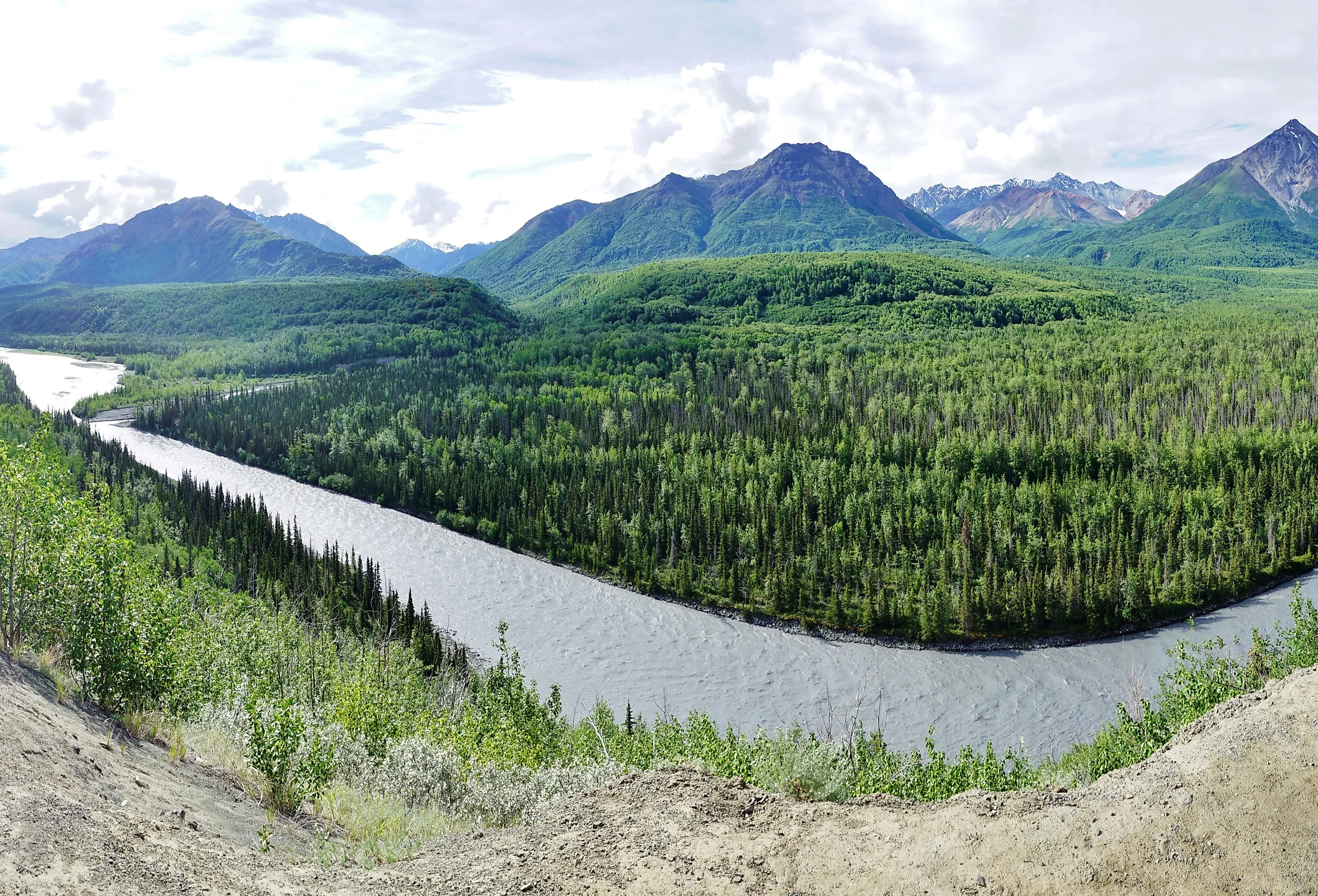
Matanuska-Susitna Valley
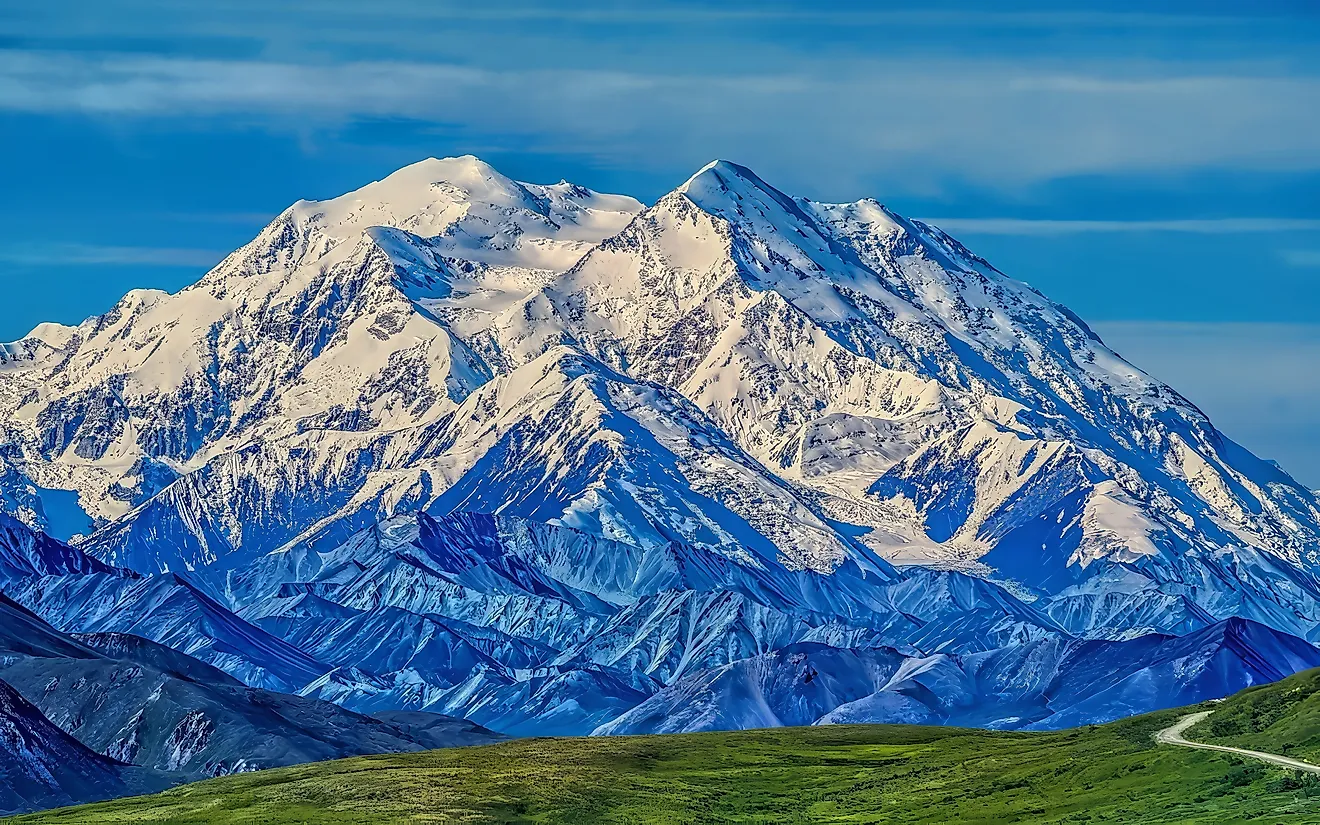
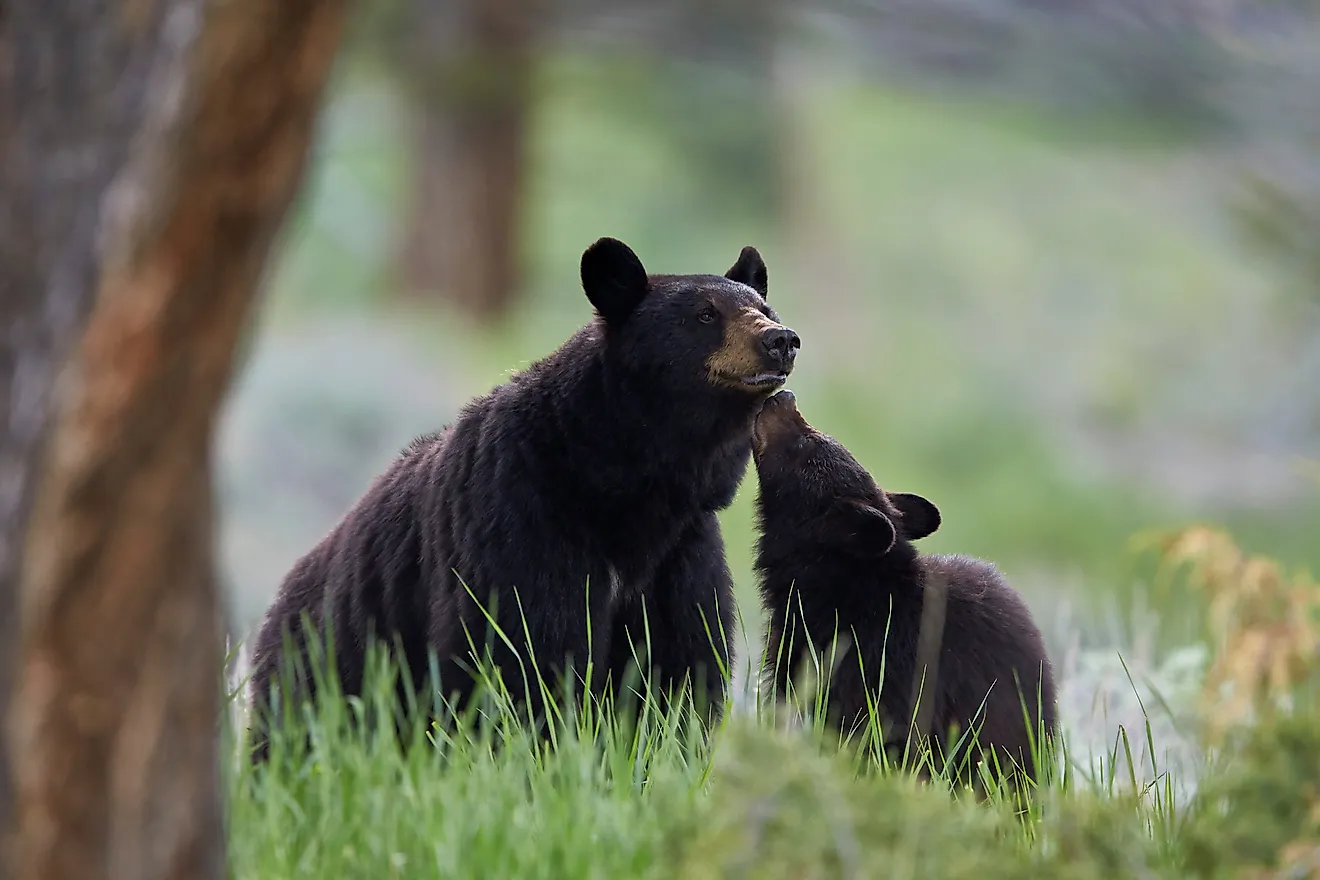
The Matanuska-Susitna Valley, between Anchorage and Denali National Park, covers 24,707.3 square miles and is the 6th-largest county in South Central Alaska. It is named for the Matanuska and Susitna Rivers, both glacial-fed rivers that drain into the valley below. It's common to see wildlife such as moose and bear wandering through this region, and is also an ideal location to catch a glimpse of the northern lights. Known as the aurora borealis, these lights transform the Valley’s night sky into a living canvas of color on cold, dark evenings between December and March.
Landmarks and Natural Wonders

This area features some of the most breathtaking landmarks and Mountain Ranges, such as the Matanuska Glacier, the largest road-accessible glacier in the US. At Mile 102 of the Glenn Highway, guided scenic tours are available in the summer for about 160$ per person. Companies such as MICA Guides and NOVA Alaska Guides take visitors across the ice on two to three-hour treks. This glacier plays a role in the incredibly strong winds that happen in the Matsu region. Cold air off the Matanuska Glacier blows through the valleys below, sometimes reaching up to 90 miles per hour.
Indigenous History and Culture
The Ahtna Athabaskan people were among the first inhabitants of the Matanuska-Susitna Valley. They used the Matanuska River trails to conduct trade between the Cook Inlet region and the Copper River watershed, one of the world's last wild salmon spawning habitats. The Ahtna language has four distinct dialects. All four are still spoken today thanks to efforts by organizations like the Cheesh’na Tribal Council, which offers structured online Ahtna language lessons. For generations, Ahtna families subsisted on fish like wild salmon and wild berries native to the region. These local berries, including honeyberries, also known as haskaps, are brewed up at local wineries in modern-day Mat-Su. Visitors can taste concoctions brewed from local berries at the family-owned winery, Swiftwater Wines in Wasilla.
The Iditarod and the Gold Rush

While visiting Wasilla for a taste of local berry wine, it's impossible to miss the infamous Iditarod Dog Sled Race at Willow Lake. Wasilla serves as a through point for the race each March, where mushers travel about 1,000 miles over Alaskan terrain to the finish line in Nome. The race gets its name from the Iditarod Trail, which was a mail route during the Alaskan Gold Rush. Independence Mine State Historical Park in Hatcher Pass is one of Alaska's largest gold mining camps. When miners returned from the 1913 Nelchina gold stampede, some chose to put down roots here, becoming among the earliest non-Native Alaskan settlers in the region.
Agriculture and the Matanuska Colony

Gold isn't the only bounty produced by this lush landscape. The valley, also known as the Mat-Su region, is incredibly fertile and produces some of the largest vegetables in the world. The Alaska State Fair in Palmer has been held from late August to early September for more than 75 years. The fair hosts a Giant Cabbage weigh-Off in which growers from across the state haul their prized cabbages into the arena to compete for more than $2,000 in prizes and a shot at making history. Cabbages topping 100 pounds are a common sight, and the world record still belongs to Palmer's Scott Robb, who stunned the crowd in 2012 with a jaw-dropping 138.25-pound cabbage.
In 1935, during the Great Depression, President Franklin D. Roosevelt sanctioned a relocation program that brought 203 farming families from drought-stricken areas of the Midwest to Palmer because of the land's fertility. The Matanuska Colony was a unique New Deal project during the Great Depression. Unlike other resettlement programs, it was not created to help struggling local farmers, since Alaska did not face severe unemployment or environmental disasters. Instead, it was established for economic and strategic reasons: to increase Alaska’s population, make the territory more self-sufficient, and strengthen U.S. defenses due to concerns about Japan’s expansion. Settlers had to travel long distances and build entirely new communities from scratch. The Palmer Museum of History and Art, opened in 2005, curates tools, photographs, and household items from this 1930s resettlement project.
Talkeetna: Festivals and Adventure

Just North of Palmer, Talkeetna brightens the dark days of December with the Talkeetna Winterfest. The festival’s main highlights include the Bachelor Society Ball and Auction, where locals bid generously for a drink and dance, and the Parade of Lights, where vehicles adorned with lights parade through town. Nearby Hatcher Pass, accessible via the 49-mile Hatcher Pass Road, holds the ruins of Independence Mine State Historical Park, a 761-acre abandoned gold mine set in the Talkeetna Mountains. Guided tours explore the ruins and historic buildings, including the Mine Manager’s House. Hikers can take the Gold Cord Lake Trail or the Gold Mint Trail on an unforgettable adventure through the mountains.
Matanuska Susitna Valley is a living mosaic of communities, each with its own unique history. The 2020 Census recorded 107,081 residents in all the towns in the Mat-Su region, and this number is steadily climbing. Every year, an estimated 750,000 visitors pass through the Mat-Su Valley to experience the views and attractions here. The region's infrastructure has struggled to keep pace with the demand of so many incoming guests. A new Gateway Visitor Center at the Glenn and Parks Highway intersection is set to open in 2026 as part of efforts to accommodate increased tourism activity in the region.