Deserts of Europe
A desert is an arid ecosystem that receives fewer than 10 inches (roughly 250 mm) of precipitation annually. Deserts support sparse vegetation and animal life because of harsh moisture stress, large day-to-night temperature swings, and, in some cases, volcanic or saline soils that prevent root establishment. While Europe is more commonly associated with green meadows, snow-capped Alps, and coastal towns, the continent holds genuine deserts and a much larger array of semi-deserts. Spain, Italy, Romania, Serbia, Iceland, Poland, Ukraine, and Russia each contain stretches of arid terrain shaped by geology, climate, or centuries of human land-use change. This guide covers the most significant European deserts and semi-deserts, including a full comparison table below.
Tabernas Desert, Spain

The Tabernas Desert in the province of Almería, along the coast of Andalusia, is typically described as the only true desert on mainland Europe by the strict rainfall definition (below 250 mm annually). It covers more than 280 square kilometres of heavily eroded badlands, gullies, and plateaus. Summer temperatures routinely push past 40°C (though higher extremes have been recorded elsewhere in Spain, Italy, and Greece), and winter rainfall is minimal. Plant and animal life concentrates around ephemeral watercourses and on north-facing slopes.
Tabernas is best known internationally as the filming location for dozens of "Spaghetti Western" films in the 1960s and 1970s, including Sergio Leone's Dollars Trilogy (A Fistful of Dollars, For a Few Dollars More, The Good, the Bad and the Ugly). The landscape's resemblance to the American Southwest made it the European film industry's default stand-in for the Arizona and New Mexico deserts. The area has been a protected Paraje Natural since 1989. Three preserved Western film sets still operate as open-air attractions (Oasys MiniHollywood, Fort Bravo Texas Hollywood, and Western Leone).
Cabo De Gata, Spain

Immediately southeast of Tabernas, the Cabo de Gata-Níjar Natural Park protects a volcanic coastal semi-desert along Spain's Mediterranean edge. Annual rainfall here can drop below 200 mm, making it one of the driest spots in Spain and in all of Europe. The park covers roughly 380 km² of eroded volcanic cones, saline coastal flats, and beaches. Dwarf fan palm (Chamaerops humilis), Europe's only native palm, grows wild here.
Bardenas Reales, Spain

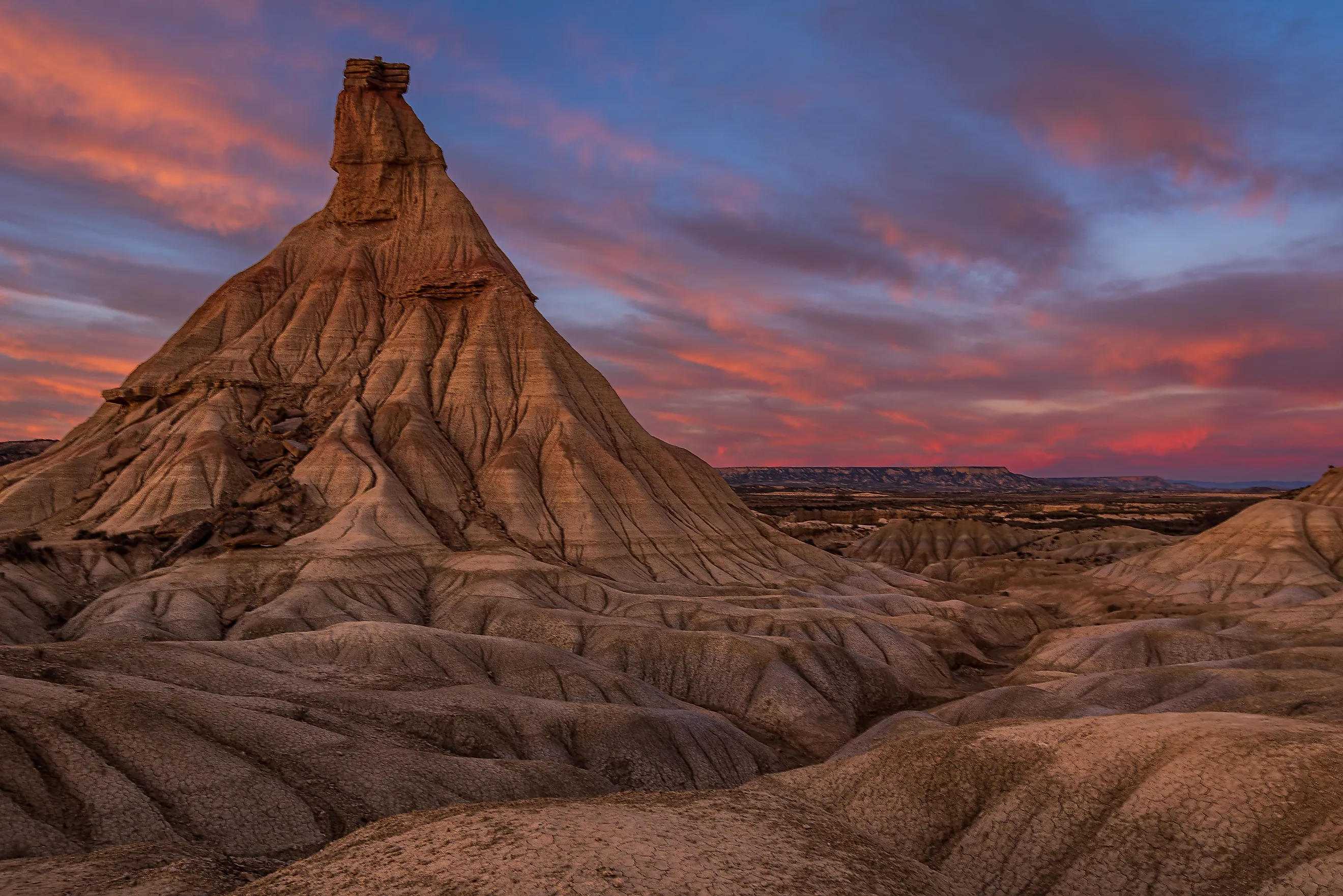
The Bardenas Reales cover about 420 km² of clay and sandstone badlands in the southeast of Navarre. Wind and water erosion have carved the terrain into dramatic mesas, plateaus, and isolated pinnacles. The region has been a UNESCO Biosphere Reserve since 2000. The Bardenas appeared in HBO's Game of Thrones (as the Dothraki Sea in Season 6) and in Ridley Scott's The Counselor.
Monegros Desert, Spain

The Monegros Desert is the largest semi-desert in Spain, covering around 2,760 km² of the Ebro Basin between the provinces of Huesca and Zaragoza. The area contains a high density of saline endorheic lagoons (closed-basin lakes with no outflow) that support specialised halophytic plant and invertebrate communities. Monegros experiences extreme continental Mediterranean aridity with very hot summers and cold winters, and rainfall often below 350 mm annually.
Accona Desert, Italy

The Accona Desert sits within the Crete Senesi, a clay-hills region south of Siena in Tuscany. It is not a true desert by the rainfall test (annual precipitation reaches 600-700 mm and supports cultivation when irrigated), but the landscape takes a "desert" designation because of its distinctive geomorphology: chalk-white pale clay dome formations (biancane) and eroded gullies (calanchi) that make the area look parched and otherworldly compared to the surrounding green Tuscan countryside.
The medieval Abbey of Monte Oliveto Maggiore, founded in 1313 and home to the Olivetan Benedictine order, sits at the edge of the Accona landscape. The abbey preserves a celebrated fresco cycle by Luca Signorelli and Il Sodoma depicting the life of Saint Benedict. The region's combination of pale clay hills and working farmland makes it a popular photographic destination in Italy.
Piscinas Dunes, Sardinia, Italy

On the southwestern coast of Sardinia, the Piscinas Dunes rise up to 100 metres, making them among the tallest coastal dunes in Europe. The dunefield extends inland from a Mediterranean beach along the Costa Verde, backed by juniper and maquis vegetation. The area is sometimes called "the European Sahara" for dramatic effect, though it is a coastal dune system rather than a desert in the climatic sense.
Oltenian Sahara, Romania

The Oltenian Sahara is a mostly anthropogenic sand landscape in the Oltenia region of southwestern Romania, between the cities of Calafat and Dăbuleni. It covers roughly 800 km² (about 80,000 hectares). The area was not originally a desert: communist-era agricultural programs in the 1960s cleared extensive forests to plant vineyards and vegetables on the sandy soils of the Danube floodplain. When the vineyards were abandoned, the sand reactivated, and summer temperatures now reach over 40°C, with sand surface temperatures climbing much higher.
Dăbuleni hosts the only official Sand Museum in Europe, and the press-coined "Sahara" nickname stuck. The Romanian government has introduced afforestation projects aimed at stabilising the sand and restoring agricultural viability, with mixed results.
Deliblato Sands, Serbia

The Deliblato Sands (Deliblatska Peščara) cover about 300 km² of the southeastern Pannonian Plain in Vojvodina, Serbia. The area is a remnant of Pleistocene-era dune fields formed after the withdrawal of the ancient Pannonian Sea and the cold, dry conditions of the last Ice Age. The dunefield takes a distinctive elliptical shape oriented along the prevailing Košava wind direction. Despite being called a "desert," Deliblato is technically a sandy steppe ecosystem with high biodiversity, hosting approximately 900 plant taxa and many endemic species. Deliblato has been protected as a Special Nature Reserve since 2002 and is frequently described (slightly inaccurately) as "Europe's largest sand desert" or the "European Sahara."
Highlands Of Iceland

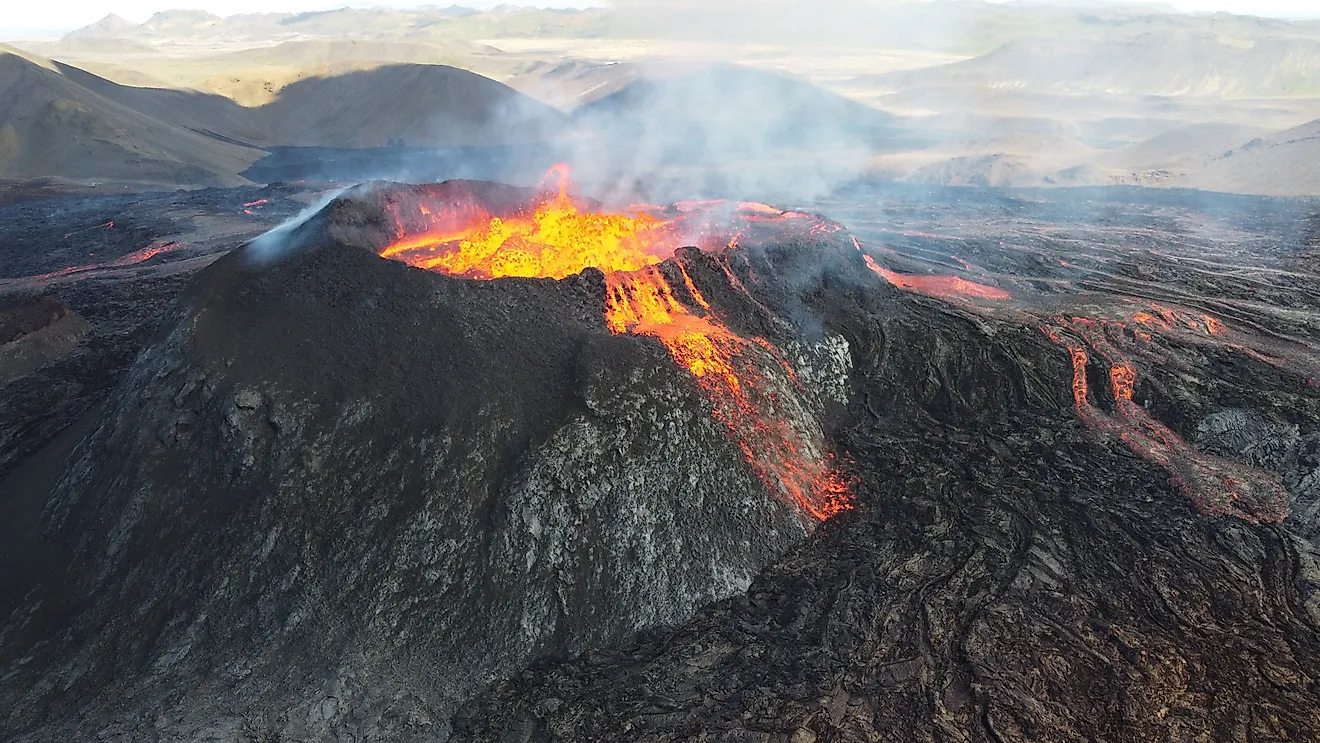
The Highlands of Iceland cover roughly 40,000 km² of the country's interior plateau, making them one of the largest uninhabited areas in Europe. The landscape qualifies as a polar desert for an unusual reason: the volcanic soils are so porous that precipitation drains through them almost immediately, leaving surface conditions too dry to support vegetation despite Iceland's relatively wet maritime climate. Some areas, such as Ódáðahraun (the "Desert of Misdeeds") around the Askja volcano, are true lava deserts. Ódáðahraun covers approximately 5,000 km² and is considered the largest lava desert on Earth. NASA used the Highlands to train Apollo astronauts for lunar landings in the 1960s and 1970s because of their resemblance to the Moon's surface.
Błędów Desert, Poland

The Błędów Desert (Pustynia Błędowska) in southern Poland, between Lesser Poland and Silesia, covers about 32 km², making it the largest accumulation of loose sand in Central Europe away from any sea. Like the Oltenian Sahara, it is largely anthropogenic: medieval silver and lead mining in the region deforested the area centuries ago, and the underlying sandy glacial deposits were left exposed. The Polish military used it for desert training during both World Wars. Natural reforestation has been advancing since the late 20th century, and conservation efforts now aim to preserve the remaining sandy core.
Oleshky Sands, Ukraine
The Oleshky Sands (Oleshkivski Pisky) in the Kherson region of southern Ukraine cover approximately 161 km², the largest concentration of loose sand in Ukraine. The dunefield is another anthropogenic formation: 19th-century overgrazing by sheep flocks stripped the area of its natural vegetation and reactivated the underlying sand. Oleshky Sands National Nature Park was established in 2010. The ecosystem was heavily affected by the 2023 Kakhovka Dam destruction during the Russian invasion, with downstream ecological consequences still being assessed.
Kalmykia Semi-Desert, Russia

The Republic of Kalmykia in southwestern European Russia, on the Caspian Lowland, contains Europe's largest stretch of continuous semi-desert at roughly 80,000 km². The area is officially designated as Russia's only genuine desert-type landscape and has been a case study in anthropogenic desertification: heavy livestock grazing during Soviet collectivisation accelerated the loss of steppe vegetation and expanded the arid zone significantly through the 20th century. Kalmykia's climate is cold-continental, with precipitation below 250 mm annually in the driest zones and strong seasonal temperature swings.
Major Deserts And Semi-Deserts In Europe
| Name | Country / Region | Approximate Size | Type |
|---|---|---|---|
| Kalmykia Semi-Desert | Russia (Republic of Kalmykia) | ~80,000 km² (30,900 sq mi) | Cold semi-desert / steppe |
| Highlands of Iceland | Iceland | ~40,000 km² (15,400 sq mi) | Volcanic / polar desert |
| Monegros Desert | Spain (Aragon) | ~2,760 km² (1,065 sq mi) | Semi-desert |
| Oltenian Sahara | Romania (Oltenia) | ~800 km² (310 sq mi) | Anthropogenic sand desert |
| Bardenas Reales | Spain (Navarre) | ~420 km² (162 sq mi) | Badlands semi-desert |
| Cabo de Gata | Spain (Almería, Andalusia) | ~380 km² (147 sq mi) | Volcanic semi-desert |
| Deliblato Sands | Serbia (Vojvodina) | ~300 km² (116 sq mi) | Sandy steppe / semi-desert |
| Tabernas Desert | Spain (Almería, Andalusia) | ~280 km² (108 sq mi) | True desert (driest in continental Europe) |
| Accona Desert (Crete Senesi) | Italy (Tuscany) | ~200 km² (77 sq mi) | Clay badlands semi-desert |
| Oleshky Sands | Ukraine (Kherson) | ~161 km² (62 sq mi) | Anthropogenic sand semi-desert |
| Błędów Desert | Poland (Silesia / Lesser Poland) | ~32 km² (12.4 sq mi) | Anthropogenic sand desert |
| Piscinas Dunes | Italy (Sardinia) | ~5 km² dunefield (part of wider Costa Verde) | Coastal dune desert |
Sizes for European deserts vary considerably by source because most of these zones do not have hard legal boundaries, and "desert" versus "semi-desert" classification depends on the rainfall threshold used. The figures above reflect the most commonly cited ranges in geological and ecological literature.
Europe's Arid Landscapes
Europe's deserts and semi-deserts range from the volcanic lava fields of Iceland's Highlands to the Spaghetti-Western badlands of Tabernas, the reforesting sands of Poland's Błędów, and the vast semi-arid steppes of Kalmykia. Some are the products of ancient glacial and geological processes; others are recent consequences of deforestation, overgrazing, and large-scale agricultural change. Taken together, they complicate the popular image of Europe as a uniformly green continent and show that aridity has always been part of the European landscape, in pockets large and small.