9 Small Towns in the Southern United States with the Best Downtowns
Few small Southern towns have a professional theater, and fewer still have their state's official one. Abingdon does, and it has company. The whole country turns up for Jonesborough's storytelling festival, and Oxford's square is home to one of the South's landmark bookstores. What fills these downtowns is real cultural life, not facades kept up for the camera. That is what makes them some of the best downtowns in the South.
Dahlonega, Georgia

At the center of Dahlonega's square stands an 1836 red-brick courthouse, among the oldest in Georgia, which now holds the Dahlonega Gold Museum. It is devoted to the gold rush of the late 1820s, when thousands of prospectors came to these hills for one of the first major strikes in the country. The rest of the square is a short loop of galleries, shops, and restaurants around the old courthouse. A block away, the restored Holly Theatre is still in use for films and live performances. Yahoola Creek Park is at the edge of town, with trails and open ground along the creek.
Abingdon, Virginia

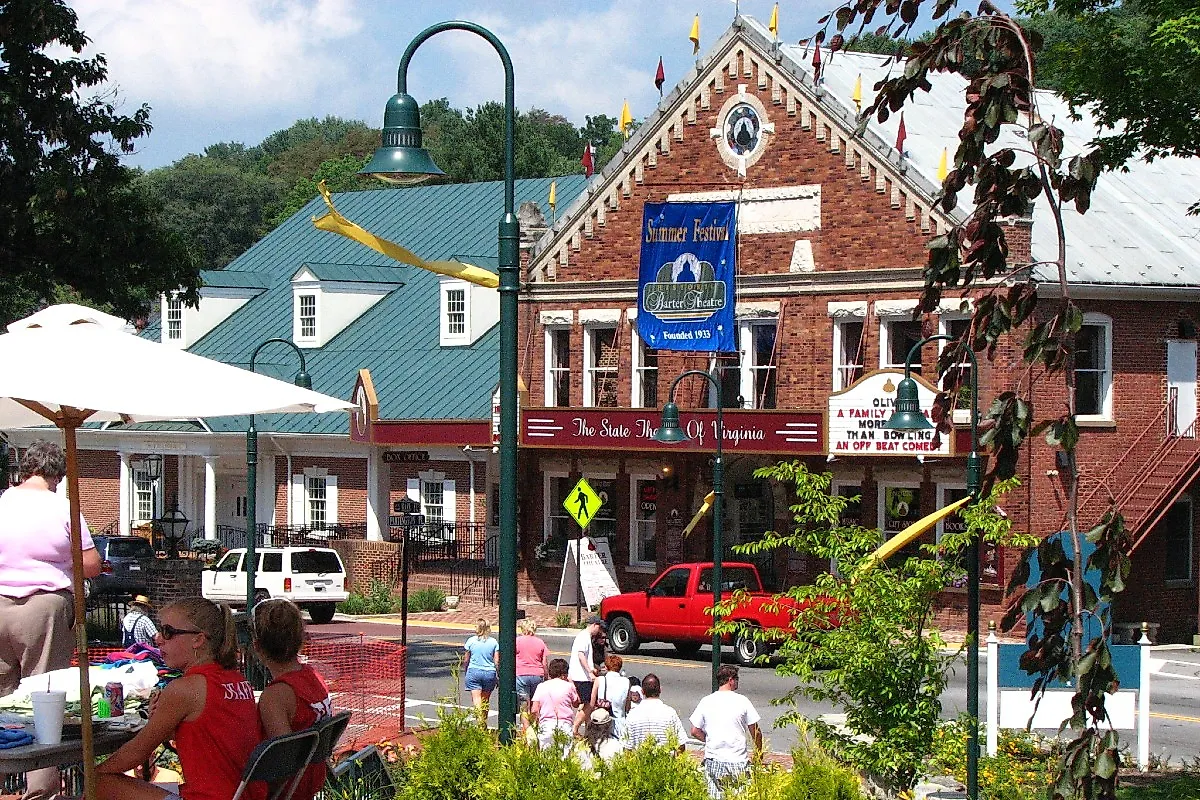
In 1933, Robert Porterfield opened a theater in Abingdon where audiences could pay their admission in produce, and the Barter Theatre has been the State Theatre of Virginia since 1946. The resident company still stages a full season on two Main Street stages, at the heart of a twenty-block historic district of brick sidewalks and preserved storefronts. A few doors along, the Arts Depot is set in a restored railroad freight station, with studio space for working artists. The 1832 mansion that became the Martha Washington Inn faces the theater across Main Street, and the whole district is compact enough to cover on foot.
Oxford, Mississippi

Square Books has been on a corner of Oxford's courthouse square since 1979, and this north Mississippi town's literary history is older still, going back to William Faulkner. His home, Rowan Oak, stands just south of the square under a stand of cedars and has belonged to the University of Mississippi since 1972. The Bailey Woods Trail connects it to the University of Mississippi Museum through the same woods Faulkner knew. Around the Lafayette County Courthouse, the square is a full block of bookshops, restaurants, and locally owned stores. Lamar Park and its walking paths are a little way from the center.
Fairhope, Alabama

Fairhope began in 1894 as a single-tax colony in coastal Alabama, an experiment in the economic ideas of Henry George. The downtown is on a bluff above Mobile Bay, laid out on a tidy grid of streets. Most of the shops are on Fairhope Avenue and Section Street, among them the longtime independent bookstore Page and Palette. Cafes, galleries, and the French Quarter are all close by. West of the shops, the Fairhope Municipal Pier reaches into the bay past a rose garden and lawns where people gather at sunset.
Natchitoches, Louisiana

Founded in 1714, Natchitoches is the oldest permanent European settlement in Louisiana, older than New Orleans by four years. Front Street runs along Cane River Lake, brick-paved and lined with two- and three-story storefronts, at the center of a National Historic Landmark district of several dozen blocks. The Louisiana Sports Hall of Fame and Northwest Louisiana History Museum stands a short walk away, and the 1989 film Steel Magnolias was shot in and around these streets. Each winter, crowds fill the riverbank for a Christmas lights festival that has run since the 1920s.
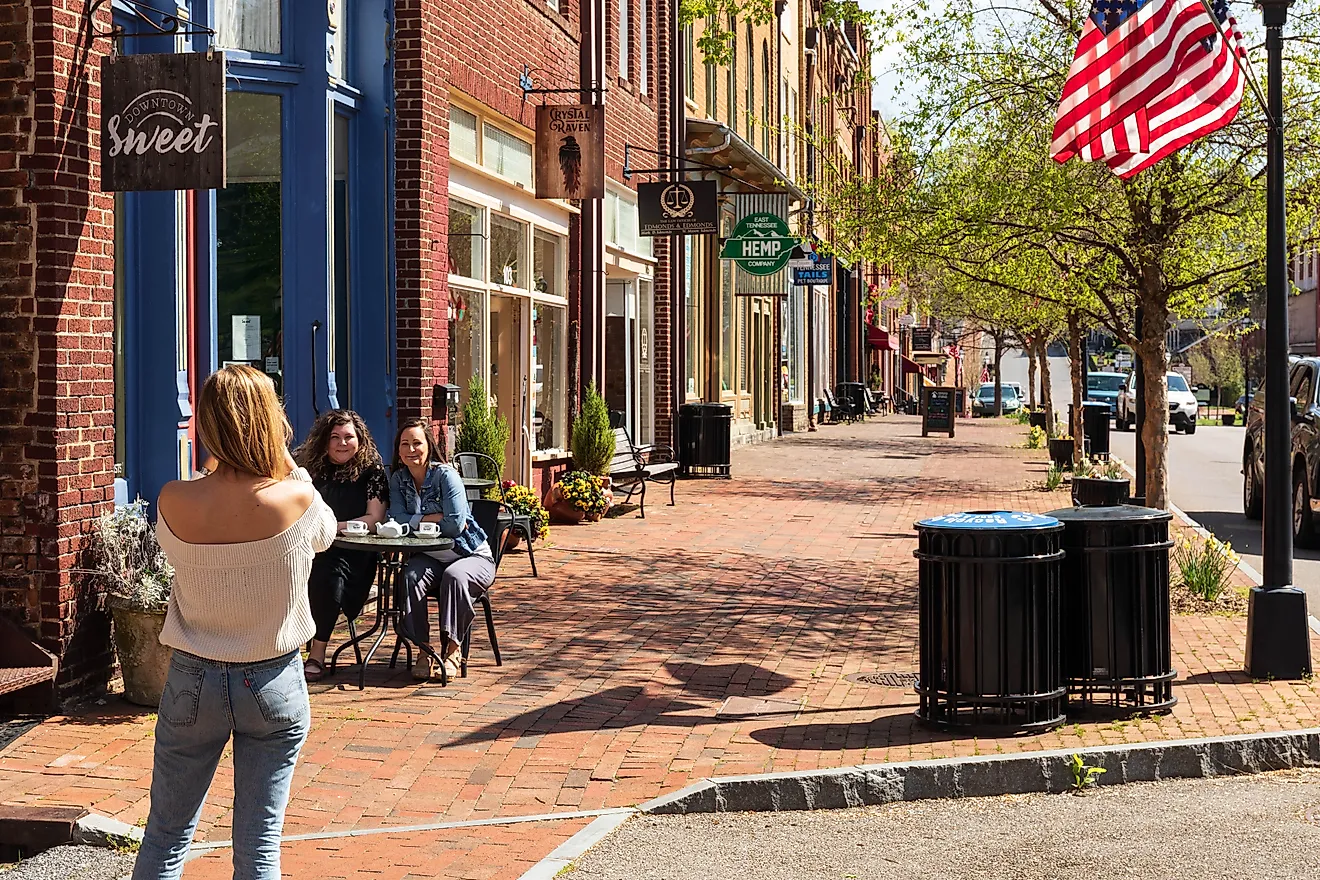
Jonesborough, Tennessee

Every October, storytellers and their audiences fill tents across Jonesborough for the National Storytelling Festival, the reason the town is known as the Storytelling Capital of the World. It is also the oldest town in Tennessee, established in 1779, and historic buildings stand along its Main Street and Courthouse Square. The International Storytelling Center stands in the middle of Main Street, and its campus includes the restored Chester Inn, one of the oldest commercial buildings in Tennessee. Nearby, the Chuckey Depot Museum has exhibits on the town's railroad past, and the Washington County/Jonesborough History Museum a wider local collection. The downtown shops are mostly crafts, gifts, and antiques.
Travelers Rest, South Carolina

A rail-trail between Greenville and the Blue Ridge, the Prisma Health Swamp Rabbit Trail runs straight through the middle of Travelers Rest, South Carolina. Cyclists and walkers pass the shops, cafes, and restaurants along the revived Main Street. The History Museum of Travelers Rest is in an old building on that street, with exhibits on the town's start as a rest stop for travelers headed into the mountains. Trailblazer Park, a few steps away, is the site of concerts and festivals through the warmer months.
Newberry, South Carolina

The Newberry Opera House opened in the early 1880s, stood empty for much of the twentieth century, and reopened as a performing-arts hall in 1998; touring acts still play its stage on the courthouse square. Across the square stands the Old Newberry County Courthouse, a Greek Revival building from 1852. Its scale and detail come from the wealth of the county's cotton economy. The Newberry Art Center holds studio classes a block away. A short walk from the commercial core, Wells Japanese Garden has koi ponds and stone paths laid out in 1930.
Beaufort, South Carolina

Beaufort is the second-oldest town in South Carolina, chartered in 1711. Much of its antebellum architecture is still standing, spared during the Civil War because Union forces occupied the town early. Bay Street runs along the water at the center of downtown, lined with restaurants, boutiques, and galleries. Henry C. Chambers Waterfront Park stretches along the Beaufort River with lawns and a promenade of swinging benches under the live oaks. The John Mark Verdier House, a Federal-style home from 1804, is open for tours. The Beaufort History Museum is in the old arsenal nearby.
The Shape of a Good Downtown
What sets these nine apart is not any single landmark but that daily life still happens downtown. People buy books, watch shows, eat lunch, and handle county business within the same few blocks their grandparents used. That mix of civic, commercial, and cultural life in one walkable place is harder to find than it once was, which is why a slow afternoon in Dahlonega or Beaufort is time well spent.