The State Parks with the Most Scorpions
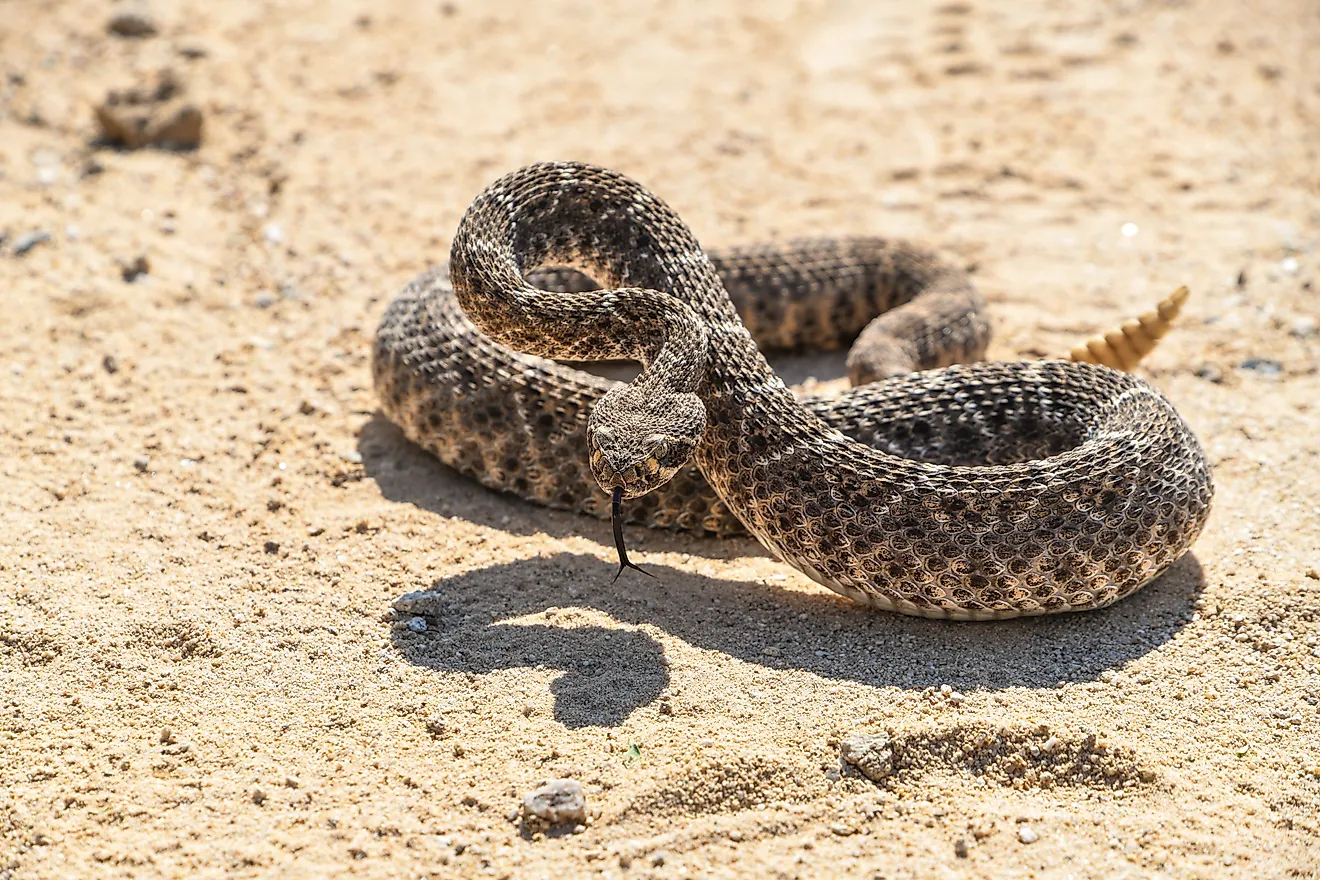
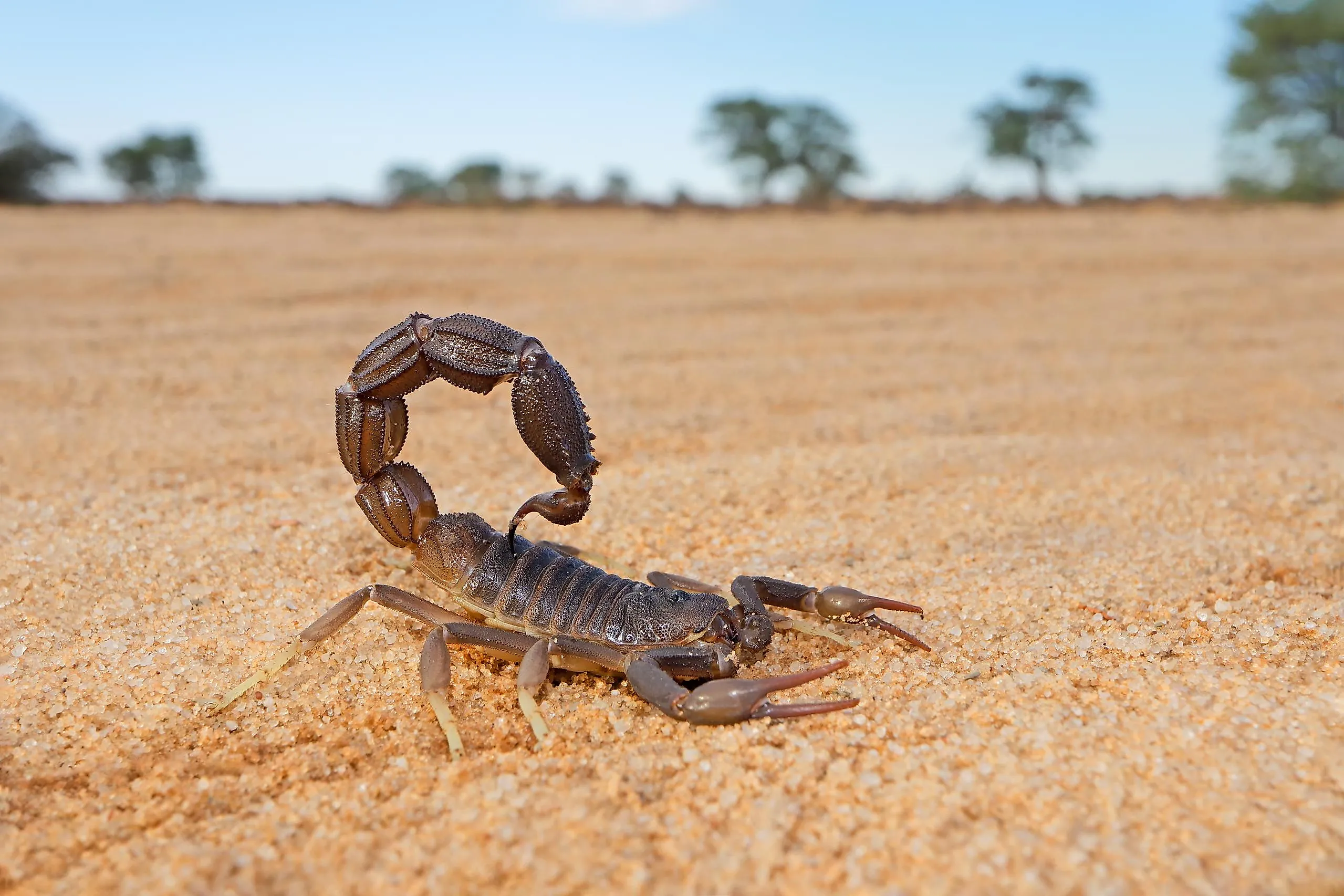
Phoenix recorded scorpion exposures at rates of up to 677 per 100,000 residents between 2010 and 2015, with Tucson close behind at 584. Those were the highest rates found in a national study of poison control data published in the American Journal of Public Health. The real concern centers on just one small, straw-colored species. The Arizona bark scorpion is the only scorpion in the United States whose sting is considered hazardous to humans, and its range is centered on the Sonoran Desert of Arizona and spills into neighboring states. While it is true that every other native scorpion can sting, the result is usually closer to a bee sting than a life-threatening emergency. No state agency counts scorpions park by park. Instead, here are the state parks where scorpions are best documented: parks with published species lists, parks inside the bark scorpion's range, and parks whose rangers lead after-dark scorpion hunts for the curious. Those hunts happen at night for a reason: under ultraviolet light, scorpions glow.
Anza-Borrego Desert State Park, California

In 2011, scientists described a new species of scorpion and named it after a state park where it made its home. Hadrurus anzaborrego, the Anza-Borrego giant hairy scorpion, is described in the journal Euscorpius as a species found primarily in Anza-Borrego Desert State Park. Covering more than 600,000 acres in a western section of the Sonoran Desert, the park is the largest in California.
Scorpions here are unusually well studied, thanks to the University of California's Anza-Borrego Desert Research Center. It publishes a species table for the park, drawn from a 2013 photographic survey, and lists four scorpion species. Two are sand scorpions, the desert sand scorpion and the Borrego sand scorpion. The other two are giants: the Arizona giant hairy scorpion and the park's namesake. A 2018 University of California student research journal included a study estimating the distribution and population of the Borrego sand scorpion, which researchers find at night by its distinct glow under a black light.
Amateur naturalists use the same trick. Hobbyists have also photographed giant hairy scorpions under UV light at Borrego Palm Canyon Campground. The dangerous bark scorpion is not on the park's list, but the four species that are here can still deliver a painful sting without mortal danger.
Picacho Peak State Park, Arizona

Drivers on Interstate 10 between Phoenix and Tucson can't miss Picacho Peak State Park, featuring a 1,500-foot peak rising out of the Sonoran Desert. But after dark, the rangers here turn their attention to the ground. For the 2026 to 2027 season, the park runs a ranger-led Scorpion Hunt, with sessions scheduled for November 2026 and February and March 2027. Participants meet in the Harrington Loop parking lot and are asked to bring their own blacklight. Rangers search under rocks, in bushes and on open ground, then, once they uncover them, they walk the group through each scorpion's anatomy from pincers to tail.
Arizona has plenty to find. The Arizona Department of Agriculture estimates that 40 to 60 scorpion species live in the state. Only one, the bark scorpion, is of medical concern, and the department offers fair warning: the bark scorpion measures 1 to 3 inches, hides under rocks, logs and tree bark, and is most often found in rocky areas.
Picacho has no shortage of rock where scorpions can hide. The park's best-known daytime challenge, the Hunter Trail, climbs 1,600 feet over the roughly 3.2 miles round-trip, with steep switchbacks, rock scrambles and several sections where hikers pull themselves up on steel cables. On a trail like that, it pays to look before grabbing a ledge, as you may be sharing it with a scorpion.
Lost Dutchman State Park, Arizona

Forty miles east of Phoenix, Arizona, Lost Dutchman State Park covers about 320 acres of Sonoran Desert at the base of the Superstition Mountains. On a single evening hunt in 2019, a group led by ranger Anna Roberts gathered about 25 scorpions in roughly an hour as reported by the Associated Press. Roberts identified three varieties in the haul: stripe-tailed, yellow ground and giant hairy scorpions.
None of the three is dangerous to humans. University of Arizona Cooperative Extension describes the stripe-tailed and yellow ground scorpions as having relatively mild venom. The Arizona giant hairy scorpion is the largest scorpion in the country, often more than 5 inches long. It is a useful neighbor, as it eats the more dangerous bark scorpions.
The glow that made the hunt possible is still a puzzle. Black lights were the key tool that night, because scorpions glow under them, although scientists don't know why. Lauren Esposito, curator of arachnology at the California Academy of Sciences, told the AP that the mystery is "the million-dollar question." Some researchers think the glow helps deter predators, while others suspect it may attract prey. For curious visitors, the explanation matters less than the result: a handheld UV flashlight makes these arachnids that are nearly invisible by day easy to spot at night.
Valley of Fire State Park, Nevada

The state legislature designated Valley of Fire State Park in 1935, making it Nevada's oldest state park. It now covers roughly 46,000 acres of red Aztec sandstone in the Mojave Desert, about 50 miles northeast of Las Vegas.
A 24-year-old Canadian tourist was climbing the trails at Valley of Fire one early summer when a bark scorpion stung her on the back of her right hand. According to a 2013 case report in JEMS, an emergency medical services journal, she developed intense pain, itching, hives and shortness of breath. Paramedics treated her on the way to the hospital, where she received more medication. Doctors found no signs of envenomation, so antivenom was not given. She went home after about four hours of observation and then proceeded to finish her vacation, hopefully scorpion free.
The Arizona Department of Agriculture includes Nevada in the bark scorpion's U.S. range, and the species is well known in the Las Vegas Valley. How it got there is debated. Nevada's state entomologist told the Las Vegas Sun in 2006 that bark scorpions had spread across Las Vegas since first appearing around 1990. A University of Nevada Cooperative Extension specialist told the Las Vegas Review-Journal that there is evidence of native bark scorpions in the region. Either way, the broken sandstone at Valley of Fire offers the kind of rocky cover the species favors.
Snow Canyon State Park, Utah

Snow Canyon State Park has flipped scorpion anxiety on its tail in one of its most popular evening programs. The park's Scorpion Safari takes visitors into the canyon after dark with park staff and blacklights, with the goal of busting myths and replacing fear with fascination. Registration is required, and in 2025 the program ran from 8:30 to 10 p.m. The 7,400-acre park near Ivins and St. George sits among lava flows and red and white Navajo sandstone cliffs at the Mojave Desert's northeastern edge in Utah.
What the safari turns up may surprise those who assume every Southwest scorpion is a bark scorpion. Utah State University Extension recognizes nine scorpion species in the state. Its fact sheet, like University of Utah Poison Control, places the bark scorpion, the only species considered potentially harmful, in Kane County, east of Snow Canyon. For Washington County, where Snow Canyon sits, the USU table lists a medium-sized sand scorpion, Paruroctonus becki, and it places the Arizona giant hairy scorpion here in southwestern Utah.
That distinction is worth knowing. Several St. George pest-control companies advertise bark scorpion treatment across Washington County, but the state's own extension service does not map the species there. Therefore, a scorpion glowing on a Snow Canyon trail is far more likely to be one of the harmless burrowers.
Davis Mountains State Park, Texas

Most scorpion lists stop at Arizona, but West Texas earns a place here. Texas has 18 scorpion species, according to Texas A&M AgriLife Extension, with West and South Texas having the largest number. AgriLife's count puts eight species in the Fort Davis region, compared with one in the Dallas area and two near Austin. That places Davis Mountains State Park, just outside the town of Fort Davis, in one of the most scorpion-diverse corners of the state.
The park covers about 2,700 acres on what Texas Parks and Wildlife calls a sky island, an elevated pocket of grasslands and mountains rising above the Chihuahuan Desert at more than 5,000 feet. The higher elevation makes it cooler and wetter than the surrounding desert. Volcanic rock forms the canyon walls along Limpia and Keesey creeks. The springs in Limpia Canyon are vital to wildlife in an otherwise dry landscape.
The scorpion visitors are most likely to meet is the striped bark scorpion, the only species found throughout Texas. Despite the name, it is not the dangerous Arizona species. A Texas A&M AgriLife field guide states that no scorpions in Texas are considered lethal to humans. Guests at the historic Indian Lodge, the adobe hotel the Civilian Conservation Corps built inside the park, should still use caution and shake out their shoes in the morning.
Ha Ha Tonka State Park, Missouri

Missouri seems an unlikely place for scorpions, but Ha Ha Tonka State Park has them. Missouri State Parks says striped bark scorpions and Missouri tarantulas can be found on the park's open, rocky glades, which support plants and animals similar to those of the southwestern United States. The park sits on the Niangua Arm of the Lake of the Ozarks and is the state's showcase of karst geology, with a natural bridge that rises more than 100 feet and the stone ruins of a hilltop castle.
The striped bark scorpion is the only scorpion in Missouri, according to the Missouri Department of Conservation, and lives mainly in the Ozarks and elsewhere in the southern half of the state. It favors glades with plenty of loose rock, such as limestone or dolomite, where it can hide from the sun during the day. The department lists Ha Ha Tonka among Missouri's dolomite glade sites. These scorpions average 1 to 1½ inches long and come out at night to hunt insects and spiders, so a flashlight beam on a glade after dark may reveal one.
University of Missouri Extension describes the sting as similar to a bee or wasp sting, with pain, swelling and redness that last a few hours. The conservation department also asks visitors not to keep flipping rocks on glades, because doing so destroys the shelter underneath that glade animals need.
What Actually Stings, And Where

Across all seven parks, one pattern holds. Scorpions are common and relatively easy to find with a blacklight, but only the Arizona bark scorpion poses a real medical risk. Its range centers on Arizona and reaches into southeastern California, southern Nevada, southern Utah and southwestern New Mexico. But even where these stingers strike, deaths are extremely rare. University of Arizona Cooperative Extension reports four U.S. deaths in 11 years, and an antivenom, Anascorp, is available in some hospitals for severe cases. Very young children and older adults face the greatest risk, and the extension advises treating a sting in a child under 9 as serious. Most stings happen when someone accidentally grabs, crushes or steps on a scorpion. It's more likely to happen at home than on the trail. A Banner Good Samaritan Poison and Drug Information Center study cited by the Arizona Department of Health Services found that 33 percent of stings happened in the bedroom. For anyone stung, the Poison Help line at 1-800-222-1222 is the number to call. Shake out your boots, sleeping bags, carry a light after dark, and let the glow warn you to keep your distance.