The State Parks Where You Can Camp Right On The Beach
Few experiences compare to starting the day with the sound of crashing waves and the fresh scent of salt water nearby. There are different ways to experience beach camping in the US, from the coast of California to remote, island-like escapes in North Carolina. Each destination is shaped by its landscape and access requirements: San Elijo State Beach combines ocean camping with nearby amenities, while False Cape State Park offers a quieter, largely undeveloped setting. Whether you prefer falling asleep to the Pacific waves or uncovering untouched dunes, these destinations are among the best places to camp on the beach.
San Elijo State Beach, California

Camping at San Elijo State Beach is a relaxing way to enjoy the San Diego area of California's coast. Campsites overlook the Pacific, with stairs that lead directly to the beach for surfing, bodyboarding, or watching the waves. Nearby is San Elijo Lagoon, a good place to watch shorebirds, seabirds, and other native wildlife, while Cardiff-by-the-Sea is a quick walk for food or supplies.

Campers should avoid feeding wildlife by securely storing food to discourage local raccoons and gulls, and also be mindful of stingrays in the shallow surf when entering the water. Regulations include quiet hours from 10:00 PM to 6:00 AM, with a limit of eight people and three vehicles per campsite. There is a strict policy of keeping dogs leashed in the campground because they are not allowed on most beach areas. One vehicle is included with each campsite reservation, while the second and third vehicles cost an additional $15 per night.
Gold Bluffs Beach at Prairie Creek Redwoods State Park, California

Gold Bluffs Beach Campground provides an unrivaled coastal experience, where the sound of crashing waves merges with the quiet of towering redwood trees nearby. The campground sits beside grassy dunes where wild Roosevelt elk are often seen grazing. The standard Fern Canyon Loop is a short route of about a mile with uneven, often wet footing, while longer approaches through the park are more strenuous. Campsites cost $35 per night, and campers who show a current campsite tag skip the Gold Bluffs Beach day-use reservation required of other visitors between mid-May and mid-September. Because wildlife is common, campers should store all food in the provided bear-proof lockers and admire elk from a safe distance without trying to approach or feed them. Davison Road prohibits trailers and vehicles over 24 feet long or 8 feet wide; smaller RVs are allowed but discouraged because the road is narrow, single-lane, and unpaved, and the campground has no hookups. Dogs are allowed on the beach and in the campground area if kept on a leash, but are not permitted on park trails or inside Fern Canyon.
Point Mugu State Park, California

Camping at Point Mugu State Park is a unique way to experience both the beach and the mountains at the edge of the sand, in one trip. Thornhill Broome sits directly on the beach but is subject to frequent tidal flooding, and vehicles or vehicle-trailer combinations exceeding 31 feet are denied entry. Campers should confirm conditions and dimensions before arriving. There are more than 70 miles of hiking trails, including entrances at Sycamore Canyon, La Jolla Canyon, and the Ray Miller Trailhead, all with scenic ocean views. Seeing wildlife is common throughout the park, and some visitors may spot migrating gray whales offshore during the winter and spring, along with deer, coyotes, and rattlesnakes on the trails. Campsites generally range from $35-$45 per night, depending on the campground, so early reservations are recommended. Campers should observe quiet hours from 10:00 PM to 6:00 AM, keep dogs on leashes in designated areas, and follow campsite occupancy of eight people per site with a two-vehicle limit.
Bear Island at Hammocks Beach State Park, North Carolina

Bear Island at Hammocks Beach State Park is an ideal place to camp if you're looking for a quiet coastal experience away from the crowds. Oceanfront sites 001-008 can be reached by the seasonal ferry, private paddlecraft, or boat, but sound-side sites 012-014 are boat-in only and have no ferry or bathhouse access. All campers must check in at the mainland visitor center at least an hour before it closes, and late arrivals are not accepted. Visitors can enjoy swimming, collecting shells, paddling through salt marshes, or dolphin watching. Depending on the season, visitors may encounter nesting shorebirds along the beach and dunes and loggerhead sea turtle nests above the high-tide line. Campers should respect wildlife by keeping their distance and avoiding bright white lights on the beach from May through October to protect the turtles in their habitat. Bear Island's primitive campsites have no vehicle access or electricity and currently cost $20 per night, while seasonal ferry transportation requires a separate ticket. Open fires are prohibited, and camping is allowed only at assigned numbered sites.
False Cape State Park, Virginia

False Cape State Park is a great choice for campers looking to disconnect and experience a peaceful, untouched stretch of coastline. For camping directly on the beach, choose an ocean-side site in the Barbour Hill Ocean or False Cape Landing Ocean area; the park’s other campsites face Back Bay. Because visitors can only arrive by hiking, biking, or boat, the park maintains a remote feel that sets it apart from busy beach destinations. Visitors can spend their time surf fishing, paddling on Back Bay, exploring the historic Wash Woods area, or watching migratory birds that pass through the park.

Wildlife such as deer, foxes, snakes, and mosquitoes are common, so campers should store food properly, stay aware on the trails, and respect protected nesting areas. False Cape offers tent-only primitive camping for $21 per night for Virginia residents and $27 for nonresidents, plus tax and a $5 transaction fee; advance phone reservations are required, and same-day reservations are not accepted. Campers should carry ample water and supplies. Potable water is available at three Barbour Hill locations, while False Cape Landing has only nonpotable washing water. Campers must also pack out trash, cross the refuge in daylight, and stay off protected dunes.
Sea Rim State Park, Texas

Sea Rim State Park provides a back-to-nature camping experience, blending the solitude of a remote beach with the unique wildlife of coastal wetlands. The park's 5.2 miles of Gulf shoreline and nearby marshlands provide opportunities for swimming, horseback riding, kayaking, and fishing without a state license when you're fishing from shore within park boundaries. Campers might spot migratory birds, crabs, and American alligators, so it is important to keep a safe distance, store food properly, and keep dogs on leashes.
Sea Rim has 15 reservable electric sites at $20 per night and 75 nonreservable West Beach primitive sites at $10 per night, plus the $4 daily adult entrance fee; its $15 floating campsite is currently closed for repairs. The park’s on-the-beach campsites are the nonreservable primitive sites in the West Beach camping area, while the electric sites sit behind the dunes near the boardwalk. Weather and tides can affect availability, so be sure to check in advance before arriving. Visitors must pack out all trash, and ground fires are allowed only in designated beach areas.
Grand Isle State Park, Louisiana

Grand Isle State Park offers one of Louisiana’s most direct beach camping experiences, with 14 designated tent campsites along the Gulf shoreline. These beach sites allow campers to wake up near the waves, while 49 premium RV campsites sit just a short walk from the water and include electrical and water hookups. Visitors can spend the day swimming, surf fishing, crabbing, birdwatching, or walking the park’s 2.5-mile nature trail. Migratory birds frequent the lagoons and shoreline, while dolphins, stingrays, and jellyfish may appear in the surrounding Gulf waters. Beach tent sites cost $18 to $27 per night plus tax, and each reservation carries a $4.50 transaction fee. Campers should watch for strong currents and rip currents, avoid swimming alone, and shuffle their feet when entering shallow water to reduce the risk of a stingray encounter. Dogs and glass containers are not allowed on the beach or in the water.
Bahia Honda State Park, Florida

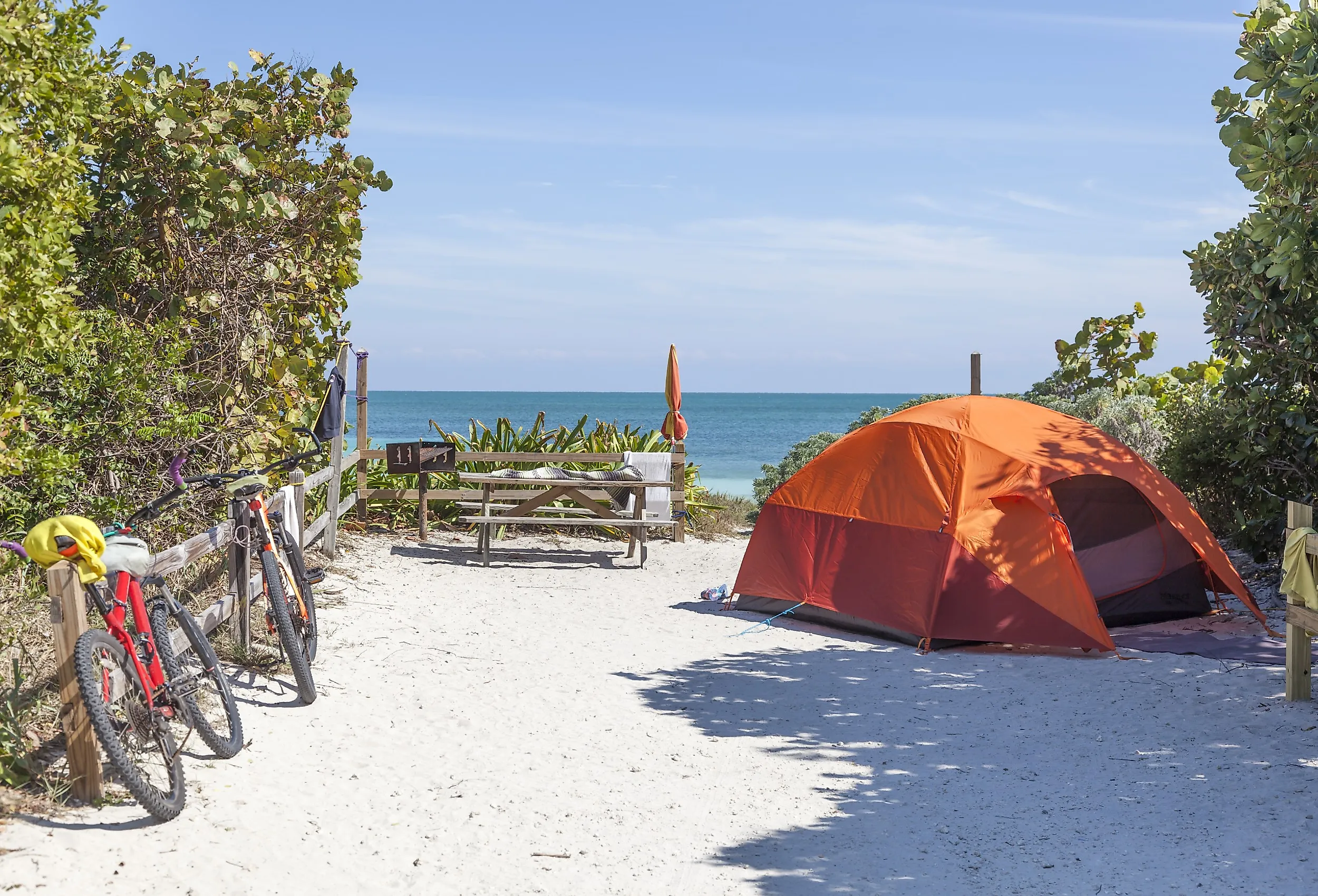
Bahia Honda State Park offers a tropical camping experience surrounded by the clear water and sandy shores of the Florida Keys. Sandspur Campground’s sites are set on gravel pads immediately beside the beach, allowing campers to reach the shoreline within a short walk. Buttonwood Campground also has waterfront sites overlooking the marina or channel, while the smaller Bayside Campground provides primitive sites near the water. Visitors can spend their time swimming, snorkeling, kayaking, watching shorebirds, or walking the trail onto the historic Bahia Honda Bridge. Campsites cost $36 per night before taxes and reservation fees, and reservations are strongly recommended because the park frequently fills far in advance. Campers should monitor the park’s beach-warning flags, remember that no lifeguards are present, and avoid swimming when strong currents or hazardous conditions are reported.
Oceanfront Views
Coastal camping is far from a one-size-fits-all experience, with each campground offering a unique landscape, activities, and connection to nature. For those seeking solitude, places like Bear Island and False Cape State Park create a deeper connection with nature by requiring visitors to slow down and travel by boat, bike, or foot. Every location comes with responsibilities, including protecting nesting wildlife and following fire, pet, and camping regulations. Planning ahead for fees, access requirements, and campground restrictions allows visitors to have a safer and more enjoyable experience while preserving these beach destinations for future generations.