The Best Coastal State Parks In America
Coastal state parks sit near waterways and diverse marine ecosystems such as salt marshes, tide pools, and coastal lagoons. Beyond historic landmarks and scenic landscapes with dramatic cliffs, they offer a variety of recreational opportunities, including surfing the swells of the Atlantic Ocean or swimming in the calm waters of the Chesapeake Bay. Add fishing, boating, and waterfront camping to round out the list. These eight state parks share a geographic connection to the coast, whether on the Atlantic, the Pacific, or the Gulf of Mexico.
Ecola State Park, Oregon

Ecola State Park combines its coastal location with historic expeditions and the peaks of Tillamook Head. The 1,023-acre park spans nine miles of the Pacific Coast, between Seaside and Cannon Beach, Oregon. It offers views of old-growth Sitka spruce forests, Tillamook Rock, and Haystack Rock, the iconic rock formation featured in the 1985 movie The Goonies. Indian Beach and Ecola Point have tide pools, where marine life like sea anemones, starfish, crabs, and mussels can often be found. Indian Beach is also a popular surfing spot, and elk, eagles, and migrating gray whales can sometimes be seen in the area.
On the historic front, Captain William Clark, along with 12 members of the Corps of Discovery, traveled through the area that is now the park in 1806. Part of the park's Clatsop Loop Trail and near Tillamook Head follow their path. The park's original tract was acquired in 1932, and the park is managed by the Oregon Parks and Recreation Department.
Huntington Beach State Park, South Carolina

Set on a barrier island on Myrtle Beach's Grand Strand, Huntington Beach State Park features a historic structure and diverse habitats on a wide, three-mile stretch of Atlantic Ocean beach. The 2,500-acre property preserves marshland, maritime forests, and fresh and saltwater habitats that are home to sea turtles, alligators, and more than 300 bird species, including great blue herons and eagles.
Located within the park, Atalaya is a Moorish and Spanish Mediterranean castle from the 1930s. A National Historic Landmark, it is the former home of Archer and Anna Hyatt Huntington, a philanthropist and sculptor. The Kerrigan Nature Trail has a boardwalk and an observation deck over Mullet Pond, while the Sandpiper Pond Nature Trail has the Maxwell Observation Deck that overlooks Sandpiper Pond, where egrets can often be seen. Other activities include swimming, fishing, and camping. Established in 1960, the park is managed by the South Carolina State Park Service.
Fort Macon State Park, North Carolina

Another Atlantic park with connections to American history, Fort Macon State Park is marked by salt marshes, dunes, and scenic beaches. On Bogue Banks near Atlantic Beach, it is located on a restored pre-Civil War site with a brick fort. Guided tours and cannon and musket firing demonstrations, along with exhibits on the property's history, are available. The park opened in 1936 as North Carolina's first functioning state park. The North Carolina Division of Parks and Recreation manages it. Activities include swimming, nature viewing, and birdwatching, with more than 300 bird species identified in the area.
Roque Bluffs State Park, Maine

Roque Bluffs State Park, on Maine's Atlantic Coast, pairs beach access with walking trails past fields, forests, and salt marshes. The park covers 274 acres overlooking Englishman Bay from Schoppee Point, offering a vantage point to spot bald eagles and Gadwall ducks. Established in 1969, the Maine Department of Agriculture, Conservation and Forestry manages the park. There is a half-mile beach cove and a freshwater pond, the 60-acre Simpson Pond. The quiet park also offers boating, picnicking, and a playground.
Mustang Island State Park, Texas

More than five miles of Gulf coastline make Mustang Island State Park a scenic coastal park, with activities such as swimming, fishing, kayaking, and camping. The terrain includes sand dunes and tidal flat ecosystems. The park comprises 3,954 acres on Mustang Island, near Corpus Christi. The Mustang Island State Park Paddling Trail leads along Corpus Christi Bay, with about 20 miles of trails through shallow water, where fishing and birdwatching are top activities. Mustang Beach, parts of which are within the state park, is an 18-mile-long stretch of barrier island beachfront. Established in 1972, the park officially opened in 1979. It is named for wild horses brought by Spanish settlers, though the horses have been gone since the late 1800s.
Galveston Island State Park, Texas

Another Texas Gulf Coast park, Galveston Island State Park protects approximately 2,013 acres on the Gulf of Mexico and West Bay, with four miles of trails winding through a variety of ecosystems. Opened in 1975, the Texas Parks and Wildlife Department manages the park. Fishing, kayaking, and birdwatching are popular, as well as swimming. The Galveston Island State Park Paddling Trail has three different sections that are between two and five miles in length, including the Dana Cove Paddling Trail and the Oak Bayou Paddling Trail. The park has a nature center with exhibits on wildlife and plants, as well as an observation platform and boardwalks that lead over dunes and marshes.
First Landing State Park, Virginia

First Landing State Park, encompassing about 2,888 acres on the Chesapeake Bay, functions as both a historical and a natural landmark. It features boardwalks through wetlands, forest trails, and calm Bay waters for swimming. The park opened in 1936 as Seashore State Park. It was renamed First Landing in the late 1990s in honor of the 1607 landing of the Virginia Company colonists who, led by Christopher Newport, eventually went on to establish the Jamestown Settlement. The Virginia Department of Conservation and Recreation manages it through the Virginia State Parks system. The park is located in a transition zone between southern and northern ecosystems, resulting in an overlap of animals, plant life, and habitats. More than 19 miles of trails for hiking and bicycling span cypress swamps and maritime forests.
Grayton Beach State Park, Florida

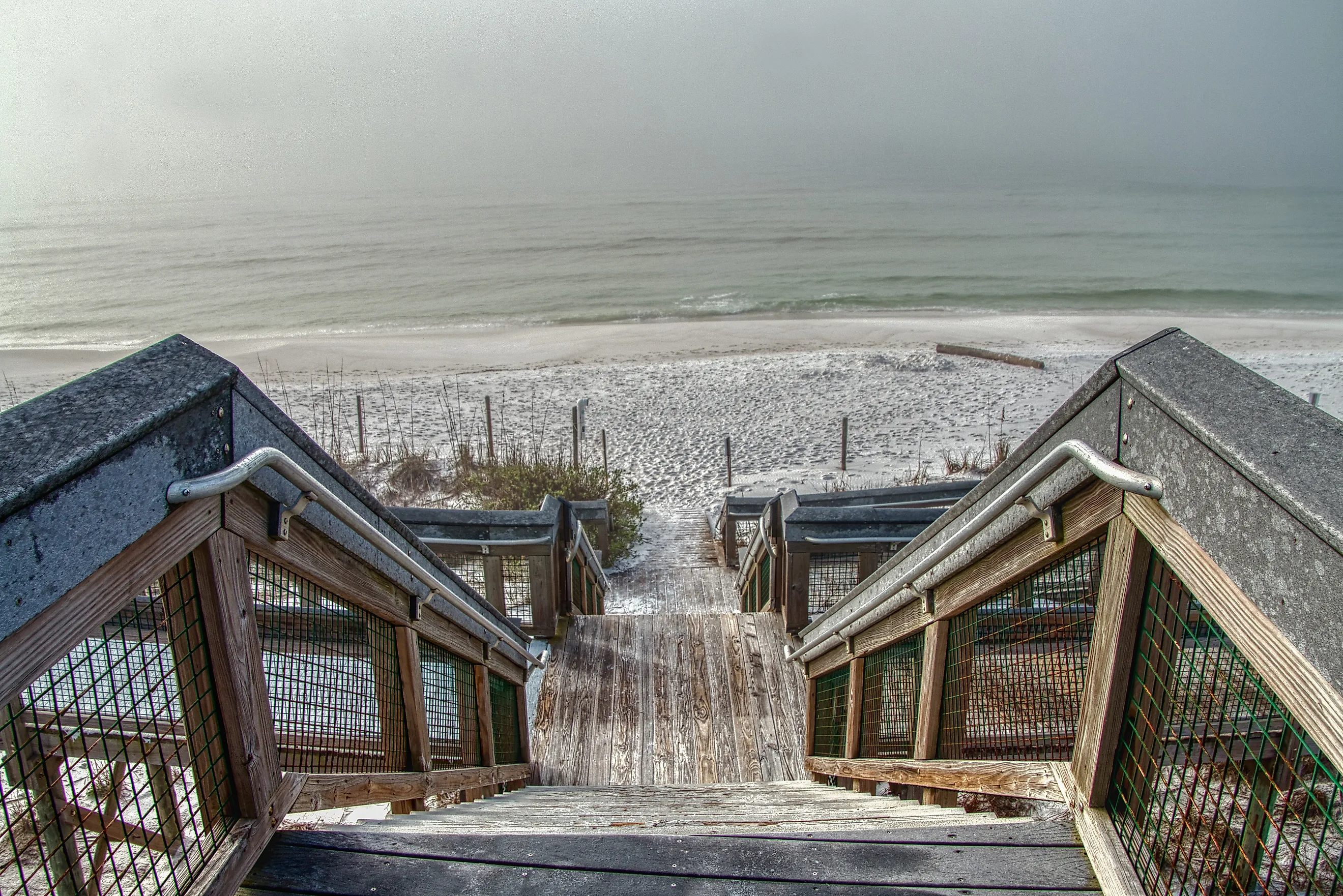
Grayton Beach State Park trades the Bay for the Gulf with its 2,200 acres of scenic beaches and rare coastal dune lakes. Set between Destin and Panama City Beach, along Scenic Highway 30A, it is defined by the natural beauty and wildlife of the Gulf Coast. It has one mile of beachfront and more than four miles of hiking and bicycling trails through coastal forest habitats. Western Lake is popular for fishing and kayaking, while the Great Florida Birding Trail provides opportunities to see a variety of shorebirds. Dedicated and opened in 1968, Grayton Beach State Park is managed by the Florida Department of Environmental Protection through the Florida Park Service.
Coastal State Parks
These state parks personalize their coastal identity through scenic beaches, diverse marine habitats, and native wildlife, giving each park a distinct character and a range of natural and cultural resources. Across the Atlantic Coast and Chesapeake Bay, parks feature historic forts and landing sites associated with the colonization of Jamestown. On the Pacific Coast, Oregon's Ecola State Park looks out over coastal cliffs and sea stacks. Similarly, Fort Macon State Park, on North Carolina's Atlantic Coast, combines a historic fort with dunes and salt marshes. These parks demonstrate how coastal landscapes can integrate natural resources, outdoor recreation, and historical significance to create distinctive visitor experiences.