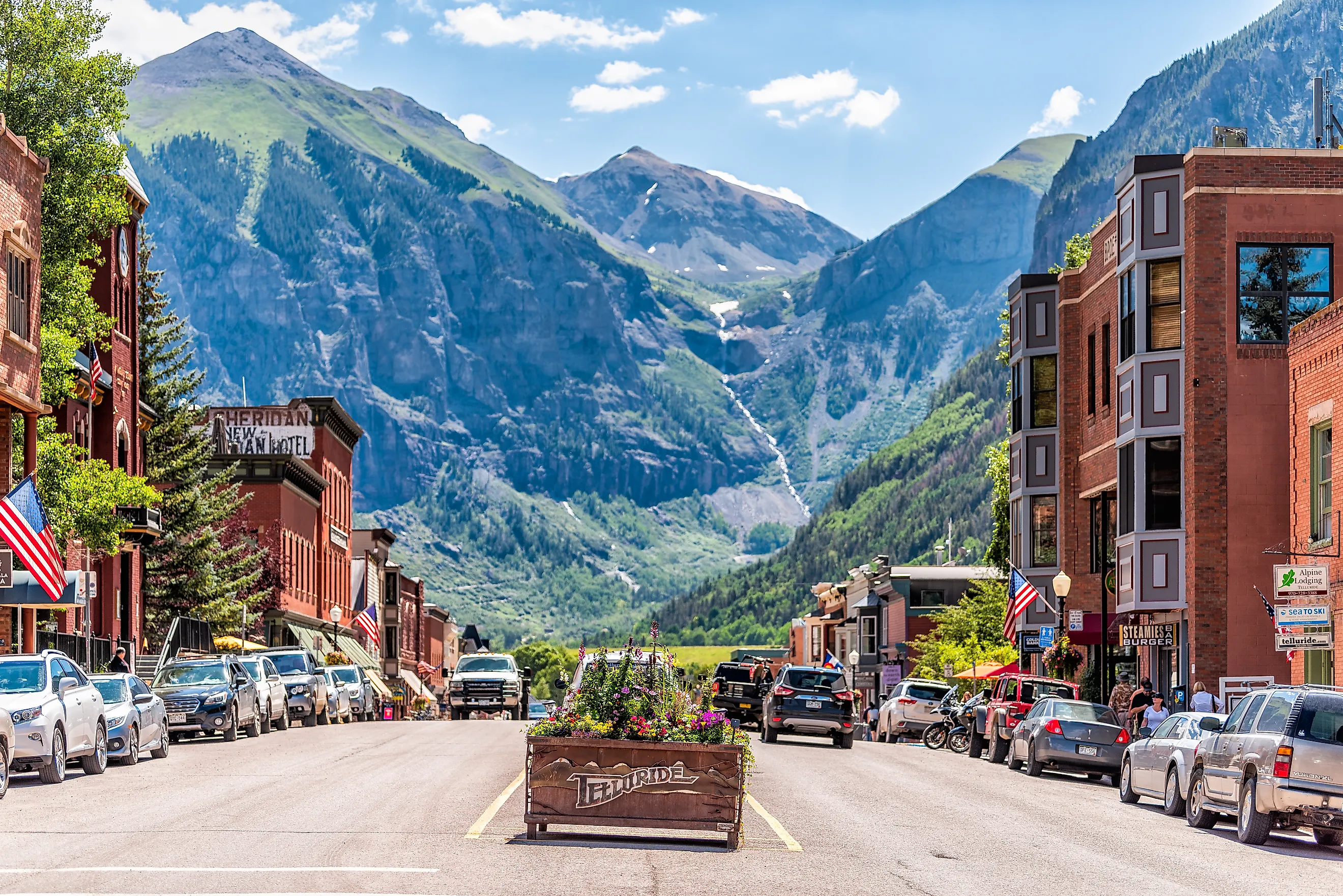
8 Best Downtowns In Colorado
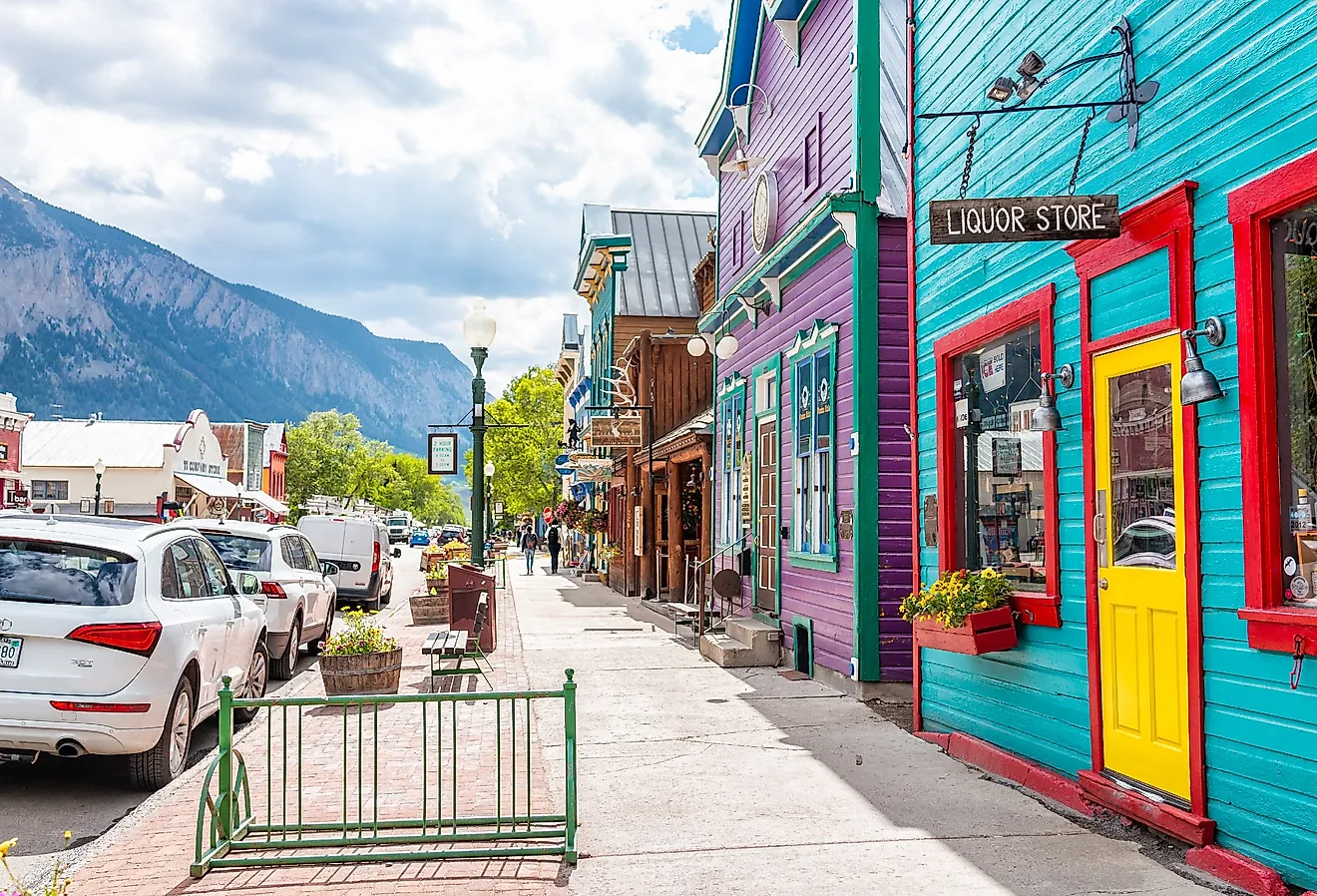
Colorado's downtowns tell the story of the state better than anywhere else. Most grew out of the same rough origins (gold rushes, silver strikes, and railroad depots) and many have main streets to show it. Telluride's Colorado Street still carries the brick and stone buildings that replaced its original wooden structures after the Rio Grande Southern Railroad arrived in 1891. Georgetown's Victorian architecture dates to the silver boom of the 1860s. Salida's F Street, the largest National Historic District in the state, rose from the ashes of two fires that forced its founders to build in brick. Here are eight Colorado downtowns, each shaped by a distinct chapter of the state's past.
Telluride

Telluride is a mountain town in southwestern Colorado at about 8,750 feet above sea level. Its downtown is a National Historic Landmark District. Telluride Ski Resort offers a 4,425-foot lift-served vertical drop across more than 2,000 acres, with high-end lodging along the slopes and views of the San Juan Mountains.
Telluride is made up of roughly 300 buildings dating to the 1880s and 1890s. After the Rio Grande Southern Railroad arrived in 1891, wood-frame buildings gave way to the brick and stone that still line Colorado Street. The Telluride Historical Museum covers the silver and gold operations that shaped the canyon's economy, including the 1889 robbery of the San Miguel Valley Bank on Colorado Street, Butch Cassidy's first major job (the gang made off with roughly $24,000). At the eastern end of the box canyon, Bridal Veil Falls cascades 365 feet and is commonly cited as Colorado's tallest free-falling waterfall. Telluride operates the only free public gondola in the United States connecting the town and Mountain Village, running daily from 6:30 AM to midnight since December 1996.
Ouray

Surrounded by the peaks of the San Juan Mountains at 7,792 feet, Ouray sits in a geographic bowl where the surrounding ridges rise above 12,000 feet. The town is nicknamed the "Switzerland of America." The Ouray Historic District is a 114-acre site with Italianate commercial buildings, listed on the National Register of Historic Places in 1983. Each January, the Ouray Ice Festival runs along the Uncompahgre Gorge and draws elite ice climbers from around the world.
At the southern end of Main Street, the Beaumont Hotel (a four-story Victorian landmark built in 1886) is individually listed on the National Register. The Ouray Alchemist Museum holds a large collection of historic pharmaceutical artifacts, and the Bachelor Syracuse Mine offers tours of a late-1800s gold mine. The town's hot spring pools trace back to Ute use well before Euro-American settlement; the Ute believed the warm mineral water had healing properties. The water runs clear and notably free of the sulfur smell common to most hot springs.
Salida

A designated Creative District, Salida sits in the Upper Arkansas Valley between the Sawatch and Sangre de Cristo Mountain ranges at about 7,000 feet. Known as the "Heart of the Rockies," Salida is surrounded by 14,000-foot peaks but sits in a local banana belt. After fires destroyed much of the commercial core in 1888 and 1892, the town banned wooden construction, which is why F Street still features the warm reddish-tan brick visible today. Salida's downtown historic area is the largest National Historic District in Colorado, with about 111 Victorian brick buildings, added to the National Register in 1984.
The Arkansas River runs roughly 148 miles between Leadville and Pueblo Reservoir, passing through Salida with world-class rafting, fishing, and swimming access at the downtown beach. The surrounding terrain supports biking across the Arkansas Hills and Methodist Mountain, backpacking, horseback riding, and hot springs soaking. Salida's public art scene is substantial: murals run throughout downtown, and the Salida Artwalk in June showcases temporary and permanent works from local artists, drawing travelers from across the state.
Breckenridge

Breckenridge sits at the base of the Tenmile Range and is among the highest-elevation incorporated towns in the United States. The town was listed on the National Register of Historic Places in 1980 for its preservation of 19th-century mining-era buildings. The historic district spans 45 complete and partial blocks and includes 249 preserved buildings dating from the 1859 gold rush into the late Victorian era. The Barney Ford House Museum at 120 East Washington Avenue honors Barney Ford, a formerly enslaved man who escaped to freedom and became one of the most successful Black businessmen and civil rights advocates in Colorado.
Breckenridge runs year-round alpine activity: dog sledding, sleigh rides, skiing, and snowboarding at Breckenridge Ski Resort in winter, and Epic Discovery at Peak 8 in summer, which includes 2,600-foot alpine slides. The town also supports horseback riding along the Tenmile Range at Peaks 9 and 10, whitewater rafting, and gold-rush tours. For hiking and mountain biking, the 14er Quandary Peak (14,265 feet) offers a demanding climb with wildlife including mountain goats, pikas, and marmots.
Georgetown

Nicknamed the "Silver Queen of the Rockies" for its role as a silver hub between the 1860s and 1890s, Georgetown sits about 45 miles west of Denver along I-70. It is known for Victorian architecture, the Georgetown Loop Railroad, and a central role in 19th-century silver mining. Brothers George and David Griffith found gold in the area first in 1859, but it was silver that drove the town's real growth. The Georgetown-Silver Plume National Historic Landmark District, designated in 1966, holds over 200 original Victorian structures across the two towns. The Hotel de Paris Museum (1875) and the Hamill House Museum (built in 1867 for William Arthur Hamill) are both on the National Register and hold strong collections of 19th-century furniture and interiors.
The Georgetown Loop Railroad, completed in 1884, rises 638 feet over a 4.5-mile trackage of switchbacks and has operated seasonally since its 1984 restoration. It runs spring through early January with scenic Rocky Mountain views and mine-park tours. Georgetown's event calendar includes the Fourth of July, the Bighorn Sheep Festival, and Christmas Market weekends.
Durango

Durango carries a strong mix of dramatic landscape, skiing terrain, rivers, and a famous narrow-gauge railroad. Founded in 1880 by the Denver and Rio Grande Railway as a supply base for the silver mines at Silverton, Durango is a National Historic District filled with late-19th- and early-20th-century architecture, hotels, restaurants, galleries, and shops. The Main Avenue Historic District lists 86 contributing buildings on the National Register. The Strater Hotel (1887) still operates with Victorian period character. The Durango and Silverton Narrow Gauge Railroad has operated since 1882, with periods of interruption, covering a 45-mile stretch along the Animas River canyon and the San Juan National Forest.
The San Juan National Forest and Mountains cover hundreds of miles of terrain for rock climbing, hiking, and biking. The Animas River and Lake Nighthorse handle canoeing, fishing, boating, and kayaking. The Durango and Silverton line still operates vintage 1920s steam locomotives (the same trains used for the robbery-scene rehearsal in the 1969 film Butch Cassidy and the Sundance Kid). The ride is a strong way to see the Durango area from a historic vantage.
Manitou Springs

Serving as a gateway to Pikes Peak, Manitou Springs is known for mineral springs, mountain landscapes, and a deep local culture scene. Mount Manitou rises to the west, and Garden of the Gods lies a short drive east toward Colorado Springs. The Pikes Peak Cog Railway is the main draw, carrying roughly 750,000 visitors a year on a 9-mile trip up to 14,115 feet on the summit, with the full round trip taking about 3.5 hours. The town has been a tourism destination since the 1870s, drawing visitors for the mineral water that local Ute communities had used for generations.
The springs have distinct mineral compositions worth sampling. The Mineral Springs Foundation runs Springsabouts walking tours covering nine spring sites, and the Chamber of Commerce offers self-guided maps at no cost. Roughly 250,000 visitors a year tackle the Manitou Incline (a 2,744-step climb gaining about 2,000 feet). At 9 Capitol Hill Avenue, the Miramont Castle Museum is a Victorian-era mansion built in 1895 by a French Catholic priest and now run by the Manitou Springs Historical Society. The building combines multiple architectural styles including Byzantine and English Tudor elements and houses exhibits on Victorian life, firefighting history, and the Queen's Parlor Tea Room.
Estes Park

Estes Park sits along the Big Thompson River on the eastern side of Rocky Mountain National Park, about 70 miles north of Denver. The town anchors the eastern gateway to the park, with high-alpine scenery, diverse wildlife, and year-round outdoor access. Elkhorn Avenue is the main business street, lined with over 200 shops and restaurants, with a one-mile riverwalk running behind it along the Big Thompson River. At 333 Wonderview Avenue, the Stanley Hotel, built in 1909 by Freelan Oscar Stanley in Colonial Revival style, is a National Historic landmark and the inspiration for Stephen King's novel The Shining. Elk herds are commonly seen grazing on the grounds. Hiking, biking, miniature golf, and kayaking on the river fill out the local activity list.
Explore The True Beauty Of Colorado
From Telluride's box-canyon alpine setting and Ouray's Switzerland-of-America bowl to Georgetown's loop railroad and the Miramont Castle in Manitou Springs, these eight downtowns cover the range of Colorado's preserved town centers. Railroad junctions, silver strikes, geothermal springs, and gold-rush camps all left their mark, and the towns that held on to enough of their original architecture are the ones worth the trip today.