7 Snake Infested State Parks In Delaware
Delaware is home to 17 state parks, and while 19 species of snakes are found statewide, humans typically encounter only a few. The coastal plain wetlands of the state are where water snakes and racers are primarily found, while other areas of the state are wooded, sandy, or rocky, providing ideal habitats for other snake species. Most snakes in Delaware are nonvenomous and help balance the state's ecosystem by controlling rodent populations.
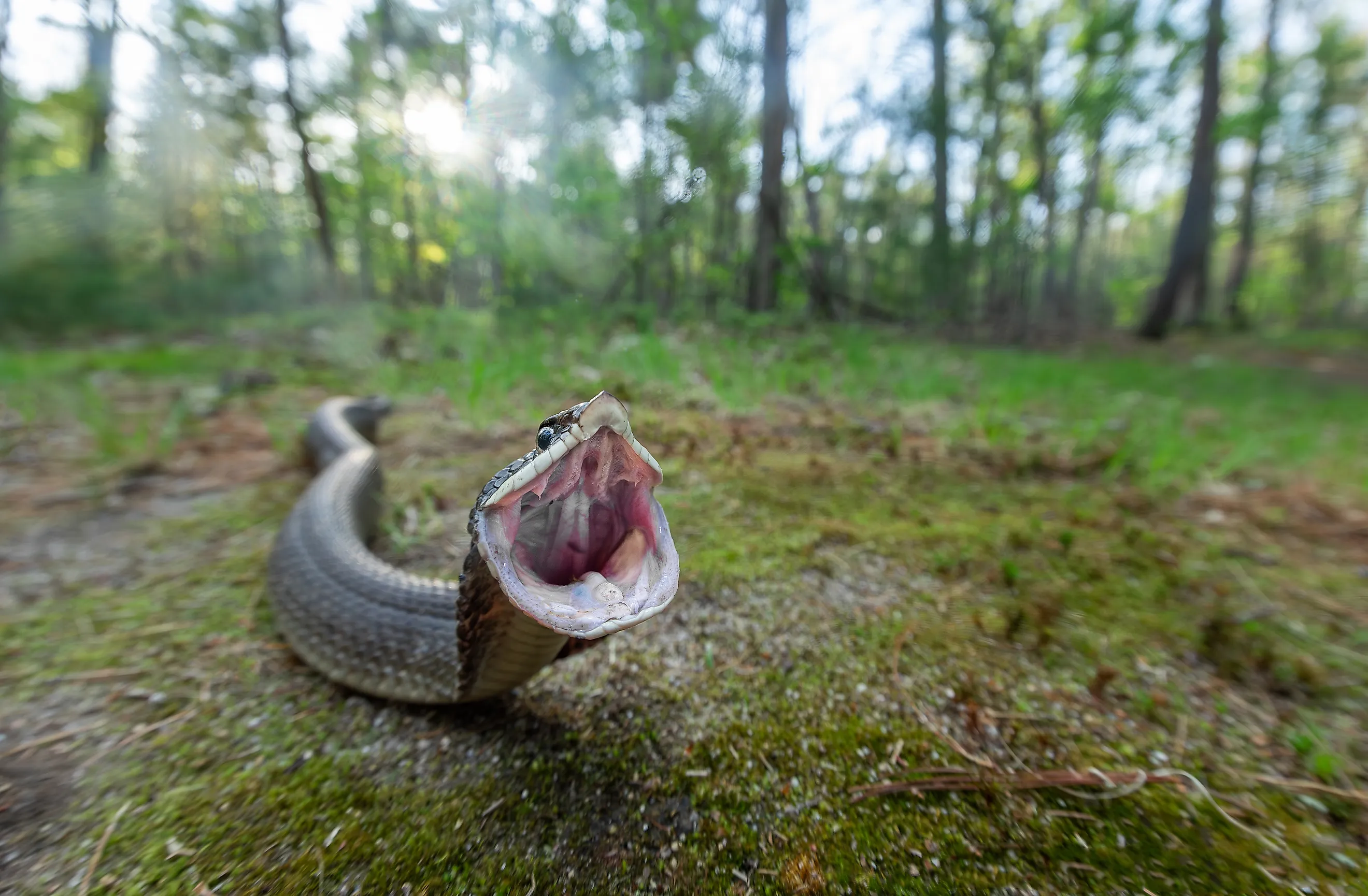
Only one venomous snake species has been seen in Delaware: the Eastern copperhead, and it has only been found in southern Sussex County and the city of Wilmington. Other reported copperhead sightings in the state are usually misidentifications of a rat snake, watersnake, or Eastern hognose snake rather than a copperhead.
Throughout the Delaware state parks listed here, you are most likely to encounter nonvenomous snakes. Read on to discover which snakes tend to live in each of these seven Delaware state parks.
Lums Pond State Park

Named after Delaware's largest freshwater pond, Lums Pond State Park covers 1,790 acres in New Castle County near Bear. It has four trails covering more than 15 miles. The 200-acre Lums Pond was formed in the early 1700s after a creek was dammed in order to support the local mill. The Chesapeake & Delaware Canal Company purchased the pond in the early 1800s. In 1963, the state of Delaware purchased the pond and surrounding area to preserve it for outdoor recreation.

When navigating the park and its trails, including the shoreline and wetlands surrounding Lums Pond, you may spot a variety of nonvenomous snakes, including the common garter snake, ring-necked snake, and the common worm snake. The black racer, another nonvenomous snake, was last seen on the park's Sensory Loop in 2025. The Eastern rat snake, also nonvenomous, has been spotted on Little Jersey Trail. The park's mature hardwood forests, including the Lums Pond Woods Nature Preserve, are also prime habitat for snakes. Make sure to wear sturdy shoes or hiking boots when traversing the park, and refrain from lifting rocks or getting too close to the pond's edge to avoid these harmless snakes.
Trap Pond State Park

A bit farther down the road, in Southern Delaware near Laurel, Trap Pond State Park contains the northernmost naturally occurring bald cypress trees in the country. The 3,800-acre park is home to Trap Pond, a 90-acre pond in the northeastern section of the park. More than 12 miles of trails surround the pond. Originally wetlands, the area that is now Trap Pond State Park was dammed in the late 1800s to generate power for the Trap Mills sawmill, which cut bald cypress trees into timber. After the mill closed, the Civilian Conservation Corps took charge of the area in the 1930s to develop it for recreational use in Sussex County. In 1951, the Delaware Parks Commission made Trap Pond State Park the first state park in Delaware.

The nonvenomous garter snake and Eastern rat snake have been seen in Trap Pond State Park. The Northern watersnake, also nonvenomous and often mistaken for the venomous water moccasin, has been found in this park. Northern watersnakes are patterned with distinct, dark bands that are wider on the top and narrower on the sides. Water moccasins, by way of contrast, have hourglass patterns that are wider on the sides and may become darker with age. Snakes in Trap Pond State Park are most often seen near the pond's edges, in swampy wetlands, and near the bald cypress trees and roots. Be careful and watch your step in these areas if you prefer not to come into contact with snakes at this park.
Cape Henlopen State Park

Also in Sussex County near Lewes, where the Delaware Bay meets the Atlantic Ocean, you'll find Cape Henlopen State Park. The park's 5,000 acres contain beaches, maritime forests, recreational areas, and opportunities for many different types of wildlife to nest. In the late 1600s, the area that is now the park was part of William Penn's land grant. Fort Miles was built there during World War II as a defensive site, testing location, and training area. Cape Henlopen was also a military recreation area before the state converted it to a state park in 1964.

Snakes seen in Cape Henlopen State Park are nonvenomous and include the common garter snake (seen on the park's Bike Loop), Northern watersnake, common worm snake, Eastern hognose snake, black racer, rough green snake (spotted at the Junction and Breakwater Trail), and Eastern rat snake. Snakes in Cape Henlopen State Park tend to prefer habitats that offer them warmth and cover, such as sunny, grassy trail edges, the salt marsh, and forested areas. Be particularly mindful when walking in these areas within the park.
White Clay Creek State Park

Back in New Castle County and spanning more than 3,600 acres near Newark, White Clay Creek State Park houses the White Clay Creek, designated a Wild and Scenic River. The creek is stocked with fish. The park features the state's most diverse trail system, with over 37 miles of trails for hiking, biking, and running. The park was created in the late 1960s as the state began purchasing lands near a smaller recreational area. More land was purchased and donated until the park reached its current size and was renamed White Clay Creek State Park in 1995.

White Clay Creek State Park is home to a variety of nonvenomous snakes, including the common garter snake (seen on Whitely Farms Trail), Dekay's brownsnake, Northern watersnake, ring-necked snake, and Eastern rat snake. Snakes in White Clay Creek State Park are usually found along riverbanks, near rocky bluffs, and in shady, wooded areas. If you are hiking among the trails of White Clay Creek State Park, wear long pants with cuffs tucked into your socks and hiking boots, and always be alert for the presence of snakes.
Killens Pond State Park

Moving to Central Delaware, Killens Pond State Park is just south of the town of Felton in Kent County. It houses the 66-acre Killens Pond along the Murderkill River. Fish thrive in the pond, and many types of birds and wildlife live within the park's 1,488 acres. Originally home to the Lenape tribe, the pond was created in the 1700s when the Murderkill River was dammed to power local grist and saw mills. The Parks Commission took over the pond and area in 1965, creating the first park in Kent County.

Nonvenomous snakes have been seen in Killens Pond State Park and include the Eastern hognose snake, rat snake, and the corn snake, which can be misidentified as a venomous copperhead but lacks the distinct markings of the copperhead. Copperheads feature reddish-brown hourglass-shaped crossbands on their bodies, while corn snakes have dark, saddle-shaped, or square-shaped blotches on their backs. Copperheads also have bulkier, chunkier bodies than the thinner corn snake. Pay particular attention when you are in the area of the ponds, marshes, and waterways, as well as forested wetlands and wooded grounds, as you may encounter snakes in all of these areas.
Delaware Seashore State Park

Once again, in Sussex County, Delaware Seashore State Park is a barrier beach that contains 6.5 miles of ocean shoreline and 20 miles of bay shoreline near Rehoboth Beach. It is the site of the Indian River Inlet, which connects the Indian River and Rehoboth Bay with the Atlantic Ocean. The area was not accessible until the federal government built stone and steel jetties in 1939to stabilize the inlet. The area was taken over by the Delaware State Parks Commission in 1965 as Indian River State Park, and was expanded and renamed Delaware Seashore State Park in 1967.

Delaware Seashore Park is home to nonvenomous snakes such as the Eastern hognose snake and Northern watersnake. Snakes favor the sandy, sunny areas, such as dune thickets, tidal marshes, borders of freshwater ponds, and along the sandy bay shore. The Eastern hognose snake, in particular, inhabits sandy, sunny spots. Be on the lookout for snakes when walking in all areas of Delaware Seashore State Park.
Holts Landing State Park

Also in Sussex County, southern Delaware, Holts Landing State Park is along the Indian River Bay in Dagsboro, about five miles north of Bethany Beach. Its natural features include salt marshes, shorelines, and maritime forests. Within its 206 acres are a boat ramp and a fishing pier, as well as the ADA-accessible Seahawk Trail. The State Highway Department bought the land on which the park is located from the Holt family in 1957. The Parks Commission took it over in 1965 when it was just 55 acres. Even at its current size of almost 206 acres, Holts Landing is still Delaware's smallest state park.

Nonvenomous snakes seen here are the Eastern hognose snake and Northern watersnake. Coastal, wetland, and the edges of the woodlands are the most popular snake habitats in Holts Landing State Park. They also like crab burrows along the water's edge. Be particularly careful when walking on hiking trails in the park, such as Seahawk Trail, where you might spot an Eastern hognose snake.
Snakes are living beings that share space with other wildlife throughout Delaware state parks. While most snakes you will encounter in Delaware are not venomous, many people still prefer to avoid them, if possible. Beware of leaf piles, crab burrows, grassy and marshy areas, and all areas near bodies of water while you are enjoying your time in Delaware state parks. Watch your step, keep children and pets close, and, if you do encounter a snake, treat it with the respect all living things deserve.