The 10 Oldest Cricket Grounds In The World
The earliest definite reference to cricket appears in a 1598 court deposition from Guildford, Surrey, where a witness recalled playing the game as a boy around 1550. The sport developed in southeast England across the 16th and 17th centuries, and once it became an established pastime, dedicated grounds followed. The oldest still in use is Lord's Cricket Ground, which opened on its current site in 1814 in London. Trent Bridge followed in 1838 and The Oval in 1845, anchoring a list of ten grounds where the game has been played continuously for more than 140 years.
10 Oldest Cricket Grounds In The World
| Rank | Cricket Venue | Year of Establishment |
|---|---|---|
| 1 | Lord's Cricket Ground | 1814 |
| 2 | Trent Bridge Ground | 1838 |
| 3 | The Oval | 1845 |
| 4 | The Sydney Cricket Ground (SCG) | 1848 |
| 5 | Melbourne Cricket Ground (MCG) | 1853 |
| 6 | Old Trafford Cricket Ground | 1857 |
| 7 | The Eden Gardens | 1864 |
| 8 | The Basin Reserve | 1868 |
| 9 | Adelaide Oval | 1873 |
| 10 | Galle International Stadium | 1876 |
1. Lord's Cricket Ground - 1814

Lord's Cricket Ground, in St. John's Wood, London, is the oldest cricket venue still in use and one of the oldest sporting stadiums of any kind. It is named after Thomas Lord, its founder and a professional cricketer in the late 18th and early 19th centuries. The current site is actually the third of three grounds Lord established. The first opened on what is now Dorset Square in 1787, the second at Lisson Grove in 1811, and the present St. John's Wood ground in 1814 after Regent's Canal construction cut through the second site. The Marylebone Cricket Club (MCC) owns the venue, while Middlesex County Cricket Club plays its home matches there. After redevelopments between 2017 and 2022, the stadium can now hold 31,100 spectators. Owing to its long history, many people refer to it as the "Home of Cricket."
2. Trent Bridge - 1838

Trent Bridge, located in West Bridgford, Nottinghamshire, England, is the world's second-oldest cricket ground in continuous use, established in 1838. The first match was played on May 28 of that year on a field behind the Trent Bridge Inn. William Clarke, who had married the inn's landlady Mary Chapman the previous December and later captained the All-England Eleven, developed the ground and continued to build it out through the 1840s. Trent Bridge's distinctive pavilion was constructed in 1886 and remains the architectural anchor of the venue. Today, the stadium seats roughly 17,500 spectators.
3. The Oval - 1845

The Oval cricket ground in London, UK. Editorial credit: Tony Quinn / Shutterstock.com
The Oval Cricket Ground in Kennington, London, was established in 1845 after the Duchy of Cornwall granted permission to lease the land for cricket. It has been home to Surrey County Cricket Club since that year. The Oval was the first English ground to host a Test match, when Australia visited in September 1880. By tradition, the final Test match of every English home summer is played at The Oval. The venue has also hosted football matches, including the inaugural FA Cup Final in 1872, along with national and international rugby matches.
4. Sydney Cricket Ground - 1848

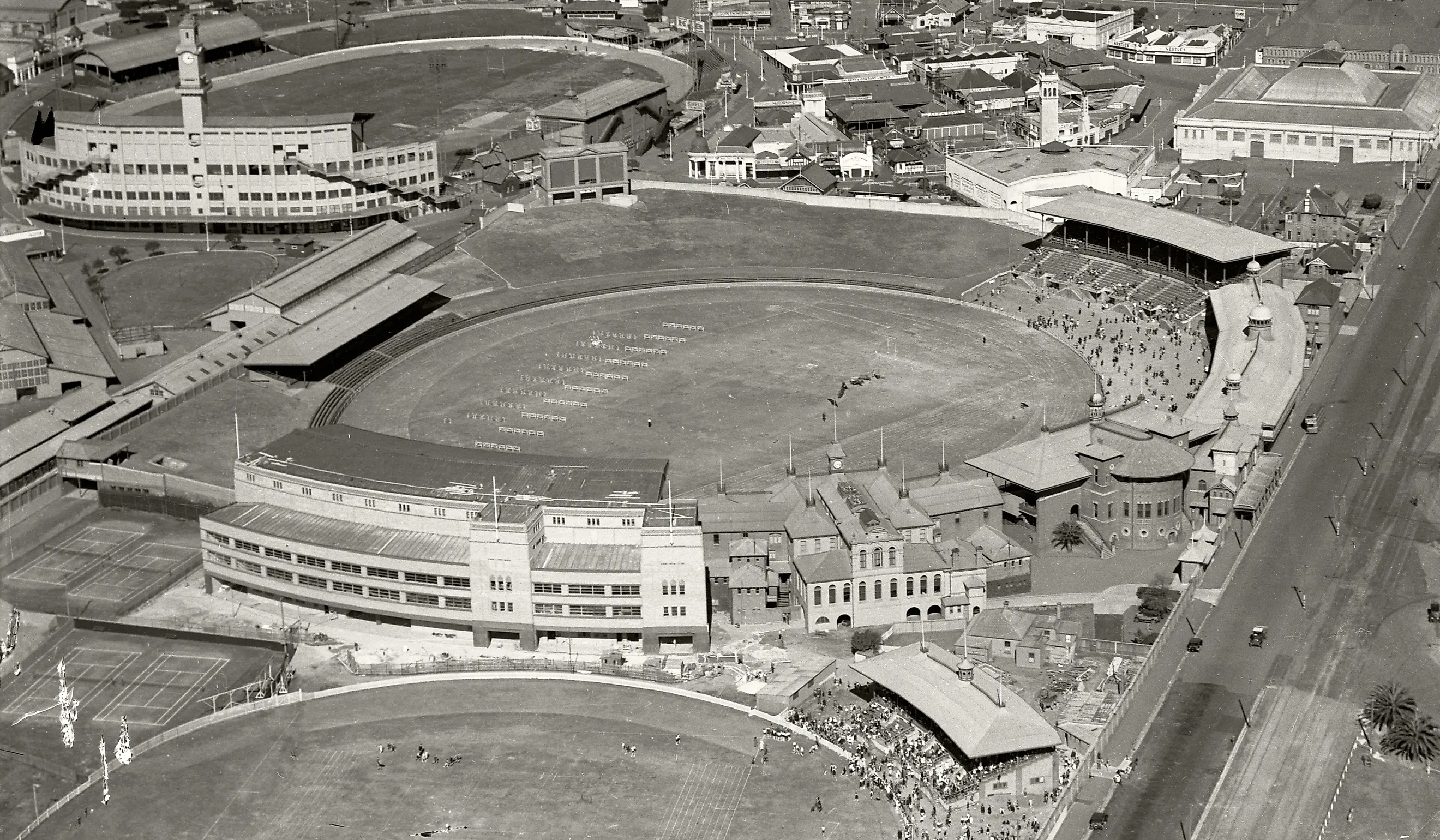
The Sydney Cricket Ground, situated in Moore Park in eastern Sydney, Australia, has hosted cricket since 1848, making it the fourth oldest on this list. The colonial government granted part of what was then Sydney Common to the British Army garrison at Victoria Barracks for use as a recreation ground and garden. The site opened officially as the Garrison Ground in 1854, named for the soldiers' Garrison Club. The ground was renamed the Association Ground in the late 19th century and finally the Sydney Cricket Ground in 1894. The SCG hosted its first Test, Australia versus England, in February 1882. It now holds approximately 48,000 spectators, and the heritage-listed Members Pavilion (1886) and Ladies Stand (1896) remain in use alongside more modern stands.
5. Melbourne Cricket Ground - 1853

The Melbourne Cricket Ground, in Yarra Park, Melbourne, was built in 1853 for the Melbourne Cricket Club, which needed a new location after railway construction disrupted its previous ground. The MCG has since hosted the 1992 Cricket World Cup Final, numerous VFL/AFL Grand Finals, and the 1956 Olympic Games. The Southern Stand was rebuilt in 1992 (now the Shane Warne Stand) and the Northern Stand redevelopment was completed in 2006 for the Commonwealth Games. A further major redevelopment of the Shane Warne Stand is planned, with construction targeted to begin around 2032 and capacity projected to rise to about 105,000. With a current capacity of 100,024, the MCG is the largest cricket stadium in the Southern Hemisphere and ranks among the ten or eleven largest stadiums in the world.
6. Old Trafford - 1857

Old Trafford Cricket Ground opened in Greater Manchester, England, in 1857 as the home of the Manchester Cricket Club. It has been home to Lancashire County Cricket Club since 1864 and is now sponsored as Emirates Old Trafford. The ground has hosted matches in five Cricket World Cups (1975, 1979, 1983, 1999, and 2019) and is the second-oldest Test cricket venue in England after The Oval. Capacity varies by event: about 19,000 for domestic cricket, 26,000 for international matches, and up to 50,000 for concerts.
7. Eden Gardens - 1864

Founded in 1864, Eden Gardens in Kolkata, India, is the oldest cricket stadium in India and the seventh oldest in the world. The Cricket Association of Bengal operates the ground and the Kolkata Knight Riders play their home IPL matches there. Eden Gardens hosted its first Test in 1934 (India versus England) and was the first venue outside England to host a Cricket World Cup Final, when Australia beat England in 1987. Renovations ahead of that tournament expanded capacity well above 100,000, and a further round of work for the 2011 World Cup added new player facilities and a clubhouse, reducing capacity to about 68,000.
8. Basin Reserve - 1868

The Basin Reserve, located in Wellington, New Zealand, traces its origins to an 1855 earthquake that lifted the local harbor floor and turned a planned anchorage into swampland. Citizens petitioned the Provincial Council for a permanent cricket ground on the site, and the first match was played there on January 11, 1868, between the Wellington Volunteers and the crew of HMS Falcon. The ground is now the home of the Wellington Firebirds first-class team and is the only sports ground on the Heritage New Zealand register. It hosted its first Test in 1930, has a seating capacity of around 11,600, and has also been used for concerts, cultural events, and association football matches.
9. Adelaide Oval - 1873

The Adelaide Oval was established in 1873 in North Adelaide, South Australia, to serve as the home of the South Australian Cricket Association (SACA), which still uses the ground as its headquarters. The South Australian National Football League (SANFL) has also called the Oval its home since 2014. The venue underwent a major redevelopment between 2012 and 2014, lifting capacity to roughly 53,500. Despite the expansion, the Oval retains its setting among gardens and trees, with the spire of St Peter's Cathedral framing the northern boundary, which is why many consider it one of the most scenic Test venues in cricket.
10. Galle International Stadium - 1876

Galle International Stadium, in Galle, Sri Lanka, was constructed in 1876 as a racecourse and was originally known as The Esplanade. Once racing wound down, the ground transitioned to cricket. The first recorded school cricket match at the venue was played in May 1888, between Richmond College and All Saints' College, and the ground was officially declared a cricket stadium in 1927. Its first first-class match was held in February 1984 and its first Test in June 1998. The 2004 Indian Ocean tsunami destroyed the stadium, which was rebuilt and reopened in December 2007. Today, the ground is home to the Galle Cricket Club, has a seating capacity of about 35,000, and sits next to the Galle Fort with the Indian Ocean on two sides.
Final Thoughts
Cricket's exact beginnings remain debated, but its earliest dedicated grounds are well documented and many still host top-level matches more than 150 years after they opened. Several of these ten venues have been rebuilt or expanded multiple times, including Lord's between 2017 and 2022, the Adelaide Oval between 2012 and 2014, and Galle after the 2004 tsunami. With Lord's, the MCG, and the SCG all running active redevelopment programs into the 2030s, the oldest grounds in cricket are also among the most actively maintained, and the list above is unlikely to change anytime soon.