Why Yellowstone's Geysers Erupt On Schedule
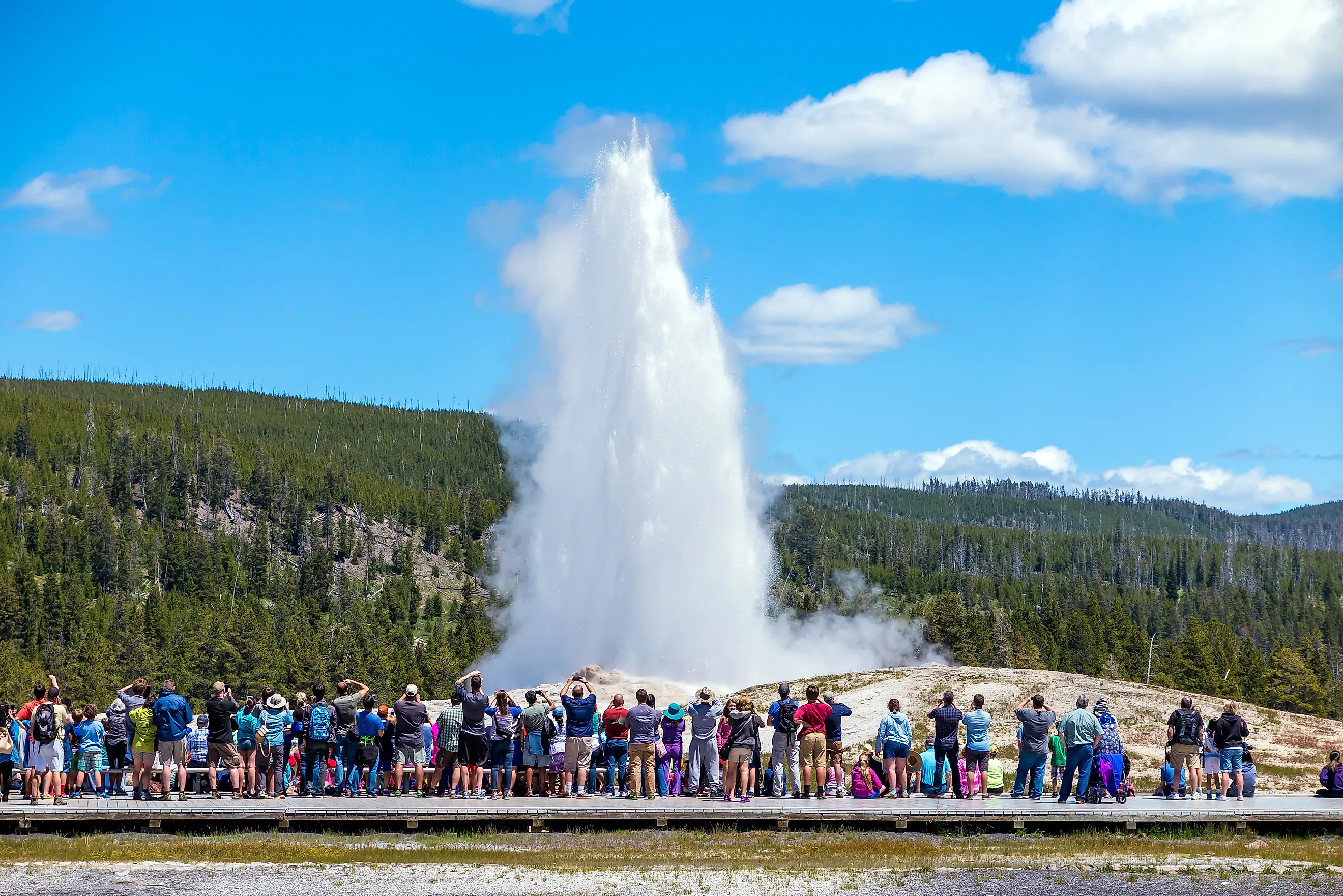
Few natural events keep an appointment quite like Old Faithful. Visitors check a time posted by park rangers, gather along the boardwalk, and within a few minutes of the prediction, a column of scalding water roars 100 feet or more into the Wyoming sky. It seems almost impossible that a hole in the ground could run on something resembling a timetable. The explanation lies entirely underground, in a plumbing system heated by a supervolcano, and it comes with a surprising twist: most of Yellowstone's geysers do not keep a schedule at all. Here is how the ones that do manage the trick.
How a Geyser Erupts in the First Place

Yellowstone sits atop a supervolcano, with a magma chamber only a few miles beneath the boardwalks, and that heat is the engine behind everything. Rain and snowmelt filter down through cracks in the rock and collect in a network of underground channels, where the magma's heat slowly raises the water well past its normal boiling point. It does not boil, though, because the sheer weight of water pressing down from above keeps it under pressure, and pressurized water boils at a higher temperature. Eventually, the water near the surface does begin to boil, which lifts some water out of the vent and abruptly lowers the pressure below. That pressure drop lets the deeper superheated water flash to steam almost instantly, and the whole column blasts skyward. That is an eruption.
The Schedule Lives in the Plumbing

After a geyser empties itself, the cycle simply begins again: water seeps back in, the magma reheats it, pressure rebuilds, and the geyser fires once more. If that recharge-and-reheat process takes a consistent amount of time, the eruptions fall into a rhythm. Researchers who lowered cameras and sensors into geysers found that many have loops or side-chambers in their plumbing that trap pockets of steam, which leak out slowly and gradually heat the water column until it reaches its tipping point. A geyser with a stable, well-defined underground shape and a steady supply of heat and water will repeat that countdown over and over, which is exactly what it means for a geyser to be "on schedule." The timetable is really just the length of the recharge cycle.
Why Old Faithful Keeps Time

Old Faithful is the model of a predictable geyser, and a big reason is that its plumbing appears to be independent, not plumbed into the neighboring vents that can throw other geysers off rhythm. It erupts roughly every 35 to 120 minutes, averaging around 90 minutes, and each eruption lasts a few minutes and can top 100 feet. The clever part is how rangers forecast it: they time the length of each eruption, because a longer eruption expels more water and therefore takes longer to recharge. A short eruption means a shorter wait until the next one, and a long eruption means a longer wait. Using that relationship, rangers can post the next eruption time and be accurate to within about 10 minutes, over and over, all day long.
Most Geysers Are Not on Schedule

Here is the part the postcards leave out: Old Faithful is the exception, not the rule. Yellowstone contains roughly half the world's geysers, around 500 of them, and most are anything but punctual. Many share tangled, interconnected plumbing with nearby springs and vents, so their behavior is chaotic and their eruptions come without warning. The most dramatic example is Steamboat Geyser in the Norris Geyser Basin, the tallest active geyser on Earth, capable of throwing water some 380 feet up. Yet it is wildly unpredictable, sometimes going three days between major eruptions and sometimes three years or more. Rangers only bother posting predictions for a small handful of the park's most reliable geysers. The rest erupt whenever their underground conditions happen to align.
Even the Schedule Drifts

Even the faithful ones are not truly fixed. Old Faithful's average interval has actually lengthened over the past century, in part because large earthquakes, including a 1959 quake near Hebgen Lake and a 1983 quake at Borah Peak, shifted the underground water system and reshaped its cycle. It was once nicknamed "Eternity's Timepiece," but it has never really erupted on the exact hour, and its rhythm keeps drifting as the plumbing beneath Yellowstone slowly evolves. So the honest answer is that Yellowstone's geysers do not keep a schedule the way a clock does. A few, blessed with steady heat, water, and stable plumbing, simply repeat themselves closely enough that we can predict them, and Old Faithful just happens to be the best at it.