The Largest Botanical Gardens In The United States
The criteria for 'largest botanical gardens' in America can go many ways. Some may consider the largest botanical garden the one with the most plants, while others may focus on visitor numbers. Greenhouse space and land area can also be criteria for a list like this. So, for this article, the measurement is the acreage each institution maintains at its main public site, including plant displays, conservation areas, and forests. Each garden or institution updates its own figures.
Longwood Gardens

Longwood Gardens in Pennsylvania is America's largest botanical garden. Today, the acreage is more than 1,100 acres (445 hectares), having grown from a humble farm setting in 1906, thanks to Pierre S. du Pont, who set out to save historic trees. Between 1916 and 1926, du Pont's goal of creating a grand facility was realized with the building of the Conservatory. The Italian Water Garden was built between 1925 and 1927, and by the 1930s, the acres had grown to 926. The Azalea House, now the East Conservatory, opened in 1973, and the gardens hosted a Christmas Display in 1984 that featured 81 outdoor trees with 60,000 lights. Today, the gardens, conservatories, fountains, and other green spaces are divided into six areas. Across these areas, visitors will find formal gardens, walking paths, meadows, and unusual plants like the Santa Cruz Water-platter and the Cardinal-flower. This botanical garden also hosts theatre fountain shows and garden performances. It is one of America's most visited attractions, and while being open to the public, it also continues plant research and conservation projects.
The North Carolina Arboretum

The North Carolina Arboretum is filled with 65 acres (26 hectares) of cultivated gardens and more than ten miles of hiking and biking trails. Overall, the arboretum covers 434 acres (175.5 hectares). There are dozens of wildflowers to see, including fire pinks and bloodroots, and for azalea enthusiasts, there is the National Native Azalea Collection. This woodland garden features azalea hybrids and selections. The arboretum also includes the Bonsai Exhibition Garden, where traditional Asian bonsai trees are displayed. The aforementioned trails include cyclist and pedestrian-only trails. They include bits and pieces of the arboretum's history, as well as a permanent art installation. Over the festive season, the arboretum hosts Winter Lights, during which the park is decked out in festive lights and displays. The gardens and trails sit on land that the Cherokee once inhabited. After settlers took over, ten farms were established in the same area. George Vanderbilt began buying land in the area in the late 1880s to build the Biltmore estate, which was completed in 1895. Long before the arboretum was established, Vanderbilt started restoring the damaged forests surrounding his home. The first garden in the arboretum was opened in 1991.
Chicago Botanic Garden

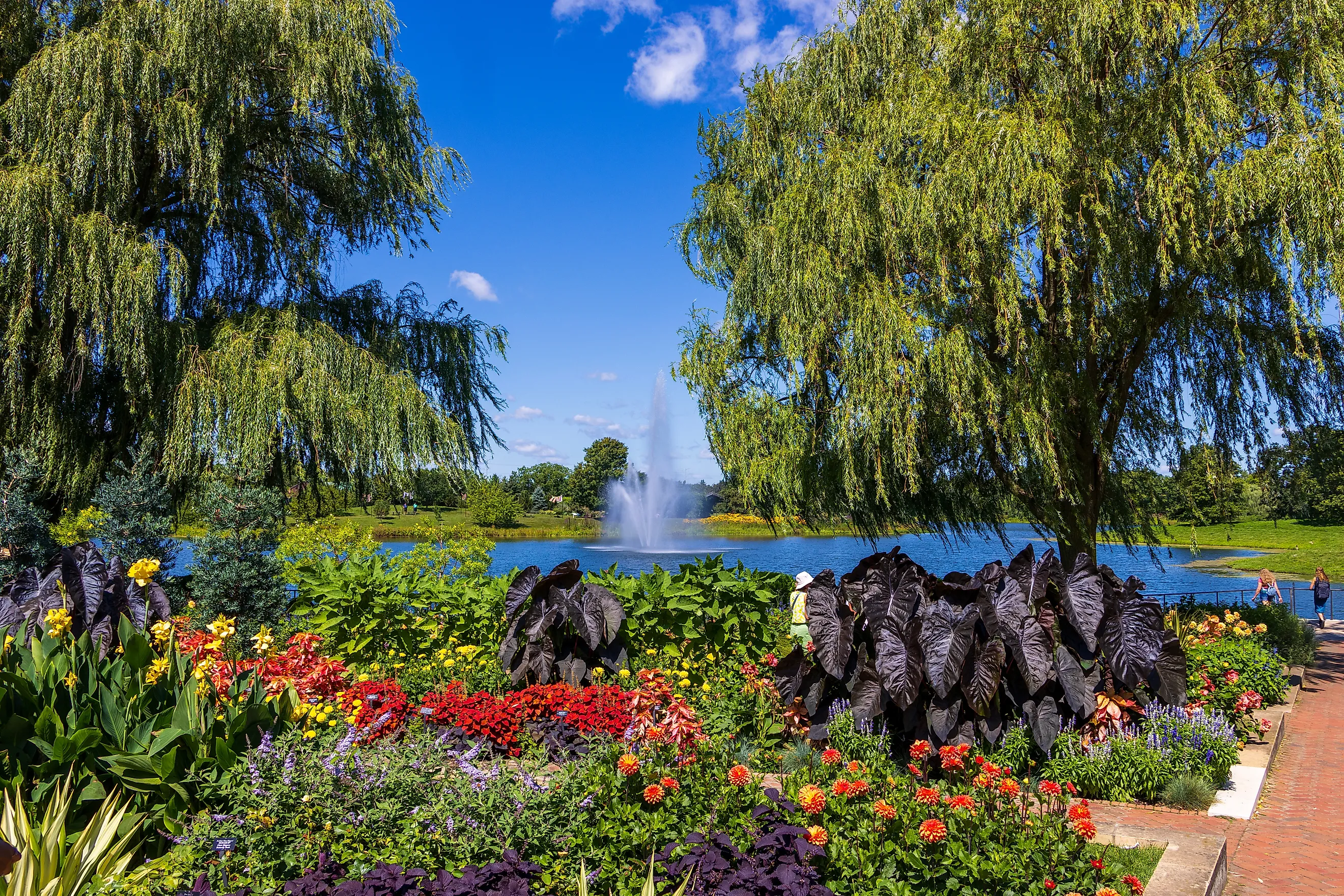
Chicago boasts its own botanic garden which covers 385 acres (156 hectares) and includes natural green spaces, lakes, and cultivated gardens. Visitors can see the gardens of the main island via tram or walking trail. There are 27 different gardens, including a sensory garden, a rose garden, a bulb garden, a Japanese garden, and an evening garden. The natural areas include the McDonald Woods, Dixon Prairie, and Barbara Brown Nature Reserve. The botanic garden also includes a 2,800-square-foot enclosure where people can see several different kinds of butterflies and moths. These include the blue morpho, starry cracker, and African moon moth. Throughout the gardens, there are 19 model G-scale trains, each with its own track. They travel across 26 small-scale bridges that sit amongst 300 different plant varieties. As Halloween approaches, carved pumpkins are set up in the gardens, with the Monarch Skull being a new introduction in 2026. The Chicago Botanic Garden officially opened in 1972 after seven years of planning and building. It is considered one of the best botanical gardens in the country today and also features a massive science center and library.
New York Botanical Garden

The New York Botanical Garden was inspired by the Royal Botanic Gardens and opened in 1891. Since then, it has grown into a 250-acre (101-hectare) facility where plant research and conservation are ongoing. At the same time, the garden hosts several public events and celebrations, including the Dia de los Muertos celebration with marigolds, the Holiday Train Show, and the Orchid Show. Throughout the year, visitors can see the arboretum collections, forest, native plant garden, rock garden, oak trees, and water lilies and lotuses. The forest features old-growth trees, glacier marks, and Native American hunting trails. The community can join the gardening outreach program, the Bronx Green-Up. The program provides horticulture information and training to residents, farmers, schools, and gardeners. The garden is also home to the largest botanical library in the Western Hemisphere, and its herbarium holds millions of preserved plant specimens from around the world.
Desert Botanical Garden

In 1939, a group of locals decided to take action to conserve the desert environment in Arizona. This goal culminated in the opening of the Desert Botanical Garden. Over the next eight decades, a library was built in the garden, the Plants and People of the Sonoran Desert Trail opened, and the Center for Desert Living Trail was refurbished. In 2017, a butterfly exhibit opened, and by 2018 the garden started hosting the Electric Desert experience. Today, the 140-acre (56.5-hectare) garden features both trails and art galleries. Visitors can dine at several restaurants and buy souvenirs at the Garden Shop. They can also explore the butterfly garden and the Schilling Library. Research and conservation efforts continue at the garden to preserve desert plants. The garden also houses a seed bank that holds more than 4,000 seed accessions from the world's rarest plants. The on-site herbarium is the fourth largest of its kind in the state and holds 100,000 accessions. Other research facilities in the garden include the Research, Conservation, and Collections Department, the Pollinator Conservation Research Program, and the Saguaro Census.
Missouri Botanical Garden

The Missouri Botanical Garden is one of the oldest continuously operating botanical gardens in the U.S. It was founded by Henry Shaw in 1859 and today covers around 79 acres (32 hectares) at its main site in St. Louis. Some of the biggest attractions include a Japanese strolling garden that stretches 14 acres (5.5 hectares) and one of the largest collections of rare and endangered flora in the world. The garden hosts several tours, including a personalized walking tour that highlights the local history and plant life. Tram tours run for about 30 minutes and pass through the display gardens and past several art sculptures. Private guided walking tours last around 2 hours, and schools can also book field trips. Visitors can also access the Sophia M. Sachs Butterfly House to see more than 60 tropical butterfly species and more than 150 tropical plants in the Tropical Conservatory. The butterfly house also includes a butterfly garden, insect zoo, and a theater space. Or people can visit the 2,400-acre Shaw Nature Reserve in Gray Summit, which is also an education and research facility. Both of these properties belong to the Missouri Botanical Garden but sit outside the city limits and are counted separately here.
How the Largest Botanical Gardens Are Decided
As seen throughout the article, there is no universally accepted definition of the largest botanical garden. A ranking based on land area will produce different results from one based on the number of plant species or visitor numbers. The ranking above compares the main public site of each institution so that only the physical size can be measured against itself.
Experiencing America's Largest Botanical Gardens
Visitors experiencing the largest botanical gardens in America will soon see they are more than just pretty places filled with flowers. Most help preserve rare or endangered plant species and support scientific research. They reach out to communities and protect important landscapes. Overall, they do their best to combine natural beauty with essential education and conservation.