8 Ideal Wyoming Destinations for a 3-Day Weekend in 2026
A weekend in Wyoming does not have to mean fighting the summer crowds at the entrance gates to Yellowstone. The eight towns here all sit below 50,000 residents, and each one packs enough into a short visit to justify the drive. In Jackson, the Teton Range rises straight off the valley floor with no foothills to soften the view. In Thermopolis, a bathhouse has stayed free to the public since an 1896 treaty with the Shoshone and Arapaho. Cody keeps five museums under one roof, and Buffalo still rents rooms in a hotel where Butch Cassidy once watched the sheriff's office from his window. Pick one, and three days is enough to see it properly.
Jackson

The Grand Teton climbs to 13,775 feet and stands roughly 7,000 feet above the valley of Jackson Hole, with no lower ridgeline in front of it, which is why the range looks so abrupt from town. Jackson itself holds about 10,700 people and sits minutes from the Grand Teton National Park boundary, where trails, wildlife, and glacial lakes fill more days than a long weekend allows. On a hillside above the National Elk Refuge, the National Museum of Wildlife Art holds thousands of works, from nineteenth-century Western paintings to modern bronze. The refuge covers about 24,700 acres and serves as winter range for several thousand elk; from December into spring, horse-drawn sleighs carry visitors out among the herd. At the center of the walkable core, Town Square stands under four arches built from naturally shed elk antlers.
Cody

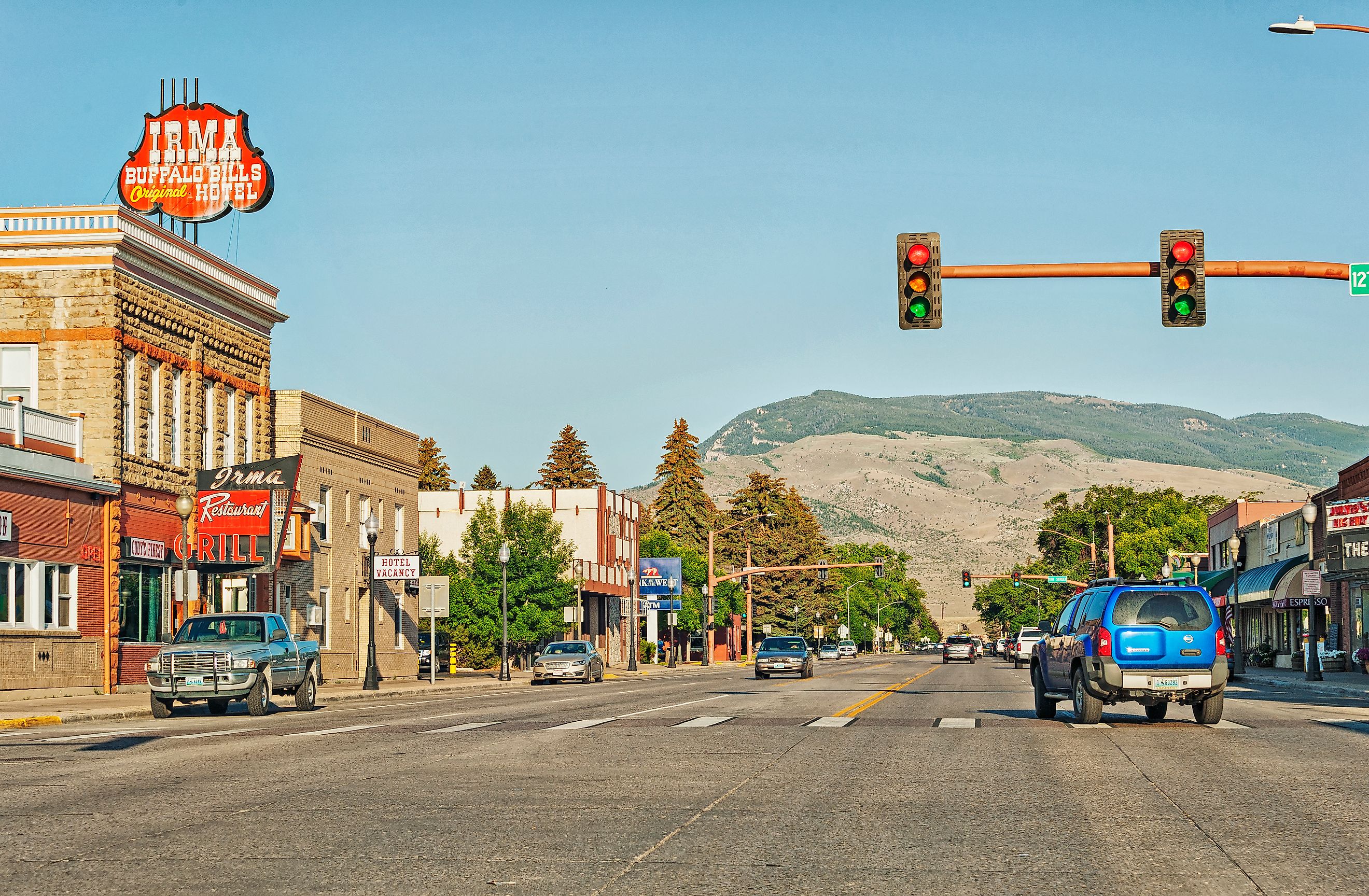
William F. "Buffalo Bill" Cody helped found this town in 1896, and it has traded on the Old West ever since. The Buffalo Bill Center of the West holds five separate museums under one roof, covering Western art, Plains Indian cultures, natural history, firearms, and Cody's own life. Old Trail Town, on the western edge of the community, is a collection of frontier cabins and structures moved in from across the region, some tied to outlaws who used the nearby Hole-in-the-Wall country. Cody also guards the road to Yellowstone's East Entrance, a drive along the North Fork of the Shoshone River that Theodore Roosevelt reportedly called some of the finest scenery in America. Actors stage a summer gunfight reenactment on the porch of the Irma Hotel on Sheridan Avenue, which Buffalo Bill named for his daughter.
Sheridan

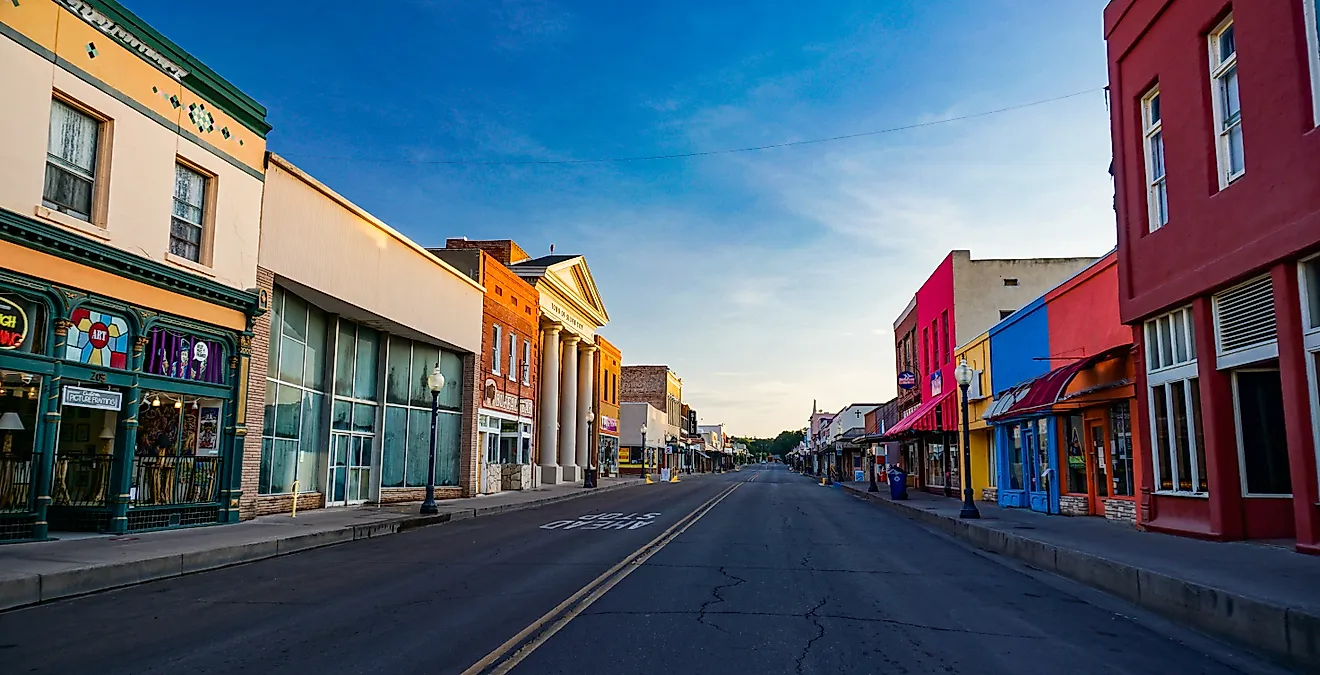
The Mint Bar on Main Street has poured drinks under a neon bronc-rider sign since the 1940s, and it sets the tone for a downtown where cowboy heritage and an arts scene share the same block. Sheridan holds fewer than 20,000 residents at the point where the Great Plains give way to the Bighorn Mountains. Brick storefronts, local shops, breweries, and public sculpture make the historic core an easy walk. Trail End State Historic Site is a restored 1913 Flemish Revival mansion built by cattleman and future governor John B. Kendrick, open to the public through most of the year. The Bighorn National Forest begins a short drive west, opening into alpine meadows, waterfalls, and hundreds of miles of trail for a day out of town.
Laramie

Butch Cassidy served time behind the walls of the Wyoming Territorial Prison, which opened in 1872 and now operates as a museum on the western side of Laramie. The University of Wyoming, the state's only four-year university, gives this town of roughly 32,000 its steady flow of concerts, galleries, and lectures through the year. The downtown historic district, built along the old Union Pacific line, carries more than 20 sites on the National Register and a series of murals from the Laramie Mural Project. West of town, the Medicine Bow National Forest holds mountain lakes, campgrounds, and scenic drives, while the granite domes and boulder fields of Vedauwoo, just east off Interstate 80, are a magnet for rock climbers and picnickers, some of the strangest rock in the Rockies.
Buffalo

The Occidental Hotel opened on Main Street in 1880, and its guest list ran from Calamity Jane and Theodore Roosevelt to Butch Cassidy and the Sundance Kid, who rode in from their Hole-in-the-Wall hideout to the south. Owen Wister set part of "The Virginian" here, and the saloon still holds its original back bar. Buffalo sits between open prairie and the Bighorn Mountains in Johnson County, with a population under 10,000. The Jim Gatchell Memorial Museum, housed in a former Carnegie library, holds a collection covering Native American history, frontier settlement, and ranching. The Bighorn National Forest lies a short drive up into the mountains, with hiking, fishing, and camping among the wildflower meadows and lakes.
Thermopolis

A free public bathhouse has drawn soakers to Thermopolis since 1896, when the Shoshone and Arapaho ceded the springs on the condition that a portion of the water stay open to everyone at no charge. That promise still holds at Hot Springs State Park, where the State Bath House mineral pools stay at about 104 degrees and sessions are capped at 20 minutes. Locals bill the town's Big Spring as the world's largest mineral hot spring, a title geologists now dispute, though the travertine terraces and colorful mineral flats are impressive by any measure. The Wyoming Dinosaur Center shows fossils dug from the surrounding hills, and its staff open active dig sites in summer. Anglers and floaters work the scenic corridor of the Bighorn River below town.
Pinedale

Above a town of about 2,000 people, the Museum of the Mountain Man traces the fur-trade rendezvous that once drew trappers to this stretch of the upper Green River in the 1830s. Pinedale works as a gateway to the Bridger-Teton National Forest and, above it, the Wind River Range, a wall of granite peaks, glaciers, and alpine lakes that ranks among the most demanding hiking country in the Lower 48. Fremont Lake, one of the largest natural lakes in Wyoming, sits minutes from Pine Street and pulls in anglers, boaters, and swimmers through the short mountain summer. The setting, ringed by mountains and lakes, is the reason people make the long drive to get here.
Dubois

Fewer than 1,000 people live in Dubois, set among red-rock badlands and false-front Western storefronts on the road between Jackson and the Wind River country. At the National Bighorn Sheep Center, exhibits and programs explain one of the country's larger wintering herds of bighorn sheep, the animals that give the surrounding mountains their name. The Dubois Museum's displays run through Shoshone culture, pioneer settlement, geology, and the early dude ranches of the valley. The Shoshone National Forest, the first national forest in the country, begins nearby and offers hiking, fishing, and scenic drives with strong odds of spotting elk, moose, and bighorn along the way.
Eight Towns, One Long Weekend
The eight towns divide roughly by what pulls you there. Jackson and Cody put you at the doorstep of the national parks, Sheridan and Laramie pair walkable historic downtowns with quick access to mountain forests, and Buffalo trades on frontier history that still occupies its original buildings. Thermopolis offers geothermal water and dinosaur digs in the same afternoon, while Pinedale and Dubois reward the longer drive with some of the emptiest, highest country in the state. None cracks 50,000 residents, yet each carries enough lodging, food, and open land to fill three days without repeating itself. The choice comes down to whether a weekend means a summit trail, a museum bench, a hot spring, or a barstool with a hundred years of history behind it.