8 Best Attractions To Visit In South Dakota
South Dakota wastes no time making an impression. Wall delivers oversized roadside fun at Wall Drug before the Badlands rise from the prairie, while Deadwood keeps its gold-rush history in full view. Mount Rushmore and Crazy Horse loom over the Black Hills. Jewel Cave and Wind Cave open into hidden worlds below, while billion-year-old cliffs tower over Split Rock Creek at Palisades State Park. These attractions show why South Dakota can turn one trip into a journey through geology, frontier history, and Indigenous heritage.
Wall Drug Store

Wall Drug Store is South Dakota's answer to the major gas station chain Buc-ee's. Ted and Dorothy Hustead bought the only drugstore in Wall in December 1931, in a town named for sitting at the "wall" of the Badlands. Business stayed thin for years, until the summer of 1936, when Dorothy Hustead put up hand-painted highway signs advertising free ice water to passing motorists. Today, Wall Drug Store has grown into a commercial destination in its own right, selling shot glasses, collectible patches, toys, and food for the journey to the Badlands.
The drug store gets more than 2 million visitors a year to pick up souvenirs and explore the Backyard section, which includes a paleontology store, courtyard, and photo op spots such as a T-rex animatronic. Wall sits on the northern edge of Badlands National Park, which makes the drugstore a natural first stop before the park itself.
Badlands National Park

The 244,000-acre Badlands National Park protects a landscape that showcases the beauty of the natural forces of erosion. The rocks that cover this area were formed through the gradual deposition of sedimentary rocks, and then were eroded gradually through rivers, wind, and rain. Today, these structures are still eroding at a rate of 1 inch annually. What makes these hills so striking is that they arise out of a largely flat mixed grassland prairie.
Atop the Badlands, one can discover sod tables, the remnants of ancient prairies from the end of the last ice age, leaving behind small, isolated patches of soil and prairie grass. Visitors can follow the accessible Door Trail boardwalk or hike the 1.5-mile Notch Trail, which climbs a log ladder before reaching a view of the White River Valley.
Other than hiking, the Badlands draw stargazers, since the park sits far from any city glow. Ranger-led night-sky viewing is typically offered at Cedar Pass Amphitheater from May through September, and visitors should confirm the current program schedule.
Mount Rushmore National Memorial

No list of South Dakota attractions would be complete without mentioning its most famous and controversial manmade monument: the Mount Rushmore National Memorial. Gutzon Borglum began carving Mount Rushmore on October 4, 1927, and work continued until October 31, 1941. These presidents each represent an aspect of America: with George Washington as the birth of the country, Thomas Jefferson for its expansion, Abraham Lincoln for its preservation, and Theodore Roosevelt for its modernization.
The sculpture and the sculptor have both been the source of controversy. In particular, Gutzon Borglum also worked on a carving in Stone Mountain, Georgia, of Robert E. Lee, Stonewall Jackson, and Jefferson Davis to honor the Confederacy. Mount Rushmore itself is controversial among Native Americans, as the Black Hills are sacred to many tribes, such as the Lakota Sioux, Cheyenne, Arapaho, and Kiowa. Many also believed this monument was an insult to the tribes who were forced off the Black Hills and onto reservations. That history is part of why a second mountain carving, this one honoring a Lakota leader, has been underway in the Black Hills since 1948.
Crazy Horse Memorial

Crazy Horse Memorial is a monument still under construction in the Black Hills in honor of the Lakota Sioux leader Crazy Horse. In 1876, Crazy Horse helped Lakota, Northern Cheyenne, and Arapaho warriors defeat Custer's command at the Battle of the Little Bighorn. Over time, he became a symbol of Plains Natives and resistance to colonization.
His cousin Henry Standing Bear, a Lakota chief, spent years trying to secure a memorial for Crazy Horse and wrote to sculptor Korczak Ziolkowski in 1939. Ziolkowski moved to the Black Hills, bought the mountain, and set off the first blast on June 3, 1948. Standing Bear intended for this monument to honor all natives and to serve as a symbol of friendship between natives and non-natives.
The finished face of Crazy Horse was dedicated in 1998, and crews are still shaping the outstretched arm. Other than the memorial itself, one can visit a museum, art galleries, and attend Native American cultural events such as dances.
Jewel Cave National Monument

Located in Custer County, Jewel Cave National Monument protects one of the world's longest mapped caves, with more than 220 miles of surveyed passages.
Jewel Cave National Monument was formed through acidic groundwater, rather than by underground rivers. Within the cave are a variety of formations, crafted by water and the long passage of time, such as spar crystals that can be found on the cave's walls, and calcite speleothems, which were formed as surface water traveled through soil and into limestone. In drier parts of the cave, one can find gypsum formations that look like needles, flowers, or spiders.
One can book a guided tour of the caves, or go exploring out on the surface by hiking through a ponderosa pine forest, or spend some time at the Historic Area. There, the Civilian Conservation Corps built a three-room log cabin in 1935, along with the stone stairway that still leads down to the cave's original entrance.
Wind Cave National Park

Wind Cave National Park is the first national park in the state of South Dakota, established on January 9, 1903, to protect its above-ground prairie and its beautiful cave. This cave is best known for its boxwork, which consists of blades of calcite that form on the walls and ceilings, often in a honeycomb pattern.
Scientists debate how this boxwork formed in Wind Cave, but many argue it formed due to a series of drying and rehydrating of mineral gypsum. The cave also contains frostwork, which looks like small ice-covered plants and is formed through very thin growths of calcite or aragonite.
Above ground, one can go hiking through prairies and forests, and visit the cave's natural entrance, a hole roughly ten inches across and the largest of the very few natural openings into Wind Cave. Some Lakota traditions state that this cave was the birthplace of both bison and humans.
Deadwood
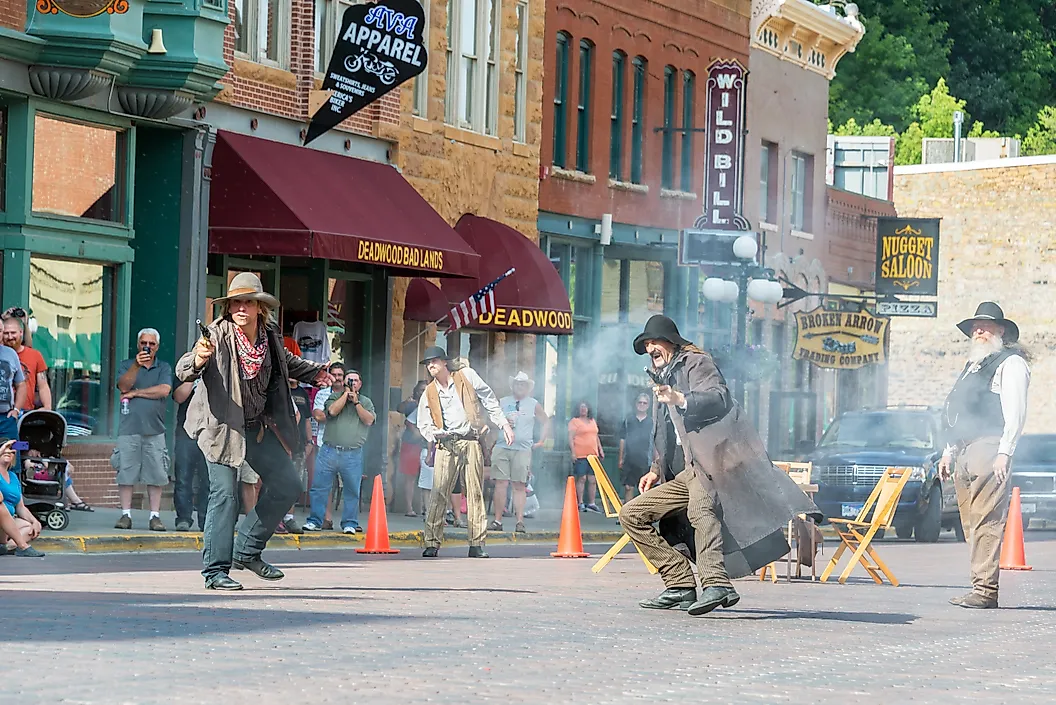
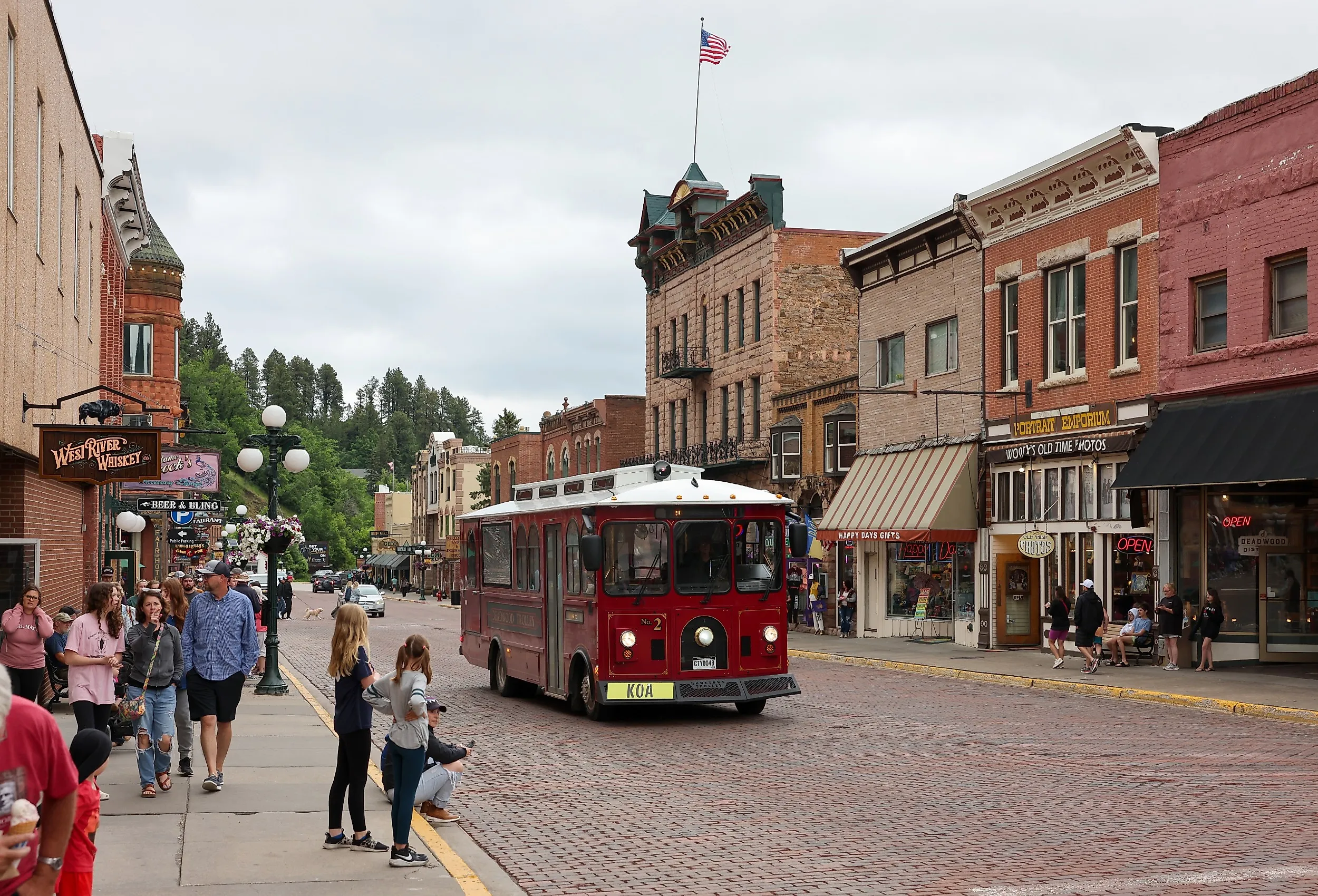
Deadwood is one of South Dakota's most historic Old West towns. It was founded in 1876 when miners looking for gold came to the area and found long rows of dead trees, hence naming it Deadwood. Now, walking through Deadwood feels like stepping into an Old West time capsule.
Visitors can examine Old West artifacts at the current Saloon No. 10 before climbing to Mount Moriah Cemetery, where Wild Bill Hickok and Calamity Jane are buried. Hickok was shot from behind while playing poker at the original saloon, and Jane was not his lover, whatever the legend says. During the summer, Deadwood Alive stages shootouts and other reenactments in the historic downtown six days a week, with nothing on Sundays.
Palisades State Park

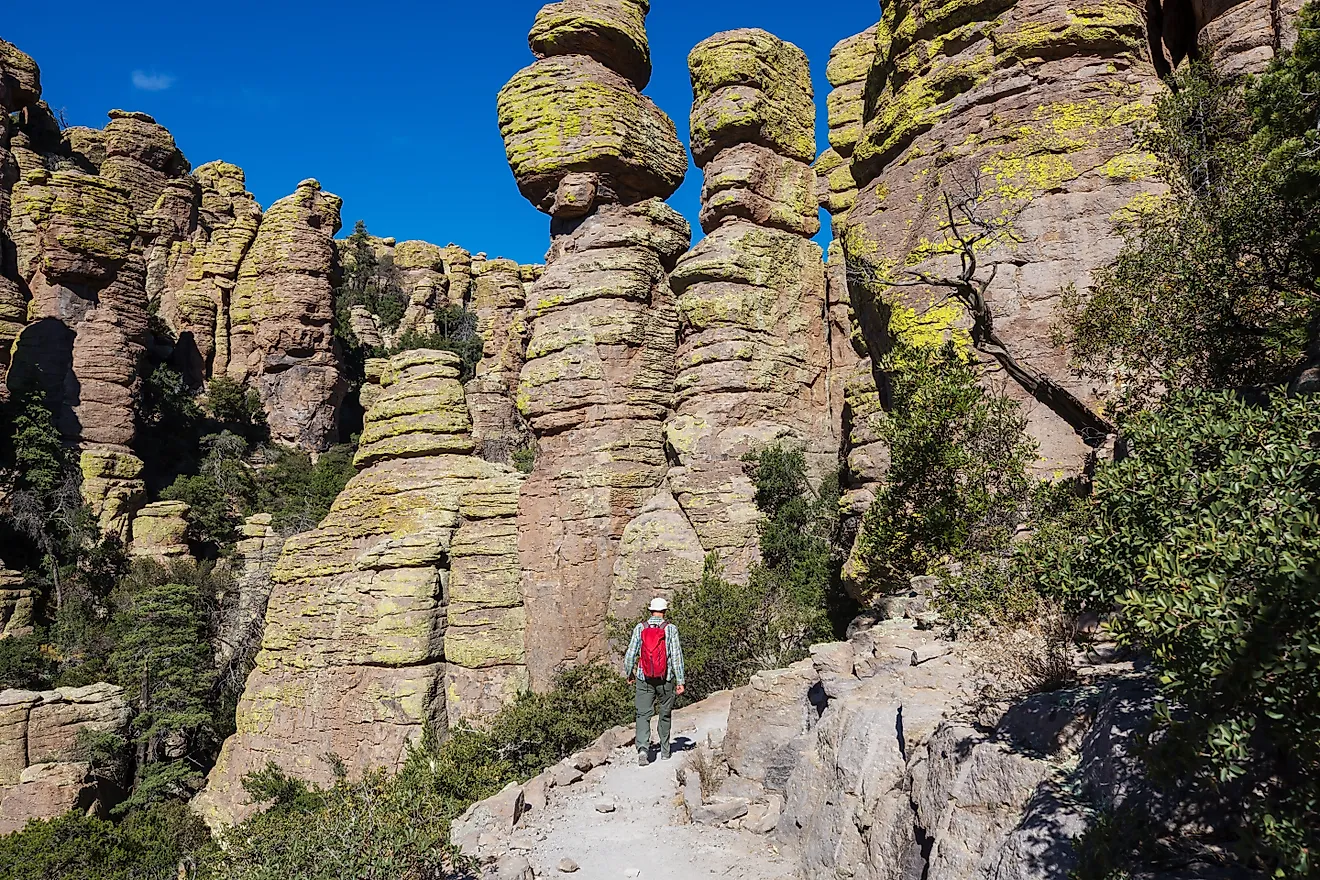
Unusual rock formations are the whole point of Palisades State Park. This park can compete with South Dakota's national parks and monuments for interesting geology, as it is covered with Sioux quartzite formations. Split Rock Creek cut the gorge that exposed them, leaving behind the pink cliffs and spires that stand today.
The Sioux quartzite here was laid down as sand roughly 1.6 billion years ago, then hardened into rock tough enough that the softer landscape around it wore away. The cliffs rise a few feet above the water in places and 50 feet in others. Four hiking trails run past the formations, and climbers use the walls for scaling and rappelling, though bolting is not permitted on the quartzite.
Who gets to tell South Dakota's story?
All of these attractions tell a different story. The Badlands National Park and Jewel Cave National Monuments speak of the geological history of South Dakota, shaped by ancient waters and eroded rock formations. Deadwood recounts the Black Hills gold rush and frontier settlement, while Mount Rushmore reflects a later effort to monumentalize four US presidents in the same landscape. In Crazy Horse Memorial and Wind Cave National Park, one can see the other side of the story: that of Native Americans who lived, fought, and died to try to keep this land. The best way to learn the story of South Dakota is to hear every perspective from both the land and the people who lived here.