6 Most Rattlesnake Infested Areas in Southern California
Whether hiking or camping, Southern California’s arid climate can be arduous yet rewarding, with beautiful views, fresh air, and the excitement of adventure. But there may be one major scaly caveat. From the shores of the Santa Ana River to the dusty shrubs and rocky outcrops around Skull Rock, every outdoorsperson should be educated on the slithering unwanted guest: the rattlesnake.
Only a small fraction of snakes are venomous (capable of injecting poison when they bite). Despite this, the consequences of an untreated snake-bite may prove fatal. As with everything in life, the best medicine is prevention, and knowledge is power.
Whether you are visiting the innocuously named Joshua Tree National Park or the (reasonably) alarming Rattlesnake Canyon, the most seasoned adventurers are those who know where to step and when to be on guard. Prepare yourself to enter snake territory and come out unscathed.
Anza-Borrego Desert State Park

In Eastern San Diego County, stretching into Imperial and Riverside counties, Anza-Borrego Desert State Park is California’s largest state park (about 650,000 acres). Its marvelous scenery is paralleled only by its devious, serpentine denizens. As a premier rattlesnake habitat, canyons like Borrego Palm Canyon and the Borrego Badlands offer the exact rocky outcrops and desert scrub that rattlesnakes seek shelter in.
As a primary habitat for several desert species, encounters are common in sandy washes and rocky canyons during spring mornings. Particular species found in the area are Red Diamonds, Sidewinders, and Western Diamondbacks.

If you happen to stumble across one of these sneaky snakes, the first harbinger of their presence is the iconic rattle. All rattlesnakes are venomous, and if encountered, one should always keep their distance, never try to kill the snake (doing so is illegal), identify the location of the snake (and alert others nearby to its presence), and leave it alone. While rattlesnakes typically defend or retreat, any agitation (such as throwing objects) can cause the snake to approach its aggressor.
Malibu Creek State Park

The riparian corridors and rocky lake shorelines of Santa Monica Mountains’ Malibu Creek State Park offer frequent sightings of snakes, particularly along the Rock Pools and Century Lake paths, where they utilize the transition between water sources and sun-warmed volcanic rock.
The former film site of the hit series M*A*S*H, this state park is a hotspot for the Southern Pacific Rattlesnake, a reptile not to be trifled with. Most frequently seen from March to October, these rattlers are often encountered around the water-rich canyons.

If by chance, you end up the victim of a rattlesnake bite in California, it is important to seek medical care immediately. Although bites often occur on the ankles, feet, hands, or wrists, they are no less serious than a bite to the neck. Symptoms widely vary from nausea and labored breathing to muscle weakness and even death. In some cases, a snake can leave a bite without venom (known as a dry bite), but it is never worth risking those odds, especially when most nearby medical facilities will have access to antivenom.
Joshua Tree National Park

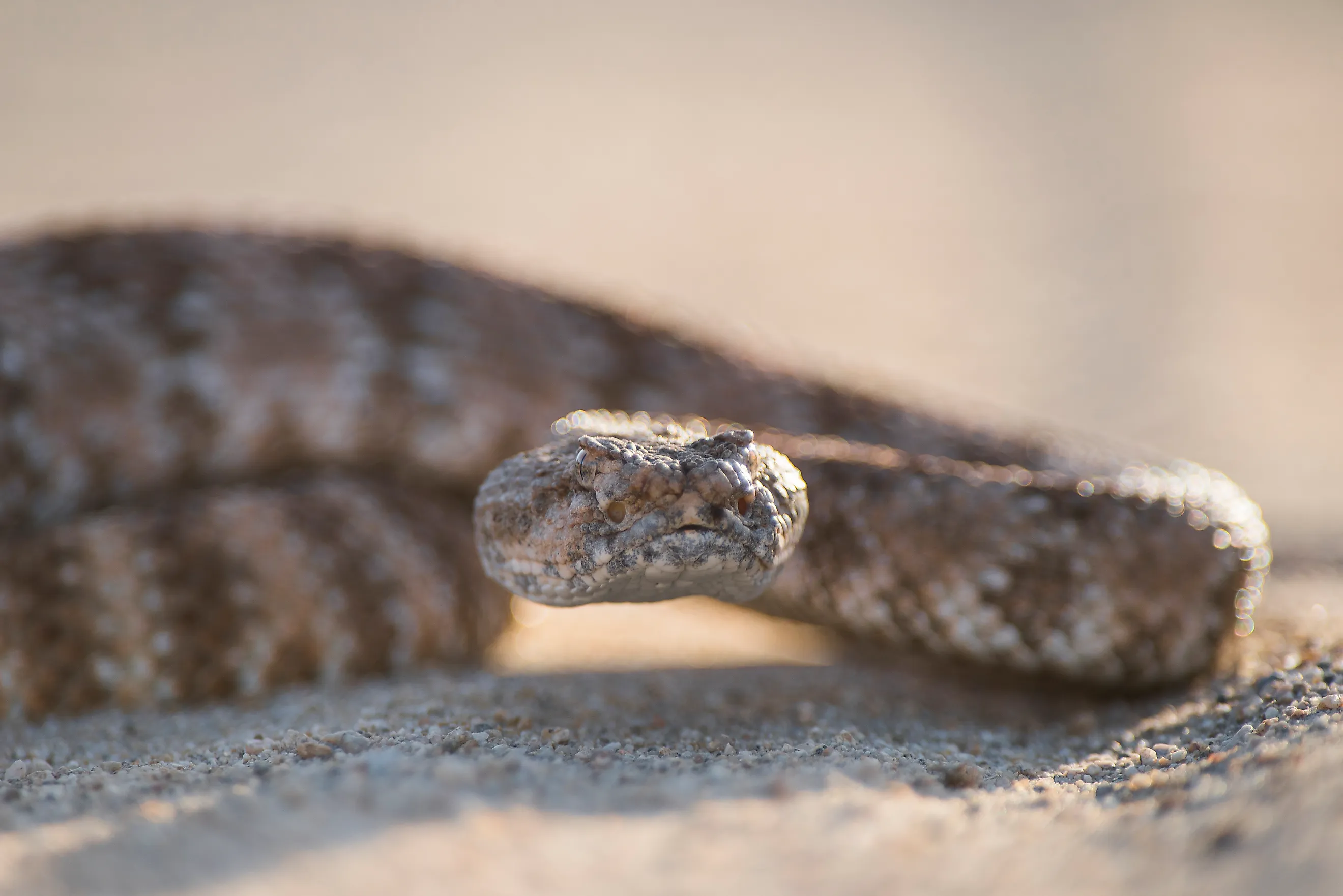
In Joshua Tree National Park, an abundance of granite crevices makes for one of the most densely populated denning areas in the state for the Mojave Green, Southwestern Speckled, and the Red Diamond Rattlesnakes. These snakes love basking in the arid desert heat of where the Colorado and Mojave deserts meet.

Famous for attractions such as Skull Rock and the Cholla Cactus Garden, the snakes of this Joshua Tree National Park are worthy of both respect and trepidation. One of the most venomous snakes in North America, the Mojave Rattlesnake (also known as the Mojave Green), calls this Californian national park its home and breeding ground.
Chino Hills State Park

In Chino Hills State Park, snakes are most active in late spring when the tall grass provides cover for their rodent prey. At the junction of Orange, San Bernardino, and Riverside counties, this state park hosts the Southern Pacific and Red Diamond Rattlesnakes alongside the King Snake and Gopher Snake.

Often seen around hotspots such as Telegraph Canyon and Bane Canyon, these snakes are unfortunately often killed by residents in the surrounding areas. This can lead to the unintended growth of the local rodent population, as many of the local snakes are their primary predators. Ultimately, when left alone, these snakes play a vital role in their ecosystems. Often at the top of their food chain, they keep local rodent populations in check (all while never preying on humans).
Mission Trails Regional Park

Seasonally, Mission Trails Regional Park sees high volumes of snakes. As it is a massive urban preserve, sightings of Southern Pacific, Red Diamond, and the Speckled Rattlesnake are reported almost daily during the summer months, especially around Cowles Mountain, the most hiked peak in San Diego.

Harmless species such as the Gopher Snake (a rattlesnake lookalike), California Kingsnake, California Striped Racer, Rosy Boa, and many others call this park home as well, but earn themselves less notoriety than their rattling cousins.
From April to June, snakes may frequently be encountered near the San Diego River, though they remain fairly active through to August. It is important to always keep pets on a leash when spending time in snake-filled regions.
San Bernardino National Forest (Rattlesnake Canyon)

In the San Bernardino National Forest, several familiar species of snakes may be found. The rocky talus slopes in the northern foothills are ideal breeding grounds. Wedged against the San Bernardino Mountains, specifically the arid slopes facing the High Desert, see frequent Southern Pacific and the Southwestern Speckled Rattlesnake activity.

This rugged and serene forest hosts 680,000 acres and four mountain ranges in Southern California. Notable spots such as Deep Creek Hot Springs and Silverwood Lake host several small reptiles and non-venomous snakes alongside the aforementioned rattlers. Remember when visiting any area where rattlesnakes are found, to watch where you step, avoid tall grass and rock crevices, wear boots and long pants, keep dogs on leash, and (most importantly) never attempt to handle wild snakes.
Do Not Let the Snakes Hold You Back
While these areas are all home to high sightings of venomous snakes, it is important to keep in mind that these creatures want as little to do with us as we do with them. When left alone, they are hardly a nuisance; if anything, they serve a benefit to the ecosystem and local pest control.
Much like the rest of us, these simple creatures just want to keep to themselves. They certainly do not hunger for conflict. Additionally, despite roughly 7,000-8,000 people being bitten by venomous snakes in the U.S. annually, thanks to antivenom, only about 5 to 6 of those bites result in death. Armed with the knowledge of snakes in these parks, you are exceedingly unlikely to be one of them.