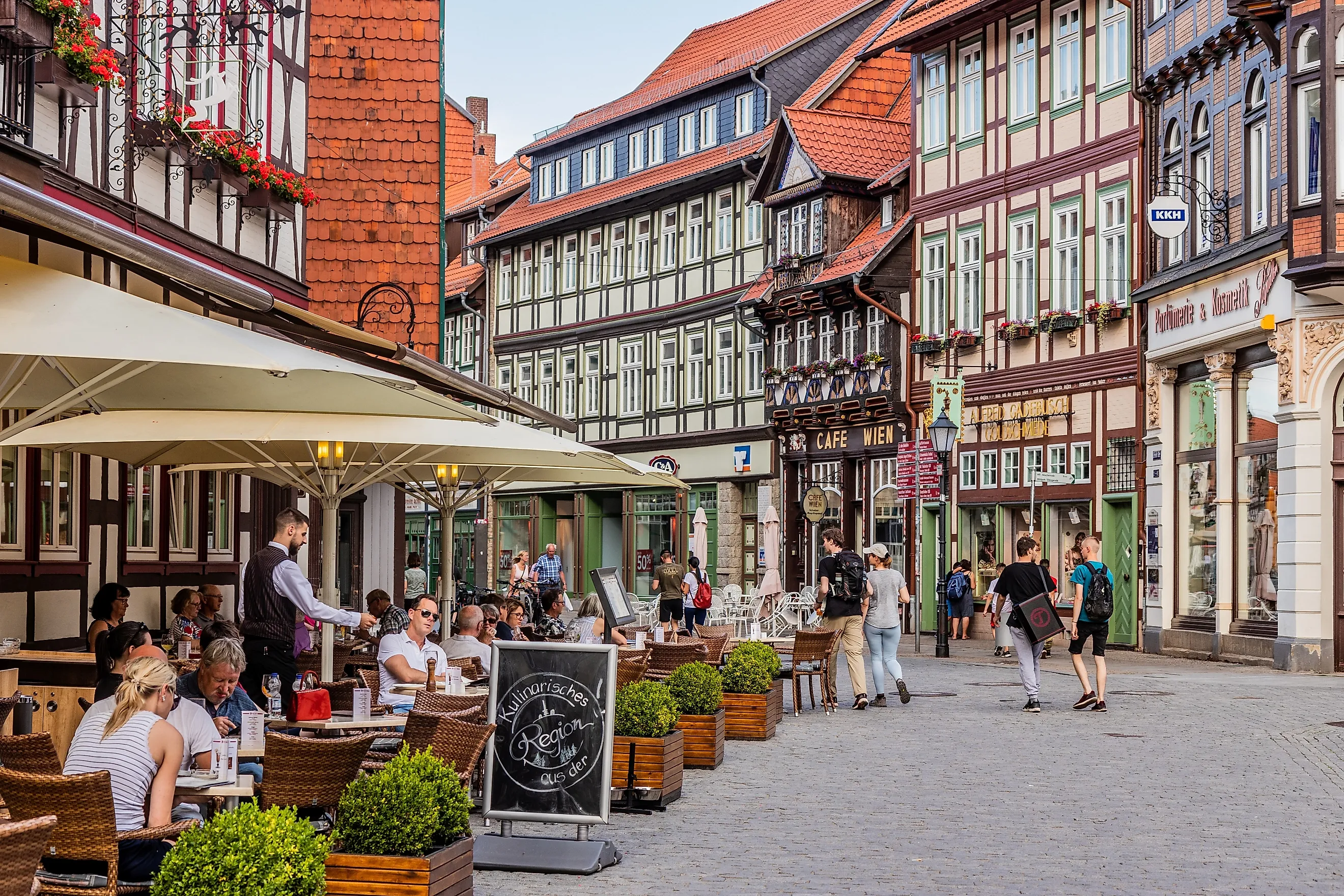
10 Best Towns In Germany For Retirees
The most retiree-friendly towns in Germany tend to look alike at the surface and pull apart the closer you get. Each one builds the basics in different ways: a regional hospital with a geriatric clinic and a senior residence with assisted living and a public-transit link to the nearest big city. Hesse trades on its spa towns and mineral springs. Lower Saxony and Saxony-Anhalt lean on the Harz Mountains and old imperial architecture. Bavaria charges a little more and offers easy access to the Alps in return. The ten towns below show the range from Saxon river valleys to the Polish border to the foothills of the Zugspitze.
Pirna

In Saxony's Elbe Valley, Pirna is a perfect fit for retirees seeking a laid-back lifestyle with access to top-quality healthcare and senior communities. Pirna's hospital, Helios Hospital Pirna, is part of the larger Helios family, a leading private hospital operator across Germany. Specialty in-patient care, such as orthopedics, oncology, and cardiology is available for retirees. The retirement community at AlexA Pflege & Betreuung (AlexA Nursing and Assistance) has out-patient care and assisted living facilities. Daycare options mean seniors can participate in social activities while staying independent. Pirna is also well-served by modern amenities and public transportation, with Dresden about a 22-minute train ride away. The total population is about 40,322, with approximately 11,900 residents over the age of 65. Its monthly cost of living is approximately $1,476 USD (1,259 EUR).
A wide range of landmarks and outdoor recreation ensures retirees stay engaged and active. The Canaletto Trail follows views associated with the 18th-century painter Bernardo Bellotto, highlighting the countryside that inspired his work. The path leads the way past views of vineyards and the Königstein Fortress. Tom Pauls Theater hosts drama, cabaret, and musical performances. The Grosssedlitz Baroque Garden is filled with more than 200 citrus trees, as well as sandstone sculptures, water fountains, and colorful gardens.
Goslar

Goslar gives retirees a welcoming atmosphere in the Harz Mountains of Lower Saxony. The retirement neighborhood at Wohnvoll Village has assisted living facilities in a modern setting. There are amenities such as an on-site hairdresser, a restaurant, and a full schedule of activities and events. The Asklepios Harzklinik Goslar is a major regional acute care hospital with services in departments like palliative medicine and urology. The monthly cost of living is about $1,570 USD (1,339 EUR), allowing retirees to make the most of their pensions and savings plans. Goslar has approximately 43,560 residents, with an over-65 population of about 9,200.
Seniors in Goslar will find plenty of cultural and historical landmarks to fill their free time. Dating to the 11th century, the Imperial Palace features historic murals and Romanesque architecture. The Rammelsberg Mining Museum is home to an underground waterwheel and a mine railway. There are also geology exhibits and tours of 18th-century shafts. The Rammelsberg Mine was a source of copper, silver, and zinc during the Middle Ages.
Wernigerode

Wernigerode combines convenient healthcare access and modern amenities with the scenery of the Harz Mountains. There are neighborhood senior centers and retirement communities, such as the GSW Seniorenheim Sankt Georg. It offers retirement, assisted living, and short-term care facilities. The Harzklinikum Dorothea Christiane Erxleben is a regional hospital with departments in physiotherapy and occupational therapy, as well as specialized outpatient palliative care. The cost of living per month is around $1,481 USD (1,263 EUR). The population is about 34,463, with approximately 11,950 over the age of 65.
Wernigerode integrates an active lifestyle with access to public transportation and historic landmarks. Historic steam trains traveling on a narrow-gauge railway connect villages around the Harz Mountains. One branch of the railway runs through the area. Wernigerode Castle, built in the 12th century, was a medieval castle and became a residence in the 19th century. It is open to the public for tours and offers sweeping views of the town below.
Görlitz

Buildings in city center of Gorlitz, Germany.
Görlitz combines access to the natural beauty of the nearby Zittau Mountains with modern healthcare and leisure opportunities. Healthcare options such as the Städtisches Klinikum Görlitz, a comprehensive hospital with specialist clinics in neurology and geriatrics, give retirees access to a wide array of medical services. The average monthly cost of living is about $1,468 USD (1,252 EUR). Its total population is around 47,940, of whom approximately 13,430 are over age 65. Located in eastern Germany near the Polish border, Görlitz's Altstadtbrücke (Old Town bridge) crosses the Neisse River at the border with Poland, creating opportunities for exploration. There is also train access to nearby Dresden.
Outdoor activities and regional cultural landmarks are also available. Nearby, the Zittau Mountains and Berzdorf Lake are access points for hiking and nature-watching. Naturschutz-Tierpark Görlitz is home to animals from around the world in natural enclosures.
Hirschau

City hall in Hirschau, county Amberg-Sulzbach, Bavaria, Germany. Editorial credit: Wikimedia Commons
Hirschau gives retirees a tranquil Bavarian lifestyle supported by accessible healthcare services and a close-knit community. Although Bavaria is considered one of the more expensive regions in Germany due to its strong economy and tourism ties, the town maintains a relatively moderate cost of living at approximately $1,952 USD (1,665 EUR) a month. Hirschau's overall population is approximately 6,300, with about 655 residents over the age of 65. Senior care needs are met by facilities such as BRK-Senioren-Wohn- und-Pflegeheim, which has both short-term and long-term residential and nursing care. Additional medical services are available within a 25-minute drive to St. Anna Krankenhaus Sulzbach-Rosenberg and Klinikum Amberg.
Retirees can take part in recreational activities such as nature watching and hiking. At just over 104 feet tall, the Aussichtsturm am Rödlasberg is an observation tower overlooking the town and the Upper Palatinate. Nearby, the Wildtiergehege am Rödlasberg is a wildlife park with several species of deer, such as red and fallow deer.
Heusenstamm

Offering a quiet residential setting on the Bieber River, Heusenstamm is another German town that pairs retiree-friendly amenities with top-quality healthcare. The AWO Horst-Schmidt-Haus has full-time in-patient care and home care for retirees. Independent apartments are also available. The town is well connected to public transportation and has access to the S-Bahn to Frankfurt, which is convenient for retirees who prefer not to drive. Heusenstamm's total population is around 19,012, with about 4,045 residents over the age of 65. The cost of living in the state of Hesse is about $1,879 USD (1,604 EUR) a month.
Seniors seeking an active lifestyle will enjoy Heusenstamm's variety of cultural attractions and outdoor recreation. Schloss Schönborn Heusenstamm, dating to the 1600s, combines Renaissance and Baroque architecture in its three-winged layout. The approximately 1.2-mile Goldberg Lake Loop, near the Patershausen Estate organic farm, takes hikers along a trail with lake and forest views.
Jüchen

Jüchen, in North Rhine-Westphalia, offers a rural setting with modern amenities and access to quality healthcare and senior living options. Retirement communities, such as the Seniorenzentrum Haus Maria Frieden, have assisted living facilities with access to leisure activities and a chapel. Kreiskrankenhaus Grevenbroich St. Elisabeth, a comprehensive care hospital known for its geriatric services, is about five miles away. Palliative medicine and oncology are other specialty services. The cost of living in the state of North Rhine-Westphalia is about $1,657 USD (1,414 EUR) a month. Jüchen's over-65 population is approximately 1,515, with a total population of about 22,562.
Jüchen blends a historic side with an industrial nod in its landmarks and attractions. The Baroque Schloss Dyck, with some sections dating to the 11th century, is defined by a moat, large English gardens, and parks spread across four islands totaling about 173 acres. The Lookout Jackerath Garzweiler Skywalk is a platform overlooking an open-pit mine, the Garzweiler lignite coal mine. The Tiergarten Mönchengladbach zoo is home to birds, monkeys, seals, and kangaroos, as well as a petting zoo.
Garmisch-Partenkirchen

Garmisch-Partenkirchen is another great choice for retirees who want easy access to Austria and the dramatic scenery of the Zugspitze, Germany's highest mountain. The town also offers specialized care and senior social programs. The Seniorentreff Marianne Aschenbrenner is a senior citizen center where people can meet, connect, and socialize. The Klinikum Garmisch-Partenkirchen has specialized departments, such as cardiology, dialysis, and acute geriatric care. In Bavaria, the monthly cost of living is around $1,952 USD (1,666 EUR), which is slightly higher than other regions. The total population is approximately 28,000, with about 6,760 over the age of 65.
Natural beauty comes together with regional history in this Alpine town. The Michael-Ende-Kurpark is a relaxing green space with sculptures and decorative flower gardens. The Museum Werdenfels preserves the cultural heritage of the region through folk art and sculptures.
Bad Wildungen

Bad Wildungen pairs the scenic beauty of the Kellerwald Forest with modern health and wellness facilities. The Seniorenzentrum Waldeck is a senior center with full-time in-patient, respite, and memory care. Therapeutic care and occupational therapy are just a few of the specialized services. Asklepios Stadtklinik Bad Wildungen covers a range of clinical services, such as rehabilitation and age-related illnesses. A spa town, Bad Wildungen is famous for mineral springs, including Stahlquelle and Georg-Victor Spring, which are used for wellness and medicinal purposes. The town has a total population of approximately 18,037 and about 2,850 over the age of 65. The monthly cost of living in the state of Hesse is around $1,879 USD (1,604 EUR).
The Gothic Stadtkirche, with early construction dating to the 13th century, houses a major work of European art, the Conrad von Soest altarpiece, which depicts the life and crucifixion of Christ. The Spa Park, developed across the 18th and 19th centuries, is filled with walking paths, tennis courts, and an English church. Located within the park, the Royal Health Theatre holds events and musical performances.
Eisenach

Located in Thuringia, Eisenach pairs a culturally rich lifestyle with healthcare and senior living options, allowing retirees to make the most of their leisure years. AZURIT Seniorenzentrum Eisenach has in-patient care as well as assisted living, respite, and memory care. St. Georg Klinikum Eisenach, a regional specialized care facility, has a wide variety of clinics and specializations in geriatrics, pain therapy, and diabetes counseling. The total population is approximately 43,846, with about 10,000 residents aged 65 and over. The monthly cost of living is about $1,383 USD (1,181 EUR).
Outdoor recreation and cultural heritage are available throughout Eisenach. Wartburg Castle, a historic symbol of the Reformation, is where Martin Luther translated the New Testament. A permanent exhibit, "Luther and the Bible," preserves the significance of the event. The nearby Hainich National Park comprises 18,582 acres of native beech forests with hiking and cycling trails. A canopy walkway leads across the forest, making a safe and leisurely way to explore the park. For low-impact activities, seniors can take advantage of Aquaplex's swimming pools, saunas, and exercise equipment.
Retiring Well in Germany
The best towns in Germany for retirees blend modern amenities with a vibrant social scene and a high quality of life. In Thuringia, access to regional healthcare services complements the natural appeal of Hainich National Park. In other areas, Hesse spa towns are home to wellness facilities as well as theaters and architectural landmarks. Small Bavarian towns have reliable public transportation connections. Meanwhile, rural areas in North Rhine-Westphalia offer convenient access to larger cities. Altogether, these towns share a relaxed lifestyle with practical access to healthcare, transit, and natural surroundings.