5 One-of-a-Kind Small Towns In New Hampshire
Some of the most nationally influential ideas in American history emerged from towns small enough to cross on foot. New Hampshire’s geography combines the White Mountains in the north, an 18-mile Atlantic coastline, and the Merrimack and Connecticut rivers, creating sharp regional contrasts within a compact state. Its history reaches back to early English settlement in the 1620s and includes the adoption of the first state constitution in January 1776, establishing legal and civic precedents during the American Revolution. The towns featured here stand apart because each developed around a singular condition, institution, or event that cannot be found anywhere else in the United States. Pack your bags, plan a drive through the Granite State, and visit these towns to see how outsized national stories continue to unfold in small places.
Canterbury

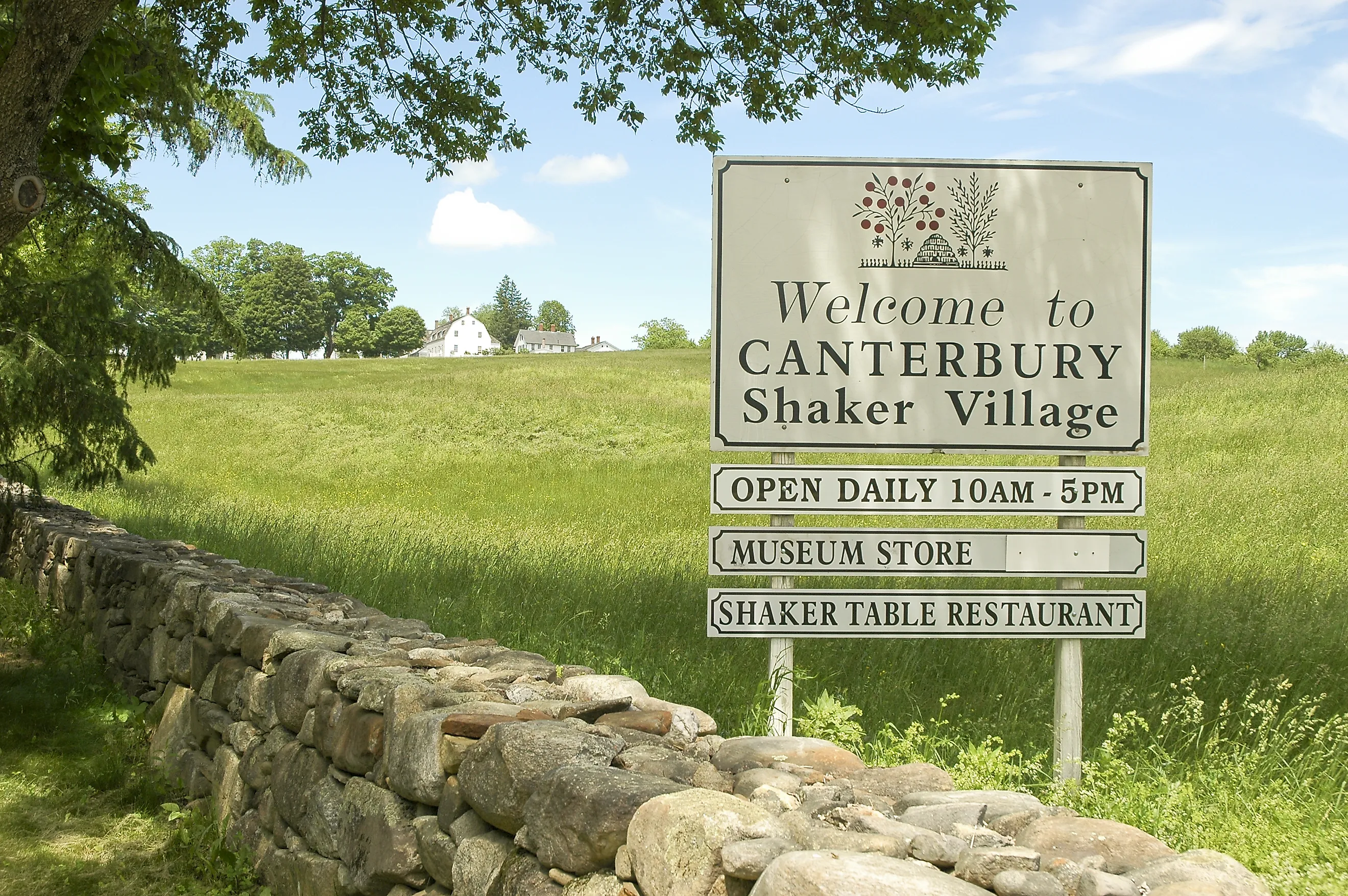
Its one-of-a-kind status rests on being home to the most complete and best-preserved Shaker village in the United States. Founded in 1792, Canterbury Shaker Village contains 25 original restored buildings and four historically accurate reconstructions arranged across the village’s original plan, maintaining unusually high architectural integrity. The site includes the only intact first-generation Shaker Meeting House from 1792 still standing in its original location, along with the only surviving 18th-century Shaker Dwelling House. Beyond the buildings, the museum safeguards a comprehensive archive with nearly 10,000 historic photographs and about 35,000 manuscript items documenting daily labor, worship, governance, and craft. The village occupies 694 acres of forests, fields, gardens, and mill ponds protected under a permanent conservation easement.
A short drive away, Hackleboro Orchard connects Canterbury’s agrarian past to the present through seasonal apple picking and cider production rooted in the region’s long farming history. Each year, the grounds also host the NH Monarch Festival, an annual event held at Canterbury Shaker Village that focuses on pollinator conservation through guided walks, educational programs, and family activities set within the historic landscape.
Bretton Woods

A global financial system took shape in this mountain village during July 1944. Delegates from 44 Allied nations met here to design a postwar monetary framework that led to the creation of the International Monetary Fund and the World Bank, linking Bretton Woods permanently to international finance. The agreements forged during those meetings shaped currency exchange rules and global lending for decades, placing a small White Mountains resort at the center of decisions with worldwide consequences. That moment remains the village’s defining feature and the reason Bretton Woods holds a singular place in U.S. and global history.

Just outside the village, the Mount Washington Cog Railway climbs the slopes of Mount Washington using a rack-and-pinion system that has operated since the 19th century, making it the oldest mountain-climbing cog railway in the world. Nearby, the Bretton Woods Nordic Ski Area maintains an extensive network of groomed cross-country and snowshoe trails that trace open fields and forest edges beneath the Presidential Range. Within the resort complex, The Cave, located inside the Omni Mount Washington Resort & Spa, occupies a historic wine cellar repurposed as an intimate dining space, connecting the site’s grand hotel era to contemporary hospitality.
Dixville Notch

A midnight vote has defined this remote mountain community since 1960. Under New Hampshire law, towns may open polls at midnight if all registered voters are present, allowing Dixville Notch to become the first place in the nation to cast and publicly report presidential ballots. The ritual takes place as soon as Election Day begins, with voters gathering just after midnight to cast their votes before the polls close minutes later. In the 2024 presidential election, only six registered voters participated, allowing results to be announced almost immediately.
From the polling room, the landscape takes over. Dixville Notch State Park protects a narrow mountain pass carved by glaciers, where short paths lead to waterfalls, steep rock walls, and shaded ravines along Route 26. Near the Dixville Flume, the Sanguinary Ridge Trail branches off as a little-known segment of the 165-mile Cohos Trail, climbing past five cliffside outlooks that reveal layered views of the notch and surrounding forest. As evening approaches, many visitors follow the road westward from nearby Errol with North Country Moose Tours, where the Moose Path route cuts through Dixville Notch, New Hampshire’s northernmost mountain pass, known for frequent moose sightings at dusk.
Peterborough

The world’s first public library entirely supported by taxation began operating here in 1833. The Peterborough Town Library introduced a civic model in which access to books and information was funded collectively rather than through private subscriptions or donations. This approach formalized the idea that education and literacy were public responsibilities, not privileges, and it quickly influenced how libraries were organized elsewhere. The library’s founding tied Peterborough to a global shift in public knowledge infrastructure, grounding the town’s identity in governance and policy rather than cultural reputation.
Near the center, the Mariposa Museum of World Cultures houses a rotating collection of artifacts from dozens of countries, focusing on everyday objects that document how people live rather than how empires ruled. Just outside town, Edward MacDowell Lake anchors a protected recreation area with walking paths and water access framed by forested hills at the base of Mount Monadnock. Nearby, Twin Elm Farm maintains a working agricultural operation with seasonal produce and community-supported programs that reflect the region’s long farming tradition.
Hanover

Hanover is widely regarded as the only U.S. town defined almost entirely by a single Ivy League institution. Founded in 1769, Dartmouth College occupies the physical and institutional center of the municipality, with academic buildings, student housing, and administrative spaces shaping how the town functions day to day. Commercial activity, housing density, and pedestrian movement align closely with the academic calendar, creating a town whose identity and operations remain inseparable from one private university.

Inside a Dartmouth building, The Epic of American Civilization, a 3,200-square-foot mural by José Clemente Orozco, presents a stark narrative of American history through images of ancient gods, conquest, and ritual violence, making it one of the most confrontational permanent artworks accessible in a small U.S. town. Below an undergraduate society house, the Panarchy Tomb Room preserves a more than 100-year-old basement chamber with ritualistic design elements that reflect the college’s secretive social traditions. Nearby, Nathan’s Garden provides a maintained botanical space used for teaching and quiet study, while Occom Pond, managed by the college, integrates rowing, skating, and walking paths into daily campus life.
National History Written In New Hampshire Towns
Taken together, these towns show how New Hampshire’s small scale has repeatedly produced places with national and even global significance. In Dixville Notch, election law and population size intersect to create the first legally reported presidential vote in the country. Canterbury preserves the most complete Shaker village in the United States, offering a rare view of an entire religious society maintained on its original landscape. At Bretton Woods, decisions made during a single wartime conference reshaped global finance for decades. Peterborough introduced the world’s first tax-supported public library, establishing a civic model that spread far beyond the state. In Hanover, a single Ivy League institution continues to define the town’s structure, culture, and daily rhythm in a way found almost nowhere else in the country.