5 Wild Animal Hotspots In Nebraska
Nebraska’s landscapes support an impressive range of wildlife, from river corridors and forested bluffs to sandhills, prairies, and rugged buttes. Sandhill cranes, prairie rattlesnakes, and wild turkeys are regular standouts, and larger species like bison, moose, and mountain lions also roam select habitats across the state.
Some places consistently offer especially strong chances for sightings thanks to prime terrain, reliable food and water, and protected space. From towering buttes prowled by wildcats to fossil beds alive with reptiles to riverside bluffs packed with birds, these are five wild animal hotspots in Nebraska!
Agate Fossil Beds National Monument

Preserving the remains of ancient animals along with living contemporary animals, the Agate Fossil Beds National Monument allows wildlife watching through time. Across its thousands of acres are millions of years of natural history, which you can trace indoors at the Agate Visitor Center by viewing real and replica bones from the Miocene Epoch (roughly 23 to 5 million years ago) and outdoors on various trails that manifest more Miocene marvels.

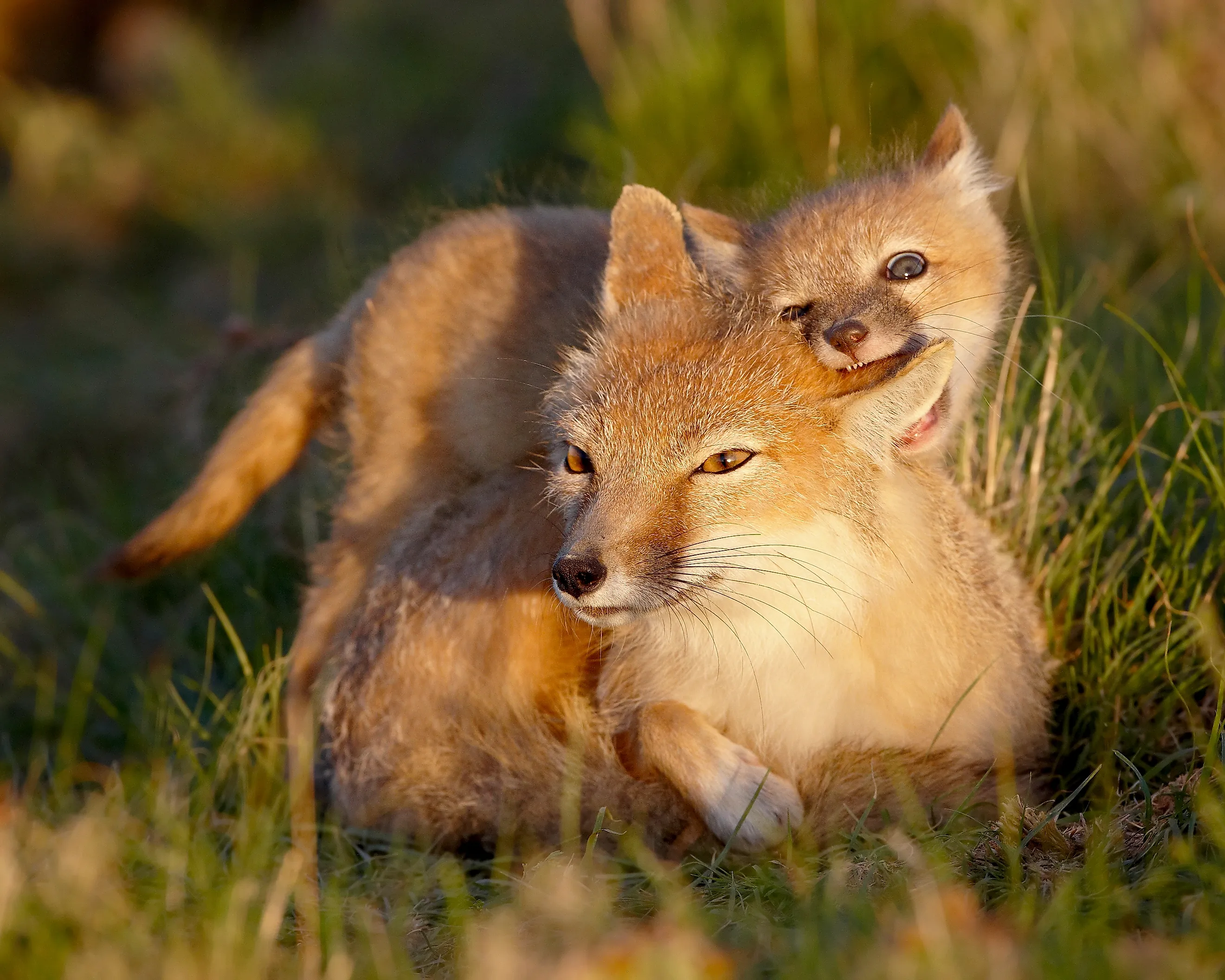
The mile-long Daemonelix Trail displays fossilized burrows made by Palaeocastor, a prehistoric land-beaver whose twisted holes are nicknamed "devil's corkscrews." The 2.8-mile Fossil Hills Trail showcases tracks from Menoceras (ancient rhinocerotid), den sites from Daphoenodon (bear-dog), and excavation sites for the likes of Daeodon (AKA Dinohyus, "terrible pig"). Such trails skirt pristine riverside prairie, which is habitat for extraordinary extant creatures. According to its website, Agate boasts at least 73 species of birds, 30 species of mammals, 16 species of reptiles, and six species of amphibians. Highlights include the pronghorn, prairie rattlesnake, swift fox, burrowing owl, greater short-horned lizard, big brown bat, and common snapping turtle.
Ponca State Park

Ponca State Park is either the best or worst place to visit before Thanksgiving. This 2,200ish-acre preserve, which overlooks the Missouri River along the South Dakota border, has one of the highest concentrations of wild turkeys in Nebraska. Watching those fat fowls proudly promenade throughout the park can make you feel hungry or guilty before the big feast. Thankfully, you can divert your eyes to other avian species—261 others, according to eBird. Yes, according to that bird-tracking app, 262 bird species have been recorded in Ponca State Park. Many such species are migratory, so you can see the likes of snow geese in spring and fall and bald eagles in winter.

Besides birds, Ponca State Park shelters mammals like white-tailed deer and eastern cottontails; reptiles like false map turtles and common garter snakes; amphibians like Woodhouse's toads and Blanchard's cricket frogs; and fish like channel catfish and shovelnose sturgeon, which swim a 59-mile stretch of the Missouri preserved as the Missouri National Recreational River, whose eastern gateway begins at Ponca.
Iain Nicolson Audubon Center At Rowe Sanctuary

Though wild turkeys and bald eagles are spectacular sights, no Nebraskan bird draws more human fanfare than the sandhill crane. Each spring, roughly one million sandhill cranes are viewed by a comparable number of people as they gather along the Platte River during their migratory stopover. Ground zero for cranespotting is the Iain Nicolson Audubon Center at Rowe Sanctuary, which offers daily guided tours at sunrise and sunset throughout "Crane Season," scheduled to run from March 4 through April 7, 2026. Said tours are so popular that they are reserved months in advance. Booking for 2026's Crane Season began on January 8.

Cranespotting hotspots that do not require reservations include the Fort Kearny State Recreation Area, Windmill State Recreation Area, and Richard Plautz Crane Viewing Site. There is even a live "Crane Cam" that streams online for birders who cannot venture to the Platte River.
Wildcat Hills State Recreation Area

True to its name, the Wildcat Hills State Recreation Area is one of the best places in Nebraska to find fierce, feral felines. Bobcats, which can weigh up to 40-plus pounds, inhabit the park, as do much larger mountain lions, which were long extirpated from the state but recently returned in sufficient quantities to enable hunting. However, annual harvest limits remain low (three for the Wildcat Hills, none of which, as of January 7, 2026, have been claimed), so Nebraskan cougars are usually spared to search their rugged surroundings for white-tailed deer, mule deer, bighorn sheep, and even moose, which were also rare in Nebraska but have seemingly settled in unprecedented abundance in the Wildcat Hills.

More big predators and similarly big prey can be found north of the Wildcat Hills along the Pine Ridge, which is preserved by the likes of the Pine Ridge National Recreation Area and Chadron State Park. In addition to mountain lions, bobcats, white-tailed deer, mule deer, and bighorn sheep, the Pine Ridge boasts elk, which is yet another sizable species to have recovered from Nebraskan extirpation.
Fort Niobrara National Wildlife Refuge

The most notable American species to have neared extinction and successfully recovered is the American bison. In Nebraska, bison are especially populous in the northern Sand Hills near the city of Valentine. You will love looking for bison in the Fort Niobrara National Wildlife Refuge, whose 19,000-plus acres line the Niobrara National Scenic River and host approximately 350 free-roaming buffalo. Besides wild bison, you can spot other wild wonders like wildflowers, elk, mountain lions, coyotes, greater prairie chickens, and prairie rattlesnakes.

But you need not stop your search at Fort Niobrara. Its surrounding Sand Hills are among the largest and most biodiverse regions of the state. South of Fort Niobrara is the Valentine National Wildlife Refuge, which claims 270 species of birds, 59 species of mammals, and 22 species of reptiles and amphibians. West of both preserves lies the Samuel R. McKelvie National Forest, whose 400-foot vegetated sand dunes support countless other species.
Let this list remind you that Nebraska is far from a fauna-less state. Find the state's iconic species in the Agate Fossil Beds National Monument, Ponca State Park, Iain Nicolson Audubon Center at Rowe Sanctuary, Wildcat Hills State Recreation Area, and Fort Niobrara National Wildlife Refuge. Which Nebraskan wildlife hotspot will you visit first?