5 Wild Animal Hotspots in Mississippi
Mississippi holds swamp, bottomland forest, and rare wet pine savanna that support a wide range of wildlife. American alligators and large eastern diamondback rattlesnakes prowl the Gulf Islands National Seashore, where more than 280 bird species also pass through. The Pascagoula River Basin holds 109 native fish species and the largest free-flowing river system in the contiguous United States. The Mississippi Sandhill Crane National Wildlife Refuge protects the state's last wet pine savanna and the small endangered crane population that depends on it. Read on for five wild animal hotspots in Mississippi worth seeking out.
Gulf Islands National Seashore

The Gulf Islands National Seashore is a chain of barrier islands off the coasts of Mississippi and Florida in the Gulf of Mexico. The Mississippi side includes Horn Island, Petit Bois Island, and Ship Island, the last of which holds the 19th-century Fort Massachusetts. The federally protected portions serve as preserved habitat for many animal species, including several listed as endangered or threatened.

The Gulf Islands provide habitat for five species of sea turtles, all either endangered or threatened, including the green sea turtle. Other reptiles here are a bit more menacing. Alligators live in bayous and marshes along the park, and the eastern diamondback rattlesnake (the largest venomous snake in North America) averages 3 to 6 feet long, with verified specimens exceeding 7 feet on rare occasions. The species is identifiable by its diamond-pattern back and the namesake rattle that it shakes when threatened.
Marine mammals such as bottlenose dolphins are common in the Gulf, along with nesting and migratory birds. More than 280 bird species are documented at the seashore, including brown pelicans with their long bills and ospreys, the fish-hunting raptor often seen overhead.
Pascagoula River Basin

The Pascagoula River Basin covers about 9,600 square miles, making it one of the largest in the state. The river itself runs roughly 80 miles from the confluence of the Leaf and Chickasawhay Rivers in southern Mississippi to the Gulf of Mexico. With no dams along its main stem, it is recognized as the largest free-flowing river system in the contiguous United States. Many of Mississippi's most iconic creatures live in and along these waters, including alligators.

Freshwater swamps and slow streams running off the river make for ideal alligator habitat. While alligators typically don't bother humans, they can attack if provoked or surprised at the water's edge.
That's hardly the only animal you'll see in the basin. More than 300 bird species use the area, including swallow-tailed kites, and 109 native fish species swim through the system, among them largemouth bass, bullhead catfish, and the federally threatened Gulf sturgeon.
Panther Swamp National Wildlife Refuge

This refuge is part of the Theodore Roosevelt National Wildlife Refuge Complex. Established in 1978, Panther Swamp covers nearly 40,000 acres of bottomland hardwood forest, cypress-tupelo sloughs, and meandering bayous in Yazoo and Humphreys counties. The waters here are some of the richest waterfowl habitat in the Mississippi Delta, with over 100,000 ducks wintering on the refuge.

Many bird species use the refuge, including geese, great blue herons, gulls, woodpeckers, and wood storks (the largest North American wading bird, standing close to four feet tall).
The upland portions of the refuge support several predatory mammals. The federally threatened Louisiana black bear is occasionally observed on refuge lands, and bobcats are present. Hikers should also watch for copperhead snakes. These pit vipers tend to freeze rather than flee when approached and are responsible for a large share of venomous snakebites reported in the United States each year.
De Soto National Forest

North of the Gulf of Mexico is the 518,587-acre De Soto National Forest. It matters to the state because of its longleaf pine savannas, flatwoods, and forests, an ecosystem that has been heavily reduced across the U.S. by logging and conversion. With its proximity to the coast, the forest holds habitat for several wildlife species, including endangered ones.
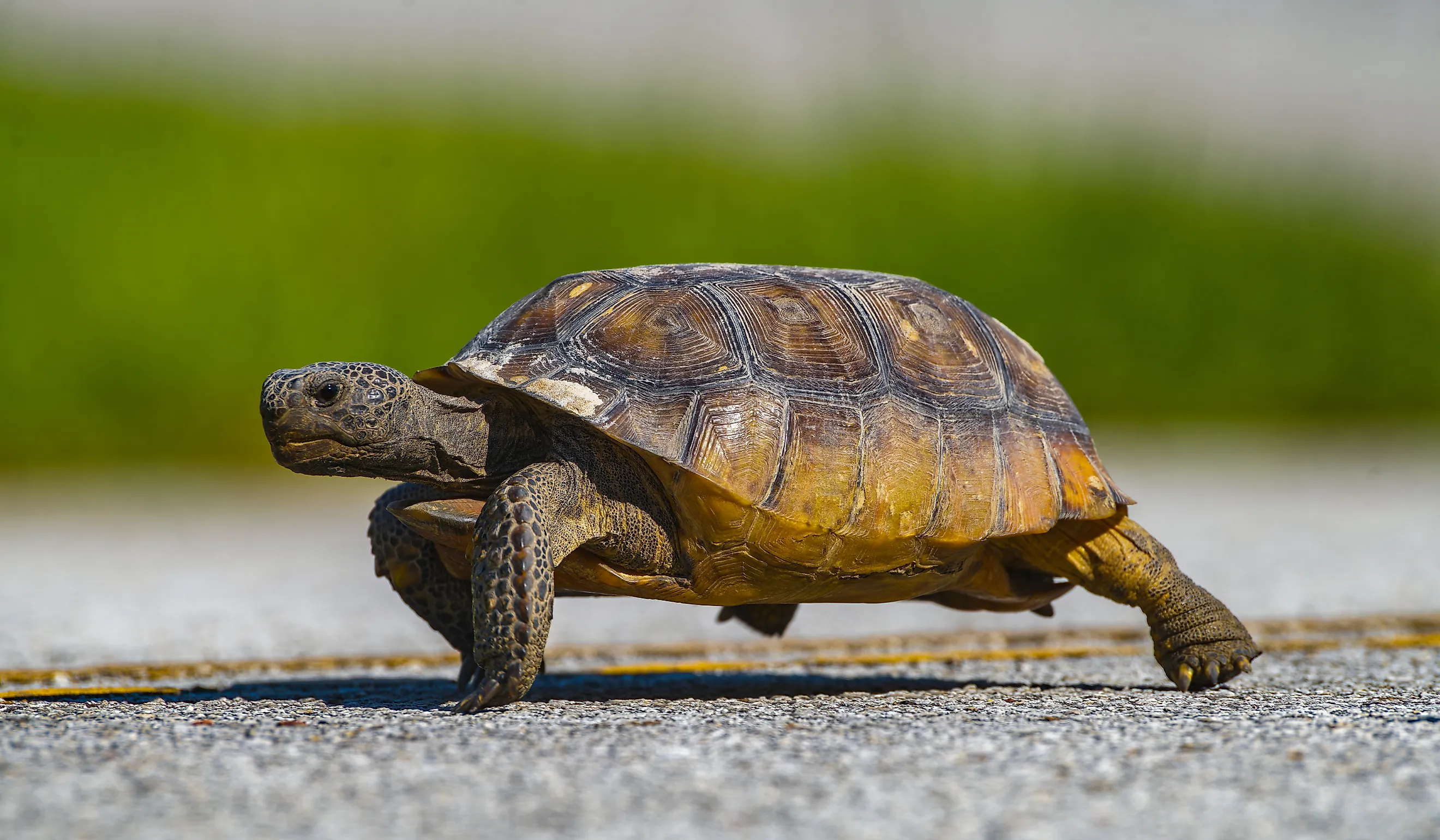
One such endangered creature that lives in the forest is the gopher tortoise. Its burrows are used by hundreds of other species (snakes, frogs, and small mammals), making it a keystone of the longleaf ecosystem. In the swampy parts of the forest, you might spot wood storks, fiddler crabs, or mangrove salt marsh water snakes.
Speaking of snakes, plenty more slither through the forest, including ring-necked snakes and black racers. Neither is dangerous to people.
Mississippi Sandhill Crane National Wildlife Refuge

The Mississippi Sandhill Crane National Wildlife Refuge was established in 1975 under the Endangered Species Act to protect the federally endangered Mississippi sandhill crane. The refuge protects wet pine savanna, an ecosystem that has nearly vanished from the U.S.
When the refuge was established, only 30 to 35 cranes remained. Through captive rearing, reintroduction, and wild birds nesting on the savannas, the population has since recovered to roughly 130 birds, with about 40 nesting pairs. The Mississippi sandhill crane is darker gray than the more common greater sandhill, and its trumpeting call carries for miles across the savanna.
Beyond the cranes, pine woods treefrogs and oak toads breed in the acidic soils of the savanna, along with the federally endangered dusky gopher frog (also known as the Mississippi gopher frog).
Visiting Mississippi's Wildlife Hotspots
While visiting these wild animal hotspots, a few key points are worth keeping in mind. Most animals you'll encounter are harmless, but they're still wild. Keep your distance and let them be. That goes double for the predatory animals that live in Mississippi (American alligators, eastern diamondback rattlesnakes, and bobcats). None of these creatures hunts humans, but each will defend itself if cornered.
Most of these locations are also protected wildlife refuges, set up to preserve rare ecosystems like wet pine savanna. Take only pictures, leave only footprints, and these places stay intact for the animals and the people who come after you.