7 Wild Animal Hotspots in Maryland
Wild animal hotspots in Maryland include national seashores, wildlife refuges, and state parks. The marshes and saltwater ecosystems of the Eastern Shore form one major wildlife region, and the Appalachian Mountains and freshwater lakes of Garrett County create another. In the Chesapeake Bay region, Elk Neck State Park’s coastal cliffs serve as important vantage points. These landscapes protect habitats while supporting conservation awareness. They also offer opportunities to observe animals in their natural environments.
Blackwater National Wildlife Refuge

Blackwater National Wildlife Refuge, on Maryland’s Eastern Shore, encompasses diverse wetland habitats for a wide range of wildlife. Established in 1933 to protect migratory birds, the refuge is part of the Atlantic Flyway, a migratory route that spans more than 3,000 miles from the Arctic tundra to South America. More than 250 bird species inhabit the area. Tidal marshes, pine forests, and freshwater wetlands also contain deer, muskrats, and Delmarva Peninsula fox squirrels.
The approximately 30,000-acre refuge has hiking trails, kayaking routes, and the 4-mile long Blackwater Wildlife Drive, all designed to facilitate wildlife observation. The refuge is open for self-guided tours, and guided birding tours led by an expert are available periodically. Additional amenities, such as an observation platform and designated gardens for pollinators, provide further opportunities for environmentally responsible exploration and interpretation.
Assateague Island National Seashore

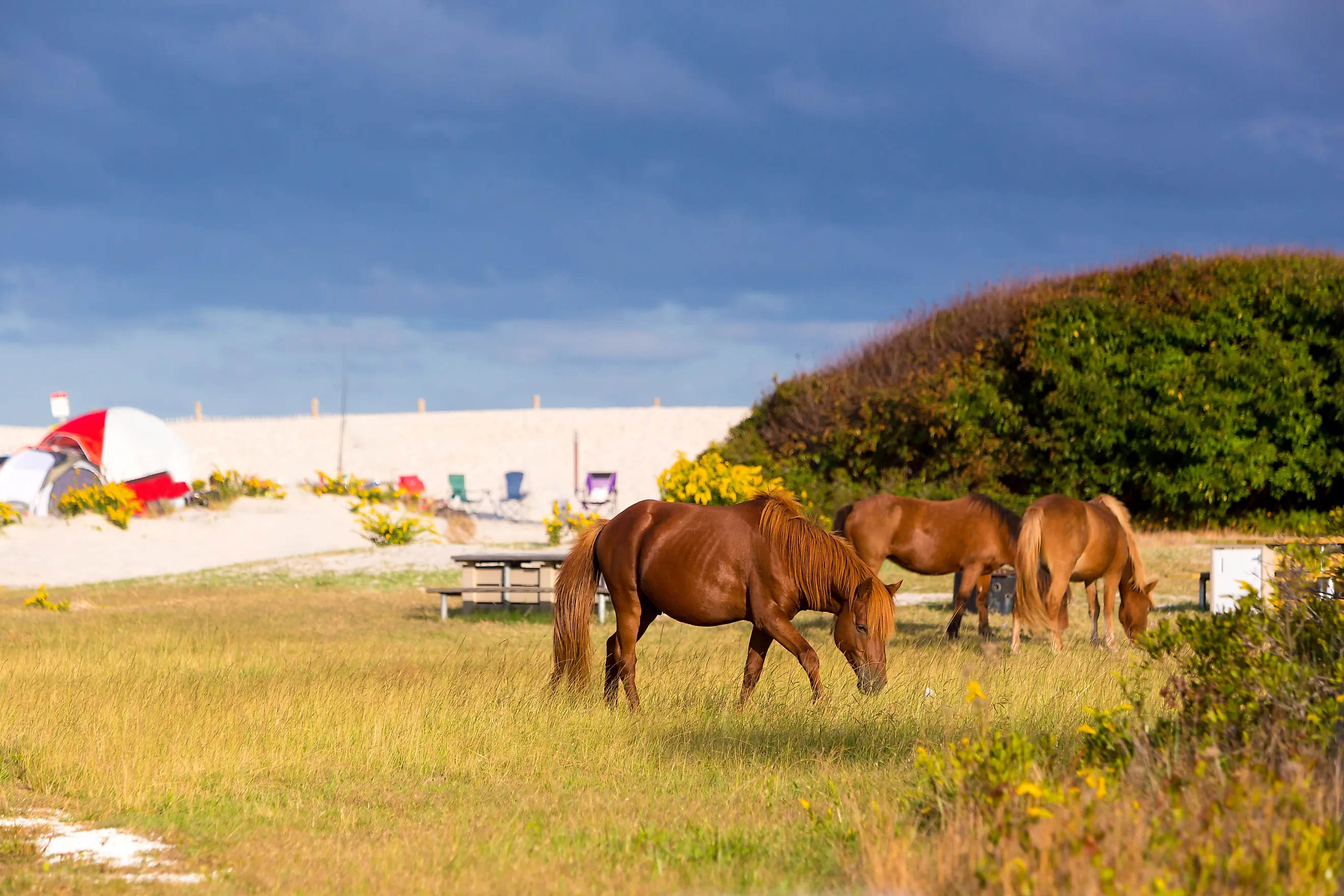
Assateague Island Wild Horses on Beach.
Assateague Island National Seashore extends about 37 miles along the Atlantic Ocean coastlines of Maryland and Virginia. Wild horses are the primary attraction and are widely believed to be descendants of domestic horses. Folklore suggests they survived an 18th-century shipwreck, but no historical evidence backs up that claim. Separate herds inhabit the Maryland and Virginia portions of the island, separated by a fence. The Maryland herd is managed by the National Park Service (NPS), while the Virginia herd is managed by the Chincoteague Volunteer Fire Company. Horses are commonly observed grazing in the marshes and walking on the beaches. The NPS recommends staying at least 40 feet away from the horses.
The island’s marshes and coastal environments support ghost crabs, blue crabs, bottlenose dolphins, and occasional river otters. The forests are habitats for sika deer, red foxes, and white-tailed deer. Frogs and toads inhabit the freshwater ponds. Part of the Atlantic Flyway, the seashore hosts more than 200 species of birds, including migratory snow geese, osprey, and herons. Recreational activities, such as hiking and kayaking, are available to observe wildlife in their natural habitats.
Elk Neck State Park

Elk Neck State Park is set on a peninsula near the Chesapeake Bay and the Elk River. Encompassing around 2,370 acres, the park features a diverse landscape of marshes, forests, and clay cliffs that make prime vantage points to see bald eagles. More than 250 bird species have been recorded within the park, highlighting its importance as a birdwatching destination.
A wide range of wildlife is found throughout the area, particularly white-tailed deer, Eastern painted turtles, and several species of snakes. Notable locations like Wapiti Pond and the Beaver Marsh Loop Trail are especially popular for observing birds and beavers. Additionally, Turkey Point is a prominent spot to see bald eagles, swifts, hawks, and tundra swans in their natural environment.
Cunningham Falls State Park

Cunningham Falls in Cunningham Falls State Park, Maryland.
Cunningham Falls State Park is located within the Catoctin Mountains and is known for its diverse wildlife habitats and scenic waterfalls, especially in the William Houck Area. Small lakes and ponds allow fish and turtles to share space, and the surrounding forests are habitats for black bears, rabbits, foxes, and eagles.
The state's only two venomous snakes, Eastern copperheads and timber rattlesnakes, have been documented in the park. Nonvenomous water snakes, rat snakes, and garter snakes are also common inhabitants. Additionally, the Manor Area has a small educational aviary and the historic Catoctin Iron Furnace, reflecting the region’s industrial heritage.
Deep Creek Lake State Park

In Western Maryland, Deep Creek Lake State Park is situated within the hemlock and spruce forests of the Appalachian Mountains. Comprising around 1,800 acres, the park has an extensive network of hiking and bicycling trails, as well as designated camping areas. The park borders Deep Creek Lake, a 3,900-acre man-made reservoir filled with a variety of fish species like bass, walleye, and trout.
The lake and surrounding shoreline are home to great blue herons and river otters. Coyotes, bobcats, and black bears are also found within the park. Beckman’s Trail and Meadow Mountain Trail have opportunities for spotting deer and turkeys. The park’s Discovery Center further enhances wildlife education with an aviary that houses injured and rehabilitated owls, hawks, and a peregrine falcon.
Potomac-Garrett State Forest

View southeast from the summit of Hoye-Crest on Backbone Mountain. Garrett County, Maryland. Editorial credit: Wikimedia Commons
In Garrett County, on Backbone Mountain, Potomac-Garrett State Forest is approximately 19,000 acres of forest and stream ecosystems. These environments provide safe habitats for a large variety of wildlife and plant species. Mixed hardwood forests of oak, birch, and red maple shelter white-tailed deer, wild turkeys, and foxes.
Nearby streams associated with the north branch of the Potomac River sustain rainbow trout, smallmouth bass, and sunfish. The forest is also home to birds like common ravens, tree swallows, and American kestrels. The site holds historical significance as one of the earliest milestones in Maryland’s forestry conservation efforts, beginning with a 1906 donation of 1,917 acres from the Garrett Brothers.
Swallow Falls State Park

Swallow Falls, located near Oakland in Garrett County, is often recognized as one of the most scenic natural settings in the state. Hiking trails lead the way through more than 100 acres of old-growth Eastern hemlock and white pine forests, offering a peaceful and relatively undisturbed landscape for wild animals. Salamanders, rainbow trout, and brown trout can be found in the waters and on the banks of the Youghiogheny River, which flows through the park. Butterflies and dragonflies are seen seasonally as well.
The park is home to black bears, white-tailed deer, bobcats, and bird species like raptors, warblers, and hermit thrushes.
Maryland's Wild Animal Hotspots
Maryland’s wild animal hotspots span diverse landscapes while supporting a wide array of species. The Catoctin Mountains in the northern region have forested habitats for turtles, black bears, and other wildlife. On the Atlantic Coast, wild horses roam the marshes and beaches of Assateague Island. These environments provide opportunities for environmentally responsible wildlife observation, with hiking trails leading to birdwatching sites along the Atlantic Flyway and to scenic viewpoints near the Potomac and Youghiogheny Rivers. Together, they offer unique settings to safely view Maryland’s wildlife and natural wonders.