8 Prettiest Small Towns In Alaska
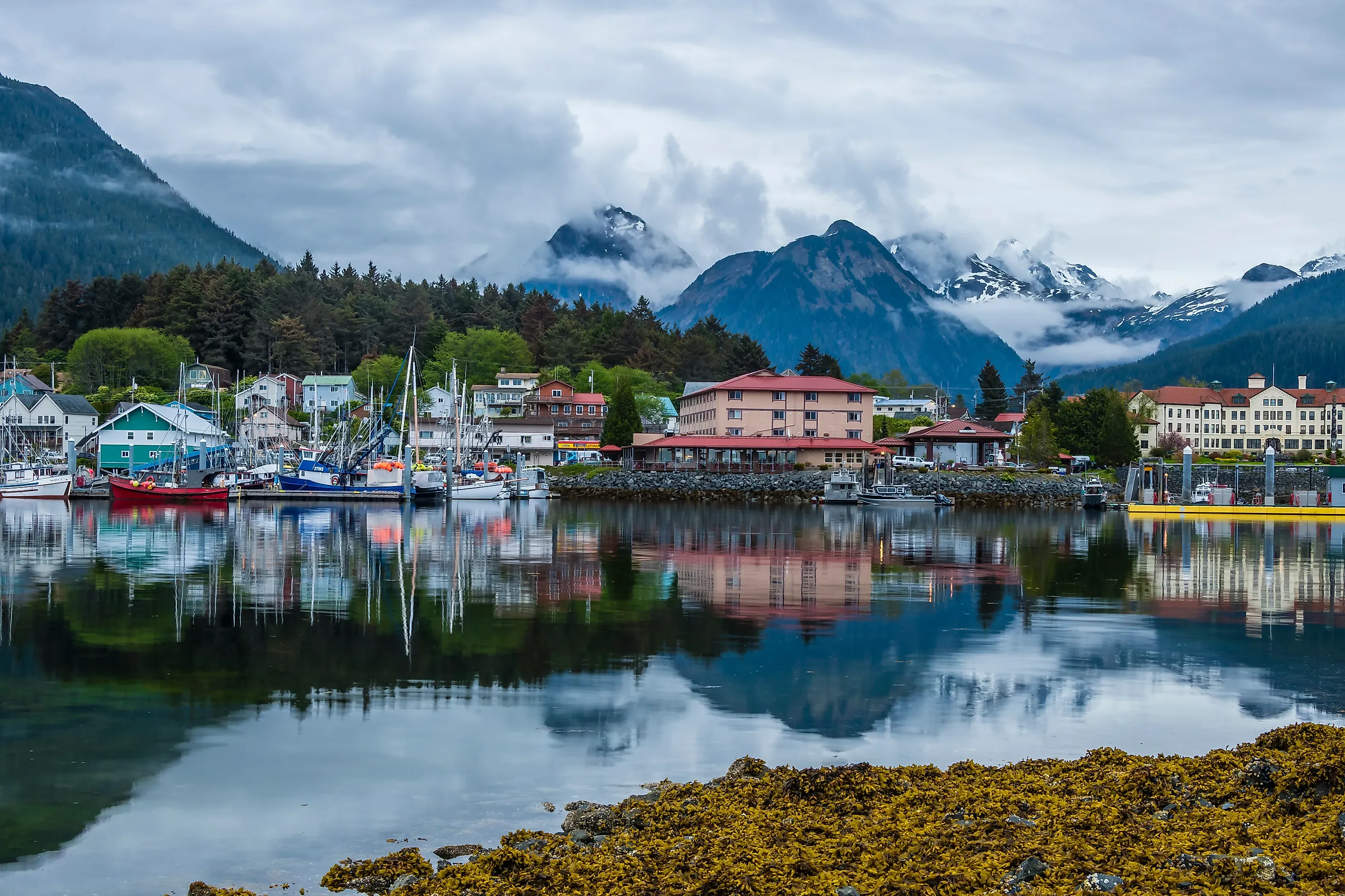
Alaska's prettiest towns are made by their backdrops. Sitka faces the open Pacific from Baranof Island with green Russian Orthodox onion domes against forested mountains and totem poles half-hidden in the spruce. Skagway is squeezed into a Klondike-era main street of false-front wooden buildings, with peaks leaning over the boardwalks and the Arctic Brotherhood Hall's facade made of more than 8,800 pieces of beach driftwood. Talkeetna sits where three rivers meet and looks straight up the Susitna Valley to Denali at 20,310 feet. Cordova, ringed by Mount Eyak and Orca Inlet, has no road in. Valdez was rebuilt four miles up-fjord after the 1964 earthquake and now runs on snowcapped peaks above the harbor and waterfalls falling straight off the mountain into the bay. The eight below all earn a place from a different angle.
Seward

Seward sits at the head of Resurrection Bay, with the Kenai Mountains rising directly behind town and snow streaks holding into summer. Downtown shows off more than 30 large murals across building walls alongside early 20th-century storefronts. St. Peter's Episcopal Church (completed 1906) holds a 1925 interior mural by Dutch artist Jan Van Empel titled "The Resurrection," depicting the resurrection of Christ set against Resurrection Bay.
Seward Waterfront Park runs along the bay past the Founder's Monument and connects to the Alaska SeaLife Center. Behind town, the Mount Marathon Trail climbs to wide views of the surrounding area. The Mount Marathon Race on July 4 is one of the oldest mountain footraces in the U.S., first run as an organized event in 1915.
Cordova

Cordova is wedged between Orca Inlet, Eyak Lake, and the steep forested flanks of Mount Eyak. There is no road connecting the town to the state highway system, only ferry and air service. That isolation has kept the place largely unchanged. The harbor is busy with commercial fishing boats and the surrounding peaks hold snow most of the year.
The town's early 20th-century architecture is still intact on First Street. The Cordova Historical Museum covers the railroad and fishing eras and the 1964 earthquake. The Ilanka Cultural Center on the waterfront houses a fully articulated orca skeleton, one of very few on public display in the world.
The Ski Hill Trail climbs from downtown to wide views over Orca Inlet. At the north end of town, Eyak Lake hosts trumpeter swans and float planes lifting off its glassy surface.
Wrangell

Wrangell sits on its own island at the mouth of the Stikine River, the only town in Alaska to have been ruled by four nations. The Tlingit, Russians, British, and Americans each left their mark, layering one of the most complex histories in the state.
Tlingit heritage is strikingly intact here. Chief Shakes Island, reached by a pedestrian bridge in the harbor, has a restored tribal house and totem poles rooted in clan history. The Wrangell Museum inside the Nolan Center displays Tlingit house posts alongside Gold Rush and fishing-era artifacts. Just over a mile out of downtown, Petroglyph Beach State Historic Site preserves more than 40 ancient rock carvings along the shoreline, with some estimated to be thousands of years old.
Sitka

Sitka faces the open Pacific from the western edge of Baranof Island, with a skyline defined by mountains, totem poles, and Russian colonial architecture. The waters around town hold so many forested islands that the view edges toward unreal.
St. Michael's Cathedral dominates downtown with its green onion dome. The original 1840s structure burned down in 1966, but the current building is a faithful replica completed in 1976 using salvaged contents and original drawings. The Russian Bishop's House on Lincoln Street is one of the few surviving examples of Russian colonial architecture in North America.
Within walking distance of downtown, Sitka National Historical Park winds through old-growth Sitka spruce and hemlock past more than 20 totem poles, with Tlingit cultural displays at the visitor center.
Valdez

Valdez sits at the head of Port Valdez, a fjord at the eastern end of Prince William Sound, ringed by snowcapped peaks. Waterfalls tumble directly down the mountainsides toward the harbor.
The original Valdez was destroyed by the catastrophic 1964 earthquake (magnitude 9.2, the second-largest ever recorded) and rebuilt four miles west on more stable ground. The Maxine and Jesse Whitney Museum holds one of the largest collections of Alaska Native art and artifacts in the state.
The Dock Point Trail winds along a peninsula between the Duck Flats and Port Valdez, with shorebirds and bald eagles regularly visible. About a mile from downtown, Crooked Creek Information Site is a reliable salmon viewing spot in season.
Skagway

Skagway sits at the northern tip of the Inside Passage, squeezed into a narrow valley with mountains leaning over the streets. It was the gateway to the Klondike in 1898, drawing tens of thousands of prospectors through this pass. The setting made it one of the most documented towns of the Gold Rush era.
Few Alaskan towns preserve their Gold Rush character as completely. Broadway Street is lined with false-front wooden buildings, boardwalks, and Gold Rush-era storefronts, many now part of the Klondike Gold Rush National Historical Park. The Arctic Brotherhood Hall, with a facade made of more than 8,800 pieces of driftwood gathered from Skagway Bay (8,883 in total per the 2005 restoration), is one of Alaska's most photographed buildings. The Gold Rush Cemetery, just north of downtown, holds the graves of legendary figures, including outlaw Soapy Smith.
Lower Reid Falls tumbles down the mountainside just beyond the cemetery, reachable on a short walk from town. The White Pass and Yukon Route Railroad departs from downtown, climbing through the same mountain pass the Gold Rush prospectors crossed.
Homer

Homer sits at the southern tip of the Kenai Peninsula, with downtown running along bluffs above Kachemak Bay. Glacier-covered mountains rise across the water, reflecting back into the bay on calm days.
The town has nurtured one of Alaska's most active arts communities; the bay views and northern lights have drawn painters, sculptors, and writers for generations. The Pratt Museum on Bartlett Street covers the art, science, and history of the Kachemak Bay region. Pioneer Avenue is lined with galleries.
Homer Spit stretches 4.5 miles into the bay with unobstructed views of the glaciers across the water and shops, lodges, and seafood spots along its length. Bishop's Beach below the bluffs connects to town via the Beluga Slough Trail.
Talkeetna

Talkeetna sits where three rivers meet (the Susitna, the Talkeetna, and the Chulitna), with the Alaska Range and Denali visible behind town. At 20,310 feet, Denali is North America's highest peak; the town is the main staging point for climbing expeditions.
Downtown is a preserved early 20th-century townscape. Log cabins and clapboard storefronts earned Talkeetna's Historic District a place on the National Register of Historic Places in 1993. Nagley's Store, with its red facade, has been a fixture on Main Street since 1921 and is the longest continually operating general store in the area.
Talkeetna Riverfront Park, at the foot of Main Street, looks out over glacial water and Denali on the horizon.
Small Towns, Big Backyards
Alaska's most memorable places earn the trip with their landscapes and histories. Sitka pairs onion-domed churches with coastal mountains and dense spruce forest. Skagway still shows its Gold Rush past in wooden boardwalks and storefronts. Cordova hides behind a wall of mountains with no road in. Across the state, harbors, peaks, old buildings, and old-growth forest give each town a distinct character.