12 Best Small Towns In Oregon For Retirees
The choice of where to retire in Oregon often comes down less to whether you stay in-state and more to which corner of it. Coastal fog towns, high desert plateaus, and Willamette Valley pockets each offer the slower pace retirees look for, but the actual experience of a winter morning differs sharply between them. Anyone who has driven from Astoria to Burns in February knows how much weather one state can hold.
The dozen towns below all clear the practical bars retirees weigh against a fixed income. Healthcare in town or close by, cost of living under state averages, walkable downtowns, and recreation that doesn't require crossing into Idaho or California for variety. What separates them is climate, scenery, and the local pace.
Sisters

Sisters' downtown runs about four blocks of Western-front buildings, all working storefronts rather than themed facades. The bakery, bookstore, outdoor outfitter, and hardware store all sit within walking distance of each other. The population sits just above 3,300, and St. Charles Family Care covers everyday medical needs in town. Bend's full hospital network is twenty minutes east when something needs a specialist.
The Three Sisters mountains dominate every view west of town, and trails into Deschutes National Forest start where the pavement ends. Suttle Lake and the Metolius River, both inside a twenty-minute drive, draw retirees out for fly-fishing and kayaking. The Sisters Outdoor Quilt Show in July fills the streets with thousands of hand-stitched panels, and the rodeo each June pulls in a different crowd entirely. Winters bring real snow, summers run dry and warm without coastal humidity, and the elevation above 3,000 feet keeps the air clear year-round.
Klamath Falls

Klamath Falls fronts Upper Klamath Lake with about 22,420 residents, big enough for solid healthcare and steady cultural programming but quieter than the I-5 corridor. The four-season climate runs mild on both ends. Summers stay warm without the inland desert intensity. Winters bring snowfall but rarely the brutal cold that hits Eastern Oregon.
Outdoor recreation defines the daily rhythm here. Hiking at Moore Park and biking the OC&E Woods Line State Trail are the in-town options. Fishing on Upper Klamath Lake fills warmer afternoons, and boating ranges out to wildlife refuges like Lower Klamath National Wildlife Refuge thirty minutes south, which stays open for birding through migration season. Cost of living and property taxes both run below the state average, which matters on a fixed income.
Bandon

The compact grid of Old Town puts most of what retirees need within a few blocks. Working harbor, post office, bakery, and medical clinic all fall inside an easy walk. Bandon's population sits around 3,300, small enough that you'll start recognizing faces at the Saturday market within the first month. Southern Coos Hospital is fifteen minutes north in Coos Bay for anything specialized.
Bandon Dunes Golf Resort draws golfers from across the country, but local rounds tend to happen at the more affordable Bandon Crossings. Face Rock State Scenic Viewpoint anchors easy beach walks among the sea stacks, and the Coquille River Lighthouse sits across the harbor. Bandon Marsh National Wildlife Refuge offers boardwalks and bird-watching for slower afternoons. Coastal fog keeps summer temperatures moderate, and winters bring rain rather than snow, so walking routines stay year-round.
La Grande

La Grande tucks into the Grande Ronde Valley with the Blue Mountains rising on three sides and about 13,190 residents. Grande Ronde Hospital covers primary care and most specialty needs without a referral drive. Local galleries, community theater, and regional music programming keep the calendar fuller than the population suggests. The median home value runs $274,221, well under the Oregon average.
The four seasons land mild here. Warm sunny summers give way to winters with gentle mountain snowfall rather than valley-floor freezes. Anthony Lakes Mountain Resort, about forty minutes out, handles the skiing crowd. Hot Lake Springs offers a soak after a day on the trails. Downtown holds onto the La Grande Drive-In Theatre from the 1950s, and meals at Cock & Bull Villa Roma or coffee at The Local fit comfortably into a slower routine.
Pendleton

Pendleton anchors Eastern Oregon with about 16,719 residents and a downtown that earns its reputation. Actual Victorian-era buildings hold working storefronts, with the Pendleton Center for the Arts as the cultural anchor. Hamleys Steakhouse runs live music, the Vert Auditorium handles theatrical productions, and the farmer's market keeps regional jams and cheeses in steady supply.
High desert summers run dry and warm. Winters land milder than the elevation suggests. Cost of living stays reasonable across the board. The Pendleton Round-Up rodeo each September is the town's signature event, drawing a crowd that doubles the population for the week, but the rest of the year keeps a slow pace. Western heritage shows up in the storefronts and the festival calendar without tipping into theme-park territory.
Lebanon

Lebanon's 19,981 residents occupy a quieter pocket of the Willamette Valley, far enough from the metro corridors to keep its own pace but close enough that specialty trips stay short. The valley climate runs warm and dry through summer, mild and wet through winter. Healthcare and cultural programming both punch above the population count.
Downtown carries murals and a steady set of working spots. Everyone's Market handles groceries, Growler Cafe and 1847 Bar and Grill anchor the meal rotation. Cheadle Lake Park and Riverview Park offer walking, tennis, and fishing within town limits. McDowell Creek Falls Trail features Majestic Falls and Royal Terrace Falls about twenty minutes out. Each fall, the Santiam River fills with returning salmon. Tree farms like the historic West's Tree Farm and wineries like Springbank Farm Winery anchor scenic drives through the foothills along the Coast Fork Willamette River drainage.
Coos Bay

Coos Bay holds about 15,835 residents on the southern coast. Bay Area Hospital sits in town and handles most needs without a referral drive. The protected bayfront boardwalk threads along the harbor and stays walkable through both the mild wet winters and the cool sunny summers.
Shore Acres State Park and the Elliott State Forest both fall within easy day-trip range, pulling retirees out for tide pools, garden tours, and forest walks. Charleston, just south, holds the Cape Arago and Coquille River lighthouses along with a working fishing fleet. Boating, fishing, and crabbing on the bay all stay in regular rotation. Trail walks like the Mingus Park Loop fill quieter afternoons. Coastal cost of living runs lower than most of the state, which factors into the appeal.
Prineville

Prineville rests at the foot of the Ochoco Mountains with about 11,957 residents and high desert weather, with warm dry summers and mild winters that bring occasional mountain snow. St. Charles Prineville handles healthcare in town, and Bend's full hospital network sits forty minutes west when needed.
Ochoco National Forest opens up about an hour from town for hiking and biking. Prineville Reservoir handles fishing and boating closer in, with Prineville Reservoir State Park and Jasper Point offering day-use access. Big Summit Prairie pulls retirees out for wildflower season and wildlife viewing. The historic downtown holds the Crook County Historical Society's Bowman Museum, which runs rotating exhibits on regional ranching and pioneer history alongside a steady core of cafes that anchor the daily routine.
Cottage Grove

Cottage Grove holds about 10,607 residents in the southern Willamette Valley. The climate keeps both extremes off the calendar. Summers stay warm without tipping hot, winters wet without freezing. Specialty appointments and concert venues sit a short drive north when needed.
Trail networks around Dorena Lake and through North Regional Park fill the morning routine for retirees who walk daily. In town, Bohemia Park and Row River Nature Park offer tennis, sports fields, and quieter paths. The Saturday farmers market downtown moves serious volumes of local produce. Dexter Lake handles water sports about half an hour out, and the Coast Fork river corridor stays accessible for swimming, fishing, and birdwatching. Lower property taxes and affordable housing both factor into the retiree appeal.
Roseburg

Roseburg lies at the confluence of the North and South Umpqua Rivers with about 24,116 residents. Mercy Medical Center handles regional healthcare. The mild climate runs warm and sunny through summer, rainy through winter without serious freezes, which keeps outdoor routines active year-round.
Stewart Park inside the city limits offers paved walking paths and shorter mountain bike loops. The North Umpqua, about thirty minutes out, holds nationally recognized trout and steelhead runs for fly-fishers. Historic downtown features murals, a steady restaurant scene, and the Douglas County Museum, which covers regional logging, ranching, and Native American history. Cost of living runs below the state average.
Gearhart

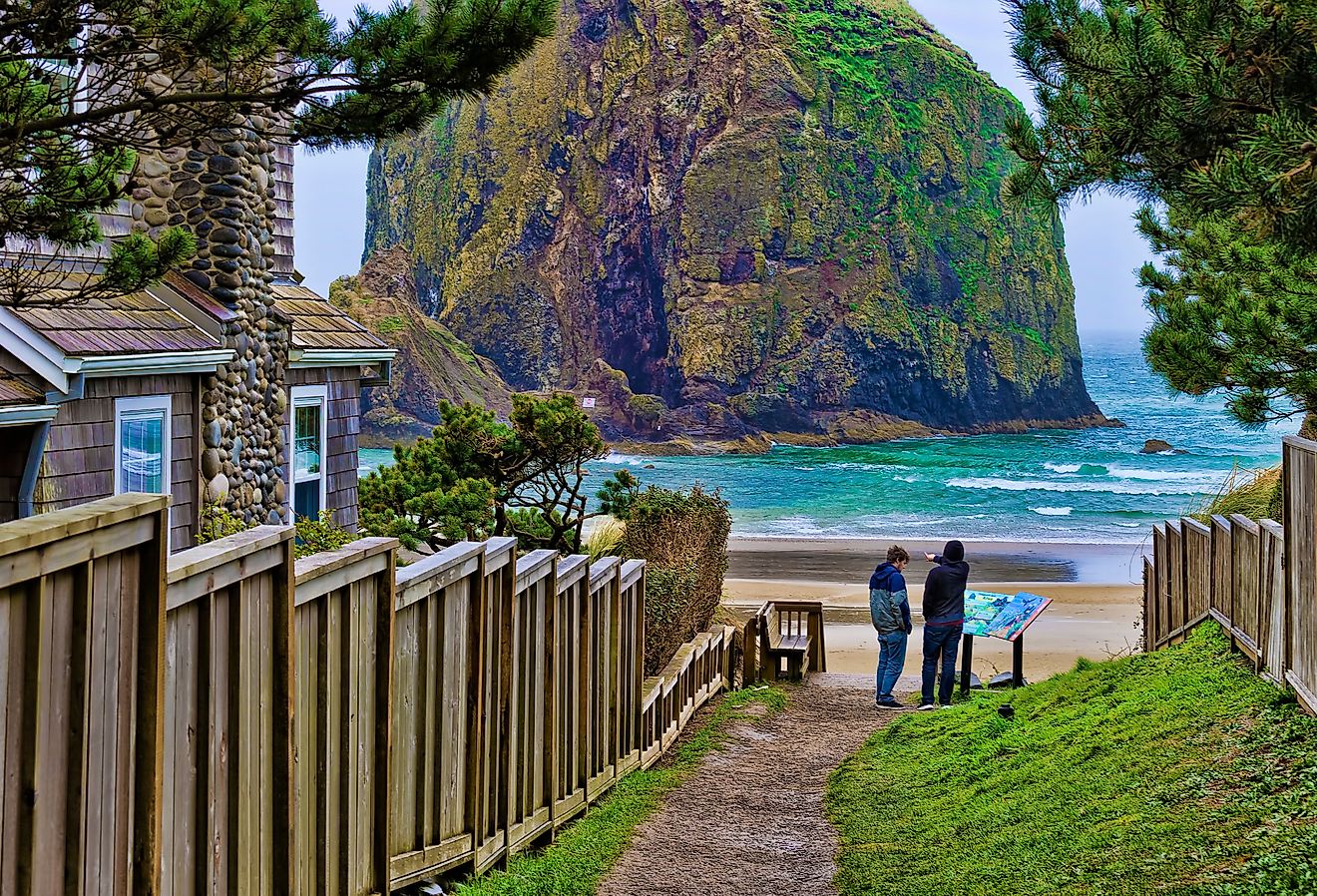
Gearhart occupies a stretch of the north coast with about 1,945 residents, putting it firmly in the smallest of the towns on this list. The community runs quiet and largely residential, houses tucked into the coastal pine with the beach reachable by boardwalks at the end of most streets. Mild rainy winters and warm sunny summers define the climate.
The beach itself runs for miles in either direction, broad and walkable for daily routines. Gearhart Golf Links, the oldest golf course on the West Coast, sits inside the town. Seaside is five minutes south for additional shopping and dining, and Cannon Beach is twenty minutes further down the coast for a more crowded but scenic afternoon. Healthcare access requires a short drive. Providence Seaside Hospital sits a few minutes south and handles most needs, with Astoria's full hospital about half an hour north.
Brookings

Brookings holds the southern tip of the Oregon coast, almost at the California border, with about 6,924 residents. The microclimate runs warmer than anywhere else on the Oregon coast. Locals call it the Banana Belt, and it shows up in winters that stay mild even by coastal standards. Curry General Hospital handles regional healthcare.
The Samuel H. Boardman State Scenic Corridor stretches just north of town with miles of cliff-top trails and beach access. The Chetco River runs through town and supports salmon and steelhead fishing. The Oregon Redwoods Trail, about ten minutes inland, accesses the only redwood groves in the state. Downtown comes alive each spring for the Azalea Festival. Cost of living and abundant outdoor access combine to keep Brookings on most retiree shortlists for the southern coast.
Picking Your Spot
None of these towns are interchangeable. The comparison usually comes down to a few practical questions. How close the nearest full hospital sits. How winters actually feel rather than how they read on paper. What the tax burden looks like once property taxes and the lack of sales tax both factor in. Visiting a town in February tells you more than visiting in August. The rest of the calendar takes care of itself.