5 Copperhead Snake Hotspots In Missouri
Missouri is home to a notable diversity of snakes, with roughly 50 species documented across the state. Only five of these species, however, possess medically significant venom. The most frequently implicated of these is the eastern copperhead (Agkistrodon contortrix). Although copperheads have been recorded statewide, they occur more consistently in certain landscapes and regions. The following five locations are among Missouri’s most reliable copperhead hotspots, and illustrate where extra caution is warranted outdoors.
Taum Sauk Mountain State Park

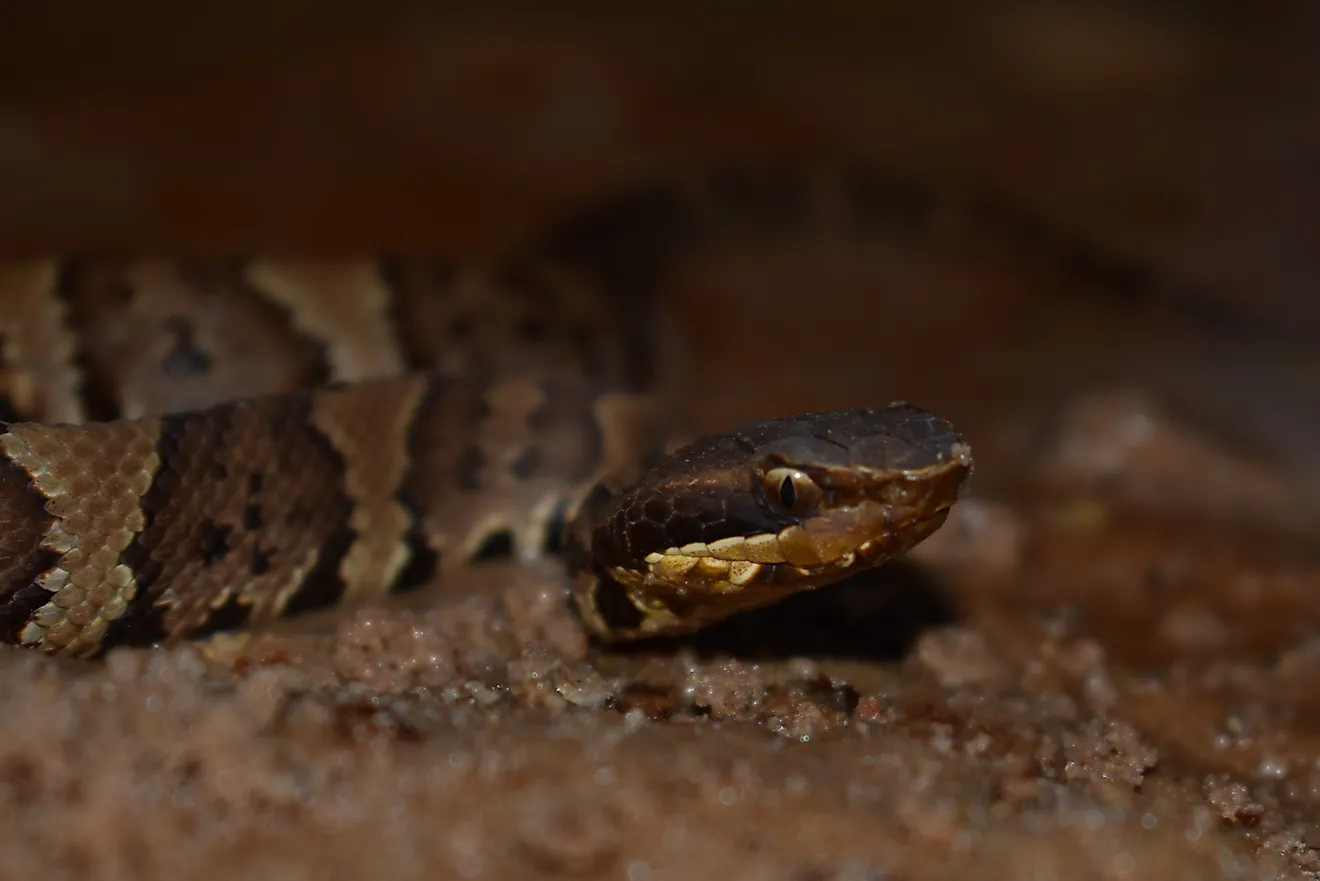
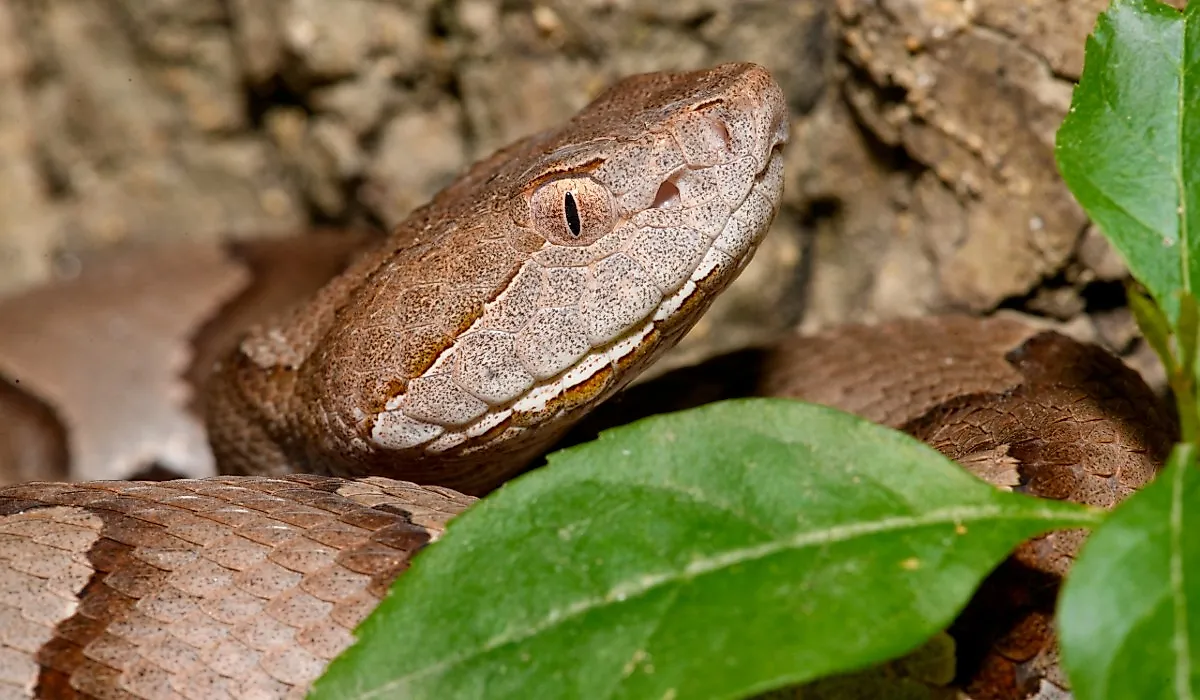
Covering the bottom half of Missouri, the Ozark Mountains shelter the majority of Missouri copperheads. Taum Sauk Mountain State Park is one such Ozark copperhead hub. Located in the northeastern Ozarks near the cities of Arcadia and Ironton, this park's namesake Taum Sauk Mountain is the highest point in Missouri. However, at just over 1,700 feet above sea level, Taum Sauk is too short to be alpine and debatably even a mountain, meaning that copperheads and other snakes are quite comfortable at that elevation. They spend their time hiding and hunting among the rocky outcrops, striking at the odd hiker that gets too close often without realizing it. With brownish, redish, grayish, and tannish coloration, copperheads are well camouflaged against their surroundings and pack a painful, toxic bite. Yet they have the mildest venom of all North American pit vipers, causing dozens of annual hospitalizations but near-zero deaths in Missouri. Watching where one steps or grabs in Taum Sauk leaves little chance of being bitten, since copperhead-on-human bites are always defensive. Keep that in mind if you venture to nearby preserves like comparably copperheady Johnson's Shut-ins State Park and the next entry on this list, which played host to a rare copperhead-caused fatality.
Sam A. Baker State Park

In July 2014, a family from St. Charles was camping deep in the Ozarks at Sam A. Baker State Park when the father noticed a copperhead and decided to pick it up. The snake bit him on the hand. Within minutes, the 52-year-old began shaking uncontrollably and soonafter passed out. CPR was tried, an ambulance was called, but it was too late. He was pronounced dead at a local hospital. Anaphylactic shock from venom was the cause.
Only a handful of people are known to have died from a copperhead bite in Missouri. That is despite the fact that copperheads cause 85 to 90 percent of statewide snake envenomations. The remaining 10 to 15 percent is split between Missouri's other four venomous species: the northern cottonmouth, western massasauga, pygmy rattlesnake, and timber rattlesnake. Of those, just the northern cottonmouth and timber rattlesnake have been credited with fatal envenomations. The former killed an intoxicated wader in 2015, while the latter killed an unidentified resident in 1933. Significantly more Missourians have died from lightning strikes than snakebites.
Although an exception is made for snakes that pose an immediate threat to life or property, all native Missourian serpents are legally protected from humans.
Castlewood State Park

Not all hotspots are way out in the Ozarks. Copperheads also congregate around cities like Kansas City, Springfield, Columbia, and St. Louis, the last of which borders noted snake hub Castlewood State Park. This 1,800ish-acre preserve on the Meramec River is a stone's throw from suburbia, yet it shelters numerous serpents. Speckled king snakes, eastern milk snakes, western rat snakes, common water snakes, ring-necked snakes, eastern hognose snakes, common garter snakes, copperheads, and perhaps the odd timber rattlesnake co-exist with hikers, anglers, mountain bikers, and horseback riders. Snakebite reports are low; fatalities, of course, are nil. Just several miles east of Castlewood is an even more urban hotspot: the Powder Valley Conservation Nature Center. Within its 112 acres, enclosed by the suburb of Kirkwood, are so many copperheads that they were the focus of a years-long study on survival in fragmented environments.
Ozark National Scenic Riverways

A decidedly non-fragmented copperhead hotspot is the Ozark National Scenic Riverways, which preserves 134 miles of Ozark rivers and roughly 80,000 acres of surrounding wilderness. Per the park's website, 197 bird species, 112 fish species, 58 mammal species, 26 amphibian species, and 46 reptile species (25 of which are snakes, four of which are venomous, the most common of which is the eastern copperhead) live in or along the protected stretches of Jacks Fork and Current rivers. It was along the latter, near park headquarters in Van Buren, where Missouri's other modern copperhead-related fatality occurred. While riverside camping in 2012, a 50-year-old tried to remove a copperhead from a tent and was bitten on the hand. He died several hours later from a heart attack. A deputy coroner said that, while the bite contributed to the man's death, it was "hard to know if it was the venom or the excitement he experienced from being bitten." Regardless, that was the first fatality attributed to a venomous snake in Missouri since 1965.
Mark Twain National Forest

Rather than one hotspot, the Mark Twain National Forest is a whole heat map of copperhead activity, spanning nine disconnected tracts across much of the Missouri Ozarks and bordering, if not encompassing, many of the aforementioned preserves. Some of the hottest hotspots within its approximately 1.5 million acres are the Ava Ranger District, Willow Springs Ranger District, Salem-Potosi Ranger District, Cassville Ranger District, and Eleven Point-Doniphan Ranger District, the last of which advises against disturbing a sleeping copperhead. Besides copperheads, forestgoers must watch out for timber rattlesnakes, pygmy rattlesnakes, northern cottonmouths, American black bears, wild boars, and even Texas brown tarantulas. The Mark Twain National Forest supports one of the northernmost populations of those stereotypically desert-dwelling spiders. Yet, like copperheads, their venom is much milder than commonly believed.
Copperheads are present in Taum Sauk Mountain State Park, Sam A. Baker State Park, Castlewood State Park, the Ozark National Scenic Riverways, and the Mark Twain National Forest, but do not confuse that with overabundant. You can spend numerous hours at each of those preserves and not encounter a single copperhead. But if you do, refrain from stepping on or near it, picking it up, or getting too close in any other way, since a copperhead does not chase and bites only when its boundaries are crossed. Follow those guidelines to co-exist peacefully in marvelous Missouri.