10 Amazing Nebraska Day Trips That Are Worth The Drive
When planning a day trip in Nebraska, its biggest attractions are its museums, which go above and beyond normal county museums and art museums to showcase the very best of Midwestern culture and history. For example, within Omaha, at the Joslyn Art Museum you can see a massive permanent collection of art stretching across 5,000 years of history, or one of the biggest 19th century coin collections at Durham Museum, while from Grand Island, you can walk through a recreated railroad town, or venture out to a museum housed within a bridge dedicated to the history of pioneers and Native Americans traveling across the ancient trails of the Platte River Valley. Alternatively, you can hike across the Platte River Valley, try out technical mountain biking trails amid river bluffs, or visit one of the only children's zoos in the country. Discover amazing day trips in Nebraska that are worth the drive.
Omaha
The Durham Museum (within the city)

Located in the former rail line Union Station, The Durham Museum is primarily dedicated to the history of the Western US, but it also includes some quirkier exhibits, such as the Bryon Reed Collection of coins. Byron Reed was one of the largest coin collectors of the 1800s (called a numismatist), including a rare 1804 Dollar. Also in the museum is a selection of artifacts from Omaha's commercial history, like a 1890 Union Pacific 1243 Steam Locomotive and a replica of the Buffett Grocery store from 1915.
The museum includes a selection of homes used by the many people groups who have called Nebraska and the West home, ranging from a rawhide tepee and earth lodge from the Omaha tribe, to an English Tudor-Revival home. The Lives of Tradition exhibit showcases how ranchers and farmers have lived and worked in Nebraska from early settlement to today.
Joslyn Art Museum (within the city)

Founded in 1931 by Sarah H. Joslyn, wife of businessman George A Joslyn, the Joslyn Art Museum in Omaha stands out from Nebraska's other art museums for its large permanent collection of art, including more than 12,000 pieces, ranging from Western to Japanese art and beyond. The museum includes three buildings with works across 5,000 years of history.
In the museum, you can see a Persian Stag Vessel used in 1,000 BC, and an Egyptian Vase that dates back to 4,500 to 3,500 BC, before even the pyramids were built. Modern art is also on display here, such as a brown sculpture called Back of a Snowman made by Gary Hume in 2000.
In addition to its permanent collection, the art museum welcomes traveling exhibitions as well, such as the City in Print, showcasing city life from 20th-century printmakers.
Fort Atkinson State Historical Park (25-minute drive)

This fort was the first of its kind established west of the Missouri River in what was then the Louisiana Purchase. It existed on the Nebraska border from 1819 to 1827 until it was abandoned. Within a few decades, the once bustling fort that housed more than 1,000 people was mostly gone. Nebraska set out in the 1950s to reconstruct as much of the fort as possible, from barracks to a council house and general store.
This park is filled with reenactors of cooks, spinners, weavers, and the 6th Infantry Company. They are dressed in 19th-century shako hats common in the Napoleonic Era and beyond, with green uniforms and accurate muskets. This company fires off period-accurate artillery at regular intervals in the day. After chatting with the reenactors, don't forget to drop by the traditional schoolhouse here and the blacksmith.
Arbor Lodge State Historical Park (46-minute drive)

Located in nearby Nebraska City, the Arbor Lodge State Historical Park is named after the Arbor Day holiday, as the holiday's creator lived here in a Colonial Revival-style mansion in 1855. J. Sterling Morton served as Secretary of Agriculture under President Grover Cleveland and pushed for the planting of trees to revitalize rural landscapes.
As befitting this legacy, the mansion has 270 types of trees and shrubs, ranging from oaks, maples, and pine trees, an Italian terraced garden, and apple orchards. Stepping inside the mansion, you can find exhibits related to the history of Arbor Day and take part in fun events, such as a Murder Mystery play in May. If you want to take some apples homegrown at the park, go to the Apple House Market.
Lincoln
Lincoln Children's Zoo (within the city)

For young families, the Lincoln Children's Zoo should be on your travel plans, as it is designed specifically to keep children engaged and excited about wildlife and the environment. It houses more than 400 animals, and 40 endangered animals, including the Sumatran tiger and Matschie's tree kangaroo.
The zoo puts on daily animal encounters, such as the Cheetah Chase Theatre, to witness a cheetah dash around at top speeds of nearly 70 miles per hour. Depending on when you visit, you can take part in Boo at the Zoo during Halloween, and the Sensory Safari in October for blind guests or those with sensory processing issues. Children ages 2 to 4 can participate in the Tots & Turtles program for them to learn about wildlife and the zoo in one-on-one lessons with the Zoo's Education team.
Sunken Gardens (within the city)

Before you leave Lincoln, Nebraska, take a moment to smell the flowers in one of the best gardens in North America: the Sunken Gardens. Initially designed in the 1930s to employ men during the Great Depression, the area used to be a dumping ground, but now the most beautiful vista in the city.
The garden is filled with sculptures, shrubs, trees, and perennials. Every year is a different theme in the garden, and 2026's theme is A Patchwork Garden. The flower beds are set up to resembles quits, such as those found at The International Quilt Museum. The previous year's theme was an Enchanted Ocean. The garden is organized into a few categories: the Healing Garden with white blossoms, the Perennial Garden with hydrangeas and hostas, and the Annual Garden, which changes its theme yearly.
Eugene T. Mahoney State Park (29-minute drive)

Located a half-hour drive away on the Platte River, the Eugene T. Mahoney State Park isn't just a place to explore nature; it also offers an indoor theatre, activity center, miniature golf, and swimming pool. It's just outside of Omaha in Ashland, Nebraska, offering recreation all year round.
For winter activities, there is an ice skating rink operating from November to March or a Venture Climb course at the activity center all year. During the warmer months, guests can take to the treetops with the Ape Rope Course or go fishing at the Platte River. There are nature trails following the river for hiking or horseback riding up the river bluffs. For summer activities, the Family Aquatic Center has two waterslides.
Platte River State Park (36-minute drive)

Continuing down the Platte River, you will reach a park that defies the typical landscape of the Great Plains. The Platte River State Park is known for having steep hills, ascending up to many river bluffs. It is at the halfway point between Lincoln and Omaha, offering picturesque views of the surrounding Platte River Basin via an 85-foot-tall observation tower.
At the park, visitors can get right out onto the rocks above the small Stone Creek waterfall, or cool off at the spray park. The park was designed with kids in mind, as Jenny Newman Lake is open for young anglers looking to learn how to catch fish. Mountain bikers will also enjoy this park with its 4.4 miles of trails, such as boardwalk log rides, curved wall rides, and other technical trails.
Grand Island
Stuhr Museum (within the city)

Stuhr Museum was named after Leo Stuhr, born to German immigrant parents who later served in Nebraska's House of Representatives. It was opened in 1967 to provide an insight into prairie living, and went on to offer many more exhibits showcasing the many ecosystems, people, and places that make Nebraska special.
The biggest attraction here is Railroad Town, a recreated 1890s-era settlement sitting outside of the main building. It has a bank, office, general store, and newspaper office, with expert reenactors to answer questions about life on the prairie.
The Stuhr building itself contains an art gallery, along with exhibitions. The museum's most current exhibit is called Wings Over the Platte, with art of wildlife, plants, and people living in harmony with the Platte River.
The Archway (45-minute drive)

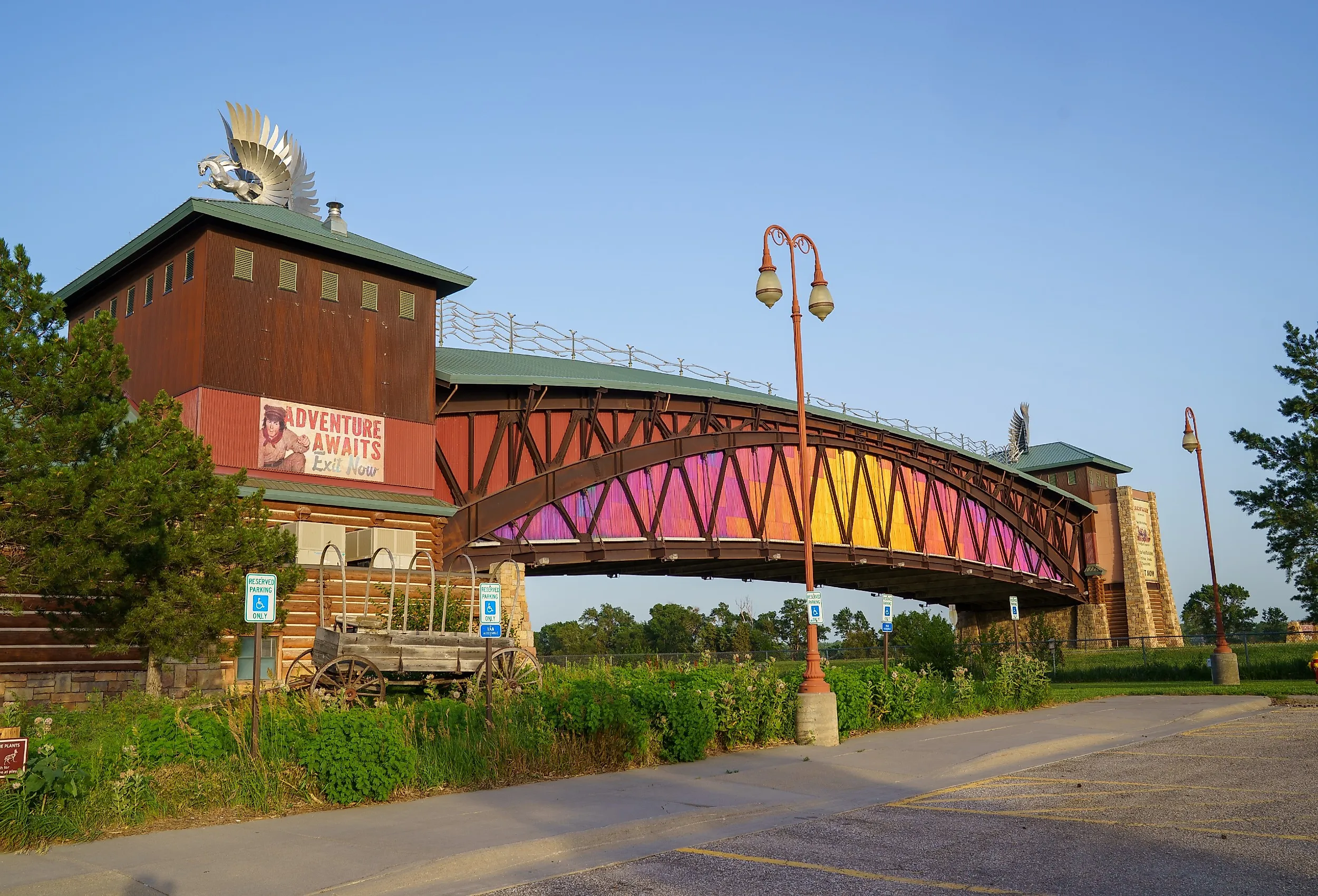
As you drive into Kearney, Nebraska, you will spot a large arch stretching over I-80. This arch is actually a museum that opened in 2000 to honor the history and stories of the Platte River Valley. The Archway is particularly dedicated to the trail that follows along the Platte River, which has been used from prehistoric times until today.
The exhibits in the Archway showcase how travelers crossed this land, from a covered wagon to a Mormon expedition, the Pony Express, and the Transcontinental Railroad. The Archway's grounds include far more than just the museum, as it continues north across a historic bridge to a replica sod house that would have been used by an earlier Nebraskan settler, and a wooded hiking trail.
See Nebraska's Beauty
Covered wagons used to be a common sight in Nebraska as settlers crossed the Great Plains in search of good farmland to settle down. Although these wagons are now the stuff of history, you can still see the places that inspired them from the comfort of your vehicle. For example, there are many spots to go to see the landscapes of the Platte River from the trails of Eugene T. Mahoney State Park or atop the observation tower at Platte River State Park. All of these destinations are either within the city limits or an hour's drive away, meaning you won't have to pay much for gas to see them all.