The National Parks With Sand Dunes
Few landscapes are as mesmerizing as a vast sea of white or golden sand rising against a backdrop of mountains, forests, or open sky. Across the United States, several national parks preserve extraordinary dune landscapes where wind has sculpted towering ridges, rolling hills, and dramatic formations over thousands of years. These parks offer visitors more than dramatic scenery, providing opportunities to hike across shifting sands, take in the night sky, explore unique ecosystems, and experience a side of America's wilderness that feels otherworldly. For travelers seeking unforgettable scenery and a little adventure, these national parks with sand dunes are well worth discovering.
Great Sand Dunes National Park & Preserve - Colorado

Let's start the list with the most obvious. The Great Sand Dunes National Park does, in fact, have sand dunes. Not only that, but they are the tallest dunes in North America, rising 750 feet high. The Park spans more than 30 miles and contains more than 5 billion cubic meters of sand. The dunes were formed by a combination of wind, water, and sediment, as creeks and streams brought large amounts of sand and sediment into the valley, and wind then blew the sand toward the bend in the Sangre de Cristo Mountains, where opposing storm winds helped squeeze the sand into the tall dunes you see today. Great Sand Dunes National Park is a Dark Sky Park, meaning it's exceptionally good for nighttime skygazing. Not only can you view a dazzling display of stars, but the Milky Way Galaxy may also put on a performance for you. Camp on the dunes in this 24/7 park and sleep under the amazing show from space glittering above.
White Sands National Park - New Mexico

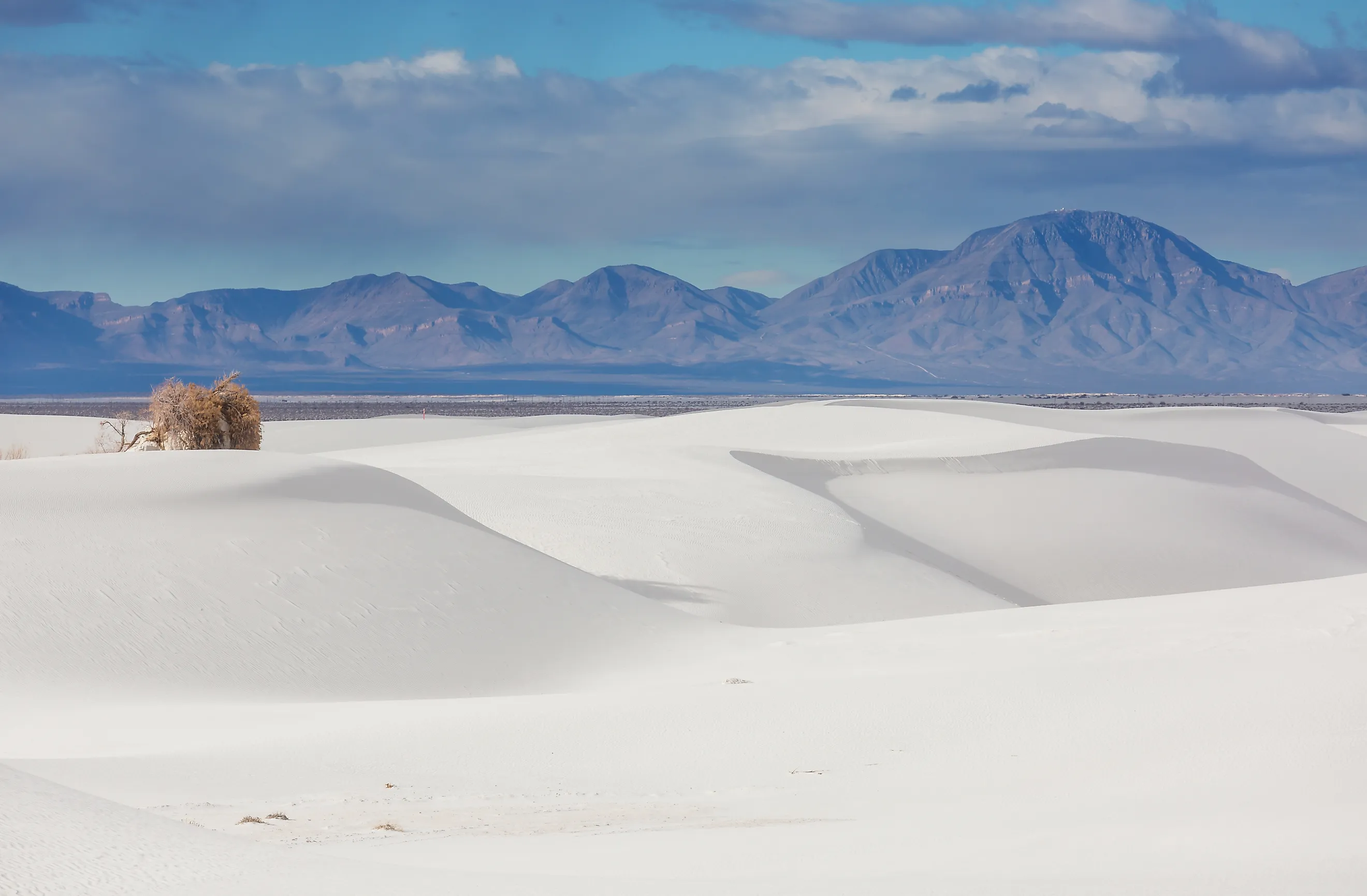
White Sands National Park was upgraded from a national monument in 2019 and now stands proudly alongside the rest of the National Parks. Rising from the heart of the Tularosa Basin in New Mexico is nearly 275 square miles of glistening white sand. The rolling white dunes are a playground for hiking, sledding, stargazing, and more. White Sands is the world's largest gypsum dune field. Gypsum is an evaporite mineral that dissolves in water and will recrystallize during evaporation of liquid, much like salt. This dune field is surrounded by the San Andres and Sacramento Mountains, which are composed of layers of gypsum. Rainfall and snowmelt from these mountains dissolve the gypsum and wash it down to the basin's floor, and the water settles on the basin floor at its lowest point, called Lake Lucero. When weather conditions are optimal, the water evaporates, and the dissolved minerals recrystallize and form selenite crystals, a crystalline form of gypsum. On a hike to Lake Lucero, visitors may spot such crystals, with some selenite crystals as large as truck tires.
Indiana Dunes National Park - Indiana

On Lake Michigan's coast in Indiana, wind and waves have shaped the land. Known for its striking terrain, plant, and bird diversity, the Indiana Dunes stretch 16,000 acres with over 50 miles of trails, taking you over, around, and through shifting sand dunes, quiet woodlands, sunny prairies, and wetlands. Camp on Kemil Beach for incredible night sky viewing and experience the stars and Milky Way with the peaceful sounds of the water. The Indiana Dunes National Park hosts two festivals you won't want to miss: Maple Sugar Time and the Indiana Dunes Outdoor Adventure Festival.
Death Valley National Park - California

Death Valley National Park contains the largest wilderness in the contiguous United States, with 3,190,400 acres of diverse habitat. Today, paved and dirt roads provide access to unique locations such as the Mesquite Flat Sand Dunes, named for the mesquite tree, which grows in abundance in the area. These interesting trees must twist and grow to avoid being buried, and leafless brown trunks are often exposed by the shifting sands. The dunes provide habitat for many animals, including nocturnal kangaroo rats and sidewinder rattlesnakes, so be careful where you step. The sand dunes are a great location for taking in Death Valley's famous dark night skies and admiring the stars above. And speaking of stars, did you know that Star Wars: A New Hope was in part filmed in Death Valley? The scene in which R2D2 wanders off from C-3PO after they crash in Tatooine was partially shot in the Mesquite dune.
Guadalupe Mountains National Park - Texas

Mountains, canyons, deserts, and dunes, oh my! The Guadalupe Mountains National Park protects the world's most extensive Permian fossil reef, the four highest peaks in Texas, and the ecology and history of the area. In the western edge of the park, the Salt Basin Dunes were shaped by water, wind, and earthquakes. Streams surrounding the graben drained into a basin with no outlet, and as that water evaporates, gypsum and salt are deposited. Gypsum grains form the bright-white dunes that cover about 2,000 acres. Uniquely, these dunes are still growing, as winds continue to carry gypsum from the dry lakebed onto the dunes, adding up to one-third of an inch of deposits a year.
Kobuk Valley National Park - Alaska

We started this list with the most obvious park to contain sand dunes, and we'll conclude with possible the least obvious park to contain sand dunes. Kobuk Valley National Park in Alaska lies north of the Arctic Circle, yet photographs of the Great Kobuk Sand Dunes evoke a landscape reminiscent of the Sahara. According to the National Park Service, Kobuk Valley's sand dunes are a relic of the last Ice Age. When the Earth cooled, glaciers began to form high in the mountains that surround the valley. Over time, the slow, grinding advance and retreat of the glaciers ground the rocks beneath them into a fine sand, which was blown by the wind into the sheltered, ice-free Kobuk Valley. Sparse grasses, sedges, wild rye, and the occasional wildflower, including the Kobuk locoweed, which is only found on the slopes of Kobuk Valley's sand dunes, grow in the shifting sand of the dunes.
BONUS: Sleeping Bear Dunes

Sleeping Bear Dunes in Michigan is one of the best sand dunes in the country, but it's officially a National Lakeshore, not a National Park. But with miles of sand beaches and high dunes that offer a spectacular view across the lake, it's well worth a visit. The dunes at Sleeping Bear Dunes National Lakeshore can be divided into four categories: beach dunes, perched dunes, falling dunes, and "de-perched" dunes.
Beach dunes, common along Michigan's western coast, form near lake level as onshore winds carry beach sand inland. Perched dunes rest on a headland, often several hundred feet above lake level. Falling dunes evolve from perched dunes when sand migrates off the plateau and onto an adjacent lowland. Dunes that move beyond the plateau and rest solely on the lowland area may be considered "de-perched" dunes.
Where Sand Meets Sky
Whether towering dunes surrounded by mountains or vast stretches of windswept sand, America's national parks with sand dunes showcase just how diverse the country's landscapes can be. Each park offers its own unique experience, whether that means climbing a massive dune, exploring unusual desert ecosystems, or simply taking in the contrast between sand and sky. For travelers willing to venture beyond the familiar forests, lakes, and mountain trails, these remarkable parks provide an unforgettable way to experience the beauty and power of nature.