The National Parks Where You Can See The Northern Lights
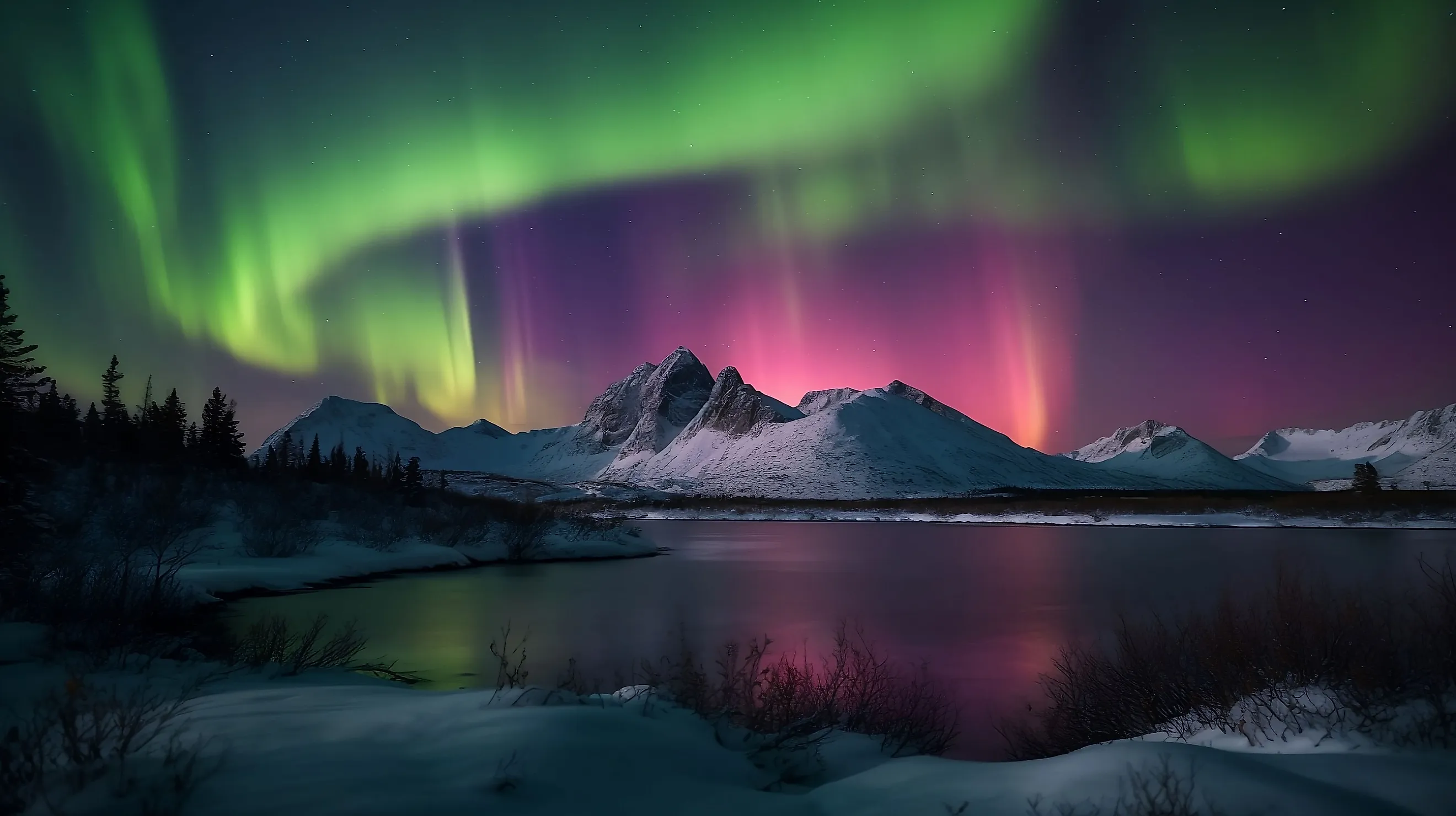
The United States National Park System protects vast tracts of land where the night sky remains dark enough to reveal the celestial currents of the aurora borealis, also called the northern lights. The aurora borealis manifests when charged solar particles collide with atmospheric gases, igniting luminous arcs of green and purple across the night sky. While this phenomenon occurs frequently at high latitudes, artificial light pollution from cities and towns obscures the faint displays in most populated regions. From the subarctic expanses of Alaska to the northern tier of the contiguous United States, eight national parks stand out for the opportunities to witness the northern lights, provided solar activity is high enough for the park's latitude and cloud cover is minimal. The Kp-index is a global measure of geomagnetic activity on a scale from 0 to 9, and can measure the visual intensity of the aurora borealis and how far away from the most northern latitudes it is visible. A Kp rating of 0 or 1 indicates quiet conditions where the auroral oval remains confined to the far north, while a rating of 5 signifies a geomagnetic storm capable of pushing visible auroras into the lower 48 states.
In Alaska, a Kp of 2 or 3 often suffices for a vibrant display, whereas observers in Montana, Minnesota, or Maine typically require a Kp of 4 or higher to see the lights clearly above the horizon. Seasonal timing is equally critical. The equinoxes in March and September historically correlate with higher geomagnetic activity, while summer months in the Arctic suffer from midnight sun or twilight that washes out the sky.
Gates of the Arctic National Park, Alaska
Gates of the Arctic National Park sits entirely north of the Arctic Circle, placing it directly beneath the auroral oval for much of the year. This 8.4 million acre wilderness contains no roads, trails, or designated campgrounds, requiring visitors to access the interior via bush plane or foot. The lack of infrastructure means zero artificial light pollution, creating a Bortle Class 1 sky where the Milky Way and aurora appear with maximum intensity.
The most practical viewing season runs from late August through mid-April, avoiding the continuous daylight of summer. During the peak months of September and March, a Kp-index as low as 2 can produce visible displays between 10:00 pm and 1:00 am.
The Brooks Range forms the core of the park and offers high-elevation vantage points where the horizon is unobstructed by trees. Temperatures during the viewing season often drop below negative 40 degrees Fahrenheit, requiring specialized cold-weather gear to survive extended periods outdoors. The sheer isolation of the park means that visitors must be self-sufficient, carrying all supplies and waste out with them.
Denali National Park, Alaska

Denali National Park encompasses six million acres of subarctic wilderness centered around North America's highest peak. The park's location at about 63 degrees north latitude ensures frequent auroral activity from late August through mid-April, when night lengths are sufficient for darkness. Private vehicle access beyond Mile 15 is generally restricted, with the famous Denali Road Lottery allowing limited access in September, while winter maintenance sometimes keeps only the first few miles near the entrance open to cars.
The prime viewing window occurs from late August to early October and again from March through mid-April, when skies are dark but temperatures are less severe than in deep winter. During these months, a Kp-index of 3 or higher typically yields visible auroras between 10:00 pm and 3:00 am. Winter visitation requires preparation for extreme conditions, as temperatures frequently plummet below negative 30 degrees Fahrenheit.
The massive bulk of Mount Denali itself can block portions of the northern horizon from certain viewpoints, so observers often seek open areas in the lower valleys and around the Riley Creek Campground area. Cloud cover is a frequent obstacle, as the mountain creates its own weather systems, but clear nights following high-pressure fronts offer exceptional visibility.
Voyageurs National Park, Minnesota

Voyageurs National Park's location on the Canadian border places it at a latitude where auroras are visible during moderate geomagnetic storms. The park protects about 218,000 acres of interconnected waterways in northern Minnesota, a region known for its dark skies. The vast network of lakes, including Kabetogama and Namakan, provides open horizons free from tree obstruction, essential for viewing low-hanging auroral bands.
Access to the interior of Voyageurs National Parkrequires a boat, as no roads penetrate the core wilderness areas. This water-based access limits development and keeps artificial lighting to a minimum. The park has earned an International Dark Sky Park designation from DarkSky International, confirming its commitment to preserving natural darkness.
The best viewing season spans from late August through October and again from March through early April, avoiding the short nights of summer and the extreme cold of January. During these windows, a Kp-index of 5 or higher is usually required to see a bright display of the aurora clearly, with peak activity occurring between 10:00 pm and 1:00 am. Winter offers the longest nights, but temperatures can drop below negative 20 degrees Fahrenheit, making the shoulder seasons more comfortable for extended observation.
Isle Royale National Park, Michigan
Isle Royale National Park, an island archipelago in Lake Superior, offers a unique vantage point for aurora viewing in the Great Lakes region. The park's isolation, accessible only by ferry or seaplane, ensures that no external light sources interfere with the night sky. The island's topography, featuring ridges and peaks like Mount Desor, provides elevated viewing platforms where the horizon is clear of forest canopy.
The park closes entirely from November 1 through April 15 due to severe winter conditions, limiting aurora viewing to the shoulder seasons of late August through October and mid-April. During these specific windows, night lengths are sufficient for darkness, and solar activity can produce visible displays.
Because of its southern latitude relative to Alaska, a strong geomagnetic storm with a Kp-index of at least 6 is typically necessary for a visible display, best observed between 11:00 pm and 2:00 am. The cold waters of Lake Superior moderate the island's climate slightly, but temperatures still frequently drop below freezing. The park's rocky shoreline offers unobstructed views to the north, where the aurora often first appears.
Glacier National Park, Montana

Glacier National Park spans over one million acres of the Rocky Mountains in northern Montana, bordering Canada. The park's high latitude and elevation combine to create favorable conditions for aurora sightings during periods of high solar activity. The rugged peaks and deep valleys can obstruct portions of the sky, so observers must seek out open areas like the shores of Lake McDonald or the high alpine meadows of Logan Pass.
The seasonal closure of the Going-to-the-Sun Road limits winter access to the lower elevations, making late August through October the optimal viewing period before snow blocks high-country access. During these months, a Kp-index of at least 4 is generally required to see the aurora above the mountain ridges, with the best chances occurring between 10:00 pm and 1:00 am. Winter nights are long and cold, with temperatures often dropping below zero Fahrenheit, but cloud cover is more frequent.
The park's distance from major cities like Kalispell and Whitefish helps maintain dark skies, though some horizon glow may be visible from these towns. Clear nights following cold fronts offer the best transparency for spotting the green arcs against the dark mountain silhouettes.
Theodore Roosevelt National Park, North Dakota
Theodore Roosevelt National Park preserves 70,446 acres of the Badlands in western North Dakota, where the eroded buttes and open valleys provide unobstructed views of the northern horizon. Located at approximately 47 degrees north latitude, the park sits directly in the path of auroral displays during moderate to strong geomagnetic storms. The absence of major urban centers within a 100-mile radius ensures that the night sky remains largely free of artificial light pollution, often reaching Bortle Class 3 or 4 conditions, though localized glow from nearby towns and industrial flaring can affect the southern horizon.
The optimal viewing window extends from late August through October and again from March through early May, avoiding the short nights of summer and the severe cold of deep winter. During these shoulder seasons, a Kp-index of 5 or 6 is typically required to produce a visible display, with peak activity occurring between 10:00 pm and 1:00 am. The park's South Unit, accessible year-round via Interstate 94, offers numerous pullouts and hiking trails that face north, while the more remote North Unit provides even darker skies for dedicated observers.
Temperatures during the viewing seasons can vary widely, ranging from mild 50-degree evenings in September to sub-zero conditions in March. The park's unique geology, characterized by colorful sedimentary layers and sculpted clay formations, creates a dramatic foreground for aurora photography. Visitors should be aware that the park's bison herds often graze in the open valleys at night, requiring caution when driving or hiking after dark. Cloud cover can be a significant factor, as the Badlands experience rapid weather changes, but clear nights following high-pressure systems offer exceptional visibility for the dancing lights above.
Acadia National Park, Maine
The over 47,000-acre Acadia National Park, located on Mount Desert Island off the coast of Maine, represents the best national park for viewing the northern lights on the east coast. During periods of higher solar activity, the aurora borealis can become visible here, though such events are less frequent than in the Midwest or Alaska. The park's coastal location provides open views to the north over Frenchman Bay and the inland waterways, free from terrestrial obstructions.
The optimal viewing season is during the winter, though the northern lights can also be seen less frequently in late fall and early spring. Given its latitude, Acadia requires geomagnetic activity with a Kp-index of at least 6 to produce a visible display, usually appearing briefly between 11:00 pm and 1:00 am.
The park's proximity to the town of Bar Harbor introduces some light pollution, but sections of the park offer Bortle class 2 to 4 skies in the more secluded coastal areas and higher mountain elevations. For coastal viewing, Sand Beach and Seawall are good bets. The summit of Cadillac Mountain and Schoodic Head are also excellent observation points with vast open horizons.
Wrangell-St. Elias National Park, Alaska

Wrangell-St. Elias National Park's location at about 61 degrees north latitude places it directly under the auroral oval for much of the year, ensuring frequent displays from late August through mid-April. The park encompasses 13.2 million acres of rugged mountain terrain in south-central Alaska, making it the largest unit in the U.S. National Park System. The massive scale combined with its remote location far from major urban centers, creates some of the darkest skies in North America, often registering as Bortle Class 1 or 2.
The optimal viewing season mirrors other Alaskan parks, running from late August to early October and again from March through mid-April, when night lengths are sufficient and temperatures are less severe than in deep winter. During these months, a Kp-index of 2 or 3 is often enough to produce vivid displays visible between 10:00 pm and 3:00 am. The park's high elevation and vast glacial valleys provide unobstructed views of the northern horizon, though observers must seek out open areas away from the towering peaks of the St. Elias and Chugach ranges, which can block low-angle views. The shores of Willow Lake offer a prime viewing location.
The park's maritime influence brings frequent cloud cover, particularly in the fall, so clear nights following high-pressure fronts offer the best transparency. Temperatures during the viewing season can drop below zero Fahrenheit, requiring specialized cold-weather gear for extended observation sessions. The sheer scale of the wilderness, combined with the frequent auroral activity at this latitude, makes Wrangell-St. Elias one of the most reliable locations in the national park system to witness the northern lights.
Viewing the Aurora Borealis at US National Parks
The national parks of the United States provide some of the few remaining locations where the night sky remains dark enough to reveal the aurora borealis. From the subarctic wilderness of Alaska to the northern tier of the contiguous states, these protected lands offer a front-row seat to one of nature's most spectacular displays. Success in viewing the northern lights requires patience, preparation for extreme weather, and a bit of luck with solar activity and cloud cover. As solar maximums approach, the frequency of visible displays increases, making these parks increasingly valuable destinations for those seeking to witness the dancing lights of the north.