The National Parks Where Pronghorn Still Migrate
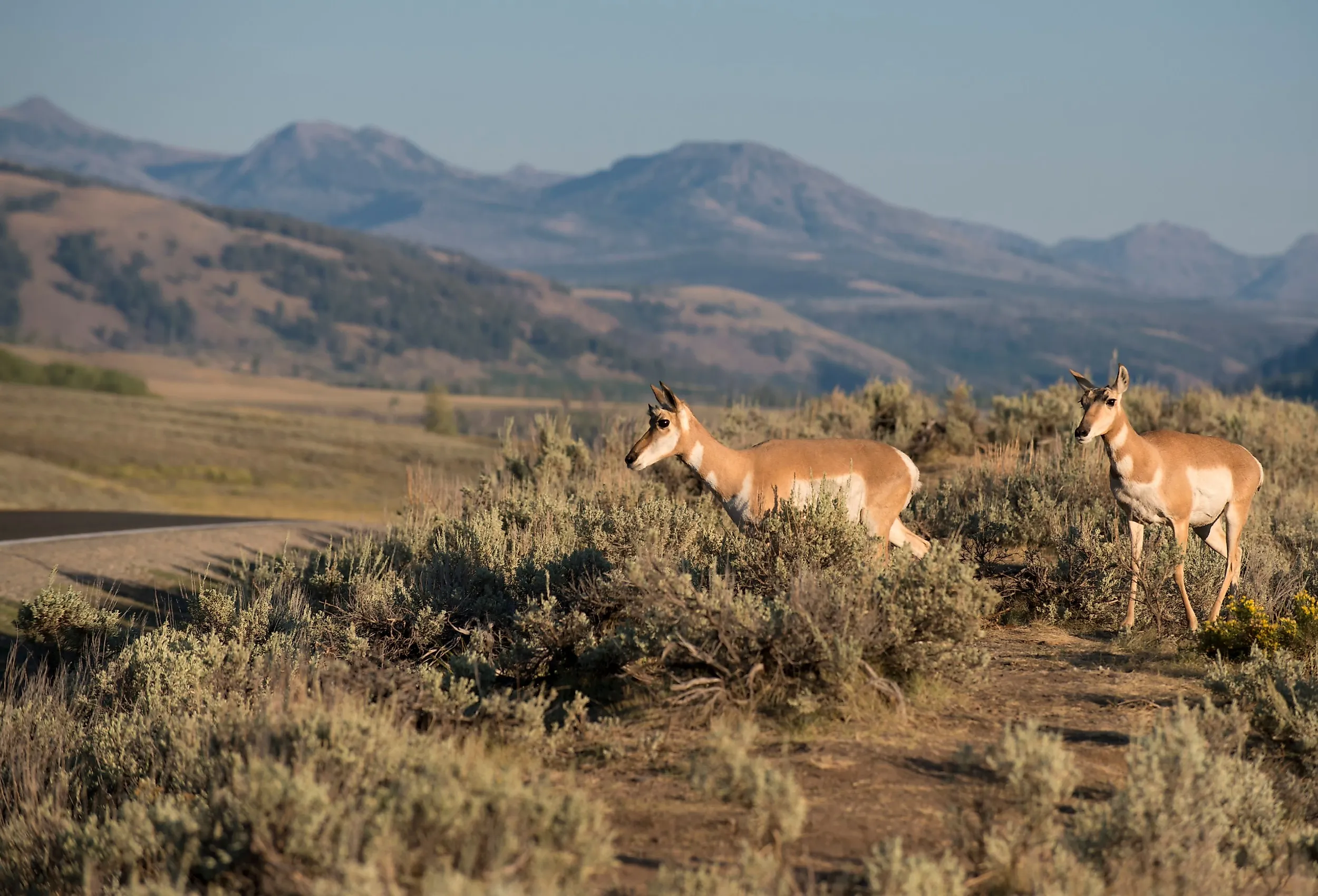
A Pronghorn can run nearly 60 miles per hour, but speed cannot solve every obstacle along a migration route. Across Wyoming and Montana, seasonal movements that began long before modern roads, fences, and development still carry pronghorn across hundreds of miles between their summer and winter ranges. Some of these routes have survived largely intact, while others have been disrupted as settlement and population have changed the landscape. National Parks remain important pieces of these migration stories, preserving portions of routes that extend far beyond their boundaries. Grand Teton National Park protects summer habitat at the northern end of the Path of the Pronghorn, while Yellowstone preserves habitat used by a herd whose historic movements extended into Montana.
The Path of the Pronghorn
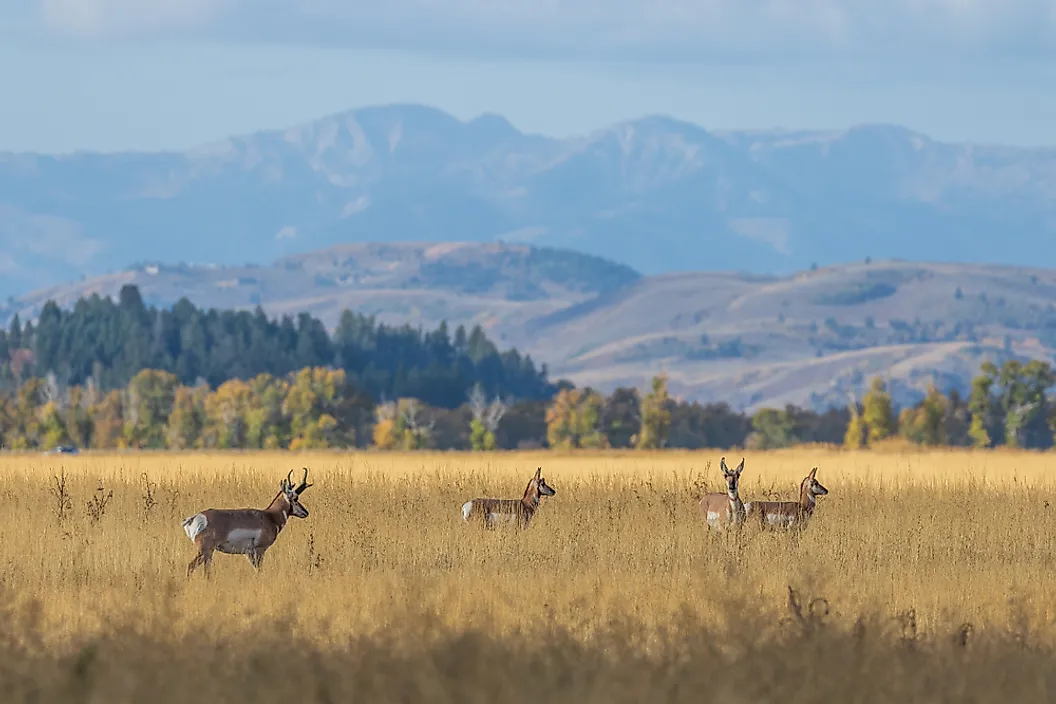
Each year, pronghorn move between the sagebrush flats along the Teton Range and the winter range in the Upper Green River Basin. The route extends roughly 100 miles, and for some animals up to about 150 miles ,through the Gros Ventre drainage toward winter range near Pinedale, making it one of the longest documented pronghorn migrations in the contiguous United States. The animals spend the warmer months in the Jackson Hole area before heading south as winter approaches, then return north in the spring.
This route is much older than the roads, ranches, and property boundaries that now cross the landscape. National Park Service research indicates that portions of the pronghorn's path have been used for thousands of years, and modern GPS tracking has helped researchers map its movements in detail. The route does not end at park boundaries or state lines. The route crosses Grand Teton National Park, Bridger-Teton National Forest, and other federal, state, and private lands before reaching winter range in the upper Green River drainage.

Fences are among the most important obstacles along the way. Pronghorns can jump, but they are reluctant to clear fences or other large obstacles, unlike deer. Instead, they look for places to crawl underneath, making low strands of wire fencing difficult to navigate. A fence that leaves little room beneath it can force pronghorn to search for another crossing point, disrupting movement along a route that may have been used for generations.
This has made the migration route a conservation project. Protecting it requires more than maintaining habitat inside the National Park. Land purchases, conservation agreements, wildlife-friendly fence modifications, and cooperation with private landowners have helped keep portions of the corridor connected. On December 30, 2024, the Interior Department and NPS announced the purchase and permanent protection of the Kelly parcel at the starting point of the Path of the Pronghorn, preserving an important link in the broader Greater Yellowstone landscape.
Grand Teton National Park

Grand Teton National Park is the summer range for a segment of the Sublette pronghorn herd. Each year, the animals gather in the park's sagebrush flats before beginning their southward migration toward winter range. Park biologists track the herd through annual surveys, including an aerial count in June and a late-summer ground survey. Before the severe winter of 2022-23, June aerial surveys of the broader Jackson Hole and Gros Ventre summer range averaged about 200 pronghorn; a separate late-August classification survey counted 708 in 2022.

The purchase and permanent protection of the Kelly parcel safeguarded a vulnerable link in the migration corridor from future development, although its effects on pronghorn population trends have not yet been measured. The $100 million acquisition combined $62.4 million from the Land and Water Conservation Fund with $37.6 million in private donations. NPS identified the parcel as the starting point of the Path of the Pronghorn and as an important link in mule deer corridors that extend across public, private, and Tribal lands.
Inside the park, habitat restoration is another part of the effort. Grand Teton has been restoring former hayfields to native sagebrush habitat, with a long-term goal of replacing approximately 4,500 acres of non-native grass fields.
Yellowstone's Historic Route

The history of Yellowstone's pronghorn differs from that of the herd summering in Grand Teton. Yellowstone pronghorn once migrated far beyond the park, but market hunting and poaching sharply reduced their numbers, while settlement, agriculture, fencing, and development curtailed access to historic winter ranges. NPS reports that boundary fences and winter feeding encouraged some pronghorn to remain near the park, while settlement, fencing, and hunting outside Yellowstone had largely curtailed their northward migration by the early 1900s. Later development also reduced the available winter range north of the park.
Some of the movements have since returned. Since 2000, biologists have documented pronghorn dispersing from Yellowstone into southern Paradise Valley, contributing to an outside population and creating gene flow between the groups. One GPS-collared female followed this route in 2019, leaving the Lamar Valley in October and traveling about 50 miles to the southern Paradise Valley, where she remained through the winter before retracing the route toward Yellowstone in spring.
This partial reconnection has depended on deliberate conservation work, especially removing or modifying fences, although the historic migration has not been fully restored. Beginning in 2008, conservation groups worked with private landowners and public land managers to remove unnecessary fencing and modify others between Yellowstone and Emigrant, Montana. About 20 miles of fencing in critical areas were removed or modified, opening access to winter habitat that had been difficult for pronghorn to reach.
Protecting the Routes Between Parks

The continued movement of pronghorn across Wyoming and Montana is a reminder that wildlife does not recognize the boundaries across the landscape. A national park can protect critical habitat, but the animals still have to reach the next seasonal range, cross private property, and navigate infrastructure along the way. For a species that depends on returning to familiar lands, losing a small section of that connection can have far-reaching consequences.
For the pronghorn still moving through these landscapes, the National Parks are just one piece of the puzzle. They are facets of a much larger range. Keeping these corridors connected is important to the long-term health and resilience of the pronghorn herds that use them.