The National Park With The Worst October Traffic
Great Smoky Mountains National Park publishes a calendar telling you which days not to come. It is on the website, built from traffic counter data, and in October it turns into a wall of red diamonds. One recent year flagged 19 separate days of heavy congestion in a single month, which is a remarkable thing for an attraction to advertise about itself. The Park Service is equally blunt in writing: October is the busiest month of the year in the Smokies, and travel times inside the park can run hours longer than usual. This is already the most visited national park in America at around 12 million visits a year, roughly twice the Grand Canyon, and October is when a large share of that pours onto two one-way roads nobody can turn around on.
The Numbers Are Genuinely Silly

The park has logged more than 1.5 million visits in every single October since 2020. Not every autumn. Every October. That is a city's worth of people arriving in four weeks, most of them in cars, most of them wanting to be in the same three places.
For a sense of scale, the entire annual visitation of many well-known national parks would fit inside one Smokies October with room left over. The park sits within a day's drive of an enormous share of the American population, which is lovely for access and catastrophic for parking.
Cades Cove Is The Whole Problem

Somebody designed an 11-mile road that is one way, one lane, lined with photogenic nineteenth-century cabins, running through a meadow where bears routinely appear. Then they let everybody drive it at once.
Nobody can pass. Nobody can turn around. The entire purpose of the drive is stopping to look at things, so everybody does, constantly, and the person at the front sets the pace for everyone behind them for the next several miles. Add one bear in a field and the loop simply ceases to function while four hundred people photograph it through a windscreen.
Eleven miles at walking pace takes an afternoon. In peak foliage season that is not the worst case, that is Tuesday.
The Park Has Quietly Admitted It
Here is the tell. From May through September, Cades Cove Loop Road is closed to vehicles every Wednesday so people can walk and cycle it in peace.
That is an official acknowledgement that the road is substantially better without cars on it, implemented for one day a week, during the months that are not even the busiest.
Roaring Fork Does It Again, Smaller

The Roaring Fork Motor Nature Trail is the second chokepoint the Park Service names, and it has the identical flaw in a more compact package. Narrow, one way, closed to buses and trailers, threading past historic buildings and waterfall trailheads.
Every feature that makes it worth driving also makes it slow, and the trailhead parking fills early enough that circling for a space becomes its own contribution to the congestion. You are now part of the traffic you came to complain about.
There Is A Highway Running Through It

This is the detail that separates the Smokies from every other crowded park. Newfound Gap Road is also US-441, a public highway crossing the mountains between Tennessee and North Carolina, which means a meaningful share of October traffic consists of people with no interest whatsoever in fall color who are simply trying to get to the other side.
Picture being stuck behind a rented minivan doing 15 miles an hour because somebody spotted a maple. Now picture doing that as your commute.
The road's status as a genuine highway is why it stayed open during the 2025 government shutdown while visitor centers closed. It is not a park amenity. It is infrastructure that happens to have a national park draped over it.
You Sit In Traffic To Reach The Traffic

Most national parks sit behind a long empty approach road. This one has a town of pancake houses, go-kart tracks and souvenir shops bolted directly onto its front door in Tennessee.
The Gatlinburg entrance, technically the Sugarlands approach, carries the heaviest traffic of any way into the park, because downtown Gatlinburg's visitors and everybody driving into the park share the same narrow corridor. The Parkway through Sevierville and Pigeon Forge congeals on its own from mid-morning to evening.
A good proportion of October park visitors have therefore already spent an hour in traffic before reaching the boundary, at which point they join a different queue.
The Color Refuses To Get It Over With

Most foliage destinations have a peak weekend. Have it, survive it, recover. The Smokies do not extend that courtesy.
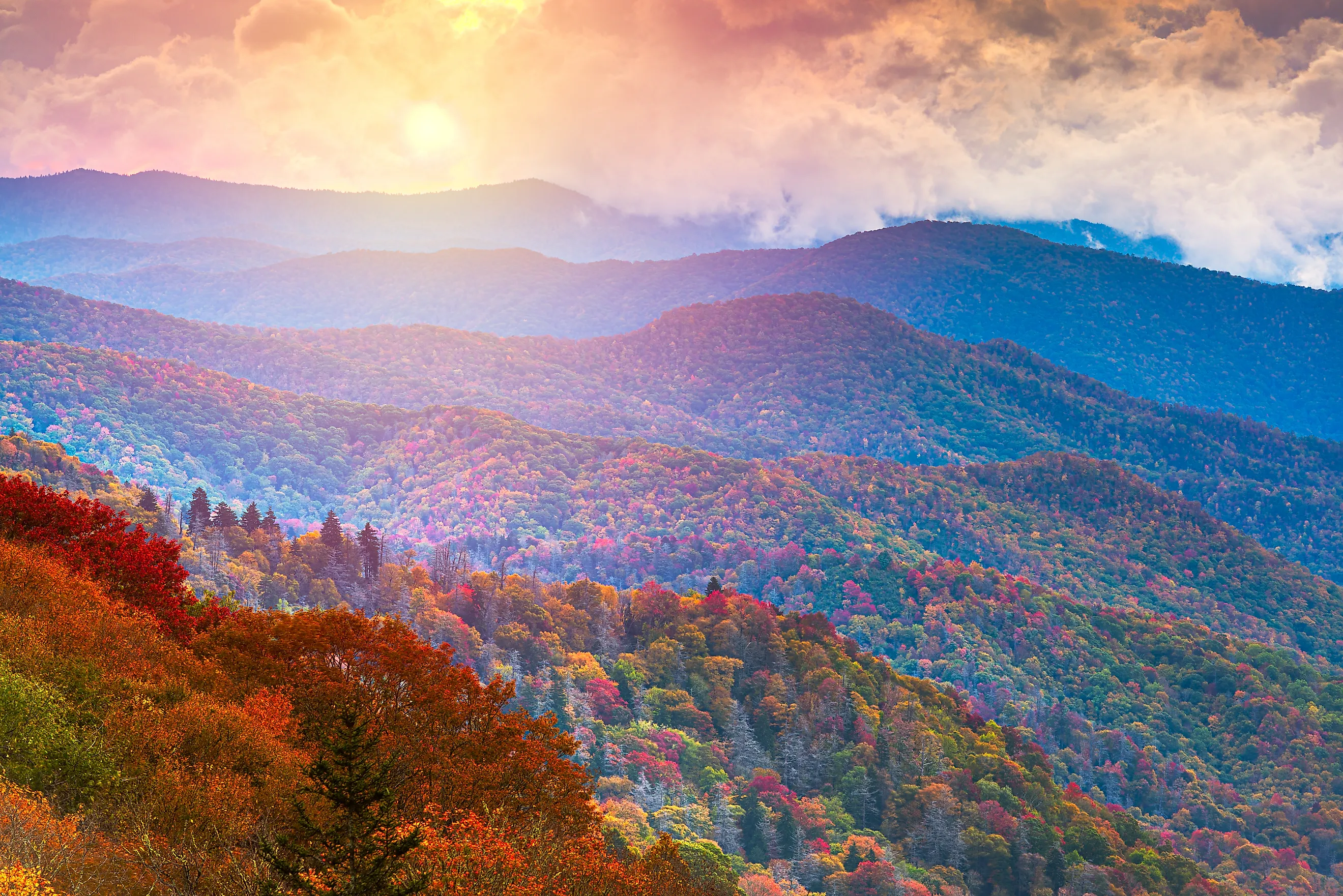
The elevation range is so large that color works down the mountainsides over several weeks rather than arriving everywhere at once. Early to mid-October brings the display above 4,000 feet, then it descends through sugar maple, scarlet oak, sweetgum, red maple and hickory into November.
Beautiful for planning a trip. Ruinous for congestion, because there is no weekend after which everybody goes home. The whole month is the peak weekend.
The Calendar Is The Answer
The most useful thing here is free, published by the park, and almost universally ignored.
The congestion forecasting calendar marks which days are expected to bring heavy traffic and full parking lots, and while October is mostly red, it is not entirely red. That same forecast flagged quieter days scattered through the month, including a stretch in early October and several near the end.
Weekdays beat weekends comfortably. A Tuesday morning on Newfound Gap Road and a Saturday afternoon on Newfound Gap Road are different activities with different names.
Turn Up Absurdly Early
Park Service advice is narrow and specific, which usually means it works: arrive before 8 in the morning or after 4 in the afternoon.
The middle of the day is when the lots fill, the overlooks back up and Cades Cove becomes a car park with scenery. A 7:30 arrival and a 10:30 arrival at the same trailhead are not comparable experiences.
Early also delivers the thing people are actually chasing, which is mist sitting in the valleys before the sun burns it off. The photographs everybody wants were taken at an hour almost nobody is willing to attend.
Or Simply Go Somewhere Else In It

The park holds more than 800 miles of trails, and the crowding concentrates in about four named places. The alternatives are not secret, merely less Instagrammed.
For driving, the Foothills Parkway and Upper Tremont Road carry a fraction of the motor loops' traffic. On the north end, Cosby and Big Creek see far less use than Elkmont or Cades Cove. Seasonal shuttles run to several of the busiest trailheads including Alum Cave, Laurel Falls, Chimney Tops, Rainbow Falls and Kuwohi, removing your car from the equation entirely.
One warning about Kuwohi, the peak formerly signed as Clingmans Dome. It runs at least 10 degrees cooler than Cades Cove, so the t-shirt that was fine in the valley will be a decision you regret at the summit.
The Honest Verdict

Great Smoky Mountains has the worst October traffic in the national park system and nothing else is close. Acadia, Shenandoah and Rocky Mountain all fill up for foliage, but none of them manages twelve million annual visitors, a public highway through the middle, a tourist town welded to the entrance, and two one-way loops where a single stopped vehicle immobilizes everyone behind it.
In its favor, the park is refreshingly honest about the whole situation. It tells you exactly which days will be dreadful, publishes the data it used to work that out, and then watches several hundred thousand people turn up on those days anyway.