How Many States Have A National Park?
Not every state in the U.S. has a national park. As of August 2026, only 30 states have a national park. Some of these states share one national park with another state, rather than having one entirely contained within its borders. These states also don't contain every national park, as one is contained within the U.S. territory of American Samoa and another is in the U.S. Virgin Islands.
What is a national park?

A national park is usually an environment that contains enough environments and resources that require protection to ensure the region is protected for wildlife, recreation, and conservation in general. Some are designated as National Parks for their historic importance, such as the Gateway Arch National Park in St. Louis, Missouri, which contains the tallest monument in the U.S. at 630 feet tall, honoring the Louisiana Purchase of 1803 and the movement out west.
In order for a region to become a national park, it must be established by Congress. A President can instead protect land as a national monument under the Antiquities Act of 1906. This legislation was signed into law by Theodore Roosevelt and was specifically used for preserving sites of particular importance for historical, archeological, or scientific reasons. Several areas were first protected under this act before later becoming national parks, such as the Grand Canyon in 1908 and Acadia in 1916. It should be noted that the President can only make this declaration for land that is already under federal management.
The National Park Service was established in 1916 as a way to manage the existing national parks and monuments, and today it works together with Congress to determine specific designations for areas needing protection, ranging from historic sites, battlefields, monuments, and national parks.
Regulations can vary between these places, as national preserves allow hunting or fishing, and national rivers are designed to allow free-flowing streams that are not redirected by dams or diversions.
States that share a national park
Idaho, Tennessee, and North Carolina are the three main states that do not have a national park entirely contained within their borders but rather share them with other states.
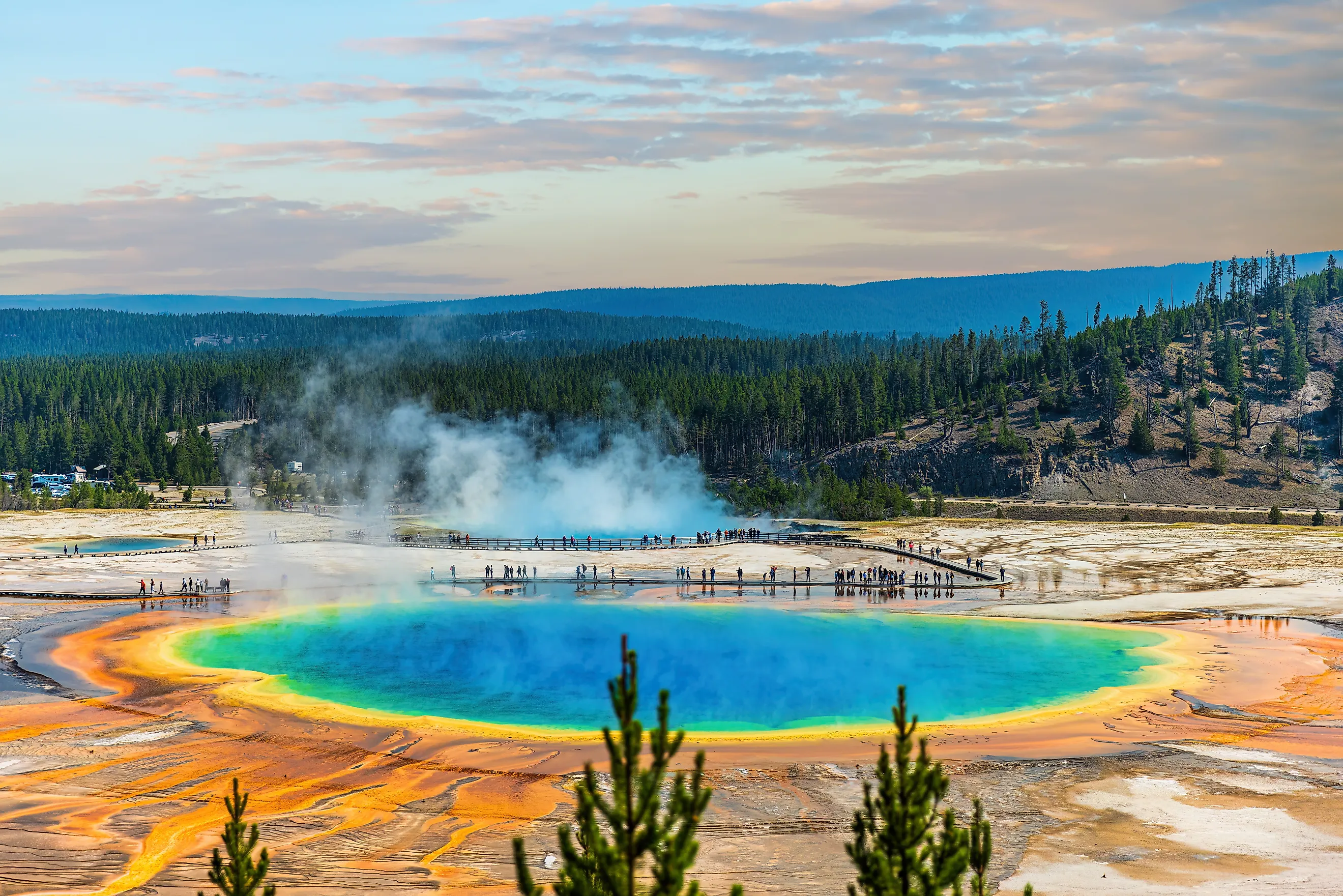
Idaho shares Yellowstone National Park with Wyoming and Montana. However, it only has a tiny percentage of the park, at 1% of its total square mileage. The vast majority of the park is found in Wyoming at nearly 3,500 square miles, and the remaining 3% is in Montana. None of the major attractions are here in the Idaho area, but one can access Old Faithful by driving to the east. Yellowstone National Park was the first national park to be established on March 1, 1872, for "the benefit and enjoyment of the people."
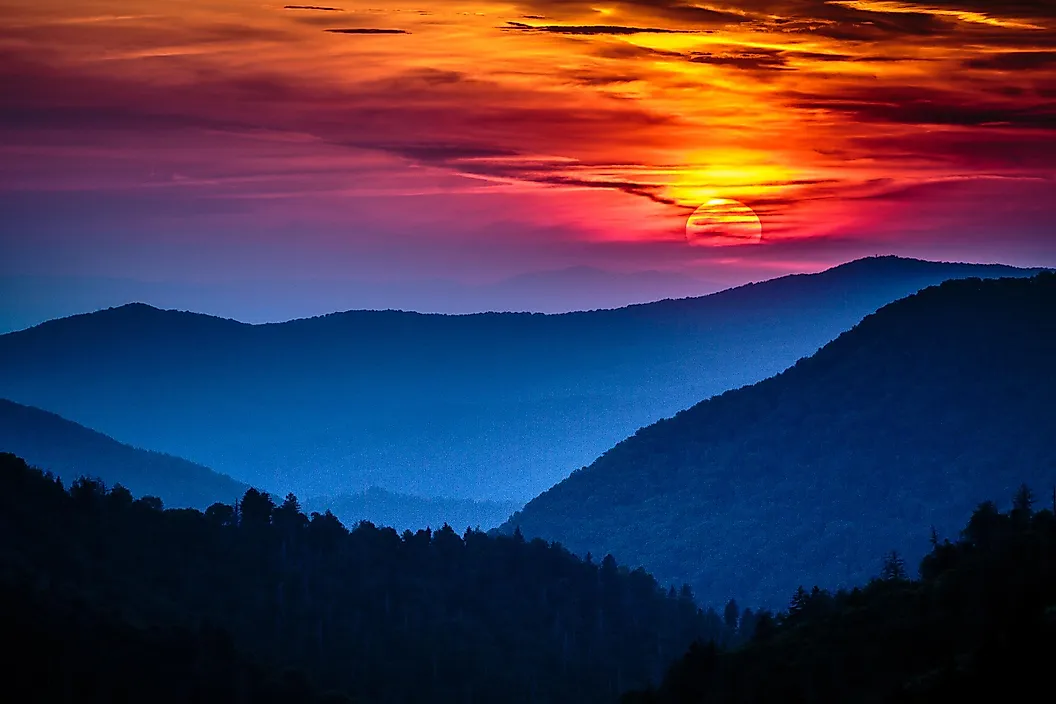
Tennessee and North Carolina, meanwhile, both share the same park, the Great Smoky Mountains National Park, named after its misty mountain peaks. Unlike Yellowstone, the 522,427 acres of the park are split nearly in two by North Carolina and Tennessee. With more than 12 million visitors yearly, it is the most visited national park in the entire U.S.
States with only one national park

Out of the states with one national park contained entirely in its borders, there are Arkansas, Kentucky, Indiana, Maine, Michigan, Minnesota, Missouri, North Dakota, Ohio, Oregon, South Carolina, Virginia, and West Virginia.
Several of these states only recently gained their national parks. West Virginia itself is the most recent state to get a national park, as New River Gorge National Park and Preserve was declared a national park on December 27, 2020. Previously, it was the New River Gorge National River.
The other two recent additions are the Indiana Dunes National Park on February 15, 2019, and the Gateway Arch National Park on February 22, 2018. Congaree National Park in South Carolina was previously the Congaree National Monument until November 10, 2003.
North Dakota is unique among these states for having the only national park named after a President, the Theodore Roosevelt National Park. Before he became President, Teddy Roosevelt visited this Badlands region first to hunt bison and later to seek solitude after the deaths of his mother and wife. His experience running a ranch in these prairies and the Painted Canyon, formed in prehistoric times from several layers of rocks, would influence his later policies as a conservationist President.
States with the most national parks

California has the most national parks of any state, accounting for 9. It has a highly diverse group of national parks, such as the hottest and lowest national park in the U.S. at Death Valley National Park, which contains the lowest spot in the U.S. at Badwater Basin, 282 feet below sea level. One can also find the largest trees in the world, known as giant sequoias, at Sequoia National Park and Kings Canyon National Park.
Alaska is a close second to California, with eight national parks. It has the largest national park in the U.S. via the Wrangell-St. Elias National Park & Preserve. It is 13.2 million acres, situated in the southeast of Alaska close to its border with Yukon, Canada. The National Park Service manages around 54 million acres in Alaska, roughly two-thirds of the entire National Park System, while the federal government as a whole controls close to 60% of the state.
Utah ranks third for its five national parks, many of which were designated for their natural formations, such as the more than 2,000 natural rock arches at Arches National Park, including the Delicate Arch, which is a common image on license plates from Utah. One of its national parks, Zion National Park, in part drew its name from the state's Mormon heritage. Mormon settlers named the entire region Zion after the Biblical word for refuge. President Taft would first propose setting land aside here for protection in 1909 due to its deep canyons and colorful canyon walls. It would officially become a national park in 1919.
What about the states without national parks?
The remaining 20 states do not have national parks as of August 2026, but there are efforts at the state level to change that.
For example, in Wisconsin, there has been an effort to designate the Apostle Islands as a national park led by Rep. Tom Tiffany in 2025. This area contains 21 islands and a 12-mile shoreline on Lake Superior. Today, they are organized as part of the Apostle Islands National Lakeshore. Some residents have raised concerns about being able to accommodate visitors if this region were declared a national park.
Some states have state parks that are larger than many national parks, such as New York. The Adirondack Park was first created in 1892 and consists of around 6 million acres within the Adirondack Mountains.
As of August 2026, there are 63 national parks in total, spread across 30 states and 2 U.S. territories, American Samoa and the U.S. Virgin Islands.