These 12 Towns In Chesapeake Bay Were Ranked Among US Favorites In 2026
Some of these Chesapeake Bay destinations received national travel attention in 2026, while others have long held lasting reputations through well-preserved downtowns, public waterfronts, and unique experiences that cannot be replicated elsewhere on the East Coast. Annapolis centers on government and naval history. Cambridge tells the story of Harriet Tubman through the landscape where she lived. Oxford still relies on a historic ferry, while Rock Hall draws visitors toward one of the Chesapeake's most important wildlife refuges. Together, these towns show why the bay continues to rank among America's favorite places for travelers seeking authentic experiences featuring essential moments in American history, architecture as part of our regional and national heritage, and daily life for a community born and raised on the water.
St. Michaels, Maryland

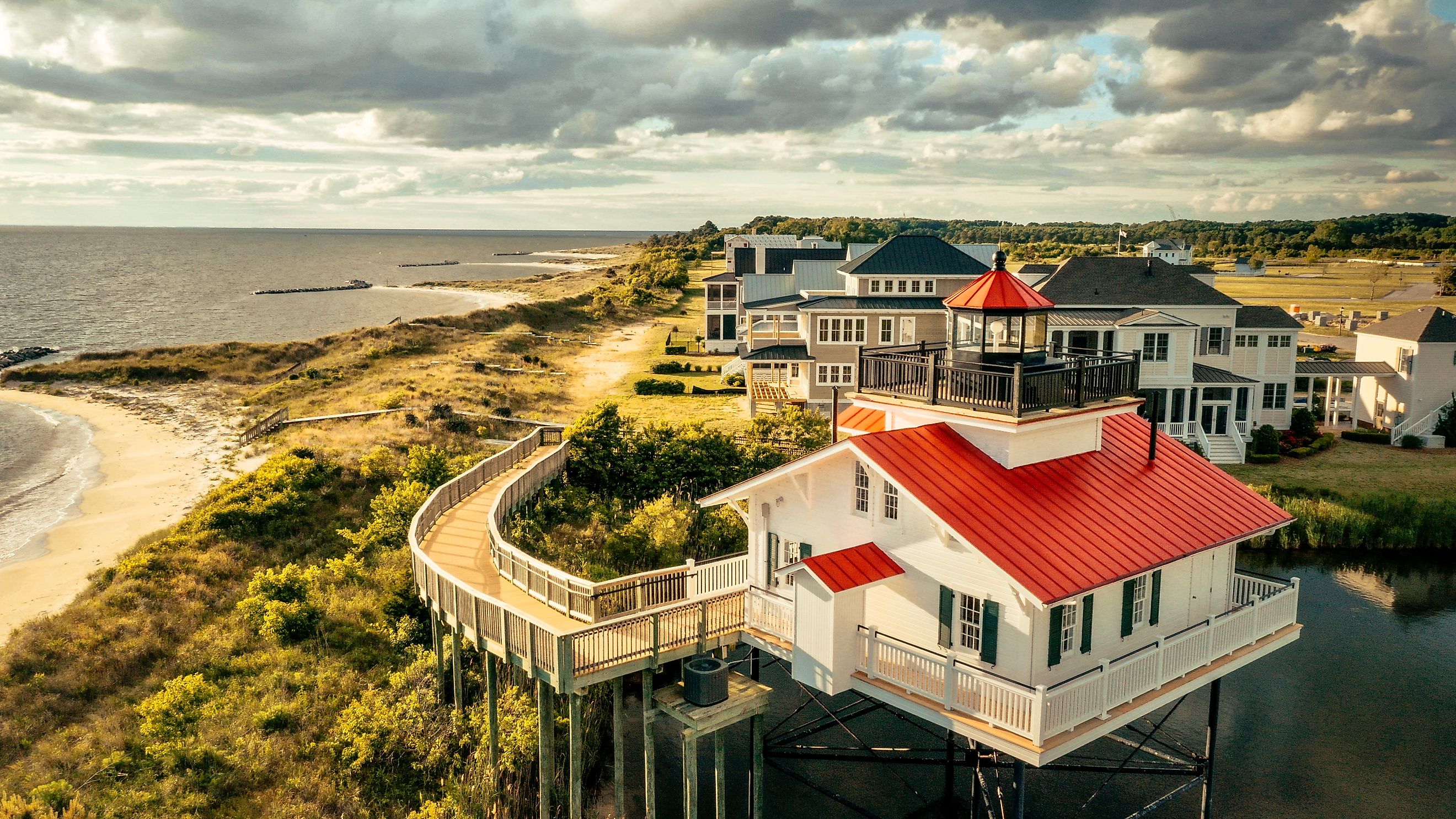
The Chesapeake Bay Maritime Museum is a highlight of any visit to St. Michaels. Covering 18 waterfront acres along St. Michaels Harbor, the campus includes floating historic vessels, working boatbuilders, exhibits about the Chesapeake seafood industry, and the restored Hooper Strait Lighthouse. That screwpile light was built in 1879 and relocated to the museum in 1966. Only a few blocks away, Talbot Street presents a different side of the town. Federal-era buildings, historic churches, galleries, and locally owned shops occupy structures that developed alongside the harbor.
Muskrat Park extends the walk to the water's edge, where sailboats and workboats share the harbor throughout the day. Many Chesapeake towns celebrate maritime history. St. Michaels allows visitors to watch it continue. Boat restoration projects take place within view of an active harbor, creating a direct connection between the museum exhibits and the vessels still navigating the Miles River.
Annapolis, Maryland

Few places on the Chesapeake Bay combine political history and maritime culture as naturally as Annapolis. Within a short walk, visitors can stand inside the Maryland State House and watch sailboats maneuver through Ego Alley before continuing toward the grounds of the United States Naval Academy. Completed in 1779, the Maryland State House remains the nation's oldest state capitol in continuous legislative use. The surrounding streets preserve rows of Georgian homes and brick sidewalks, along with public buildings that developed during the Colonial period.
The waterfront creates an entirely different atmosphere. City Dock faces one of the East Coast's busiest sailing harbors, where recreational boats pass within a few feet of restaurants and public benches along the harbor promenade. Guided tours of the Naval Academy add another perspective by connecting the city's Colonial past with its continuing military role.
Oxford, Maryland

The trip to Oxford becomes memorable before reaching downtown. Drivers approaching town eventually arrive at a narrow peninsula where the Tred Avon River surrounds much of the community, placing the water in view from several directions. Oxford's defining attraction remains the Oxford-Bellevue Ferry. Operating since 1683, it continues carrying passengers and vehicles across the Tred Avon River between Oxford and Bellevue near Royal Oak. The crossing lasts only a few minutes, yet it preserves one of the oldest continuously operating private ferry services in the United States while eliminating the longer drive around the river.
Back in town, The Strand follows the shoreline past historic homes and public green space, with boat docks overlooking the river. Oxford developed as an important Colonial port, and its street pattern still reflects that relationship with the waterfront. Instead of treating the ferry as a historical exhibit, the town continues using it as practical transportation more than three centuries after the route first opened.
Chestertown, Maryland

High Street has served as Chestertown's main approach to the Chester River since the early 1700s, and it remains the best introduction to the community today. The route passes the courthouse, Washington College, brick storefronts, and restored homes before ending at Wilmer Park along the waterfront. Founded in 1706, Chestertown became one of Maryland's leading Colonial ports. Much of that history survives through Georgian and Federal architecture that continues to house businesses and civic buildings instead of standing behind admission gates.
Washington College, established in 1782, keeps the downtown active with public lectures and performances throughout the year. Every May, the Chestertown Tea Party Festival transforms High Street and the waterfront into the center of the town's largest annual celebration. Historical reenactments, tall ships, music, and riverfront activities fill the same streets that helped establish Chestertown as one of the Chesapeake's earliest commercial ports.
Cambridge, Maryland

History and landscape remain closely connected in Cambridge. The Choptank River shaped the city's commercial waterfront, while the surrounding marshes formed the environment Harriet Tubman knew during her early life in Dorchester County. Long Wharf Park occupies one of the city's most prominent waterfront locations. Fishing piers and open green space overlook the broad Choptank River beside the marina, where commercial boats still share the water with recreational traffic. Several blocks inland, Race Street reflects another chapter of Cambridge's history through landmarks connected to Tubman's life and the Underground Railroad.
The Harriet Tubman Museum and Educational Center reopened in March 2026 after nearly a year of water-damage repairs, then closed again that July following a break-in, with no reopening date announced. The Harriet Tubman Underground Railroad Visitor Center near Church Creek remains open. Exhibits there connect Tubman's story with the marshes and waterways surrounding Cambridge rather than presenting it apart from the landscape. Many travelers continue south to Blackwater National Wildlife Refuge. More than 32,000 acres of tidal marshes, managed wetlands, forests, and cropland support nesting bald eagles and osprey along with large concentrations of wintering waterfowl. A wildlife drive and several walking trails carry visitors into the marsh, placing one of the Chesapeake's most important natural areas only a short drive from downtown.
Havre de Grace, Maryland

The Susquehanna River widens dramatically before entering the Chesapeake Bay, and Havre de Grace occupies one of the best viewpoints along that transition. The city's waterfront links parks, museums, marinas, and public walkways into a continuous route rather than scattering them across downtown. Concord Point Lighthouse remains the centerpiece. Builder John Donahoo completed the 30-foot granite tower in 1827, making it the second-oldest lighthouse still standing in Maryland. During the seasonal opening months, visitors can climb to the lantern room for sweeping views across the Susquehanna Flats and the upper Chesapeake Bay.
The restored keeper's house stands across the street. The Havre de Grace Decoy Museum and the Havre de Grace Maritime Museum extend the story beyond the lighthouse itself. Together, they explain how navigation, commercial shipping, hunting traditions, and waterfowl shaped one of Maryland's most important river communities.
Rock Hall, Maryland

Boaters often know Rock Hall first, but the town's strongest attraction lies several miles beyond the harbor. Eastern Neck National Wildlife Refuge occupies a 2,285-acre island where the Chester River meets the Chesapeake Bay. Its tidal marshes, forests, grasslands, and shoreline habitat support bald eagles, osprey, great blue herons, and migrating waterfowl. Several walking trails and observation platforms cross the refuge, giving birdwatchers opportunities to experience the Chesapeake landscape without leaving protected public land. Seasonal wildlife closures help safeguard nesting areas, making spring and fall particularly rewarding times for birding.
Back in Rock Hall, marinas and seafood docks continue reflecting the town's maritime economy. The Wings of Spring festival, held for the first time in April 2026, marks the return of nesting ospreys to Rock Hall Harbor with an osprey symposium downtown and a guided walk at Eastern Neck National Wildlife Refuge, demonstrating how recreation and conservation have become equally important parts of the town's identity.
Crisfield, Maryland

Traveling south along Maryland's Eastern Shore brings a noticeable change in scenery. Historic courthouse squares give way to commercial docks and crab boats, with broad views across Tangier Sound. Crisfield has remained one of the Chesapeake's most recognizable seafood ports because the waterfront still supports the industries that built the city.
Somers Cove Marina serves as the center of activity. Charter boats and seasonal cruises to Smith Island depart from the harbor, while the adjacent promenade gives visitors a close look at working crab boats unloading their catch. Every Labor Day weekend, the National Hard Crab Derby turns those traditions into one of Maryland's best-known festivals. The event includes crab races, crab picking competitions, boat docking contests, parades, and fireworks.
Cape Charles, Virginia

Crossing into Virginia introduces a different Chesapeake landscape. Cape Charles pairs a public beach with a downtown that developed during the railroad boom of the late 19th century, allowing visitors to experience the waterfront and historic district without driving between attractions. The beach stretches along Bay Avenue, where calm Chesapeake waters replace the surf typically associated with Virginia's Atlantic coast. The fishing pier marks the southern end of the shoreline, while public access points appear at the end of nearly every cross street. Cape Charles Town Beach is the only public beach on Virginia's Eastern Shore that charges no entrance or parking fee. A few blocks inland, Mason Avenue reflects Cape Charles' railroad heritage through brick commercial buildings and restored storefronts. The short walk between the beach and downtown has helped make Cape Charles one of Virginia's most recognized Chesapeake destinations.
Onancock, Virginia

Onancock developed around a protected harbor long before tourism became part of the local economy. Today, Market Street still leads directly toward Onancock Wharf, where docks and public seating look out over Onancock Creek before it widens into Onancock Bay. One block away, Ker Place introduces another chapter of the town's history. Built in 1799, the Federal-style house now serves as the headquarters of the Eastern Shore of Virginia Historical Society. Exhibits inside explain how agriculture and maritime trade shaped Virginia's Eastern Shore over more than two centuries. Travel plans require one important note. The Tangier-Onancock Ferry suspended operations in June 2026 and has not resumed service. Even without the ferry, the waterfront and the historic district continue to define one of Virginia's oldest Chesapeake communities.
Urbanna, Virginia

Unlike many Chesapeake towns that developed around shipbuilding or fishing, Urbanna built its reputation through oysters. Established as an official tobacco port in 1680, the community later became closely associated with Virginia's oyster industry because of its position on Urbanna Creek near the Rappahannock River. That heritage reaches its peak each November during the Urbanna Oyster Festival. Recognized as Virginia's official oyster festival, the event attracts more than 50,000 visitors for oyster shucking contests, parades, seafood vendors, maritime exhibits, and community celebrations. Outside festival season, Virginia Street connects the commercial district with the creek. Historical markers throughout downtown explain the town's Colonial past while preserving the relationship between the waterfront and the businesses that continue operating there today.
Reedville, Virginia

Few Chesapeake communities illustrate the region's commercial fishing history as clearly as Reedville. During the late 19th century, the menhaden industry transformed the community into one of Virginia's wealthiest waterfront settlements, leaving behind a collection of impressive homes along Main Street known locally as "Millionaire's Row."
The Reedville Fishermen's Museum explains how menhaden fishing influenced the economy of the Northern Neck through historic boats, photographs, tools, and restored buildings. Cockrell Creek remains active with commercial vessels, allowing visitors to connect museum exhibits with the working harbor only a short distance away. Unlike recreated maritime villages, Reedville still functions as an active fishing community. The combination of preserved architecture and a working waterfront makes the town one of the Chesapeake's most rewarding stops for travelers interested in the bay's commercial heritage.
Why These Chesapeake Bay Towns Continue To Stand Out
Annapolis preserves one of the nation's oldest state capitols, only steps from an active sailing harbor. St. Michaels connects a nationally respected maritime museum with a working waterfront, while Oxford still depends on a ferry route that has crossed the Tred Avon River for centuries. Wildlife refuges, oyster festivals, historic lighthouses, Colonial streets, and active harbors give each community its own identity and make them favorites for 2026.