The Lake Erie Islands Where Water Snakes Came Back
When European settlers reached the western Lake Erie islands they found so many snakes that they called the place the Serpent Islands. By the 1990s the Lake Erie watersnake was down to a few thousand animals on a dozen scraps of limestone, mostly because residents had spent a century killing them on sight. It was listed as federally threatened in 1999 and removed from the list in 2011, having roughly doubled its recovery target. The thing that saved it was an invasive fish nobody wanted.
It Lives Nowhere Else

The subspecies has one of the narrowest ranges of any reptile in North America.
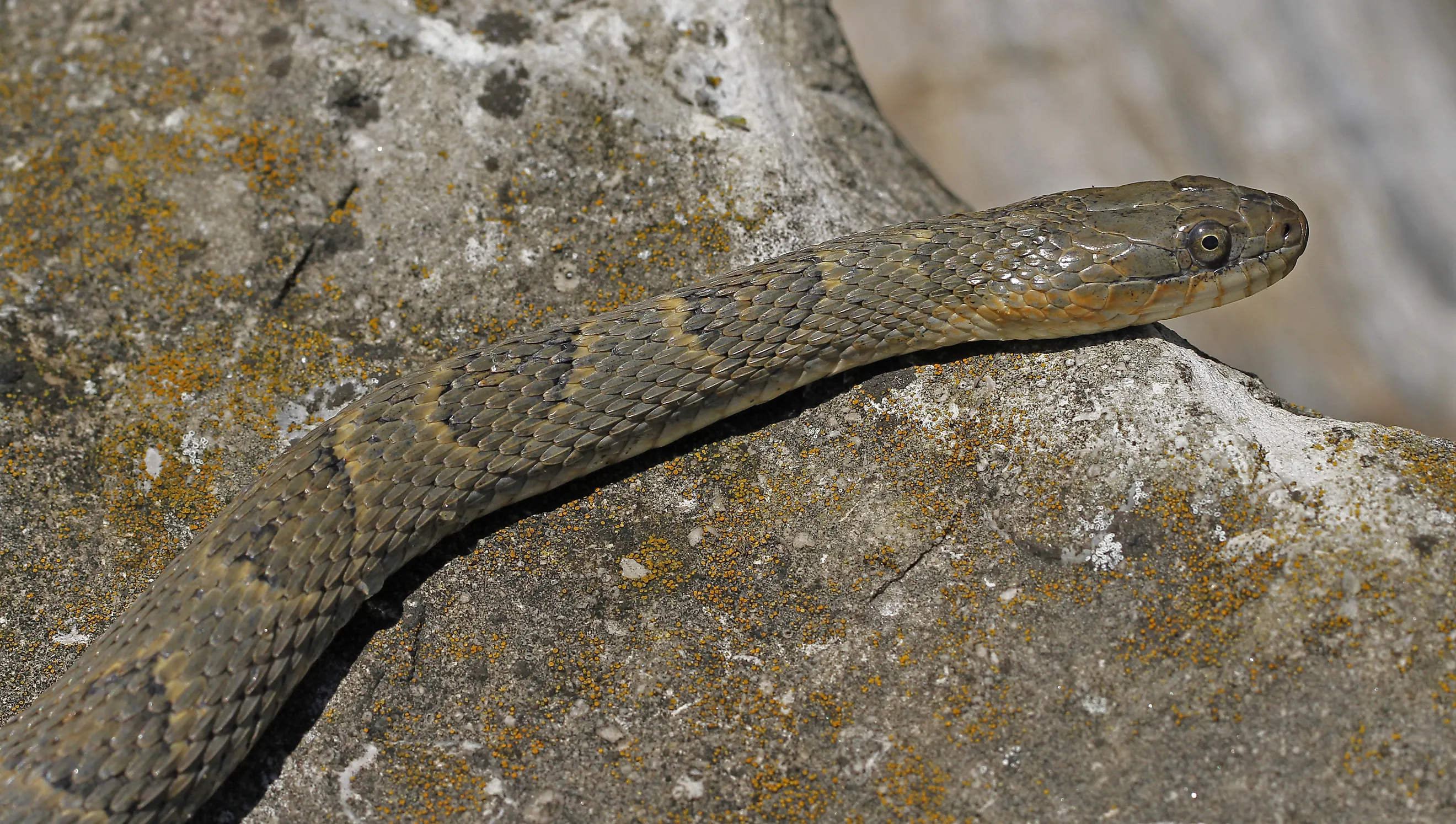
Nerodia sipedon insularum is a subspecies of the common northern watersnake, found only on about fifteen islands at the western end of Lake Erie, split between Ohio and Ontario. It was described in 1937.
Islands in the range include South Bass, Middle Bass, North Bass, Kelleys, Rattlesnake, Sugar and Gibraltar. The snake has already disappeared from the Ontario mainland and from West Sister, Green, Middle Sister and North Harbour.
The Threat Was People, Not Habitat

Most endangered species are losing ground. This one was being killed deliberately.
NatureServe records the decline in distribution and abundance as caused by active eradication by humans alongside habitat loss from shoreline development. The federal listing in 1999 named human persecution directly.
The snake is harmless, and most of the killing came from misidentification. People assumed a thick dark snake in the water was venomous and acted on it.
It Was Listed In 1999

Federal protection arrived after six years of consideration.
The US Fish and Wildlife Service proposed threatened status in August 1993 and designated it on 30 August 1999, covering the offshore islands of western Lake Erie and their adjacent waters more than a mile from the mainland.
Ohio listed it as state endangered, which made killing one illegal inside state borders. A recovery plan followed in 2003.
The Goal Was 5,555 Snakes

Recovery criteria for this species are unusually specific, and that precision makes the outcome easy to judge.
The recovery plan set delisting at an estimated population of 5,555 adult watersnakes on the US islands, sustained over time, alongside habitat protection targets.
At the time of listing the population was estimated at a few thousand. By 2002, three years in, it had already passed the threshold.
Then An Invasive Fish Arrived

The round goby reached Lake Erie in the early 1990s and was nothing but bad news for everything except this snake.
The goby is an aggressive invader that outcompetes native fish for food, shelter and nesting sites, and it caused substantial declines in native fish populations across the Great Lakes.
It also turned out to be exactly the right size and abundance for a watersnake. Research now puts round goby at more than 90 percent of the Lake Erie watersnake's diet, with mudpuppies, perch and darters making up the rest.
The Diet Switch Was Almost Total

What happened to the snake's feeding habits in a decade is rare in the literature.
The species went from a diet of native fish and amphibians to one composed of over 90 percent round goby. The Fish and Wildlife Service's own five-year review documents the shift and the significant interaction between the two species.
Abundant, easy prey raised survival and reproduction rates. The invasive fish inadvertently became the engine of a federally funded recovery.
The Snake Returns The Favor

The relationship runs both ways, which is the part that justified the conservation spending.
Lake Erie watersnakes help keep the invasive goby population in check, and that predation has been described as critical to maintaining balance in the region's ecosystem.
A recovered native predator eating an unwanted invader is as close to a free outcome as invasive species management gets.
Habitat Got Bought And Protected

The goby was luck. The land was deliberate.
Collaboration between Ohio DNR, the Fish and Wildlife Service, The Nature Conservancy and the Black Swamp Conservancy permanently protected roughly 11.4 miles of shoreline and 318 acres of inland habitat by 2011.
That protected acreage supports about half the species' recovery population goal. The other half lives on private land, which made the next part essential.
Attitudes Changed Measurably

Outreach on an island community is measurable in a way it rarely is elsewhere, because the population is small and fixed.
The five-year review recorded that tolerance of the Lake Erie watersnake had increased in 83.5 percent of survey respondents since the 1999 listing. Education focused on correcting the belief that the snake was venomous.
Given that deliberate killing was the primary threat, a change in what residents believed was worth more than any amount of habitat.
Delisted In 2011

The removal came twelve years after listing, with the population at more than double the target.
The Lake Erie watersnake was removed from the federal list on 16 August 2011, having reached about 11,980 adults by 2009. It was the 23rd animal delisted due to recovery rather than extinction.
A post-delisting monitoring plan was adopted in January 2011, and the snake remains state endangered in Ohio, so killing one is still illegal there.
The Short Version
The Lake Erie watersnake lives on about fifteen islands at the western end of Lake Erie and nowhere else on Earth. It was listed as federally threatened in 1999 after a century of being killed on sight, hit its recovery target of 5,555 adults by 2002, reached nearly 12,000 by 2009 and was delisted in 2011.
Protected shoreline helped and changed attitudes helped more. But the decisive factor was the round goby, an invasive fish that wrecked the native fishery and then became 90 percent of the diet of the snake it accidentally rescued.