The Towns In The Great Lakes Where Retirees Are Actually Moving To
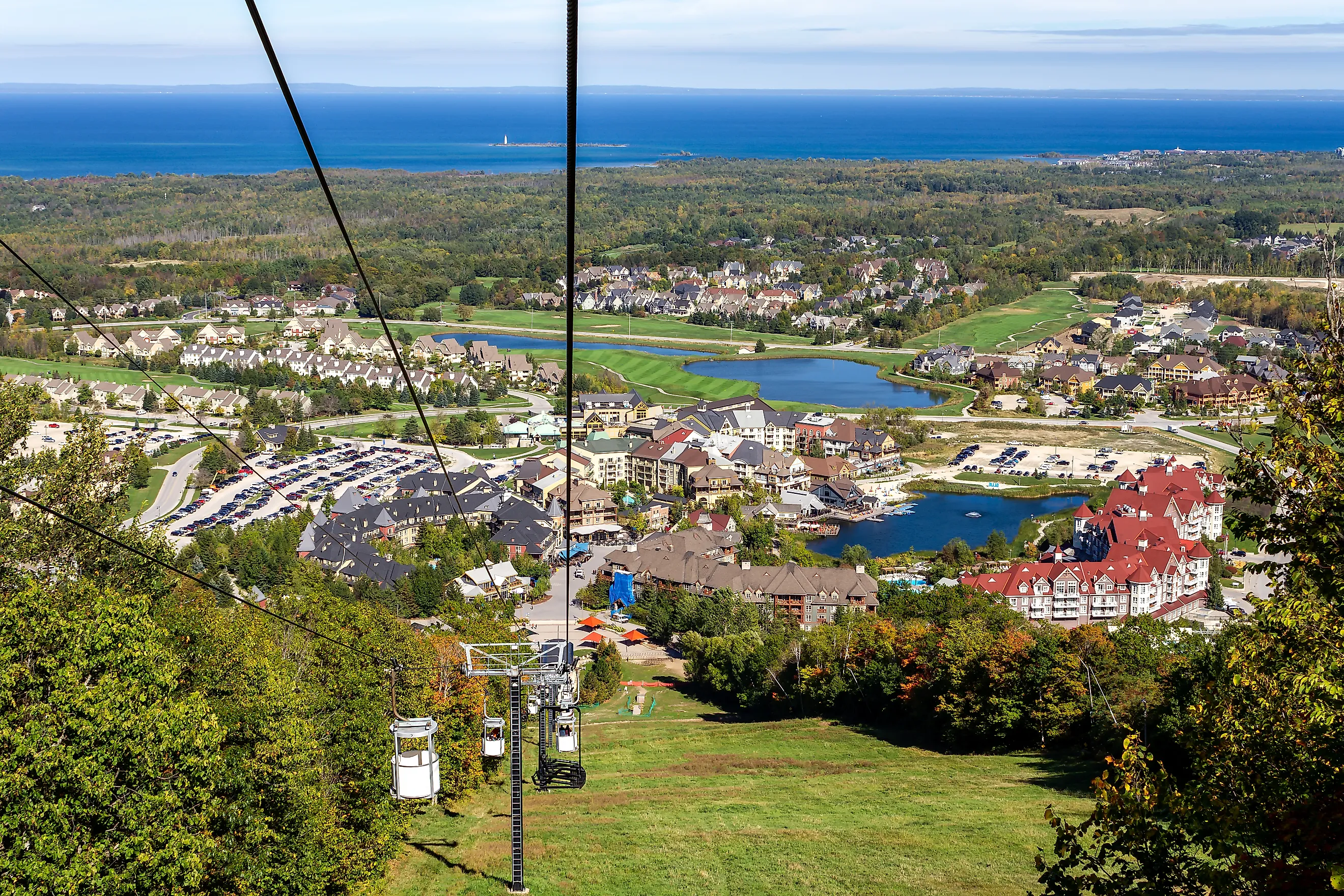
Forget Florida. The retirees turning up in Great Lakes towns this year cashed out pricey houses and followed family back toward the water, not away from it. In Wasaga Beach and Collingwood, Ontario sellers are swapping Toronto-area home values for a waterfront address and pocketing the gap. On the US side, the newcomers are landing on the Michigan shore and across the lakes in Wisconsin's Sturgeon Bay and Bayfield. The trend is real, and it shows up in enrollment counts and migration records on both sides of the border.
Ludington, Michigan

Ludington's surrounding Mason County provides stronger evidence than the city's population estimate alone. Its population aged 65 and older averaged an estimated 6,681 during 2015 through 2019, compared with 7,689 during 2020 through 2024. That represents 15.1 percent growth, with the older share rising from 23.1 to 26.3 percent. The 2020 through 2024 Census mobility estimates show 255 older arrivals from other counties or states against 107 departures, a net gain of 148.
Within Ludington, the estimated older population increased by 368, although sampling uncertainty prevents a firm city-level growth conclusion. The city also recorded positive estimated net older migration across county lines. Earlier Census origin tables, covering 2011 through 2015, identify older arrivals from Amber and Hamlin townships, both within Mason County. Those records establish historical origins, rather than where today's newcomers predominantly lived.
One more recent retirement arrival became involved in the local arts community. After retiring from Cadillac Area Public Schools in 2022, educator Richelle Daniels relocated to Ludington and taught workshops at its arts center. Her classes included watercolor and mixed media.
Muskegon, Michigan

Farther south along Lake Michigan, family ties explain one documented retirement move to Muskegon. Nancy and John Walling relocated from Somerville, New Jersey, after careers with Chubb Insurance. Nancy's family described their decision as a move to spend retirement near relatives. Her subsequent life included church service and helping younger family members get to school and activities.
Muskegon County's estimated population aged 65 and older was 28,541 during 2015 through 2019, compared with 32,488 during 2020 through 2024. Its older share rose from 16.5 to 18.5 percent. Census mobility estimates counted 781 older arrivals against 362 departures, producing a net domestic gain of 419. Of those arrivals, 490 came from elsewhere in Michigan and 291 from other states.
The city itself had positive estimated net older migration across county lines, but its estimated senior population increase remains statistically uncertain. Historical age-specific records covering 2011 through 2015 identify origins including Kent and Ottawa counties. The Wallings' account supplies an individual retirement example, although it does not date their move or establish the origins of recent arrivals.
Sturgeon Bay, Wisconsin

Across Lake Michigan on the Door Peninsula, Sturgeon Bay sits at the center of a county that has aged faster than almost any other in Wisconsin. Door County's residents aged 65 and older grew from about 27.1 percent of the population in 2015 to roughly a third by 2024, when the county counted an estimated 10,400 seniors. Sturgeon Bay, the county seat, held about 9,700 residents at the 2020 census, the largest community on the peninsula.
The increase is not only a matter of residents aging in place. Research from the University of Wisconsin-Madison Applied Population Lab placed Door among the Wisconsin counties with the highest net migration rates for people aged 55 to 74 during the 2010s, and state demographers attribute much of that to second-home and cottage owners who shift to year-round residence as they retire. County-level statistics do not isolate migration into Sturgeon Bay itself, and the net-migration research describes the 2010s rather than the latest single year.
Bayfield, Wisconsin

At the northwest corner of Wisconsin, on Lake Superior, the small city of Bayfield shares its name with a county that has grown while much of the surrounding region lost people. Bayfield County added residents between 2010 and 2020, outpacing Wisconsin's statewide rate, and its share aged 65 and older climbed from 16.4 percent in 2000 to about 30 percent by 2020 and roughly a third by 2024. The county counted an estimated 5,600 seniors that year, out of about 16,800 residents.
A Rural Insights analysis of the Lake Superior northlands found that Bayfield County was growing specifically because net migration outweighed natural decline, with retirees and middle-aged arrivals accounting for most of those gains. The city of Bayfield itself, the ferry gateway to the Apostle Islands and Madeline Island, held 584 residents at the 2020 census, so the county figures carry the migration signal rather than the city's own small count.
Wasaga Beach, Ontario

On the Canadian side of Lake Huron, Wasaga Beach has recent evidence of older residents arriving. Its population aged 65 and older reached 10,181 in July 2025, compared with 9,724 a year earlier. That was an increase of 4.7 percent, bringing the older share to 35.1 percent. Statistics Canada's migration estimates show a net gain of 173 older residents through moves within Ontario during 2024 to 2025. After a net loss of 19 to other provinces, the overall domestic migration gain was 154.
Toronto is one documented origin, although the available evidence does not establish its share of recent senior arrivals. In a 2018 Canadian Press interview, retired construction worker Dennis Johnston, then 68, described moving with his wife, Trudi. They sold their Toronto home in 2017 for roughly C$900,000 and bought in Wasaga Beach for about C$400,000. Trudi explained that their wealth had been tied up in their Toronto house, limiting their retirement options. These were their transaction prices, not current market averages.
Collingwood, Ontario

Nearby Collingwood also gained older residents through migration, alongside an increase in its senior population. Statistics Canada estimates put its population aged 65 and older at 8,582 in July 2025. That was an increase of 235, or 2.8 percent, since July 2024, bringing the older share to 31.5 percent. During the intervening year, domestic migration added a net 78 older residents. Moves within Ontario contributed 71, with interprovincial moves adding another seven.
Mississauga supplies a specifically documented origin. Retired window dresser John Doherty was 75 when CollingwoodToday interviewed him in September 2024, three years after his move. His brother and sister-in-law already lived in Collingwood, and repeated visits introduced him to its skiing and hiking trails. After relocating, he joined Keep Collingwood Clean and continued painting, with an exhibition at the public library. He also described finding it easy to make friends and become involved locally.
Cobourg, Ontario

Farther east on Lake Ontario, Cobourg recorded a smaller senior population increase but a positive migration contribution. Its population aged 65 and older reached 7,418 in July 2025, compared with 7,334 the previous July. That was growth of 1.1 percent, bringing the older share to 35.3 percent. The latest migration estimates show a net gain of 88 older residents through moves within Ontario. A net loss of 19 to other provinces reduced the overall domestic gain to 69.
One documented move involved William "Bill" Peters and his wife, Ann, who had lived in Lorne Beach, near Kincardine. According to his family's account, published in June 2024, they decided in 2021 to sell their house and seek a smaller home. They relocated to Cobourg and built an addition to their son's house. Born in 1941 and retired since 1998, Bill made that move late in retirement, joining family in a different lakeside community.
What The Records Actually Show
The clearest recent town-level evidence here comes from Ontario, where each of the three communities recorded positive older migration and senior population growth. Michigan's demographers also project substantial growth in the oldest age groups, increasing the importance of accessible housing and care capacity. These changes give local planners reason to monitor housing availability and clinic demand, although the migration figures alone establish neither rising prices nor shortages.
Data note: U.S. mobility figures pool responses collected during 2020 through 2024 and describe residence one year before each survey. They are not cumulative five-year migration totals. Canadian migration figures cover July 2024 through June 2025 and count net moves within Canada. County statistics do not establish growth inside individual cities, and the named movers illustrate origins without identifying where most recent arrivals came from. The Wisconsin figures for Door and Bayfield counties draw on Census population estimates and published migration research rather than the same single-year mobility tables, so they appear here as shares and research findings rather than arrival and departure counts.