Where People Are Moving To In New Hampshire In 2026
New Hampshire’s recent population gains are spreading across the Seacoast, southern New Hampshire, and the Upper Valley. The US Census Bureau estimated the state’s population at 1,415,342 in 2025, up 2.7% from the 2020 estimate base. Epping and Merrimack rank among the fastest-growing communities by percentage. Lebanon adds residents around Upper Valley health care and college employment. Meanwhile, places like Dover, Portsmouth, and Salem are growing around housing and highway access. Each of these places attracts residents for different combinations of jobs, infrastructure, and local development.
Lebanon

Lebanon’s population reached 15,481 in the 2025 Census estimate, which was a gain of 1,186 residents from the 2020 estimate base of 14,295. That 8.3% increase is one of the more noticeable city-level gains in New Hampshire, especially for a community already serving as a major Upper Valley employment and healthcare center.
The growth is tied directly to jobs, healthcare, and housing demand. Dartmouth Hitchcock Medical Center and the broader Dartmouth Health system make Lebanon one of the state’s most important medical employment centers. Dartmouth College in Hanover and Upper Valley employers keep housing demand high across the region. Lebanon is already planning around that demand. A 2026 National League of Cities article noted that the city’s housing needs documents call for about 850 new units by 2030 and 1,249 by 2040. Dartmouth has also financed a $15.2 million 21-unit employee housing development in West Lebanon, which shows how employers are responding to the same pressure.
Epping

Epping has one of New Hampshire’s largest percentage gains since 2020. The town reached 7,973 residents in the 2025 Census estimate, up from a 2020 estimate base of 7,132. That 11.8% increase shows how quickly a smaller town can grow.
The town’s location close to Manchester and also the coast is the main reason for its visible growth. Epping sits at the meeting point of Route 101 and Route 125, which Business NH Magazine described as two of the state’s busiest highways. Brickyard Square gives the town a concrete example of that growth with retail, restaurants, a movie theater, and highway access at one of the town’s busiest commercial points. The center’s owner describes the site as having more than 3 million visitors in 2019 and a trade area of 130,000 people.
Merrimack

Merrimack has added enough residents to stand out among southern New Hampshire’s larger towns. Census Vintage 2025 estimates list Merrimack at 29,699 residents in 2025, an 11.5% increase from the 2020 estimates base. That growth reflects Merrimack’s position between Nashua and Manchester, where housing demand, job access, and retail activity all meet along the F.E. Everett Turnpike corridor.
The town’s employment base gives Merrimack more than a commuter-town identity. The town’s economic development office lists major employers such as Fidelity Investments, BAE Systems, and Anheuser-Busch among its business profiles. Merrimack Premium Outlets adds a major retail destination just off the turnpike. New housing is part of the equation, too. Slate at Merrimack is expected to total 402 residential units after Phase II, with the project located near Merrimack Park Place and close to retail and employment areas.
Londonderry

Londonderry reached 27,844 residents in the 2025 Census estimate after starting the decade from a 2020 estimate base of 26,057. That 6.9% increase puts the town squarely inside southern New Hampshire’s growth pattern, especially for residents who want access to Manchester, I-93, Route 102, and Boston.
The biggest local growth marker is Woodmont Commons. New Hampshire Housing describes it as a 603-acre mixed-use development with housing, office space, retail, restaurants, medical space, civic space, and open space. The project includes 1,400 new housing units, some age-restricted, and construction began in 2018 as part of a long-term buildout.
Dover

Dover added 1,865 residents between the 2020 estimate base and 2025, bringing the city’s population to 34,623. That 5.7% increase makes Dover one of the Seacoast’s more active growth cities, especially as it adds residents while reshaping its waterfront and downtown edges.
The Cochecho Waterfront Development gives Dover one of the most concrete examples of growth in the state. The city says the private development plan includes three mixed-use buildings, two multifamily buildings, and three townhouse clusters. Approved site plans include about 26,000 square feet of commercial space and 418 residential units.
Portsmouth

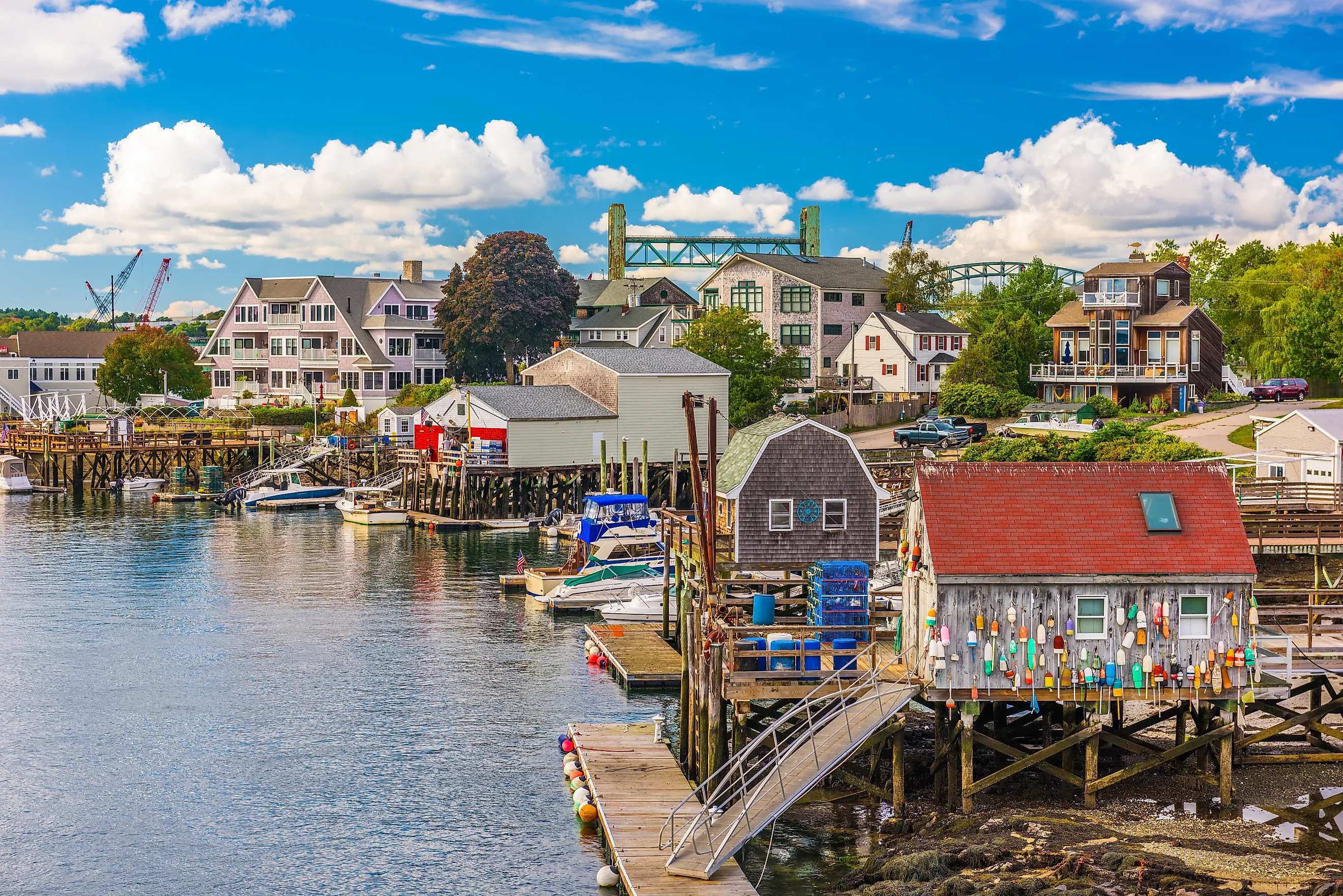
Portsmouth’s population moved from a 2020 estimate of 21,960 to 23,028 in the 2025 Census estimate, a 4.9% increase. That gain may look smaller than Epping or Merrimack by percentage, but it carries weight in a compact coastal city where housing, jobs, restaurants, offices, and waterfront land are already in high demand.
The city’s growth is tied to downtown demand and new housing near older waterfront corridors. The Maris along North Mill Pond is a good example. H+O Engineering reported that The Maris had topped out and was targeting a 2026 release, with 45 waterfront homes and new commercial space planned within walking distance of downtown Portsmouth and the future North Mill Pond greenway. Another North Mill Pond-area project at 105 Bartlett Street was approved for a 152-unit apartment building and greenway, according to the developer.
Rochester

Rochester’s population climbed from a 2020 estimate base of 32,489 to 33,716 in 2025, giving the city a 3.8% increase. That growth places Rochester inside the Seacoast and Lakes Region access pattern, where relatively lower housing costs and new commercial development help the city compete with more expensive nearby communities.
The city’s growth is closely tied to housing and retail development around The Ridge, which is a regional shopping, dining, and community events destination. Phase II planning has included a 100,000-square-foot entertainment and dining destination within walking distance of The Ridge, a 300,000-square-foot regional shopping center. Local economic development documents also referenced plans for about 200 apartments, along with retail, restaurants, and entertainment uses.
Salem

Salem reached 31,868 residents in the 2025 Census estimate, rising from a 2020 estimate base of 30,095. That 5.9% increase fits the town’s role as one of southern New Hampshire’s major growth points near I-93, Route 28, and the Massachusetts border.
The defining project is Tuscan Village. The Town of Salem describes it as a 170-acre mixed-use development on the former Rockingham Park Race Track site located off I-93 near the Mall at Rockingham Park and Route 28. When completed, the project is expected to include about 2.8 million square feet of retail, shops, restaurants, hotels, entertainment, office space, and housing options. New Hampshire Housing describes Tuscan Village as a large-scale district that could contain 4 million square feet of development if fully built out, with nearly 1,800 housing units planned.
Where New Hampshire’s Growth Is Heading
New Hampshire’s growth is spreading across the Seacoast, southern New Hampshire, and the Upper Valley. The southern tier shows that pattern through Epping, Merrimack, Londonderry, and Salem, while Dover, Portsmouth, and Rochester show how Seacoast demand is spreading into cities with more redevelopment potential. Lebanon adds the Upper Valley version of the same pattern, where healthcare, college employment, and housing needs are closely linked. That growth could increase pressure on housing supply, traffic, school capacity, and local services in communities that are still finding room to grow.