The Best State Parks In The Ozarks
Some of the Ozarks' greatest attractions have been millions of years in the making, with the preservation of ancient rock formations alongside historic landmarks. At Johnson's Shut-Ins State Park, visitors can slide through natural water chutes carved into volcanic rock. Elephant Rocks State Park features enormous granite boulders dating back 1.5 billion years. Ha Ha Tonka State Park even offers a glimpse into the past through its stone castle ruins. These seven state parks showcase the Ozarks' remarkable geology, rich history, and opportunities for adventure.
Johnson's Shut-Ins State Park, Missouri

Water has done most of the work here. The East Fork of the Black River squeezes through narrow channels of volcanic rhyolite, and in summer the smooth, polished rock becomes a natural water park of chutes, potholes, and pools. "Shut-in" is the Ozarks word for a river confined between rock walls. In December 2005, the Taum Sauk reservoir on the mountain above the park failed and sent roughly 1.3 billion gallons of water through the valley, stripping soil and trees and wrecking the campground and park buildings. Missouri State Parks reopened the park in 2010 with rebuilt facilities. The swimming area can close after heavy rain because of flash-flood risk, so check conditions that morning. Water shoes help, since the rock is slicker than it looks. This is a popular spot for photos or exploring along the water and in the surrounding wooded trails.
Elephant Rocks State Park, Missouri

Granite boulders about 1.5 billion years old line up end to end like a stalled circus train, and the largest, nicknamed Dumbo, stands roughly 27 feet tall and weighs several hundred tons. The park covers only about 130 acres, so it works as a half-day stop. Granite from the surrounding Graniteville quarries was cut for buildings and monuments, and the remains of the quarry's engine house and equipment still sit among the rocks. The one-mile Braille Trail is paved and has tactile markers, which makes this one of the more accessible parks in the region. After a rain, small pools collect on top of the boulders.
Ha Ha Tonka State Park, Missouri

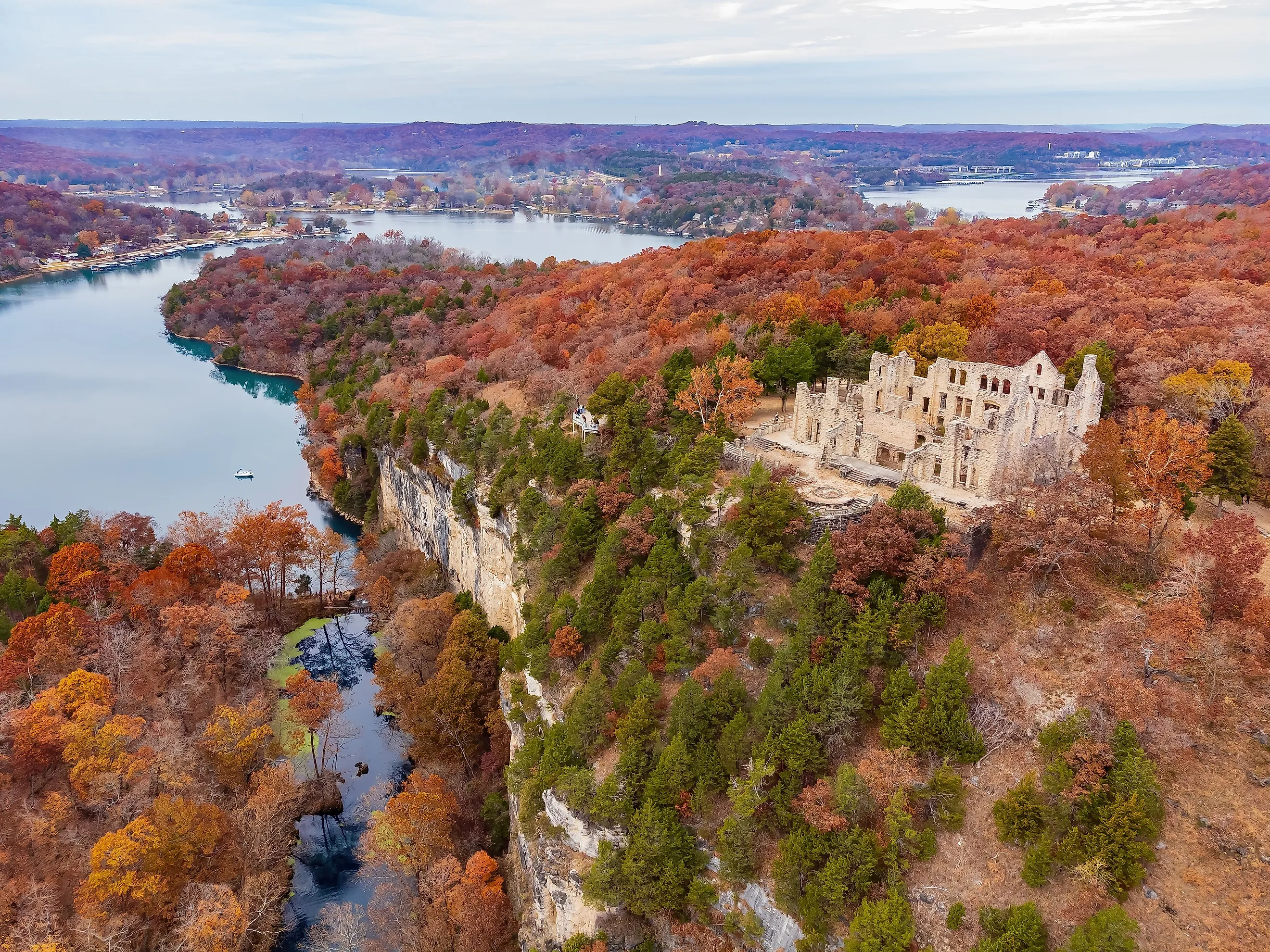
In 1905, Kansas City businessman Robert Snyder began building a stone castle on a bluff above the Niangua arm of the Lake of the Ozarks. He died in a car accident the next year; his sons finished the job, and a fire gutted the building in 1942. The shell still stands, and trails lead down from it past a natural bridge, sinkholes, and caves to Ha Ha Tonka Spring at the water's edge. Those collapsed caves and sinkholes make the park one of the best places in Missouri to see karst terrain up close. Walk to the castle first, then descend to the spring, because the climb back up the stairs is easier after the downhill is behind you.
Roaring River State Park, Missouri

Trout season opens here every March 1, and anglers line the river by the hundreds before sunrise. Cold water from Roaring River Spring sustains the fishery, and the Missouri Department of Conservation runs the hatchery that stocks it. Anglers who keep fish need a daily trout tag in addition to a fishing permit, and the park divides the stream into zones with different rules, so check the current regulations before packing a rod. The park sits in Barry County in the state's southwest corner, a long drive from the other Missouri parks on this list. Non-anglers can watch the fish from the hatchery walkways or take the ridge trails above the valley. Weekdays in April are much calmer than opening week.
Echo Bluff State Park, Missouri

Echo Bluff opened in 2016 near Eminence, which makes it one of the newest parks in Missouri's system and a contrast to the Civilian Conservation Corps (CCC) era parks elsewhere on this list. Spring-fed Sinking Creek runs clear through the grounds, and the lodge and cabins mean you can do the Ozarks without a tent. The Current River, a short drive away, belongs to the National Park Service as part of Ozark National Scenic Riverways. Many visitors split a weekend between the two, floating the federal river by day and returning to a state park bed at night.
Devil's Den State Park, Arkansas

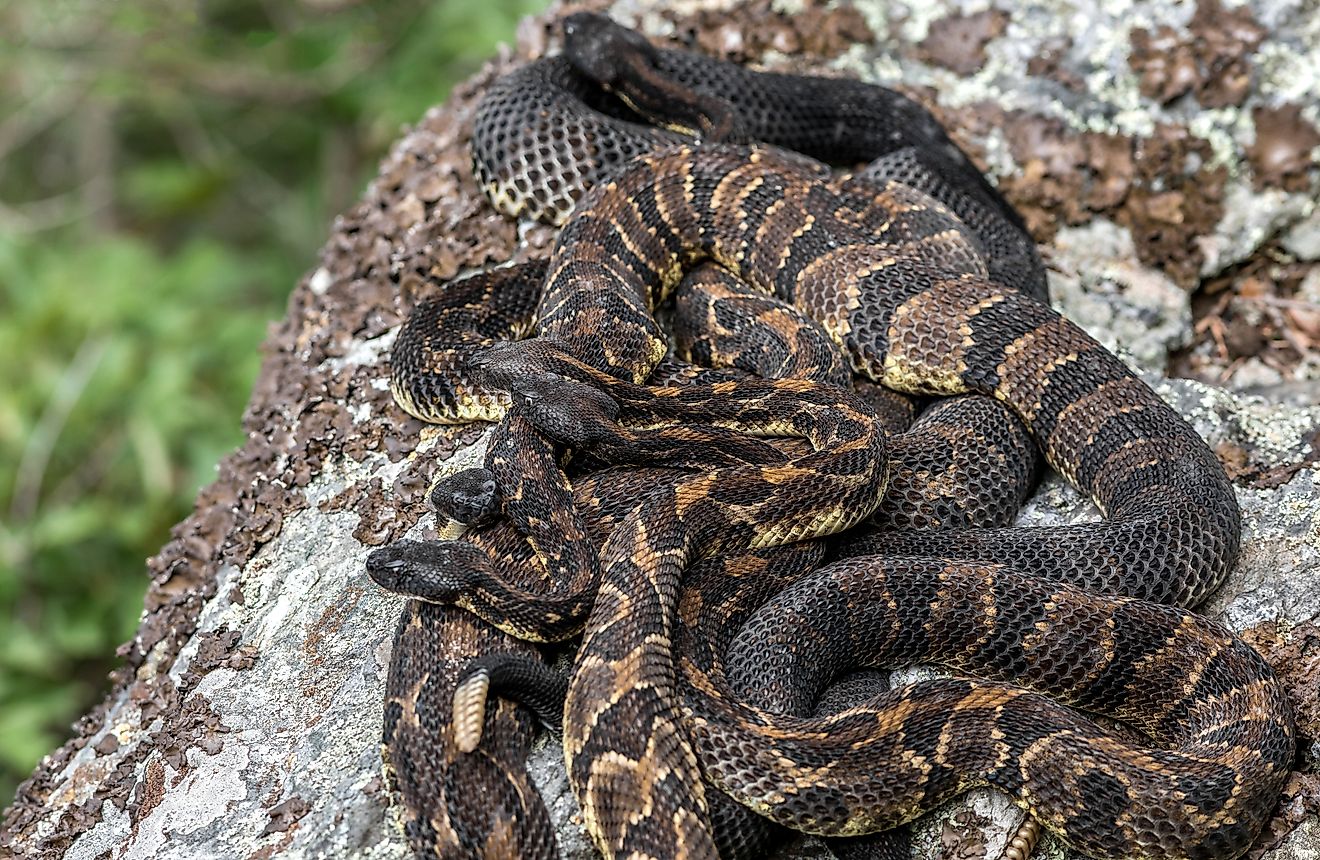
The CCC built much of Devil's Den in the 1930s, and the stone cabins, dam, and trail structures still show the crew's craftsmanship. The namesake crevice caves cut into sandstone in the Lee Creek valley, south of Fayetteville in the Boston Mountains. The Yellow Rock Trail climbs to a bluff overlook that pays off the effort, and the small lake the CCC created is a good spot for a paddle. Copperheads and timber rattlesnakes live in the Ozarks, so watch where you put your hands and feet around rocky areas. Slips on wet sandstone are the more likely way to get hurt.
Hobbs State Park-Conservation Area, Arkansas

At roughly 12,000 acres, Hobbs is the park Arkansas State Parks lists as its largest, on the shore of Beaver Lake near Rogers. The "conservation area" in its name reflects shared management with the state's wildlife agency, but it is a full Arkansas state park. Hunting is allowed in designated seasons, so wear bright colors in fall. The Historic Van Winkle Trail passes the ruins of an 1800s lumber mill, and the park's mountain bike trails draw riders from across northwest Arkansas. With that much acreage, it is the one park here where you can hike for hours and see few other people.
The parks group better than a map of the whole region suggests. Johnson's Shut-Ins and Elephant Rocks sit in Missouri's St. Francois Mountains, under an hour apart by road, so a summer weekend can cover a morning among the granite boulders and an afternoon in the rhyolite chutes. Echo Bluff works as a base for the Current River corridor, while Roaring River and Ha Ha Tonka sit far enough from everything else that each deserves its own trip. In northwest Arkansas, Devil's Den and Hobbs are under two hours apart and pair sandstone crevices and CCC stonework with a lumber-mill ruin on a long trail. With only one weekend, take the Johnson's Shut-Ins and Elephant Rocks pairing: two different kinds of billion-year-old rock, a short drive apart. Wherever you travel, you'll find some of the best state parks in the Ozarks.