These Small Towns in Oregon Come Alive in Summer
Oregon is full of surprises. It is the birthplace of Nike, and the Malheur National Forest in the state's east holds an Armillaria ostoyae fungus often called the largest single living organism on Earth. Its small towns are where summer really lands: windsurfers riding the Columbia River, sandcastles rising on the coast, rodeos kicking up dust in the high desert, and tasting rooms pouring with river views. Here are eight of them worth a summer visit, and what to do once you arrive.
Hood River

Hood River sits on the south bank of the Columbia River, with Mount Hood rising behind it. The wind funneling through the Columbia River Gorge is so reliable that Hood River calls itself the "windsurfing capital of the world," and on a summer afternoon the water fills with sails and kites. With a population just over 8,000, the town balances that adrenaline with orchards and tasting rooms. Outdoor visitors bike and hike the gorge trails and chase waterfalls at Starvation Creek State Park, where short paths lead to Starvation Creek Falls and Hole-in-the-Wall Falls. The 35-mile Hood River Fruit Loop winds through the valley's orchards, farm stands, wineries, and cideries just south of town. Back downtown, Full Sail Brewing pours pints overlooking the river, a fair reward after a day on the water.
Cannon Beach

Cannon Beach is the Oregon coast's most recognizable town, anchored by Haystack Rock, a 235-foot basalt sea stack that sits right on the sand and fills with tide pools and nesting birds at low tide. National Geographic named the beach one of the world's 100 most beautiful places in 2013. It lies about 80 miles west of Portland, an easy drive that gets busy in summer. June brings the annual Sandcastle Contest, a tradition since 1964 and one of the oldest on the West Coast, followed by the Fourth of July parade. Downtown is a walkable stretch of galleries, cafes, and shops along Hemlock Street, with longtime stops like Bruce's Candy Kitchen. For a sit-down dinner, Newman's at 988 serves French-Italian plates out of a converted cottage. Haystack Rock at sunset is the photograph everyone takes home.
McMinnville

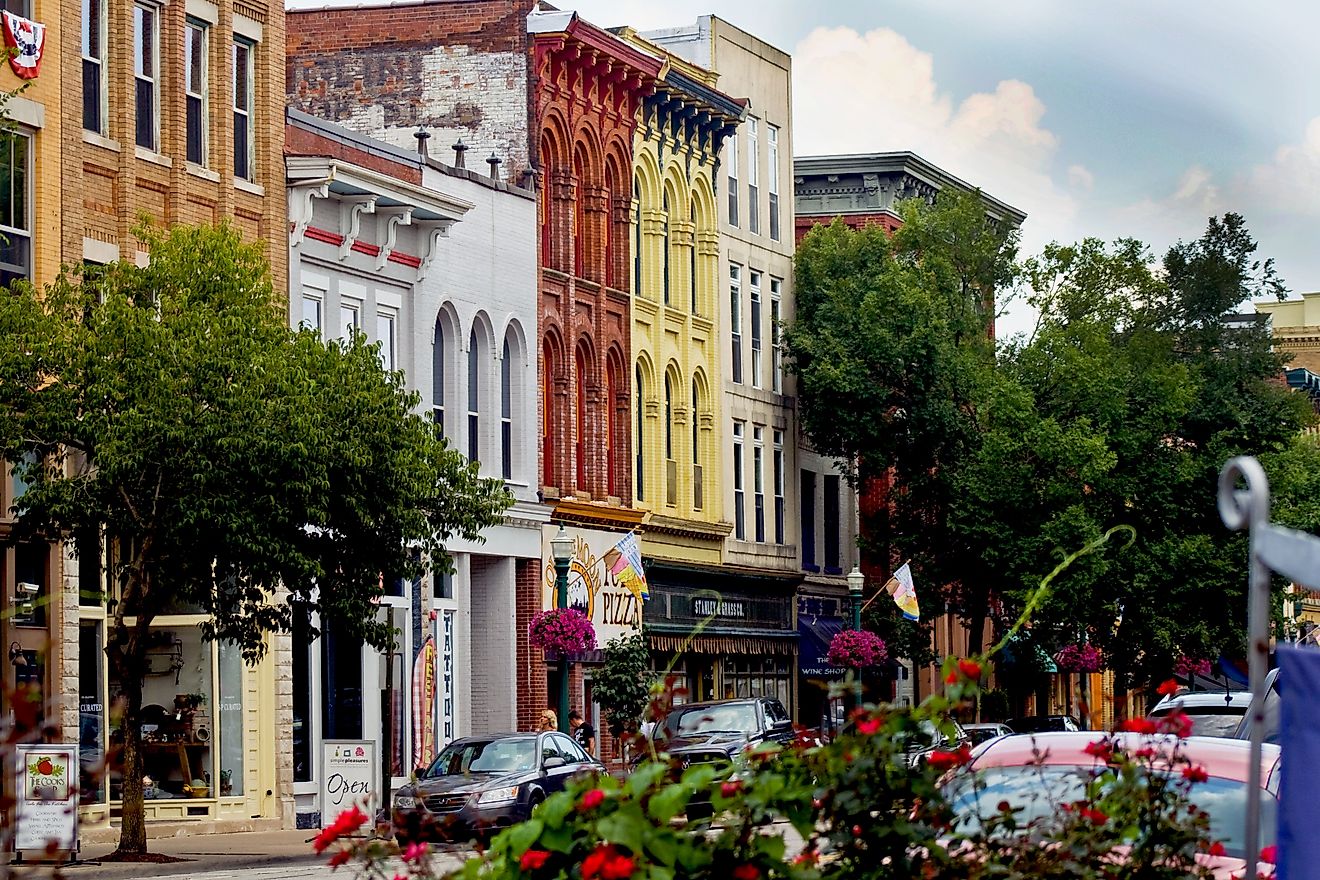
McMinnville is the hub of Oregon wine country, set in Yamhill County in the Willamette Valley. Its walkable downtown along Third Street is lined with buildings from the 19th and early 20th centuries and more than a dozen tasting rooms pouring Willamette Valley pinot noir. The town's most unusual event is the UFO Festival, held each May since 1999 and hosted by McMenamins Hotel Oregon; organizers bill it as one of the largest UFO gatherings in the country. McMinnville is also home to the Evergreen Aviation and Space Museum, where the original Spruce Goose is on display. For a place to stay, the downtown Atticus Hotel keeps things boutique. With about 34,000 residents, McMinnville is the rare wine town that still feels like a working community.
Ashland

Ashland sits about 15 miles north of the California border and runs on theater. The Oregon Shakespeare Festival, founded here in 1935, is one of the most important theater companies in the country, staging classic and contemporary plays in repertory across a season that stretches spring into fall, spread among three venues. The grandest is the outdoor Allen Elizabethan Theatre, whose stage dimensions were drawn from the contract for London's 1599 Fortune Theatre. The festival shares the town with Southern Oregon University, in the city that was settled in 1852. Between shows, visitors wander 93-acre Lithia Park, named for the lithium-rich springs that put Ashland on the map during an early-1900s health craze, or check into the 1925 Ashland Springs Hotel downtown. It is a small town that draws hundreds of thousands of theatergoers a year.
Joseph

Joseph anchors the Wallowa Valley in Oregon's far northeast corner, a town of about 1,000 backed by the granite peaks of the Wallowa Mountains, which give the area its nickname, the Little Switzerland of America. Main Street is lined with bronze sculptures from the town's renowned foundries. Summer fills the calendar: Chief Joseph Days, a major rodeo running since 1946, takes over the last full week of July; the Bronze, Blues, and Brews festival follows in August; and Alpenfest, a celebration of Swiss and Bavarian culture, arrives in September. A mile south, Wallowa Lake State Park offers hiking and swimming on a glacier-carved lake, and the Wallowa Lake Tramway, one of the steepest vertical lifts in North America, climbs 3,700 feet to the summit of Mount Howard, where the Summit Grill serves lunch with a view over the Eagle Cap Wilderness.
Sisters

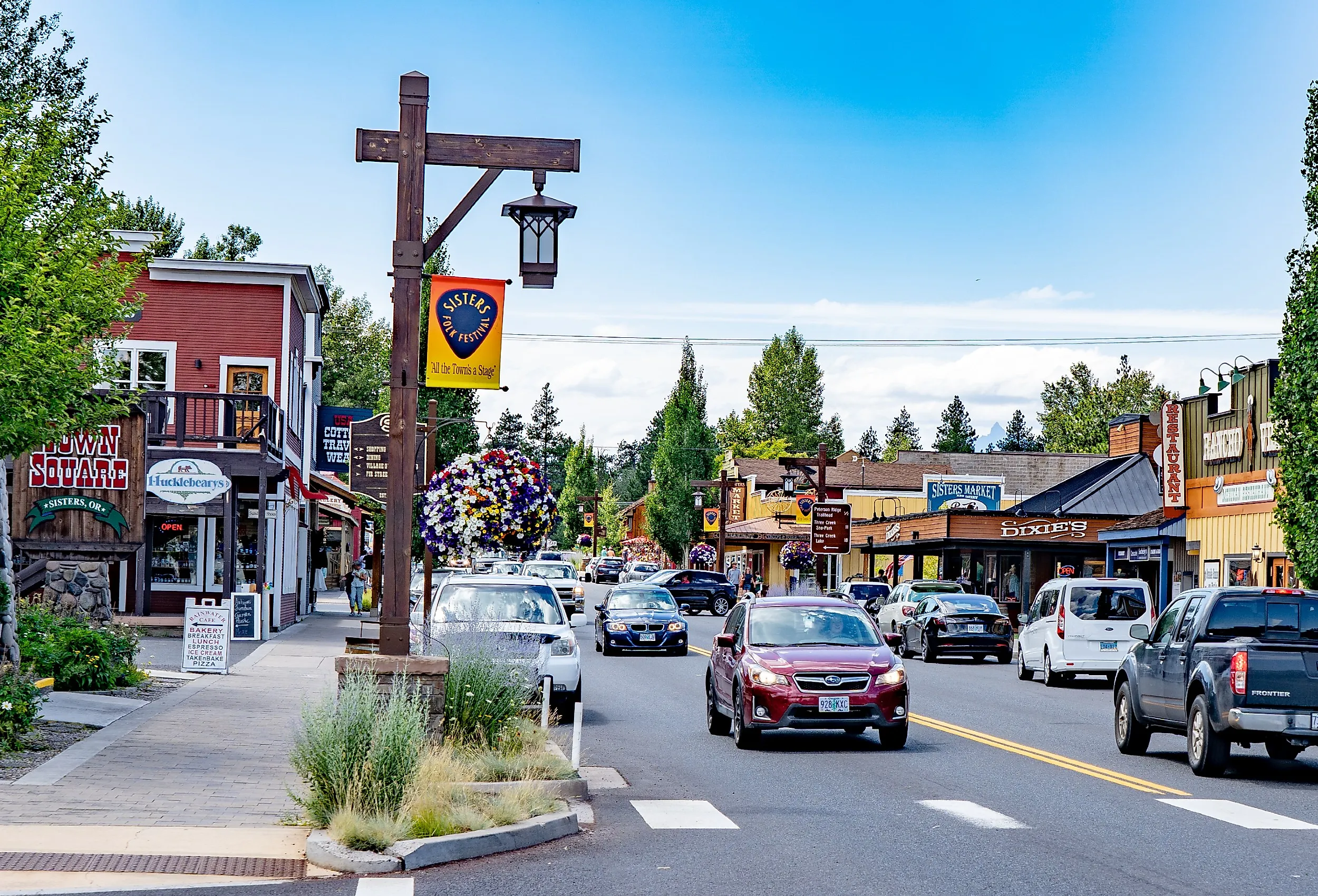
Sisters takes its name from the Three Sisters, the trio of Cascade peaks that rise to the southwest, and its downtown plays up an 1880s Old West look. With Deschutes National Forest at its edge, it is a base for hiking, cycling, and paddling, and its dark skies have earned it recognition as an International Dark Sky Community. The town of about 3,000 hosts two signature summer events: the Sisters Rodeo in June, running since 1940 and billed as "The Biggest Little Show in the World," and the Sisters Outdoor Quilt Show in July, considered the world's largest outdoor quilt show since it began in 1975. Caffeinate at Sisters Coffee Company, browse the galleries and boutiques, and grab a microbrew and pub fare at Three Creeks Brewing or a Western-style meal at the Sisters Saloon and Ranch Grill.
Florence

Florence sits at the mouth of the Siuslaw River on the central coast, at the northern edge of the Oregon Dunes National Recreation Area. Its Historic Old Town lines the riverfront with shops, galleries, and restaurants, including Mo's, the Oregon-coast institution known for its clam chowder, while the Art Deco Siuslaw River Bridge from 1936 spans the water nearby. Just south, the Oregon Dunes run for about 40 miles, with sand peaks reaching 500 feet that draw hikers and dune-buggy riders. Eleven miles north, an elevator drops 200 feet into the Sea Lion Caves, North America's largest sea cave and home to Steller sea lions, and the half-mile Hobbit Trail tunnels through mossy coastal forest to a quiet beach. The town also sits on the gray whale migration route, with the animals heading south in December and January and back north between March and June. In May, the Rhododendron Festival, dating to 1908 and one of Oregon's oldest, fills the streets with blooms.
Mosier

Mosier is a Columbia River Gorge town of about 400 that punches above its weight in wine. Three vineyards sit within easy reach of one another: Analemma Wines, a former cherry farm that now grows grapes biodynamically alongside lavender and orchards; Garnier Vineyards, set on the historic 1910 Mayerdale Estate with a tasting room overlooking the river and known for its pinot noir and rose; and Idiot's Grace, a certified-organic farm and winery. Beyond the tasting rooms, the paved Mosier Twin Tunnels Trail runs about 4.5 miles toward Hood River for walkers and cyclists, and the Mosier Plateau Trail climbs to a 100-foot waterfall on Mosier Creek with a summer swimming hole. In cherry season, around June and July, Evans Fruit Company opens its orchards for U-pick sweet cherries and peaches.
Plan the Trip
These eight towns share a season more than a setting. Summer is when the gorge winds peak, the rodeo and quilt-show crowds arrive, the tasting rooms open their patios, and the coast warms enough to linger. Each one rewards a different kind of traveler, whether the draw is theater, dunes, alpine peaks, or a glass of pinot with a river view. Pick one as a base, give it a couple of days, and the rest of the state is an easy drive away.