Where People Are Moving To In Ireland In 2026
Ireland has one of the fastest-growing populations in the European Union, and in 2026 the country passed 5.5 million people for the first time. Two forces are driving it. The first is record immigration, with more than 100,000 people arriving each year for the past five years, a mix of Irish emigrants coming home, international workers, and families from across the world, so that roughly one in six residents is now a non-Irish citizen. The second is an internal shift out of Dublin, as people priced out of the capital move to the ring of commuter towns around it and down the motorway corridors. Housing cost sits behind both, as Dublin remains the most expensive place to live in the country, and most of the homes built inside the city are apartments rather than the larger family homes that Irish households and newcomers want. The seven top places below, all in the Republic of Ireland, are where these streams are converging fastest.
Naas, County Kildare

Naas has become one of the clearest examples of Dublin's overflow. The Kildare town has grown by roughly a fifth since the last census, to about 26,000 people, entering the country's ten largest towns for the first time. Most of the newcomers are priced-out Dubliners, drawn by housing prices well below the capital and a much more affordable commute, mortgage data signals that Dublin buyers are taking a large share of first-time purchases across Kildare. The Dubliners arrive alongside a growing international workforce employed at Intel's Leixlip campus in the north of the county. Sallins station puts the city within rail reach, and the M7 runs straight to the M50 connecting Kildare to Dublin for those who want the opportunities in Dublin without the Dublin cost. What sets Naas apart from a simple dormitory town is that it has kept its own centre of gravity, anchored by the redeveloped Devoy Quarter and a working core of hospital, courts, and county-council offices.
Ashbourne and Navan, County Meath

Meath has been the fastest-growing county in Ireland, and much of that is straightforward Dublin overspill. It is the least native county in the country. Only about a third of its residents were born there, and the arrivals are a blend of priced-out Dubliners moving in and a sizable international community, with roughly a quarter of Ashbourne's residents born outside Ireland. Navan, the county town, has passed 33,000 people, while Ashbourne, just north of Dublin on the M2, has grown from a village of a few thousand in the 1990s to more than 15,000 today. The draw is new family housing at Dublin-adjacent commute times, and it shows in the demographics. Ashbourne and neighbouring Ratoath are young, with a quarter of residents under 15 and high home ownership. The M3 Parkway rail line and the M2 and M3 motorways carry the daily flow into the city each morning.
Drogheda, County Louth

Drogheda is the largest town in Ireland, home to more than 44,000 people, and it has spread so far that its southern edge now crosses into County Meath. Together with nearby Dundalk, it gives little Louth the two biggest towns in the State. The county sits on the northern arm of the commuter belt, and it draws the same Dublin outflow seen across the region, now alongside a fast-growing immigrant population. Close to six in ten of all the new homes built in Ireland in 2023 went up in Dublin and its four commuter counties, Louth among them. The deal is distance traded for price. Drogheda offers houses well below the capital while keeping a direct rail line to Dublin Connolly and the M1 at its doorstep. New estates keep fanning out north and south of the River Boyne, anchored by the Scotch Hall shopping centre on the water.
Balbriggan, County Dublin

Not everyone chasing a cheaper home leaves Dublin. Many just shift to its northern coast. Balbriggan, at the top of the Fingal area, has grown past 24,000 people and is both the youngest and one of the most diverse large towns in the country, with an average age in the low thirties and residents drawn from dozens of nationalities. Fingal has recorded the largest natural increase of any county, a reflection of how many young families, Irish and international alike, have settled there. The pattern is short-range for some and global for others, with Dublin households moving out for newer, cheaper homes and immigrant families putting down roots near the capital's jobs. Balbriggan sits on the northern rail line to Connolly and Pearse, with the M1 minutes away, and fast estate building has reshaped the town along the coast north of Swords.
Gorey, County Wexford

Gorey marks the outer edge of Dublin's commuter reach, and it has been the fastest-growing corner of Wexford. The town itself is above 11,000 people, and its wider district has climbed well past 30,000 as estates spread out from the old market centre. The upgrade of the N11 to the M11 and the opening of the bypass in 2007, which cut the drive to south Dublin sharply, explain most of it. Most of Gorey's residents came from outside the county, a blend of Dublin and Wicklow families chasing cheaper housing as well as newcomers from overseas. The town is young and heavily owner-occupied. With roughly 3,000 more homes in the pipeline, north Wexford looks set to keep expanding. The railway line to Dublin Connolly and the M11 remain the backbone of the daily commute.
Carrigaline, County Cork

Cork is the county that has grown mostly from within, though increasingly from abroad as well. Its residents are the least likely in Ireland to leave their home county when they move, and Cork drew the highest net inflow of any county in the last census period, most of it people resettling closer to the city rather than arriving from Dublin. The multinationals around the harbour add an international layer, bringing pharmaceutical, technology, and medical-device workers from across Europe and beyond. A lot of that movement has landed in the harbour towns to the south and east. Carrigaline, the largest town in the county, has grown past 18,000 people, and Midleton and Cobh have expanded along the same commuter rail and road lines. The engine is Cork city's own economy, which lets people buy a family home within a short drive of work. The ring of satellite towns is where most of the county's new housing is going up.
Galway City, the West

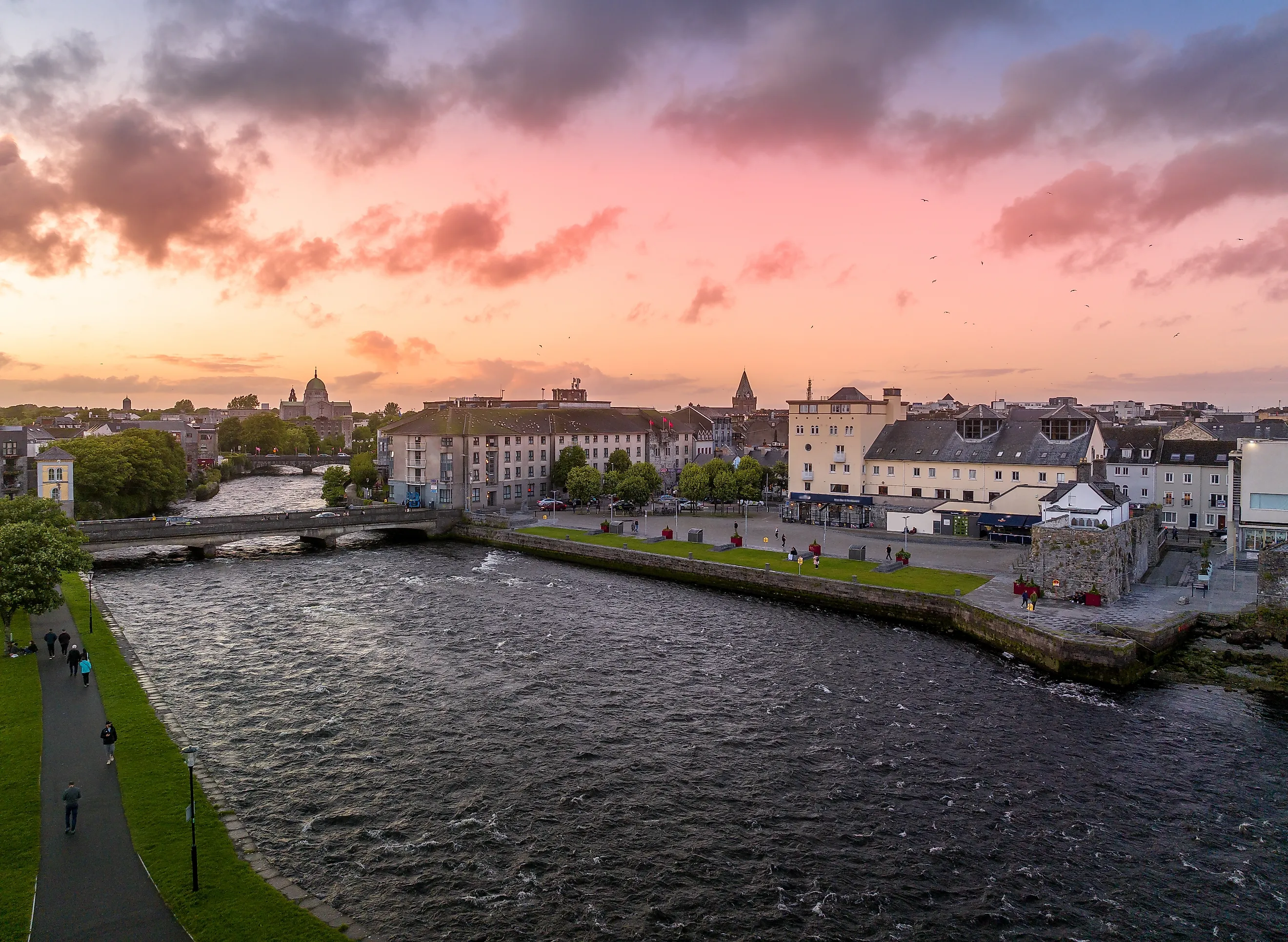
Galway is the one that pulls without any help from Dublin. The West, meaning Galway with Mayo and Roscommon, has become the second-fastest-growing region in the country after the capital, and Galway city is its engine. The city has passed 85,000 people, the largest in the west of Ireland and the fourth largest in the State, and it carries a large international community to match its economy. That economy is the draw. Galway anchors roughly a third of Ireland's medical-device workforce, with Boston Scientific, Medtronic, and Abbott running large plants, and the University of Galway pulls in students and staff from across the country and abroad. Newcomers arrive from around Connacht, from Dublin professionals wanting a smaller city, and from international workers and returning emigrants rather than from any single source. Housing demand has followed the jobs into the city and its suburbs.
The Bottom Line
The direction of travel is consistent, and it is unlikely to reverse anytime soon. Ireland's growth now runs on two engines at once, record arrivals from abroad and a steady internal shift out of Dublin, and both are pooling in the same places. The commuter ring around the capital, across Kildare, Meath, Louth, and Wicklow, is projected to grow faster than anywhere else in the Republic for years to come, while the far west and border counties gain more slowly. What is really shifting is where the next family home gets built, and for now that means the motorway ring around Dublin, the harbour towns around Cork, and a resurgent Galway. For the towns and small cities on this list, it means new schools, busier main streets, and the unmistakable energy of communities on the rise.