This Quiet Florida Town Is An Underrated Gem For Nature Lovers
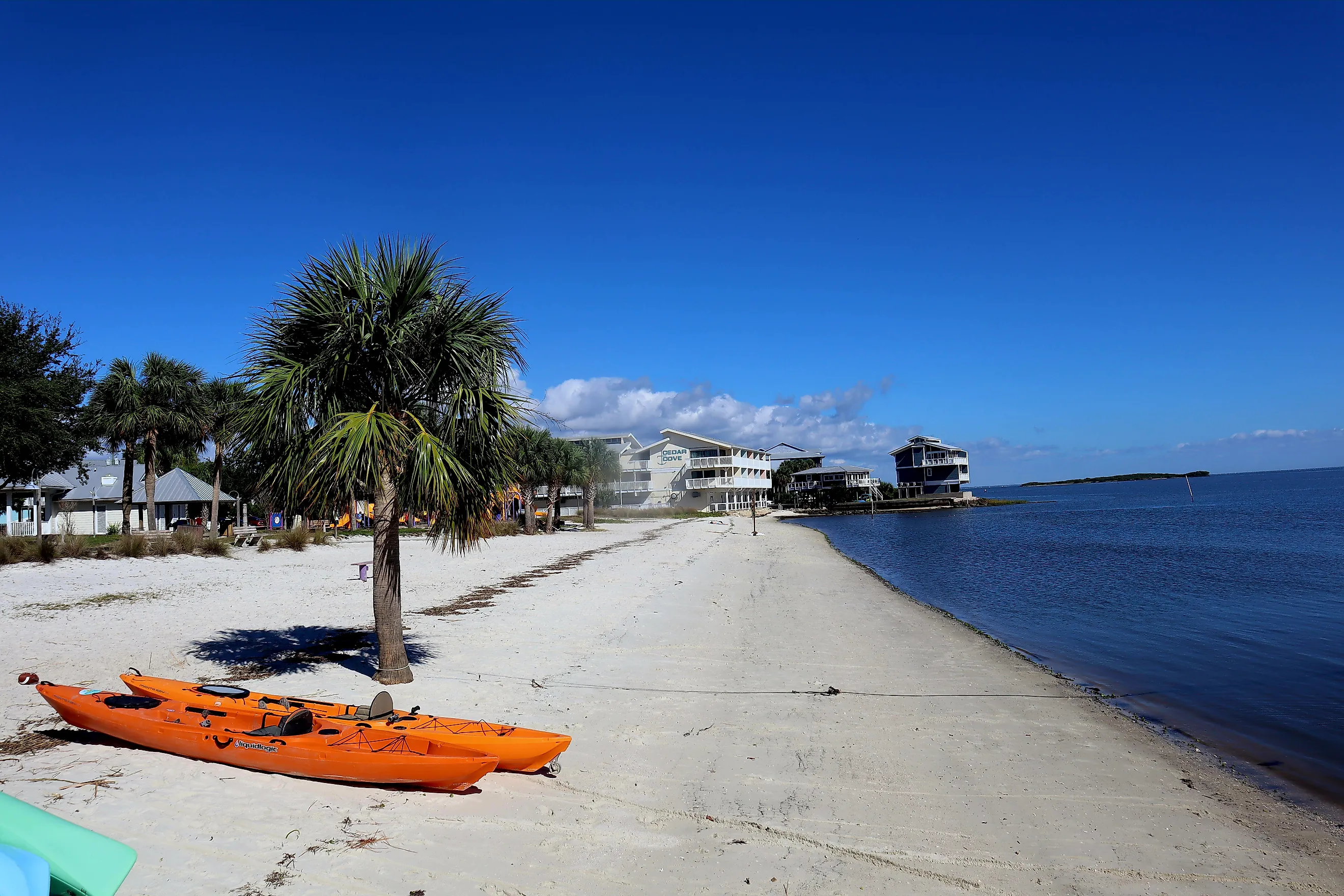
Cedar Key offers so much for nature lovers. Within a 15-mile radius of this small town are opportunities to paddle to a 1929 federal bird sanctuary or hike a nearly 1,500-year-old shell midden. Near the town, visitors can also walk one of the rarest scrub habitats in Florida, drive a nine-mile nature loop through 53,000 acres of protected estuary, and watch tens of thousands of bats emerge at dusk. For travelers seeking an authentic slice of Old Florida and a base for serious nature watching, Cedar Key is a must-visit.
Cedar Keys National Wildlife Refuge

The main attraction for nature lovers in this cluster of barrier islands is the Cedar Keys National Wildlife Refuge. Established on July 16, 1929, by President Herbert Hoover, the refuge was a response to a period when colonial nesting birds like egrets and herons were being slaughtered for fancy hats. Today, the refuge protects 762 acres across 13 offshore islands and shelters one of the largest colonial bird nesting grounds in Florida. In addition to herons and egrets, brown pelicans, double-crested cormorants, white ibis, and roseate spoonbills are regular nesters.

Public access is by boat only, and most visitors head for Atsena Otie Key, the only island that's open year-round. A pleasant half-mile boardwalk and trail leads past the ruins of the original 1840s Cedar Key settlement, wiped out by a hurricane in 1896, ending at a cemetery and observation deck overlooking the Gulf.
Kayak rentals and guided tours are available, and the one-mile paddle between Cedar Key City Marina and Atsena Otie is usually calm enough for beginners to tackle. Seahorse Key, at 52 feet above sea level the highest point on Florida's west coast, is worth visiting for the Cedar Key Light Station (the island restricts access at certain periods, so check the latest updates before heading out). Constructed in 1854, the light station now serves as the University of Florida's marine research lab.
Lower Suwannee National Wildlife Refuge

Just north of town, the Lower Suwannee National Wildlife Refuge protects 53,000 acres along the final 20 miles of the Suwannee River and 26 miles of Gulf coastline. One of the country's biggest undeveloped river-delta systems, it forms a critical link in the Florida Wildlife Corridor, a nearly 18-million-acre network that connects conservation areas from the Panhandle down to the Everglades.

The refuge supports some 255 documented bird species, more than 90 butterfly species, and several threatened species, including the Gulf sturgeon, eastern indigo snake, gopher tortoise, and wood stork. The nine-mile-long Lower Suwannee Nature Drive is the easiest way to experience the refuge, an unpaved loop through pine flatwoods and tidal creek crossings where wading birds, alligators, and ospreys are commonly seen. It's also a breeding site for swallow-tailed kites, visible late February through August.
For walkers, the 2.8-mile Tram Ridge Trail loops through habitats favored by migratory songbirds. Visit at dusk, and you might catch some of the 30,000 or so Brazilian free-tailed and southeastern myotis bats heading out to hunt. Manatees and bottlenose dolphins are frequently spotted where the Suwannee River meets the Gulf.
The Shell Mound
Located 14 miles north of town, Shell Mound is the largest prehistoric shell midden on Florida's central Gulf Coast. Built between approximately 400 and 650 CE, the five-acre, 28-foot-tall semicircular ridge contains an estimated 1.2 billion oyster shells.

Excavations by the University of Florida have linked the site to large-scale summer gatherings that may have coincided with celebrations of the summer solstice. Part of the Lower Suwannee National Wildlife Refuge, the scale of the mound is best appreciated along the half-mile Shell Mound Trail. Looping through and over the ridge, interpretive signs explain the site's archaeology.
A small-boat launch provides access, while the fishing pier is popular with anglers trying to hook redfish and sea trout. The adjacent Shell Mound County Park offers basic campsites.
Cedar Key Scrub State Reserve

Six miles northeast of town, Cedar Key Scrub State Reserve protects 5,000 acres of one of Florida's rarest natural environments. Florida scrub is found only on ancient sand dune ridges and supports a variety of plants and animals adapted to its dry conditions. Twelve different natural habitats are protected here, ranging from coastal salt marshes to sand pine scrub and longleaf pine sandhills.

The reserve is the place to go for sightings of the Florida scrub-jay, the state's only endemic bird species. Other notable residents include the gopher tortoise, eastern indigo snake, Florida mouse, and bald eagle, many of which can be spotted along the color-coded multi-use trails that cut through the reserve's flatwoods, sandhills, and scrub.
Cedar Key Museum State Park

Though focusing on the human side of life in the area, Cedar Key Museum State Park presents the relationship between people and the surrounding salt marsh. Highlights include the 1880s home of St. Clair Whitman, a longtime resident whose collection of seashells and Native American artifacts became the foundation of the museum.
Whitman's home has been restored to reflect 1920s island life, and the adjacent museum houses dioramas illustrating the town's timber, pencil-mill, and seafood-industry past. Nature lovers visit too. The Whitman Trail is a wooded path through native vegetation that ends at the salt marsh, with viewing benches and a kayak launch.

A short drive away, the Cedar Key Railroad Trestle Nature Trail follows the route of the old Cross Florida Railroad that operated from 1861 to 1932. Just over a mile there and back, the original wooden trestle pylons can still be seen. Bring binoculars, as roseate spoonbills, ibises, ospreys, and migratory songbirds are regularly spotted along the route.
Florida's Most Underrated Town for Nature Lovers
Cedar Key is the kind of place travelers usually drive past on their way to Florida's Gulf Coast resorts. And that's a shame. Part of Florida's Nature Coast, it is home to two national wildlife refuges, a state park, and one of the rarest scrub habitats in the South. Add in its size (only around 800 people live there) and the fact there is no high-rise development, and it is easy to see why nature lovers "in the know" consider Cedar Key one of Florida's most underrated outdoor destinations.