11 Most Unique Upstate New York Towns
From the St. Lawrence River's shoreline at Alexandria Bay to the Spiritualist gates at Lily Dale and the chamber-music summers in Skaneateles, New York's upstate towns each turn on a single specific draw. Beacon runs on Dia and Mount Beacon. Bethel runs on the Woodstock site. Croton-on-Hudson runs on a 297-foot masonry dam that still supplies New York City with drinking water. The eleven towns below stand out for what they actually anchor, not for where they sit on the state map.
Alexandria Bay

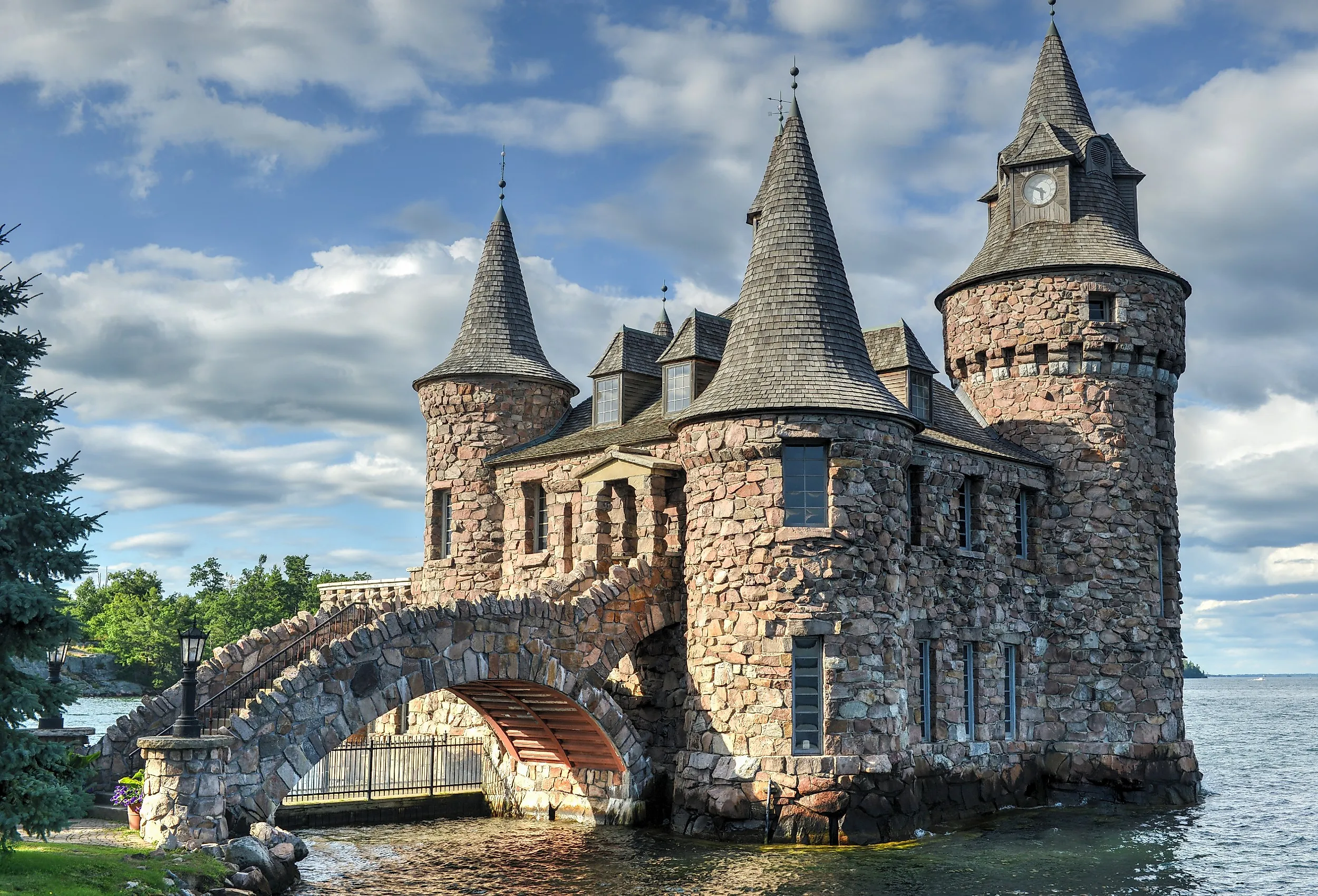
Alexandria Bay sits on the St. Lawrence River in the heart of the Thousand Islands, a short hop from the Canadian border. The waterfront pulls most of the attention. Sailboats, fishing charters, and pontoon boats line the harbor, and shuttles run regularly to Heart Island, where the unfinished Boldt Castle has been a tourist landmark since the early 20th century. George Boldt halted construction in 1904 when his wife died, and the building sat empty until 1977, when the Thousand Islands Bridge Authority took over the restoration.
The town itself runs on small-scale fun. Mini-golf, batting cages, go-karts, tennis courts, and a hedgerow maze fill the warm months, and eight state parks ring the area. Sunset dinner cruises run on a Mississippi-style paddle-wheel boat or a triple-decker tour vessel. Bill Johnston's Pirate Days in August has been a local fixture since 1953. Powerboat Poker Run, Blues in the Bay Festival, Fish Day in the Bay, and the Roaring '20s Weekend round out the rest of the season.
Beacon

Beacon is roughly 90 minutes north of Grand Central by Metro-North, which is the main reason it has become one of the easier weekend escapes in the Hudson Valley. The reason to come is Dia:Beacon, the contemporary art museum housed in a former Nabisco box-printing factory. The collection runs heavy on the postwar minimalists. Donald Judd's metal boxes fill one wing. Richard Serra's massive curved steel walls fill another. Joseph Beuys, Dan Flavin, Louise Bourgeois, and Sol LeWitt have permanent installations across the rest of the building.
Main Street stretches for over a mile, and a full afternoon disappears easily into a walk along it. The Mother Gallery, BAU Gallery, and Hudson Beach Glass cover the other end of the art scene. Hudson Valley Marshmallow Co. handles dessert. For outdoor adventures, Mount Beacon is the highest summit in the Hudson Highlands and a strenuous hike up to a fire tower with views over the Hudson River.
Bethel

Bethel is the town where the Woodstock festival actually happened in August 1969. The festival took its name from the town of Woodstock, which lies 60 miles northeast, but the venue was Max Yasgur's dairy farm in Bethel. Roughly 400,000 people showed up over the four-day weekend. The site is now Bethel Woods Center for the Arts, a permanent music venue with the original festival field listed on the National Register of Historic Places.
The Museum at Bethel Woods covers the 1960s counterculture in serious depth, with original instruments, footage from the festival, and exhibits on the civil rights and antiwar movements that shaped the era. Mountain Jam runs at the end of May and pulls the kind of multi-stage rock-and-roll crowd that would feel right at home on Yasgur's old pasture. The peace-painted school bus parked permanently near the site has become an unofficial photo op. Catskill Distilling Company at the Dancing Cat Saloon a few miles north handles the after-show.
Catskill

Catskill sits on the west bank of the Hudson at the foot of the Catskill Mountains, and it is the town that gave the mountains their name rather than the other way around. Thomas Cole, founder of the Hudson River School of painting, lived here, and his house is now the Thomas Cole National Historic Site. Washington Irving based Rip Van Winkle on a Catskill local. The Hudson River Skywalk crosses the river to connect Cole's house with the Olana State Historic Site, the former home of his student Frederic Edwin Church.
Kaaterskill Falls, one of the tallest cascades in the state, drops 260 feet in two stages a short drive west of town. RamsHorn-Livingston Sanctuary preserves the largest forested tidal swamp on the Hudson. Dutchman's Landing handles the picnic-and-watch-the-boats side of things. The Catskills Beverage Trail runs three breweries and a cidery inside the village limits. Rip Van Winkle Brewing Company pairs Italian pub fare with the local pours; Subversive Malting + Brewing works with 100 percent locally sourced grain in a farmhouse setting.
Cooperstown

Cooperstown is the home of the National Baseball Hall of Fame, and that single fact drives the town's entire summer economy. Roughly four hours by car from Manhattan, the village sits at the southern tip of Otsego Lake in central New York. The Hall of Fame on Main Street is worth a visit even for non-fans; the exhibits cover the social history of the country as much as the sport itself.
Beyond the Hall, the Fenimore Art Museum holds one of the strongest collections of folk art and Native American art in the Northeast. The Farmers' Museum across the road is an outdoor living history complex with 19th-century buildings moved to the site from across the state. Glimmerglass State Park covers the lake's northern shore for hiking and swimming. Bocca Osteria handles the Italian end of dinner; the Stage Coach Coffee shop opens early for the next museum sprint.
Croton-on-Hudson

Croton-on-Hudson is a Westchester village 35 miles north of the city, and the headline attraction is the New Croton Dam, a 297-foot stone masonry dam completed in 1906 that still helps supply New York City with drinking water. Water cascades down the spillway face in spring and early summer, and Croton Gorge Park at the base offers picnic ground and trails along the river. The dam took 14 years to build (1892 to 1906) and was the tallest dam in the world at the time of its completion. It remains the largest cut-stone masonry dam in the United States.
The Van Cortlandt Manor at the south end of the village is an 18th-century Dutch-Anglo estate, restored and operated by Historic Hudson Valley. The grounds include a stone house, a brick ferry house, and a working herb garden. Croton Tapsmith is the local for craft beer and a family-style meal. The Blue Pig handles ice cream, and the Oreo flavor is the local favorite that ends up in most weekend photos.
Ithaca

Ithaca runs on the energy of two universities (Cornell and Ithaca College) that together bring in over 30,000 students each year and roughly double the town's population during the school months. The Ithaca Commons is the pedestrian-only downtown core with bookstores, cafes, and a long lineup of restaurants. Cornell's campus sits on the hill above town with the Johnson Museum of Art at the top and a series of dramatic gorges (Cascadilla and Fall Creek) cutting through the campus.
Ithaca sits at the southern end of Cayuga Lake in the Finger Lakes wine region, which means dozens of wineries within a short drive. Buttermilk Falls and Taughannock Falls state parks frame the town to the south and north. Taughannock Falls is 215 feet tall, one of the highest single-drop waterfalls east of the Rockies. Amtrak runs into town and Ithaca Tompkins International handles direct flights to a handful of major US hubs.
Lake Placid

Lake Placid hosted the Winter Olympics in 1932 and 1980, and the venues from both editions are still in working order. The bobsled, luge, and skeleton track at Mount Van Hoevenberg is open to the public for the Olympic Bobsled Experience, which is exactly as terrifying as it sounds. The ski jumps on the south side of town still host international competition and can be ridden up via elevator for the view from the top.
The town sits in the heart of the Adirondack Park, the largest publicly protected area in the lower 48. Mirror Lake fronts downtown with a 2.7-mile walking loop. Whiteface Mountain is the resort for serious downhill skiing; it holds the longest vertical drop in the eastern United States and is open most of the year for hiking and a scenic road to the summit. The Mirror Lake Inn Resort and Spa anchors the upscale dining end of the village.
Lily Dale

Lily Dale is the largest Spiritualist community in the country, a gated village of roughly 275 year-round residents in Chautauqua County, about an hour southwest of Buffalo. The Spiritualist movement (a 19th-century religious movement centered on communication with the dead) traces its origin to the Fox sisters in Hydesville, New York in 1848. Lily Dale itself was incorporated as the Cassadaga Lake Free Association in 1879 and has been the institutional home of the movement ever since. The hamlet hosts an unusually high concentration of registered mediums, and visitors pay a daily gate fee to enter the grounds.
The Lily Dale Museum sits inside a former schoolhouse and traces the movement's history; the original Fox cottage was moved to Lily Dale from Hydesville in 1916 before burning down in 1955. The Lily Dale Assembly runs an active summer schedule of public mediumship demonstrations at Inspiration Stump in the woods, where the spirits supposedly come through more reliably than anywhere else on the grounds. Lucy's Coffee Shop is the social hub, and a conversation with a working medium happens to most visitors before they leave.
Millerton

Millerton is the headquarters of Harney & Sons, the family tea company that licenses the Historic Royal Palaces collection (Tower of London, Hampton Court, Kew Gardens, and others) and supplies tea to a long list of upmarket hotels. The 90,000-square-foot factory and tasting room sit on Main Street with samples of every blend, including the SoHo coconut-chocolate that has become the unofficial town drink. The tasting is free, the staff knows their stuff, and you can leave with a tin of whatever you liked best.
Beyond the tea, Millerton has Oblong Books (an independent bookstore that has been in town since 1975) and The Moviehouse, an art-house cinema that runs the Met Live in HD series. The Harlem Valley Rail Trail starts in town and runs south to Wassaic for 10.7 miles along the Webatuck Creek. 52 Main handles the tapas-and-wine end of dinner, and Irving Farm runs a coffee roastery and cafe. Spring for Sound, the Festival of Lights, and Fall for Art fill out the events calendar.
Skaneateles

Skaneateles sits at the northern tip of Skaneateles Lake, a long narrow Finger Lake about 30 minutes west of Syracuse. The lake itself is one of the cleanest in the country (the city of Syracuse draws its drinking water from here without filtration), and the village along the shore is a classic upstate main-street town with white clapboard buildings, brick storefronts, and a working pier.
The Charlie Major Nature Trail follows Skaneateles Creek north along the route of the old Skaneateles Short Line Railroad for an easy two-mile out-and-back walk. Doug's Fish Fry has been a regional landmark since 1982 and pulls a line out the door for fried haddock most evenings. Bed-and-breakfasts cluster along the lakefront, and the Skaneateles Festival brings chamber music to town for two weeks every August. The Mid-Lakes Navigation Company runs the U.S. Mail Boat tour, one of the few commercial mail-by-boat routes remaining in the country.
Eleven Towns That Earn the Drive
Some of these towns lean on a single huge draw (the Baseball Hall of Fame in Cooperstown, the Woodstock site in Bethel, Dia:Beacon in Beacon). Others run on something quieter and stranger (the mediums in Lily Dale, the tea factory in Millerton, the Spiritualist meetings at Inspiration Stump). All eleven earn a long-weekend trip on the strength of what they do, not where they happen to sit on the map.