8 Prettiest Small Towns In New Hampshire
New Hampshire's most beautiful small towns sit in some of the most dramatic landscapes in New England. The White Mountains tower over northern settlements such as Jackson and Conway. Covered bridges arch over cold streams rushing down from the Presidential Range. Colonial meetinghouses and 19th-century mill buildings still define the skylines of towns that grew up along the state's rivers and trade routes. These eight towns bring together mountain wilderness, river history, and colonial architecture under one photogenic sky.
Exeter

Exeter lies along the Squamscott River, a quiet corridor that has shaped the town's streetscape since its founding in 1638. The river winds through the center of town, its banks softened by the towering old growth of Swasey Parkway. That canopy of trees frames the water beautifully, and at the center of the parkway, a cast-iron bandstand marks the spot where the Exeter Brass Band has played open-air concerts for nearly two centuries.
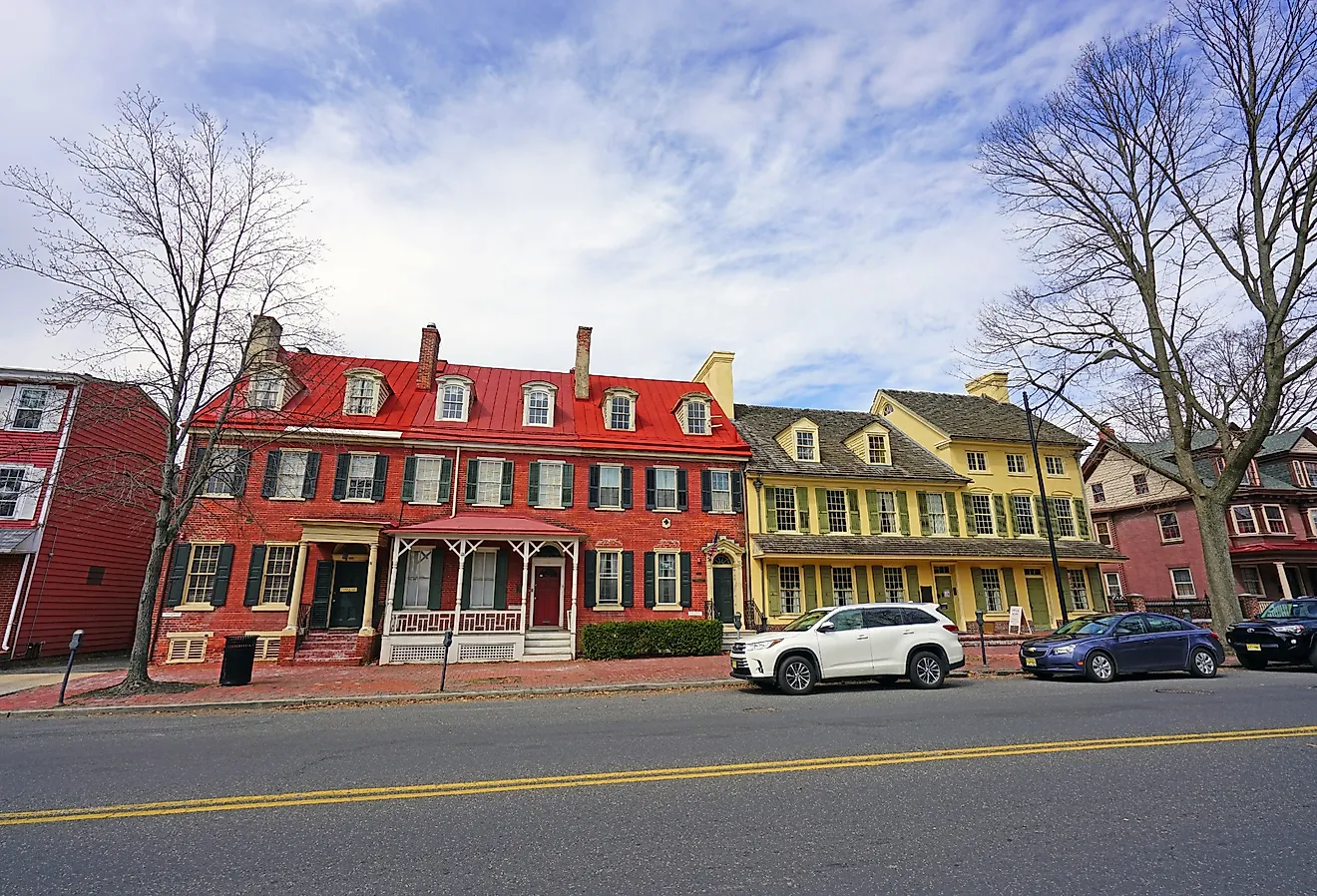
Exeter's architecture spans two distinct eras, colonial settlement and academic grandeur, with buildings from both just steps apart. The warm red brick of Phillips Exeter Academy, founded in 1781, glows against manicured lawns just steps from the colonial downtown. That same downtown holds the stately yellow Ladd-Gilman House, where one of the original Dunlap Broadsides of the Declaration of Independence is preserved.
Jackson

Located in the Ellis River valley beneath the Presidential Range, Jackson is a village where cold streams, granite waterfalls, and dense forests define the view. The Wildcat Brook cascades over 100 feet through smooth granite shelves at Jackson Falls, near the village center. The 64-foot Glen Ellis Falls tumbles through Pinkham Notch, a short drive north. Thick forest presses in from every direction, broken only by the cold, glittering rush of the Ellis River below.
Jackson's village character is shaped by historic inns, covered bridges, and white-steepled churches. The red Honeymoon Bridge, spanning the Ellis River just south of its confluence with the Wildcat, was built in 1876 and is among the most photographed covered bridges in the state. Wentworth Hall, the principal structure in the Jackson Falls Historic District since its completion in 1883, stands as a reminder of the White Mountains resort era.
Littleton

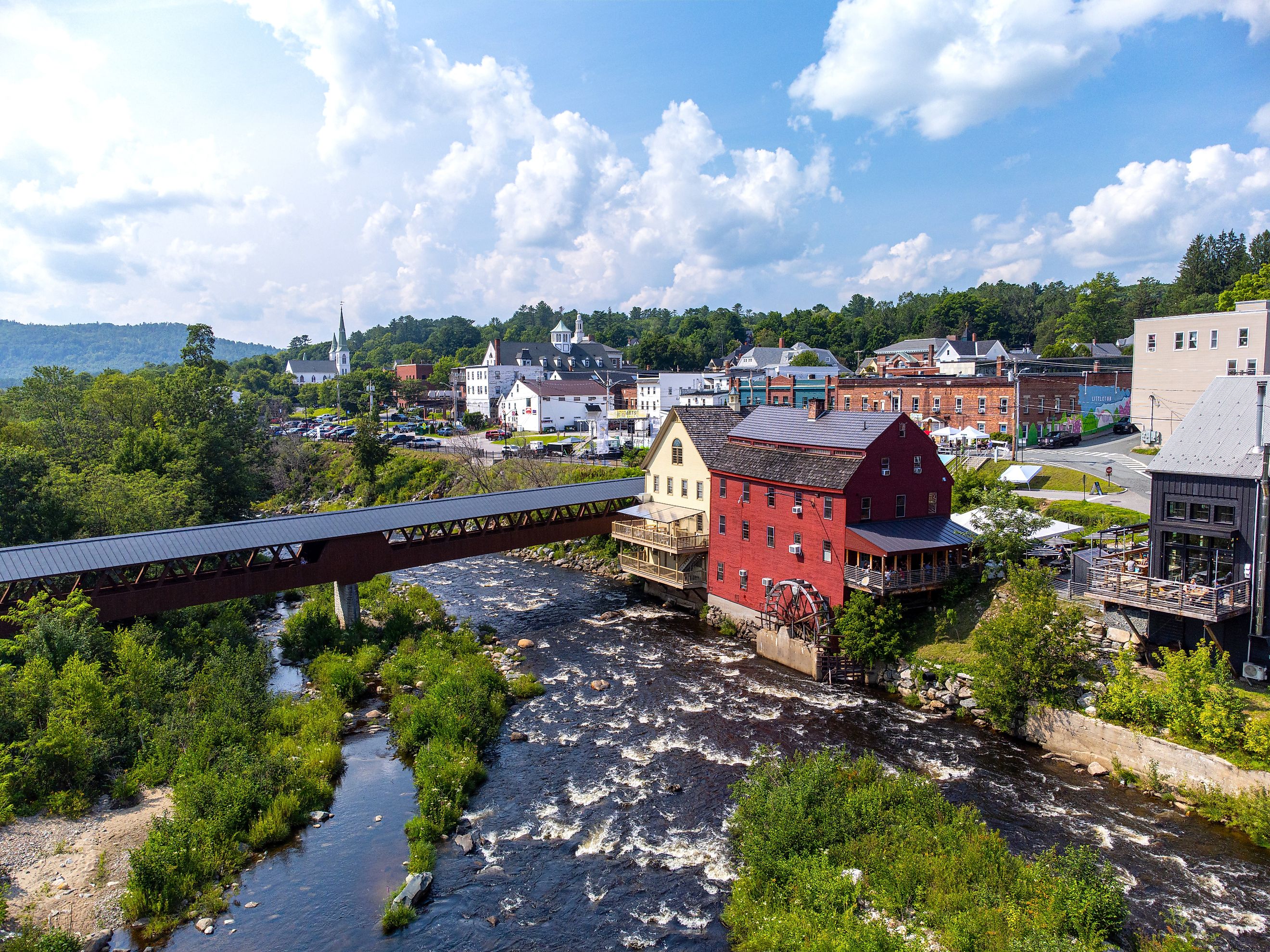
Littleton is a northern New Hampshire town located where the White Mountains meet the Ammonoosuc River, giving it a rugged, scenic character. The river rushes through the base of town, crossed by the Riverwalk Covered Bridge in the scenic River District. Harmony Park hugs the riverbank, where outdoor musical instruments invite visitors of all ages to play along to the sound of rushing water. A 0.7-mile hike up Kilburn Crags opens into panoramic views of the Ammonoosuc River Valley and the peaks beyond.
Littleton's downtown preserves a nearly mile-long stretch of Victorian-era brick buildings from the late 19th century, anchored by landmarks that reflect both industry and culture. The Littleton Grist Mill, originally constructed in 1797, now houses a craft brewery beside a mill pond. The Littleton Opera House punctuates the skyline with its distinctive octagonal clock tower. A bronze statue of Pollyanna, arms flung wide in welcome, honors hometown author Eleanor H. Porter, who was born in Littleton in 1868.
Hanover

Situated on the eastern bank of the Connecticut River in New Hampshire's Upper Valley, Hanover draws its beauty from both dense woodlands and broad open spaces. The Appalachian Trail passes directly through town, threading past forested hillsides and centuries-old cemeteries. The Mink Brook Nature Preserve and Balch Hill Natural Area bring deep woodland trails within minutes of downtown. Across the river, the wooded hills of Vermont complete a wide valley panorama that shifts color with every season.
Hanover's built environment is defined by more than two centuries of collegiate architecture set around a large central green. Dartmouth College, founded in 1769, spreads across 269 manicured acres at the heart of town. The Baker Library Tower, modeled after Philadelphia's Independence Hall, rises 200 feet above the Dartmouth Green. The Hood Museum of Art and the Hopkins Center for the Arts bring serious cultural programming to the quiet Upper Valley town.
Conway

Conway is set in Mount Washington Valley, where forested peaks, the Saco River, scenic drives, and dramatic granite cliffs shape the landscape. On the town's western edge lies part of the Kancamagus Highway, a 34.5-mile drive through White Mountain National Forest. The route traces the Swift River past waterfalls, covered bridges, and mountain overlooks.
Conway's villages preserve a collection of 19th-century buildings, including the carefully restored 1874 Victorian train station in North Conway. The Conway Scenic Railroad departs from that handsome station, carrying passengers through the gorges and ravines of Crawford Notch. The Mount Washington Observatory Weather Discovery Center adds a distinctive scientific landmark to the village streetscape.
Meredith

Meredith hugs the western shores of Lake Winnipesaukee, a 21-mile stretch of water framed by wooded hillsides and wide mountain views. The Winnipesaukee Scenic Railroad departs from downtown, tracing the lake's western shore through a series of waterfront vistas. From almost any point in town, the distant ridgeline of the White Mountains is visible.
Meredith's downtown has a warm, unhurried character built around handsome wooden storefronts and a restored 19th-century mill complex. The Mill Falls Marketplace lies at the center of town, its converted mill buildings housing boutique shops beside a waterfall. The Winnipesaukee Playhouse brings professional theater to the heart of town each summer season. The Meredith Sculpture Walk adds more than thirty outdoor installations to Hesky Park and Scenic Park, turning a lakeside stroll into a quiet open-air gallery.
Peterborough

Peterborough lies in the Monadnock Region along the banks of the Contoocook River, its forested hills and mountain views reflecting the New England character that inspired Thornton Wilder's beloved play Our Town. The summit of Pack Monadnock rises above town in Miller State Park with views of the surrounding hills. The Cranberry Meadow Pond Trail connects the town to that summit through a stretch of deep woodland. Edward MacDowell Lake adds a serene stretch of calm water to a natural setting that already feels like a painting.
Peterborough's downtown is a well-preserved cluster of red-brick buildings with a deep and thriving artistic identity. The Peterborough Town Library, established in 1833 as the first tax-supported free public library in the United States, sits beside the Contoocook River in a handsome 1893 brick building with a colonnaded front portico. It was expanded in 2021 with a glass-walled modern wing that won an honor award from the American Institute of Architects. MacDowell, the nation's first artist residency program, has welcomed celebrated writers, composers, and visual artists to its 450 woodland acres since 1907.
Hancock

A quiet town in southern New Hampshire's Monadnock Region, Hancock is wrapped in wooded trails, peaceful paddling waters, and expansive preserved natural areas. The Hancock Village Green offers a park-like open space framed by historic buildings and tree-lined streets. The Harris Center for Conservation Education maintains a network of hiking trails across hundreds of forested acres just outside town. Norway Pond offers a calm stretch of water for kayaking and fishing.
Hancock's Main Street carries a village streetscape where many of its historic buildings hold a place on the National Register of Historic Places. The white-steepled First Congregational Church of Hancock and the four-chimney brick Hancock Historical Society face a wide village green. The elegant Hancock Inn displays stenciled murals by celebrated itinerant artists Rufus Porter and Moses Eaton Jr.
Beauty at Every Turn
New Hampshire's most beautiful towns feature extraordinary landscapes, history, and architecture. Hanover's collegiate greens and river valley views give it a beauty rooted in both nature and learning. Littleton's riverside mill and mountain backdrop tell a story of industry shaped by remarkable geography. Peterborough's red-brick downtown has nurtured working artists and professional theater for nearly a century. Across mountains, rivers, and colonial downtowns, these towns prove that New Hampshire's beauty runs as deep as its history.