This Quiet Arizona Town Is An Underrated Gem For Nature Lovers
Patagonia is a quiet Arizona town set between the Santa Rita and Patagonia Mountains, where nature stays close at hand. With the Arizona Trail weaving through town, it is easy for nature lovers to immerse themselves in a variety of hiking trails. The grasslands surrounding the town hold a mild climate that keeps places like Patagonia Lake State Park comfortable for recreation without being overwhelmed by the heat. Patagonia is not a resort crowded with tourists, but rather a calm base for outdoor lovers seeking a nature-based retreat to relax and reset.
Why is Patagonia Underrated?

Set along Sonoita Creek and flanked by mountain ranges on both sides, Patagonia is not easy to reach. It is over an hour from Tucson and close to three hours from Phoenix. Additionally, the road to Patagonia was a dirt road until 1940, when a section was paved. Due to its elevation of over 4,000 feet, Patagonia is about 7 degrees cooler than Tucson and 12 to 14 degrees cooler than Phoenix. These cooler temperatures and milder climate keep larger crowds of tourists at bay, resulting in quieter experiences for nature lovers.
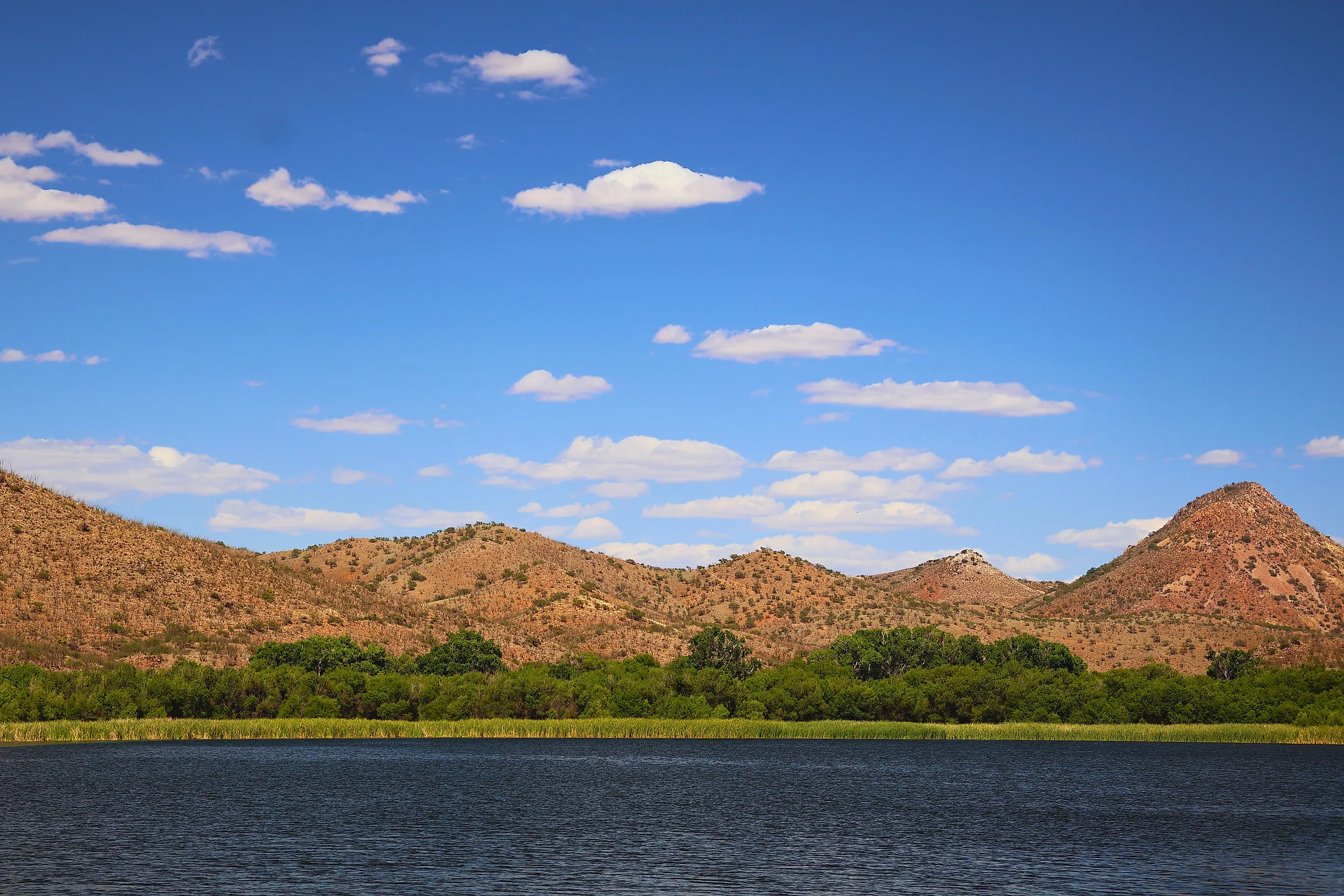
This is especially true at Patagonia Lake. The 265-acre manmade namesake lake is a unique oasis hidden in the otherwise surrounding desert landscape of southeastern Arizona. The lake is so quiet that anglers, hikers, and picnickers often share the shores with great blue herons, and the hiking trails and surrounding hills with whitetail deer.
Natural Attractions

Sonoita Creek State Natural Area is a riparian and upland area comprising almost 10,000 acres, protecting one of the last remaining riparian habitats in the region. It is further downstream from Patagonia Lake State Park along the banks of Lower Sonoita Creek. It is a much more remote natural experience than Patagonia Lake State Park, supporting a wide range of flora and fauna that inhabit the aquatic and riparian habitats, including 36 species of reptiles and amphibians, 106 species of birds, 49 species of damselflies and dragonflies, over 130 species of butterflies, 5 species of bats, and countless species of mammals.

The area is laced with 20 miles of hiking trails and 8 miles of equestrian trails that wind so far into the backcountry that hikers and horseback riders will encounter more wildlife than they will people. The Overlook Trail is particularly popular, culminating in 360-degree viewpoints of desert landscape blooming around the shores of Patagonia Lake. Patagonia is a gateway community for the Arizona Trail, which passes through town on its roughly 800-mile run south to north across the state, connecting the border with Mexico to the Utah line. The trail links diverse landscapes, including deserts, mountains, canyons, and forests.
What Makes Patagonia Unique?

Patagonia is a certified bird magnet. The Paton Center for Hummingbirds has recorded 261 bird species. The birds are drawn in by native plants and feeders dotted throughout the property. Visitors can sit under a shaded pavilion and observe the birds. Additionally, the Richard Grand Memorial Meadow is on site and blooms with flowers during the growing season, attracting a number of butterfly species. The main pond is not only a major lure for the birds, but also a crucial habitat for the endangered Gila topminnow.
The Patagonia Picnic Table Effect is a birding phenomenon associated with Patagonia. It is alleged that sometime between the 1960s and 1970s, birders observed a rare black-capped gnatcatcher, or possibly a nesting pair of rose-throated becards, at a rest area outside of town. Regardless, the report of rare birds drew an abundance of birders, which, in turn, led to even more rare birds being sighted in town. Whether it is a myth or a phenomenon, the abundance of bird species has added to Patagonia's reputation.
Preserving the Outdoors

Community-led nonprofit organizations, like Patagonia Area Resource Alliance (PARA), are dedicated to protecting the Patagonia Mountains and the Sonoita Creek Watershed from the impacts of modern industrial mining. The organization was formed in 2011 by six local residents after an exploratory company from Canada announced its intention to resume mining in the Patagonia Mountains. Since then, PARA has continually strived to keep the land, water, and wildlife healthy through monitoring mining-related activities that impact water and wildlife, public outreach, and educational work.
When is the Best Time to Visit Patagonia?

Winter in Patagonia usually begins in December and ends around mid-March. Despite Patagonia's high elevation in comparison to other areas, there are only one or two days of snowfall, which usually melt quickly. Since winters are warmer than other places across the United States, it is suitable to visit year-round.
However, based on each nature lover's outdoor activity of choice, certain periods are better for different experiences. Winter is the optimal time for birding and wildlife watching. Spring is mild, making the weather comfortable for hiking, fishing, and water sports. June and July are the hottest months of the year, and the temperatures quickly cool off in July when monsoon rain arrives. Much of the summer activity in Patagonia revolves around Patagonia Lake, where swimming is permitted and can be done until as late in the year as October.
Enjoy the Quietness of Patagonia
Patagonia is not your average mountain town. It lacks resorts filled with tourists, and its lack of heavy snowfall makes it unsuitable for skiing or snowboarding. This means the rowdiness of après-ski is not an issue for those seeking quiet time in nature. Its favorable year-round temperatures mean nature lovers can comfortably enjoy the outdoors on any given day, where they can view rare bird species, sit at the uncrowded shores of Patagonia Lake, and hike trails where wildlife outnumber people. Patagonia is truly an outdoor lover's dream and a remarkable wilderness destination like no other in Arizona.