These Towns In Italy Have The Best Main Streets
One of the world’s most visited travel destinations (only France, Spain, and the United States attract more tourists), Italy is famous not just for its ancient history and stunning scenery but also for many quaint small towns. Boasting magnificent old main streets steeped in centuries of history, these towns perfectly embody the spirit of old-world Italy, preserving architectural relics and cultural traditions that continue to define their character.
Main streets in these lovely towns are lined with structures dating back to the Renaissance or even earlier, sometimes with evidence of the Roman Empire still easy to spot. Exploring these picturesque towns with their charming piazzas, elegant palaces, and old main streets never gets old (unlike the towns themselves).
Orvieto

Situated in Italy’s beautiful Umbria region 90 minutes north of Rome, Orvieto makes for an ideal day trip from the nation’s capital. The town’s main street, Corso Cavour, offers a direct path through centuries of Italian history and is where you’ll find architectural wonders such as Orvieto’s iconic Duomo, a grand Gothic cathedral built between 1290 and 1591 that’s a must-visit for its detailed façade and extensive art collection. Be sure to include Torre del Moro, a 13th-century tower that offers panoramic views of the town and countryside, in your Orvieto itinerary, too.
Orvieto is renowned for its medieval Palio del Carro, an annual event in August featuring vibrant costumes, musicians, and historical reenactments. Another highlight is the Festa della Palombella, celebrated each June on Pentecost Day. This traditional festival involves feasts, decorations, and the release of a single white dove symbolizing the Holy Spirit.
San Gimignano

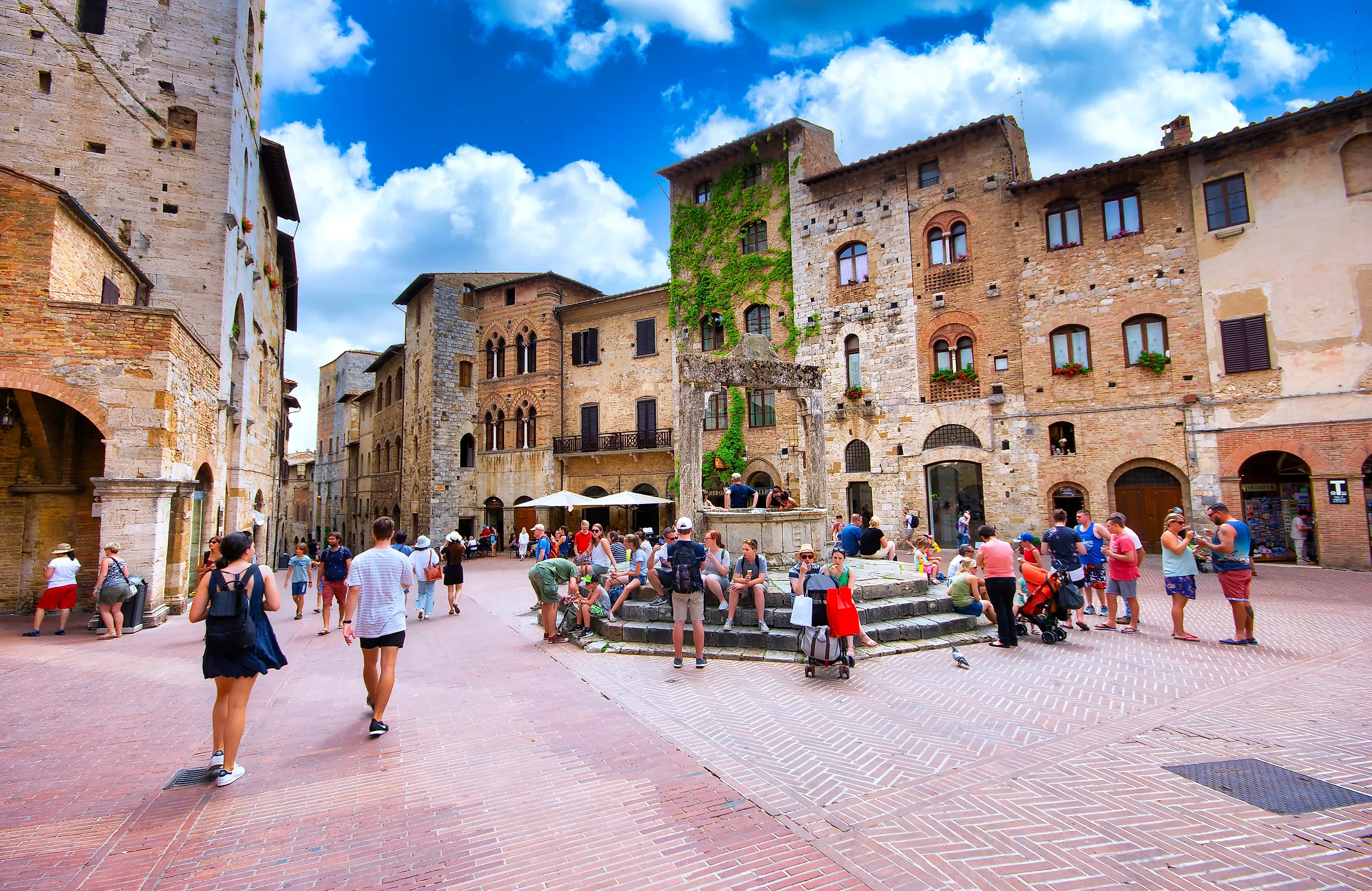
Only an hour from the busy (and often crowded) Tuscan city of Florence, San Gimignano is a great spot to visit for its 14 historic stone towers. The last remaining of 72 towers that once defined the town’s skyline, they’re still an awe-inspiring site. The tallest, Torre Grossa, was built in the 1300s as a watchtower and stands 177 feet tall with 218 steps to the top for spectacular views.
The town’s main street, Via San Giovanni, is a delight to walk along for its many 12th- and 13th-century structures, including the Romanesque Collegiata di San Gimignano. Built in the 11th century, it remains a landmark on the main street and houses an impressive collection of frescoes depicting biblical scenes. Each summer, San Gimignano hosts the Ferie delle Messi, a medieval harvest festival that recreates life from the town’s past, with townsfolk dressed as knights, flag bearers, and in traditional medieval costumes. Wine enthusiasts can also enjoy the town’s famous Vernaccia vintages through tours and tastings at small wine shops dotted along Via San Giovanni.
Civita di Bagnoregio

You might already know Civita di Bagnoregio, often called Italy’s "dying town." Situated on a slowly eroding hill an hour north of Rome, it has just 12 full-time residents. Founded by the Etruscans over 2,500 years ago, the town can only be reached by a footbridge. Despite this, it attracts many curious travelers because it appears remarkably untouched by time.
Follow Civita’s main street, Via Santa Maria, through narrow lanes and past medieval houses into Piazza San Donato, the town’s main square. Here, you’ll spot the Romanesque church of San Donato, built in the 7th century and still serving its original purpose as a place of worship. Each June, the town’s Sagra della Tonna (Festival of the Donkey) brings residents and tourists together for a fun race held in Piazza San Donato.
Spello

Spello is another great Umbria location worth visiting. Known for its Roman roots and beautifully preserved medieval streets, follow the main street, Via Cavour, and you’ll pass old Roman arches and churches adorned with Renaissance frescoes, including the Church of Santa Maria Maggiore with its Baglioni Chapel painted by Pinturicchio in 1501. It’s certainly an atmospheric stroll, especially in spring and summer when the town’s many gardens are in bloom.
Need an excuse to visit? Le Infiorate di Spello is a major event held in June that transforms Via Cavour into an artistic display of flower carpets celebrating Corpus Christi, the Catholic day of feasting for the Eucharist. It’s a spectacular occasion, with locals creating elaborate designs using nothing but flower petals.
Montepulciano

Nestled in the heart of Tuscany, Montepulciano is renowned for its Renaissance architecture and exceptional wines. Just 70 miles from Florence, the main street, Via di Voltaia, ascends past historic palazzi, charming piazzas, and wine cellars carved from ancient caves. Though the climb is steep, reaching the Palazzo Comunale—an impressive medieval structure from the 14th century—at the top makes it worthwhile. After the ascent, you’ll have earned a moment to relax and enjoy breathtaking views of the old town and picturesque countryside.
The annual Bravìo delle Botti di Montepulciano is a great time to visit. Held in August, this quirky event sees competitors roll large wine barrels through the streets, paying homage to the town’s winemaking legacy while enthralling onlookers. Montepulciano’s main street is also home to many tasting rooms where you can sample the town’s famed Vino Nobile.
Ravello

Set overlooking the Amalfi Coast, one of Italy’s most romantic destinations, the small town of Ravello offers breathtaking views and plenty of European charm. Located a 30-minute drive from the city of Salerno, Ravello’s main square, Piazza Vescovado, is home to the impressive Duomo of Saint Mary of the Assumption. Built in the 11th century, the Duomo is worth a visit for its well-preserved medieval interior.
Ravello’s old downtown area comes alive each summer with the Ravello Festival, one of Italy’s most famous music events. Founded in 1953 to honor composer Richard Wagner who famously visited and found inspiration in Ravello, the festival features classical music concerts set in the historic gardens of Villa Rufolo with a stage that’s adjacent to the spectacular Amalfi coastline.
Todi

Drive an hour south of Perugia in Umbria, and you’ll come to Todi, a delightful small town that’s bursting with medieval and Renaissance-era treasures. The town’s main street, Corso Cavour, passes by grand old homes and leads to Piazza del Popolo, the town’s main square, where you’ll see Todi Cathedral. Built in Gothic style in the 12th century, it dominates the square and can be toured. Other historic sites along this route include the Palazzo del Capitano, dating from the 1200s, and Palazzo dei Priori, built a few decades later and now serving as the town’s visitor’s center.
If possible, time a visit for late August or early September to catch some of the fun of the Todi Festival. One of the country’s leading cultural events, the town comes alive with music performances, theater, and visual arts, much of it taking place in the town square. October is also a good time to visit during the Fiera di San Fortunato celebrating Todi’s patron saint with processions and food.
The Final Word
When you do get around to scratching Italy off that bucket list (or heck, even if you’ve already been there), Italy’s historic small-town main streets offer a unique glimpse into the nation’s fascinating past. These streets not only attract tourists with their historical sites and events, but they each continue centuries-old traditions that continue to lure locals and visitors alike, offering experiences that truly capture Italy’s enduring charm.